


Magma leader Christian Vander created the zeuhl genre in 1969, attempting to offer hope to humanity, and even created a language to go with it. Perhaps unsurprisingly, a talent as unique as the French drummer, pianist and vocalist hasn’t always been easy to work with – as Prog explored in 2009.
Christian Vander started out as a drummer, with help from a friend of his mother. “Chet Baker taught me how to do the 4/4,” the French artist told Prog in 2024. “He gave me my first drum kit when I was 14 or 15 years old. He said, “Come tonight with a taxi and I will wait here with a drum kit for you.” So I came and took the drum kit. Many years after, I discovered that Chet stole the drum kit from his own drummer! The police came and said, “You are holding a stolen drum kit. You have to give it back!.
In the 1960s Vander saw that the future of the Earth looked bleak: industrial pollution and overpopulation were the scary ideas of the day which he took and wove into a vast operatic song cycle called Theusz Hamtaahk, or Time Of Hatred. Magma’s first self-titled album, recorded and released in 1970, tells the story of the future when things have gone beyond even the bleakest predictions.
A small group of dissidents escape Earth and find a colony on the distant world of Kobaïa. They establish a more enlightened way of life, working in harmony with nature and the cosmic force of the universe. Years later another Earth ship lands on Kobaïa. The crew are impressed and persuade Kobaïan missionaries to return with them.
Second album 1001 ̊ Centigrades tells of the arrival of the Kobaïans with their message of peace and love. But the Earth authorities imprison the missionaries, sparking off a war between Earth and Kobaïa. Kobaïa gives Earth an ultimatum: release them or they will unleash their ultimate weapon, the Mekanïk Destructïw Kommandöh. The Kobaïans escape – and some Earth people have heard and remembered their message.
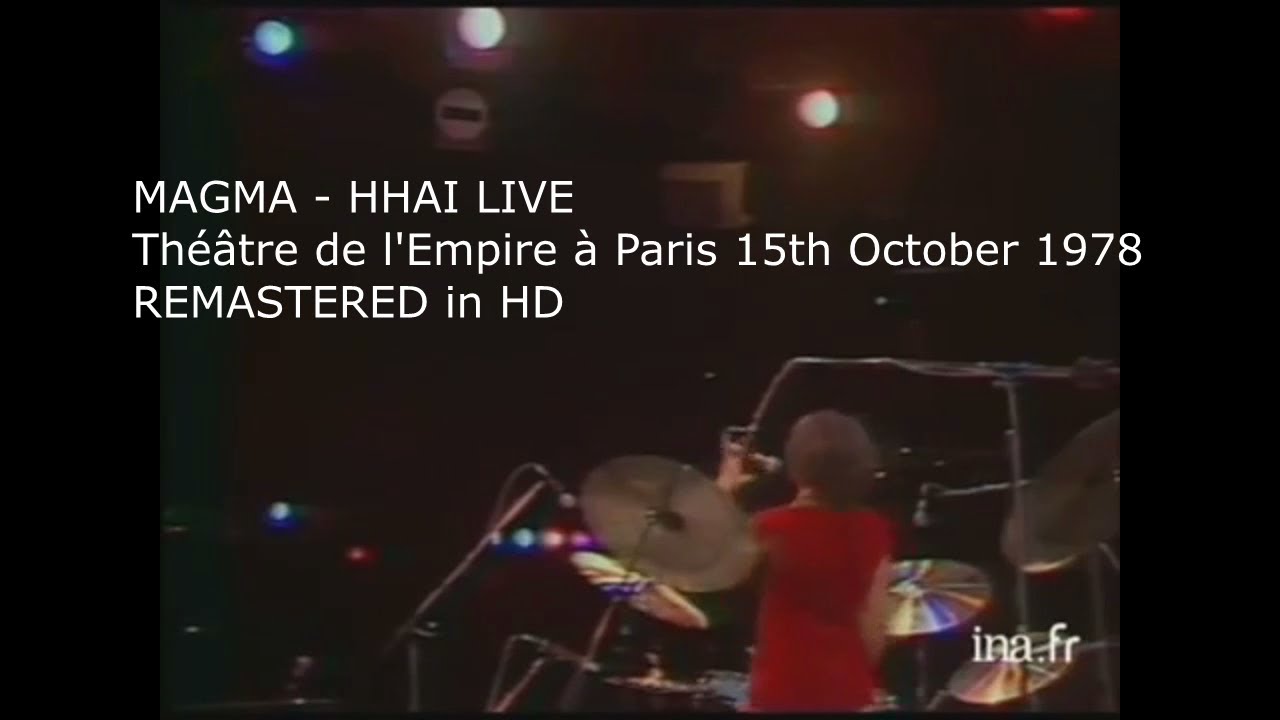
The third part is about the prophet Nëbehr Gudahtt, who remembers the message and preaches that humanity must seek self-purification and communion with the supreme being. Naturally this pisses everyone off and they form an angry mob, marching off to lynch Gudahtt. But en route they all miraculously see the light – then commit mass suicide, becoming transformed and purified and melding into the substance of the universe.
This was the band’s incredible third album, Mekanïk Destructïw Kommandöh, released in 1973. It was apocalyptic music with a story that seemingly connected all of Magma’s songs, delivered in Vander’s own phonetic umlaut-laden language to fit his cosmology; Kobaïan sounded like gutteral German or Serbo-Croat.
Although as a visionary artist and a gifted musician Vander commands enormous respect with everyone who’s worked with him, the impression from outside is that it’s bloody difficult to work with him. Ego clashes were inevitable – most famously with bassist Jannik Top, who was part of the line-up from 1973 until 1978.
In his book Repossessed, Julian Cope recounts a story told by Martin Cole, who worked with Magma’s management: “The original group had come to a stunning and savage conclusion in Spain. Vander had rented a hilltop castle for his own use, which had annoyed Top’s ego. He rented a similar place within sight of Vander, and the two proceeded to wage magic war upon one another.
“Martin ended driving from one castle to another, trying to patch the band up, only to discover Jannik Top with serious chest wounds, screaming that Vander had caused him to tear his own chest open.”
One of the astonishing things about Vander is that, through many incarnations of Magma and through many other projects – film music, children’s music, bands where he has played as merely a drummer – he’s still refining and honing the visionary concept that possessed him back in 1969.
“The story of these people leaving Earth for a better place, another planet, is not finished,” he said in 2024. “Kobaïa is like Earth, but without the stupid, the dumb people. They wanted to make this place a better place, but they had to do it on another planet – because it looks like it’s impossible to do that on Earth.
“So it’s not science fiction. It’s just about escaping from here, and there are many different ways to escape. One of the ways is trying to create another planet somewhere. It doesn’t have to be in space.”
It’s a very good thing to be able to say, ‘I’m doing my own kind of music, and I’m not the only one to do it’
What’s more, he actually spawned an entire genre. Zeuhl – which means “cosmic music” in Kobaïan – is a rich prog sub-genre. Former Magma members formed bands like Weidorje. Belgium’s Univers Zero have always been a sort of brother band to Magma, as have France’s Art Zoyd.
Top himself formed The Utopic Sporadic Orchestra, who performed De Futura, the epic song that he composed for Magma’s 1976 album Üdü Wüdü. Current Zeuhl prime movers include Japan’s enigmatic Koenji Hyakkei and the UK’s Guapo.
Vander acknowledges the existence of these bands – while never admitting he’s listened to them. Asked in 2024 what he thought of those other proponents, he said: “Of course we’re pleased, because it became a new genre – you have jazz, you have pop, and then you have zeuhl. It’s a very good thing to be able to say, ‘I’m doing my own kind of music, and I’m not the only one to do it.’”

