"When I got the lyrics, I thought it was a bit like a nursery rhyme. I was like, Oh, okaaaay, this isn't quite what I thought these guys would be doing. I thought they were going to be much more heavy and deep."
In July 1994, after her band Angelfish broke up following their final show supporting Live on their Throwing Copper US club tour, Shirley Manson flew to Madison, Wisconsin to meet up with Butch Vig, Steve Marker and Duke Erikson to work on a new project they'd sarcastically titled Garbage. The four musicians had met up earlier that year in London to discuss working together, somewhat ironically on the day that Nevermind producer Vig learned that Nirvana's Kurt Cobain had been found dead in Seattle, but their first jam session In Madison was - in Manson's memory - "a fiasco". Nevertheless, that summer, the 28-year-old Scottish singer was invited to come out to Smart Studios to record vocals on new songs the trio had written. Looking back on the experience 25 years on, Manson recalled "sitting on an airplane, about to touch down in Madison, not having a clue where I was going or who I was going to be working with."
"It was both thrilling and terrifying," she told Spin. "I was so young and so afraid."
The first songs that the quartet worked on were Vow, which in March 1995 would become Garbage's debut single, and Queer, which would become the band's first UK Top 20 hit in December '95. Among the next batch of songs presented to Manson was a demo version of Only Happy When It Rains, with Duke Erikson on vocals.
"Out of all the songs, that was the one that arguably was the most formed," Manson recalled in an interview with the podcast The Story Behind The Song. "But of course, when you have someone with such a big personality as me [laughs] coming in and performing a song, it's going to be so wildly different from what you imagined, and I came at that song with a lot of verve and gusto."
When Manson was first presented with the song she admits to having felt a little "alarmed" because the title was so close to Happy When It Rains from The Jesus And Mary Chain's 1987 album Darklands.
"I felt a little anxious," she recalled, "like, this is too close to the bone for my tastes. But we took it in such a different direction that the two songs are completely different."
Speaking to UK rock magazine RAW in 1995, Manson described the lyrics of Only Happy When It Rains as being "about wanting love but knowing life will always get in the way... yet not being obliterated by that."
"It's a song for people that know what it is like to live on the dark side of life," she continued. "It's about devotion but a different kind - a devotion to the truth and to freedom... and to hell with the consequences."
She also alter explained that the song was "a dig at ourselves because we like records that don't make us feel very happy, and at this so-called 'alternative' scene of 'we're so weird and more wonderful than everybody else'."
Only Happy When It Rains was released as a single in the UK in September 1995, one month after the emergence of Garbage's self-titled debut album. It peaked on the UK singles chart at number 29. In the US, the song reached number 55 on the Billboard Hot 100 in April 1996, the same month that the band made their US TV debut, performing the song on Saturday Night Special.
"It's funny," Manson told The Story Behind The Song, "because it wasn't our biggest hit, but people think of it as our biggest song."
"The song has become more and more 'us' as a band than it ever was," she added. "It's really kind of who we are in a funny way. And if you don't really get the concept of wanting to sing sad songs in the dark, you are never going to be a fan of this band, ever. That's just a given. This is like our sort of blueprint, in a funny way, of who we are, and how we have lived our lives, and what we're attracted to, and where we've gone in our career."
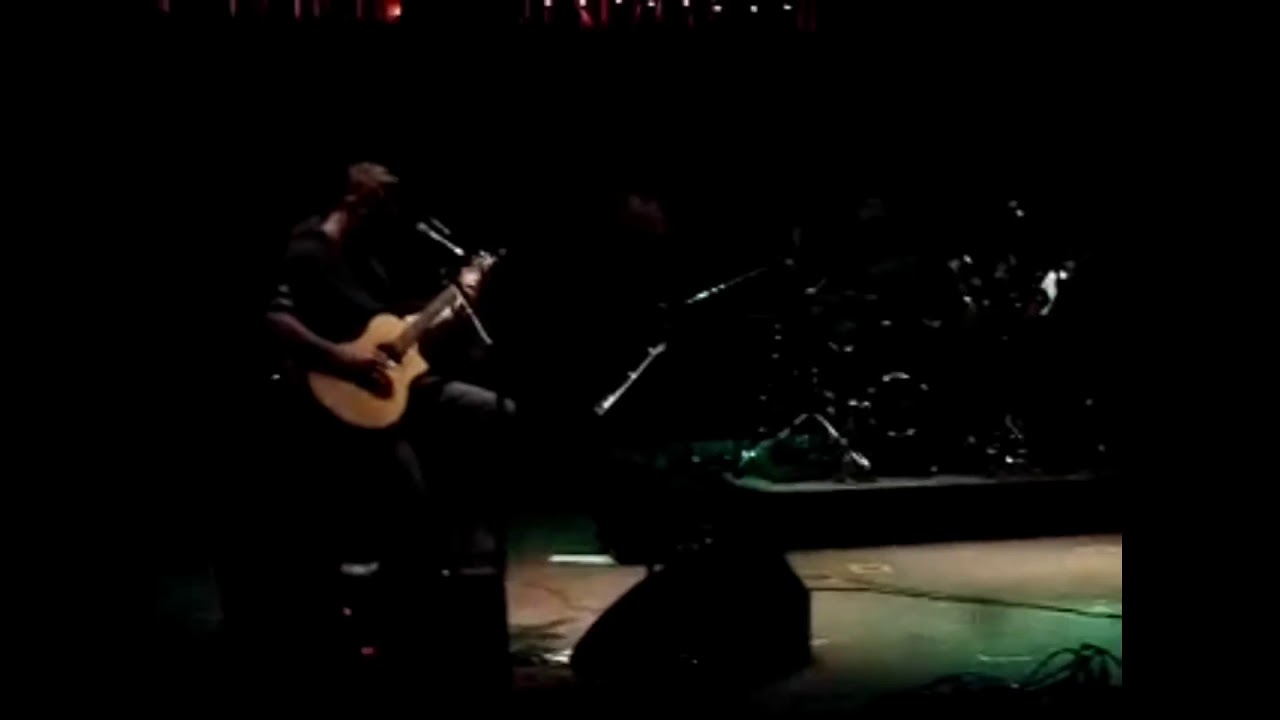
On October 27, 2007, Metallica paid Garbage the compliment of covering Only Happy When It Rains during their performance at Neil Young's Bridge School Benefit Show, alongside covers of Dire Straits' Brothers In Arms, Nazareth's Please Don't Judas Me, and I just Want To Celebrate by Rare Earth. A download of the show can be purchased here, with profits being donated to the Bridge School, a non-profit organization whose mission is to ensure that individuals with severe speech and physical impairments achieve full participation in their communities.