


Taken at face value, Smashing Pumpkins' 1993 single Today is one of the most euphoric and uplifting alt. rock songs of the decade.
"Today is the greatest day I've ever known," Billy Corgan sings at the song's outset, sounding elated at the thought of the boundless possibilities and opportunities that may lie just over the horizon. Ironically, however, the origins of the song stem from a time when the Chicago band's frontman could see now joy or hope in his future.
Although they emerged into the spotlight around the same as Nirvana, Soundgarden and Pearl Jam - their debut album Gish being released in May 1991, just a few months ahead of the release of Nevermind, Badmotorfinger and Ten - Smashing Pumpkins were always held at arm's length by their peers, and were mercilessly mocked by some of the more sycophantic British music journalists who prostrated themselves before Kurt Cobain and the Sub Pop records 'in-crowd'.
Billy Corgan's unashamed ambition, and love of classic metal and prog rock, marked him out as a 'careerist' in the eyes of the alt. rock scene's punk-adjacent gatekeepers, and where Kurt Cobain's angst and frustration was treated with gravitas and recorded with empathy by the music press, Corgan was caricatured as a whiny man-child for expressing similar sentiments. That Gish had sold well, but achieved only a fraction of the sales figures racked up by Nevermind stung their sensitive, competitive frontman, and it surely didn't help his self esteem that his on-off girlfriend, Hole's Courtney Love, left him for Kurt Cobain, and rarely missed an opportunity to belittle him and his art. Couple all this with the disorientating effects of media and fan attention, unresolved issues from a troubled, abusive childhood, and the mental and physical burn-out that comes with being a touring musician travelling the world, plus mounting inter-band tension and record company pressure for hit songs, and the 25-year-old Corgan was not in a good place as he began writing his band's second record.
"After the first album, I became completely suicidal," he recalled in a 2005 interview with Pitchfork. "It was an eight-month depression, give or take a month, and I was pretty suicidal for about two or three months. And I made this sort of weird fundamental choice, which was, Well, I'm kind of at the bottom and there's nothing else to live for, so I might as well make the music I really wanna make. It was the beginning of the change in my life, that's when I started writing stuff like Disarm and Today, which for me were like, literally ripping my guts out."
In an interview on Last Call With Carson Daly in 2012, Corgan revealed that he during this dark period he had regular suicidal ideations.
I just thought it was funny to write a song that said today is the greatest day of your life because it can't get any worse
Billy Corgan
"I almost killed myself about three, four, seven times," he admitted. "I literally started planning my death and what I would leave behind, and what I was gonna write. Three or four times in my life.
“I’d been plotting my own death for about two months,” he later told NME. “And if you’ve ever read anything about the warning signs of suicide one of them is you give away all your stuff, and I’d given away all my stuff, I gave away all my records, I started giving away my guitars.”
“I was fantasising about my own death, I started thinking what my funeral would be like and what music would be played, I was at that level of insanity.”
“I think it’s very common among children who have been abused,” he told The Telegraph in 2020, “to react to that abuse by erasing your personality – because that’s the simplest way across the bridge."
Amid this mental torment, Corgan continued writing, and penned lyrics laced with biting sarcasm for what became Today. "I just thought it was funny to write a song that said today is the greatest day of your life because it can't get any worse," he later told Rolling Stone.

Recalling how the song came together musically, Corgan told Guitar World, "I had all of the chords and the melody, but no opening hook."
"At that point, we just started the song with the verse chord progression [Eb-Bb-Ab], which in and of itself is catchy because of the inherent melody. I knew I had to come up with some sort of opening riff. Then, out of the blue, I heard the opening lick note-for-note in my head.
"That's the state of mind I've trained myself to be in," he explained. "I'm always looking for the guitar hook. When I added the opening riff, it completely changed the character of the song. Suddenly, I had a song that was starting out quiet and then got very loud. I could start to hear the shifts in the song as it progressed. I knew that I was going to bring that riff back in for emphasis, and I knew where I could do that."
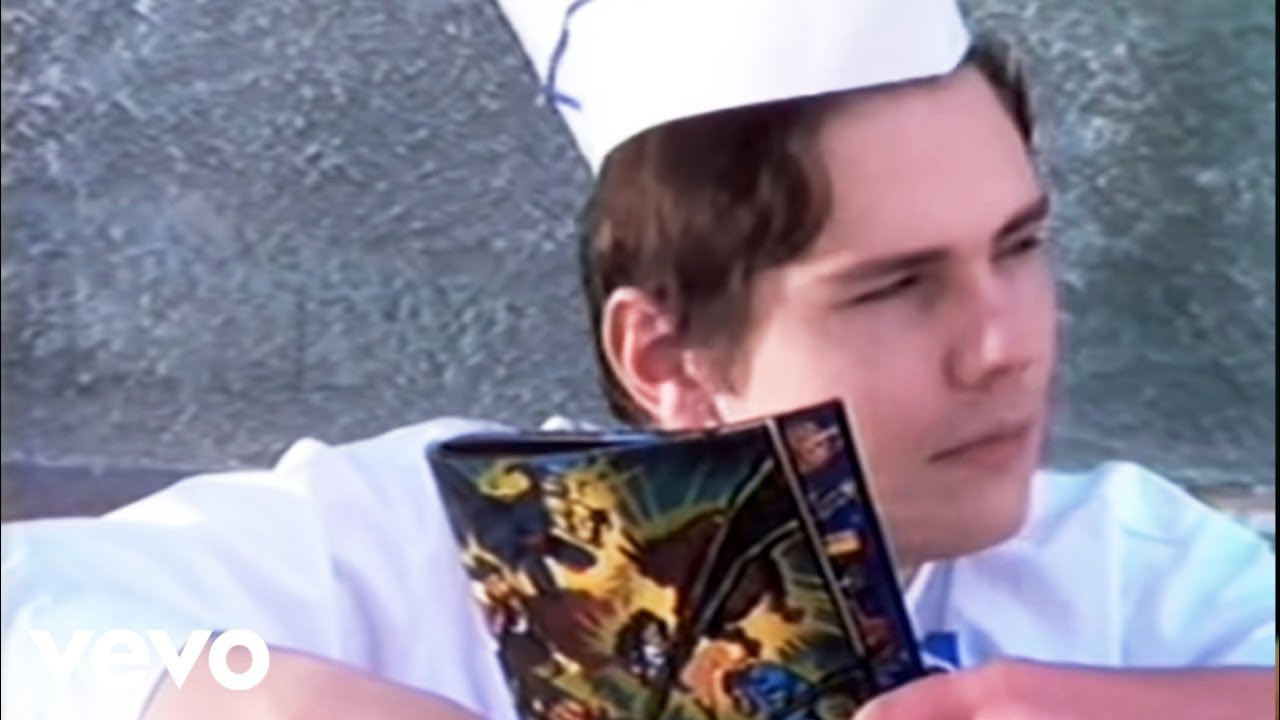
When Corgan played the song for his manager, he was told, "It's a hit." Producer Butch Vig also recalled expectations for the album being sky-high within the music industry before he'd even recorded a single note at Triclops studio in Marietta, Georgia. No pressure then. The band worked 12 hours per day, seven days a week on the record, but with guitarist James Iha and bassist D'Arcy Wretzky barely speaking following the break-up of their relationship, and drummer Jimmy Chamberlin immersing himself deeper in heroin use, the studio sessions were fraught, over-budget, and behind schedule.
Ever the control freak, Corgan took to playing every guitar part as well as D'Arcy's bass lines on more than one song. When the recording process was finally complete, Corgan admitted to feeling too emotionally drained to mix the songs, and drafted in Alan Moulder (My Bloody Valentine/Depeche Mode) to get the record over the finishing line. Even then, Corgan's travails were not complete, as disagreements arose with the band's label, Virgin.
"I wanted Cherub Rock as first single, they wanted Today," he recalled. "I mean, I created a monstrous emotional piece of art of an hour and the only thing people wanted to talk about was a song I wrote in 10 minutes."
Today was released as the second single from Siamese Dream, two months after the album's July 1993 release. Although it failed to break into the UK Top 40, peaking at number 44, the song became a radio hit in America, reaching number 4 on Billboard's Alternative Airplay chart. It also helped push its parent album to sell four million copies in the US alone, and went a long way to making Smashing Pumpkins global stars.
Today now stands as the Pumpkins' third most-streamed song on Spotify (behind 1979 and Bullet With Butterfly Wings). and is acknowledged as one of Corgan's greatest masterpieces. Not that the Pumpkins leader took much joy from its success at the time, obviously.
"Sometimes when we play," he once complained, "I feel that people are only there to hear Disarm or Today and they don't give a fuck about the rest of the show or who we are as people."

