





In 2014 Rick Wakeman told Prog about the making of his 1974 solo breakthrough album Journey To The Centre Of The Earth, revealing that it hadn’t been an easy ride thanks to his record label – and that advice from David Bowie had kept him fighting.
Rick Wakeman vividly remembers the day he was presented with his first gold (“or platinum, or whatever it was”) disc for Journey To The Centre Of The Earth, at the Midem music industry conference.
In a great moment for irony, one of the heads of A&M, who’d tried to prevent the 1974 album’s release, was doing the honours in front of a shedload of journalists.
“He stood up,” Wakeman recalls, “and spoke words to the effect of, ‘Every now and then, an album lands on your desk and you know you’ve got something very special – something you must nurture. And that’s exactly how I felt when Journey To The Centre Of The Earth came to me.’”
Wakeman, waiting at the side of the stage, felt his jaw dropping with disbelief at the alternative reality of the speech. “But what was really brilliant was, as I approached him, under the applause, he leaned into my ear and said, very clearly: ‘Don’t. You. Fucking. Dare!’” So the keyboard wizard, choosing the route of diplomacy, declared his gratitude to A&M – and afterwards the pair shook hands.
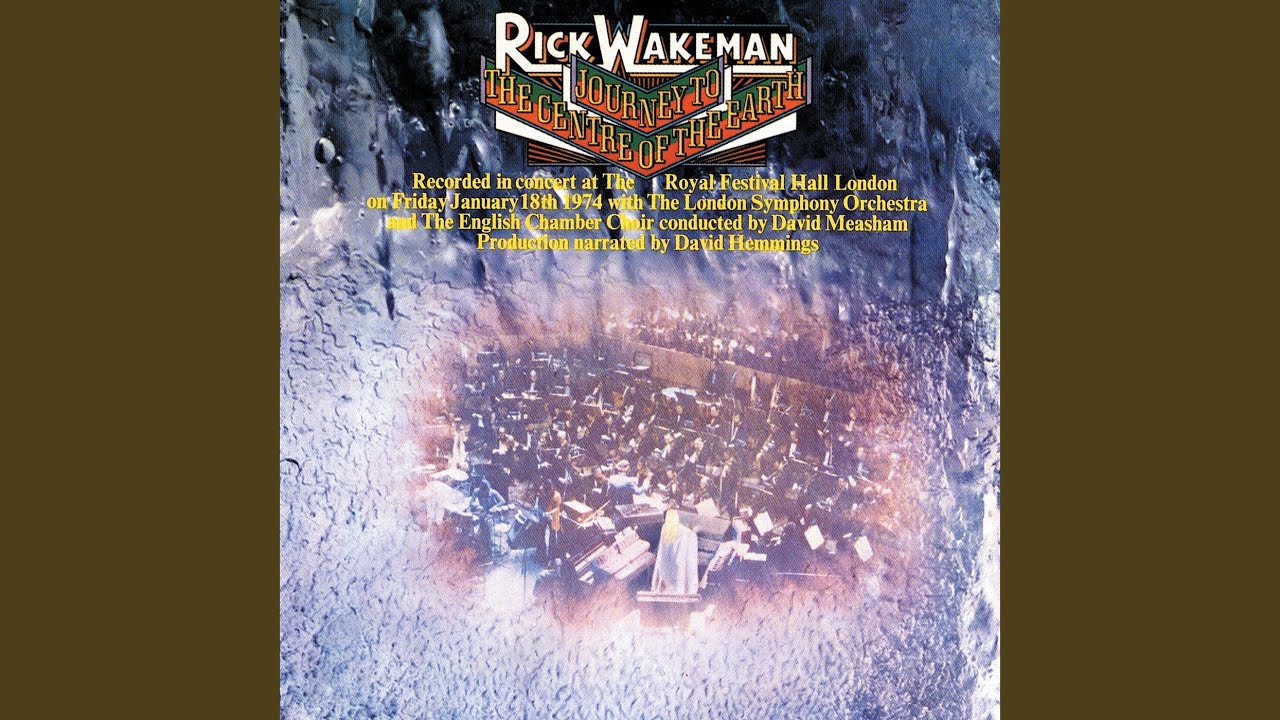
“Many years later, with A&M long since sold off, the guy was asked about the history of the label, and they came to the Rick Wakeman bit. The chap acknowledged I’d had their first UK Number One album and other massive sellers.
“Then he said: ‘The interesting thing was that I neither liked nor understood one single note of anything Rick ever recorded or played. I used to sit in my office and think, “But why should I fucking question it? He paid for most of this!”’
“And he added: ‘You don’t have to like everything you release. Thankfully, there were millions of people who did. So probably I was the one that was wrong.’” Wakeman notes: “I’ve seen him since and we laugh about it. He says: ‘I still don’t get it!’”
Long labelled the epitome of outlandish, pompous pretension, Journey To The Centre Of The Earth now sounds like someone’s thrown open the windows in the stuffy, cramped rooms of predictable, prescriptive, musical possibility. But it was a demanding project for Wakeman – who took heart from something a former collaborator had told him.
“One thing I’d learnt from David Bowie, while working on Space Oddity, was to fight for what you believe in. He fought tooth and nail for that single to be stereo, which might not sound like much now, but there weren’t many stereo singles then.

“He said to me: ‘If you battle for what you believe in, and get people around you who believe in you, then you really can make things happen.’ That was key. I was quite happy being a band member with Yes and Strawbs and others. I liked being part of a team – but I’d always had clear ideas of other things I wanted to do.
“I wouldn’t say it was that I’d lacked the courage to do it, but I’d thought it looked very difficult. David said: ‘No, it’s not so difficult.’ And the moment I started pulling in a group of like-minded people, we were on a roll.
“Journey was my major breakthrough. It was difficult, with A&M not wanting it, but I persevered.”

