




You can blame William Shakespeare for Dream Theater’s success. He may have died four centuries ago, but the Bard was the inspiration for the song that not only saved the budding prog-metal band’s career, but also gave them an unexpected hit during the grunge era: Pull Me Under.
“We got airplay with that song, and that was remarkable,” says Dream Theater guitarist John Petrucci. “At the time, grunge was starting to take over. So unless you were Nirvana, Pearl Jam or the like, radio stations weren’t interested. But Pull Me Under was the exception.”
As the 1990s dawned, Dream Theater were on the skids. The Boston band’s highly rated debut album, 1989’s When Dream And Day Unite, had seen them held up by the press as the missing link between Rush and Metallica.
But the acclaim wasn’t matched by record sales, and the band were dropped by their label, Mechanic/MCA. To make life even more difficult, they had fired singer Charlie Dominici due to what they saw as limitations with his voice. With no label and no singer, and out-of-step with the changing musical times, Dream Theater considered splitting up.

They didn’t. But they did enter a two-year wilderness period in which they knuckled down to ensure they had some kind of future. Still without a vocalist, they began to stockpile songs with a view to recording them when they did eventually find a suitable frontman. It was during this time that original keyboardist Kevin Moore wrote Pull Me Under.
“To us it was just another decent track we might be able to use in the future,” Petrucci remembers.
For inspiration, Moore turned to Shakespeare – specifically Hamlet. The song was written from the perspective of the titular Danish prince. One line from the play even made it into the lyrics: ‘Oh, that this too, too much solid flesh would melt’.
The band recorded a demo of the song with Moore on vocals. “That’s the way things worked out for us – whoever wrote the lyrics would handle the singing on the demo,” says Petrucci. “We tended to demo everything.”

The tape caught the ear of Derek Shulman at Atco Records. Shulman had a stellar track record as an A&R man – he had been responsible for the signings of 80s hard-rock success stories Bon Jovi and Cinderella, among others.
To us it was just another decent track we might be able to use in the future.
John Petrucci
Shulman had also been the vocalist with baroque British prog band Gentle Giant, and Dream Theater’s complex, musicianly approach chimed with him straight away.
“I heard the basic demo of Pull Me Under,” Shulman recalls. “It was one of four songs which persuaded me they were worth having on the label.”
By the time the band began to record their second album, Images And Words, they had added Canadian singer James LaBrie, who had until recently been in glam-metal band Winter Rose. Pull Me Under might have been written before he joined, but LaBrie stamped his own personality on it right away.
“I had this idea for giving my voice a raspy feel,” LaBrie says today. So I went into the vocal booth and got Doug [Oberkircher, the album’s engineer] to try some settings that would make me sound a little gruff.”
Apart from that, the finished track was kept exactly as it was when it was first written – with one exception.
“The original version has a neo-classical guitar part in the middle,” explains Petrucci. “But when we began to record, we realised that we had to lose this part, as it didn’t work. We took it out of Pull Me Under, and it became the instrumental Erotomania on our next album, Awake.”
The guitarist knew that Dream Theater had come up with something special with Pull Me Under. Despite being eight minutes long, it was both strongly melodic and instantly memorable.
“I kept playing it to friends,” he says. “‘You’ve gotta hear what we’ve done!’ But it never occurred to me that it would become so popular.”
Derek Shulman agreed. He spotted the song’s potential to get the band airplay, and put out an edited, five-minute version to DJs across the US in August 1992. To the band’s surprise, if not Shulman’s, word of the single began to spread.

“At first it was one DJ on a radio station who picked up on it and decided off his own bat to play it over and over again,” Petrucci says, laughing. “And then it spread to other stations.”
It proved there was hope for a style of music that was totally out of favour in the early 90s.
James LaBrie
The wildfire success of the single caught the band on the hop. They made a hurried decision to shoot a video.
“We were on the road at the time,” says Petrucci, “and suddenly the label were really pushing us to get a video done. The only way we could do it was to have footage shot of us on stage, and have that edited down. It was all such a rushed job. But this did get on to MTV, which was crucial exposure.”
In the US Pull Me Under reached No.10 in Billboard’s Hot Mainstream Rock Chart – an impressive achievement, given the musical climate and the complexity of Dream Theater’s music. After a shaky couple of years, their career was back on track.
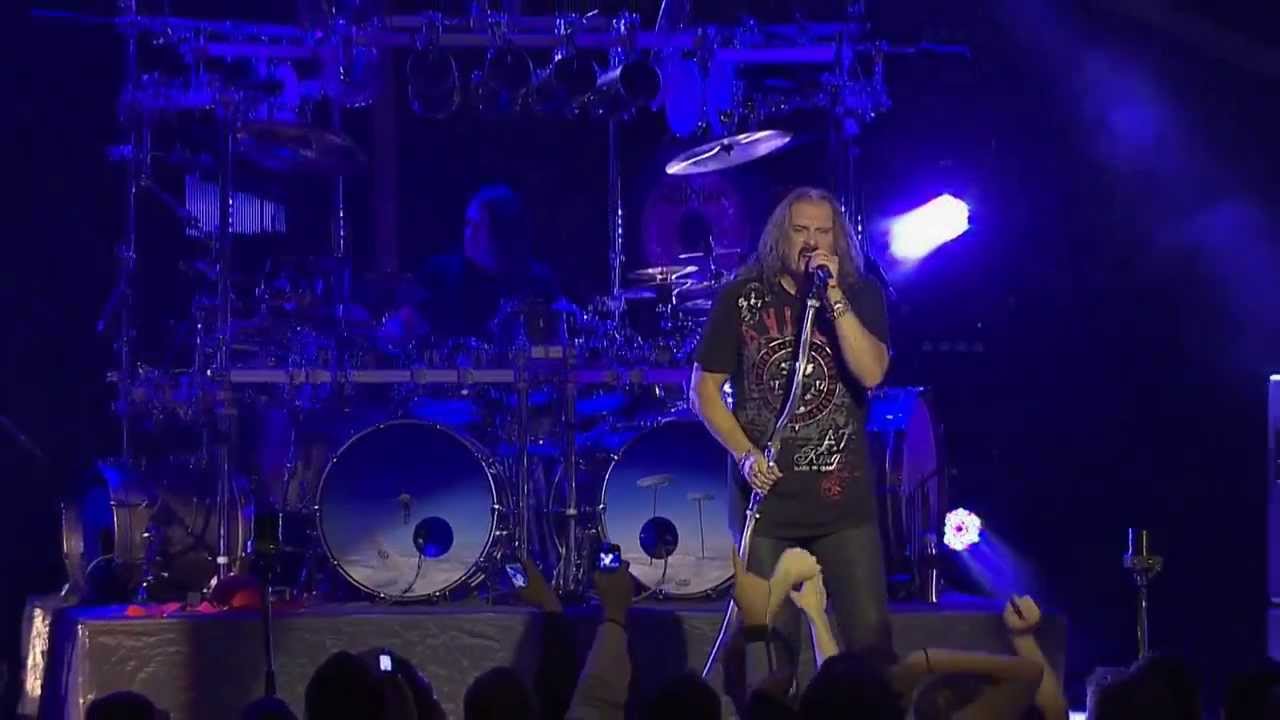
“We were suddenly selling out venues,” recalls LaBrie. “Before the song got on the radio, we were doing okay. But now, people wanted to see us. We were still on the club circuit, but at least the band could move forward.”
But the success of the single had wider implications. Dream Theater opened the door for prog metal, especially in the US. Suddenly an almost terminally unfashionable genre was in the charts and on the airwaves once again.
“I wouldn’t say loads of bands started to copy us,” LaBrie offers, “but what it did was prove to them there was hope for a style of music that was totally out of favour in the early 90s. For Dream Theater it was the launching point for everything we’ve since achieved.”
Originally published in Classic Rock issue 221 (February 2016)

