


Bruce Dickinson wasn’t contemplating becoming a full-time solo artist when he began work on his second solo album Balls To Picasso in 1992, though by the time of its troubled completion two years later, Iron Maiden’s swashbuckling lead singer knew that he had no alternative but to leave the band.
“I’d taken [my time with] Maiden as far as I could without having some mighty confrontation,” Bruce told Hammer at the time. “You start invoking parallels about leading horses to water, and you cannot expect the whole band to abandon everything and do something completely different.”
By 1994, Bruce had recorded the album three times, each attempt distancing him further from Maiden’s well-defined, foot-on-the-monitor territory. A first effort, retaining Chris Tsangarides (who’d worked with Bruce on his 1990 solo debut, Tattooed Millionaire) and using London hard rockers Skin as his backing band was quickly scrapped for being nowhere near radical enough.

I’d taken Maiden as far as I could without having some mighty confrontation.
Bruce Dickinson
“I wanted to use percussion and different rhythms in a way that’s never been done before,” he explained. “What’s been lacking in this form of music for so many years is groove. Things just became regimented into what’s now the ‘Maiden gallop’ or the ‘AC/DC plod’.”
Next up, Bruce jetted to Los Angeles to work with Keith Olsen, but the Whitesnake/Ozzy Osbourne producer still couldn’t capture the left-of-field ideas buzzing around in Bruce’s head. “I tried to stay away from screaming metal… and it was sort of me, but I missed the guitars,” he smiled.

With the Ozzy collaborator removed from the picture, perhaps out of desperation, Keith’s engineer, Shay Baby, took over the console. And then a bolt of lightning struck. Having misread his diary and on a day that he shouldn’t even have been at the studio, Bruce met producer and guitarist Roy Z, who was mixing some songs from his own band, Tribe Of Gypsies – an East LA troupe whose music mixed hard rock and funk with Latin flavours.
“When Roy played me the Tribe, I was blown away,” explained Bruce. “They had great style, great songs. They were a real street band with awesome presence.”
Roy was about to become a pivotal figure in the singer’s life. After forging an instant connection, Bruce engaged Tribe Of Gypsies’ bass player, Eddie Casillas, drummer David Ingraham and percussionist Doug van Booven to perform on what had to be one final stab at making the record, flying them in to work at London’s Metropolis Studios.
“After scrapping the first two albums I went to the accountant to find out how many pennies were left in the piggy bank,” Bruce revealed. “The answer was not many at all. I’ve got two kids and a third on the way, but you’ve got to do what you believe in, so bollocks.”

It all amounted to one last throw of the dice, especially as Bruce was dead set on making music that pushed the envelope. Around him, management and record company were trying to exert pressure in favour of a more traditionally metal-orientated sound.
I tried to stay away from screaming metal, but I missed the guitars.
Bruce Dickinson
“Look,” Roy Z told Hammer, “if you’re going to go to Vegas and put everything you have on a number, then pick your own number – don’t use anyone else’s.”
Despite the above statement, Roy now admit that as far as possible he did try to push the music back towards more recognisable territory – “within the foundations of the situation I snuck in some metal here and there; when I could, I did. But the whole thing was a puzzle for me,” he admits, referring to Bruce’s strongly identified status at that time. “You don’t change the colour of Coca Cola.”
But still, the external coercion continued. One morning Bruce awoke to find that somebody, presumably from Mercury Records, who would later drop the singer when the company downsized, had pushed a copy of the 1976 Aerosmith album Rocks under his hotel room door, along with a note saying: “Something like this would be good.”
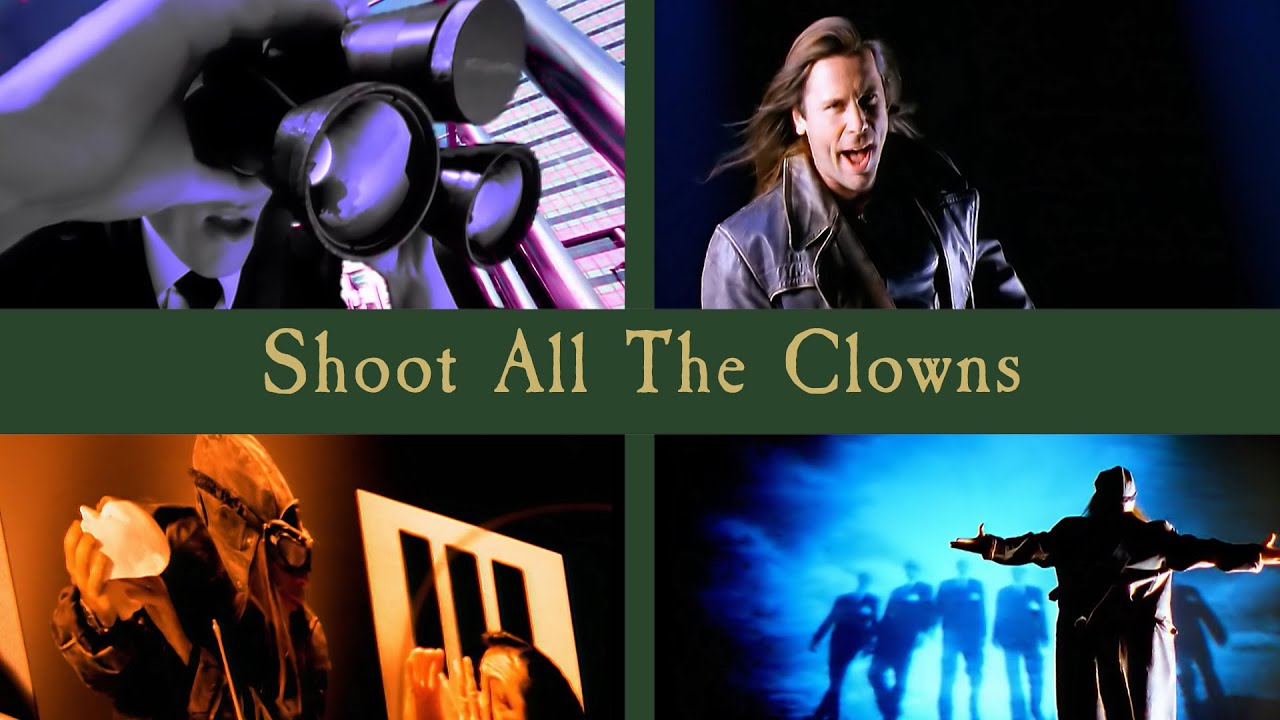
The sheer impertinence made Bruce irate, but he and Roy Z harnessed the experience as a positive force to inspire one of the album’s best songs – later a Top 40 single in the UK.
“We took the piss out of the situation with a song called Shoot All The Clowns, because those guys are clowns,” Roy seethes. “Don’t fucking tell us how to write.”
What emerged was a fusion of drumming so precise it could have been mechanical and blisteringly heavy guitars. It’s best summed up on its hypnotic, eerily inhuman opening track, Cyclops, which we can now consider a sinister warning of today’s CCTV-monitored society.
“Oh, it’s all real drummers, except for a very cheap drum machine which goes ‘ping!’ and chips away at the back of your brain,” Bruce insisted back then. “There’s not a sample or a keyboard on the record; it’s all real.”
Indeed, the robotic ‘voice’ featured on Cyclops belonged to Roy Z. “That’s me talking through the pick-ups of my guitar,” the guitarist revealed.

“Three of the album’s songs were written on a freeway with Roy playing a tape of riffs on the car stereo, and me screaming along,” Bruce guffawed. “Roy was holding the tape recorder there… it was a wonder we weren’t fucking killed.”
I think Steve found my going off and changing deeply worrying.
Bruce Dickinson
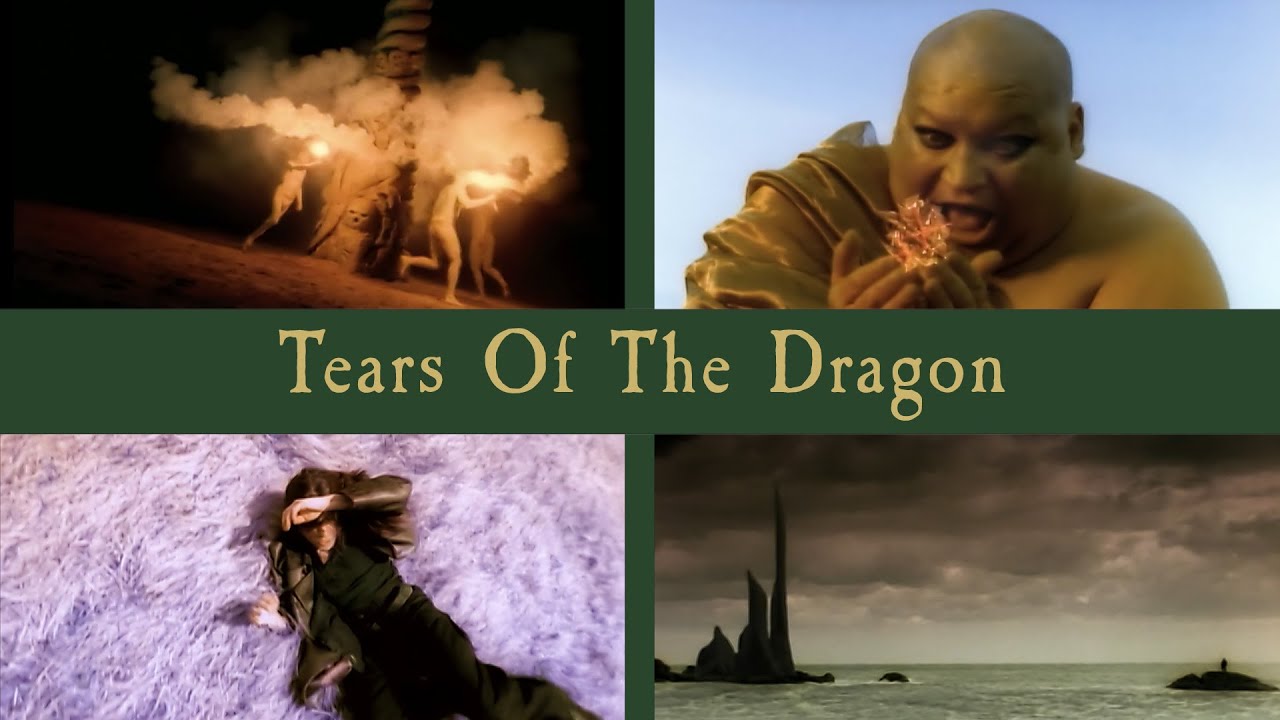
The centrepiece of Balls To Picasso was its grandiose, six-minute epic, Tears Of The Dragon, the only survivor of each of the album’s incarnations. Originally titled Pendragon’s Day, Bruce claims it was retitled and rewritten about six times for the Keith Olsen sessions, and even recorded with a full orchestra before Roy persuaded him to allow one last stab at getting it right.
“The band had gone home but Roy suggested we get Dicki [Fliszar, Skin drummer] in for a day and Roy would do all the guitars and play bass,” Bruce recalled. “And it turned out exactly how I envisaged it.”
When Hammer spoke to Bruce back in ’94, the singer wasn’t aware of if Steve Harris had heard the finished record, laughing when this writer informed him that we had interviewed Maiden’s bassist recently, and that he was unwilling to be quoted on the subject.
In fact, Steve seemed to agree with another writer who’d predicted that Bruce would make “a bad Peter Gabriel album.”
“Steve did hear the Olsen stuff,” Bruce clarified, “and I think he found my going off and changing deeply worrying ’cos it disturbed the order of his universe. Steve does like things to obey the natural laws.”
Balls To Picasso peaked at Number 21 in the UK chart. With hindsight, the delay in its making could now possibly be seen as fortuitous. After the apex of grunge, rock had its shackles off and artists could be seen to do anything they wanted; along with grunge’s own survivors, the biggest rock records of ’94 came from artists as varied as Nine Inch Nails to The Offspring.

The downside of the situation was that Tribe Of Gypsies had their own record deal and were unable to work live with Bruce in the long term. So, with his next album, 1996’s Skunkworks, Bruce poured kerosene on any last remnants of how he was viewed, hiring a young, fired-up bunch of musicians, bringing in Nirvana’s producer Jack Endino, moving away from EMI to a smaller, more understanding label and even cutting his hair.
Roy Z would return for two more albums that saw Bruce returning the sanctuary of metal, 1997’s Accident Of Birth and the following year’s The Chemical Wedding. But Bruce returned to Maiden in 1999, where he has remained since.
There is something Bruce regrets about the Balls To Picasso era, however. “All that I would change about the album is its title,” Bruce told Hammer in 2005. “‘Balls To Picasso’ was some graffiti I saw on a lavatory wall…”
Originally published in Metal Hammer issue 323 (July 2019)

