




Rivers Cuomo was a student at Santa Monica College when the chorus melody for Buddy Holly came to him while walking across campus.
Having moved from Connecticut to Los Angeles with his high school band Avant Garde (who changed their name to Zoom), Cuomo had dreams of becoming a metal star. He had the hair, the chops and the drive, but they failed to attract any interest from the music industry.
After Zoom broke up, he played in a string of bands – Fuzz, The Truth, Sixty Wrong Sausages – and set himself the challenge of writing 50 songs before committing himself fully to another band. Working part-time at Tower Records on Sunset Boulevard had a profound influence on his musical tastes, and his head was turned by alternative rock.

There, he started listening to bands like Nirvana, Sonic Youth and the Pixies, and became a huge fan of The Beatles and the Beach Boys. By early 1992, he'd more or less reached his goal of writing 50 songs and formed Weezer; it was inevitable that their sound was potent blend of the bands he'd absorbed while replenishing stock on the shop’s shelves.
Former bassist Matt Sharp is credited with helping steer Cuomo away from using any songs he'd written in Fuzz for his new band, encouraging him instead to focus on the pop hooks that he had a knack for creating.
"I think that’s where Matt’s head was at, at the time,” drummer Patrick Wilson told Rolling Stone. “ ’Yeah, let’s not be grunge. Let’s be more like the Beach Boys. But loud."

While juggling his studies and employment, Cuomo found time to be part of his college choir. There, a friend named Steve Graff loaned him a Korg keyboard which inspired him to write a new wave song for what would become Weezer's debut album.
In the liner notes for his solo release Alone: The Home Recordings of Rivers Cuomo, he was inspired to write Buddy Holly in defence of his choir friend Kyung He, who was made the butt of a joke by his bandmates.
"They were the 'homies dissin' my girl'," he wrote. "I rarely wrote lyrics about tension between me and the guys in the band because I thought it would be awkward for us all to perform those songs together. In this case, though, it didn’t seem like a big deal."
And as for the opening line – 'What's with these homies dissin' my girl? Why do they gotta front?' – Cuomo puts this down to listening to lots of N.W.A., Ice Cube and Public Enemy at the time.
The song's chorus wasn't originally anchored by '50s rock'n'roll star Buddy Holly or American actor Mary Tyler Moore. He'd initially toyed with using the dancing duo Fred Astaire and Ginger Rogers, but struggled with the reference points. It was while walking to class that he scrapped the Fred Astaire reference and replaced it with the late rock'n'roll icon who wore thick black frames, just like Cuomo.
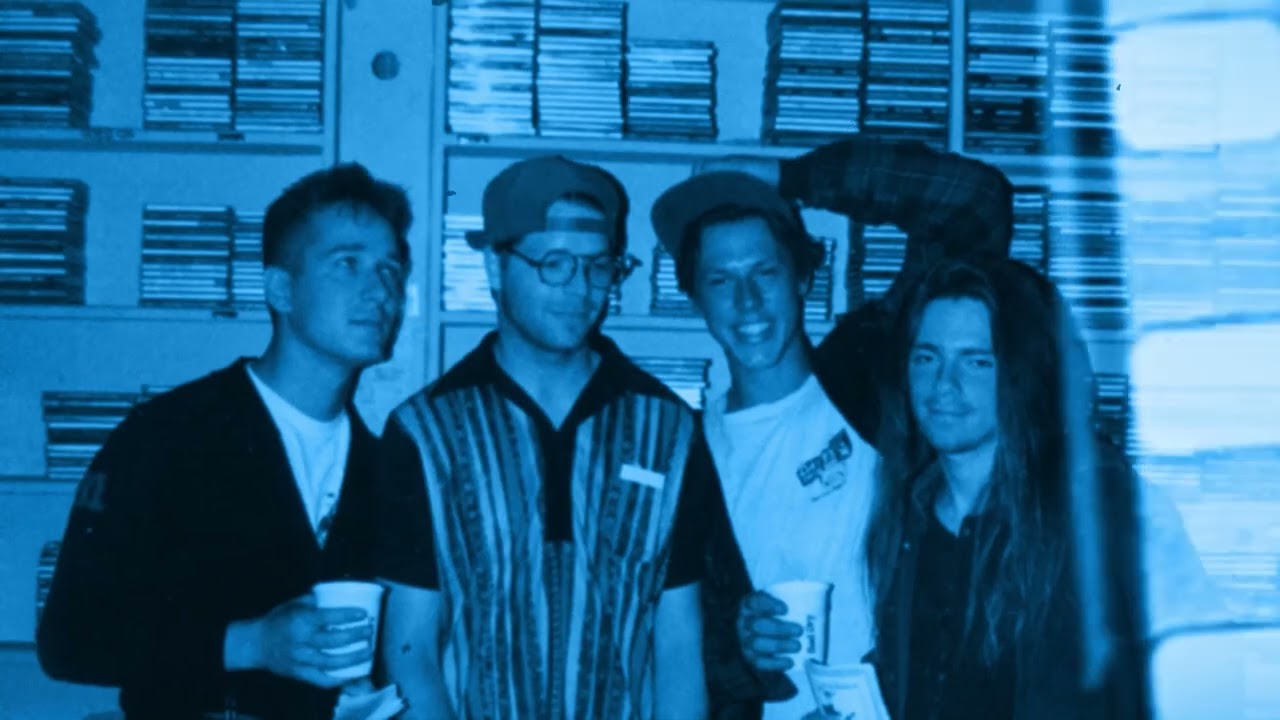
By the following year, the band had signed a deal with Geffen. They travelled to New York City to record their debut with The Cars frontman Ric Ocasek. While in the studio, it became apparent that the Cuomo intended to shelve the "dirgey" song and keep it for Weezer's second album.
Ocasek felt it had a place on their debut. He had fond memories of falling in love with Buddy Holly and The Crickets' 1957 single That'll Be The Day when he was a child, and he was convinced this quirky song was worth committing to tape.
In the book Rivers' Edge: The Weezer Story, Ocasek recalls: "I was like, 'Rivers, we can talk about it. Do it anyway, and if you don't like it when it's done, we won't use it. But I think you should try. You did write it and it is a great song.'"

Sharp remembers the subtle charm offensive led by the producer a little differently.
"Ric said we'd be stupid to leave it off the album. We'd come into the [Electric Lady] studio in the morning and find little pieces of paper with doodles on them: WE WANT BUDDY HOLLY."
He succeeded in getting Cuomo to reconsider his feelings on the song, which was released the following year as a single on September 7 – Buddy Holly's birthday – and changed the path of their career.
The seeds for the iconic video were sown two years prior when Cuomo caught the promo for Nirvana's single In Bloom, directed by Kevin Kerslake. Shot on grainy, black-and-white stock, the fun video parodies 1960s entertainment shows, with the show’s host introducing the band as "thoroughly all right and decent fellas" before they perform the song.

"I was overcome by jealousy and admiration for Kurt Cobain as we watched him crooning in his subtly goofy way with Buddy Holly glasses," wrote Cuomo in a 2020 Riverpedia entry. "My feeling was, 'That’s exactly what I would do if I had thought of it, but for some reason I didn’t!' Ah... Kurt, you’re so awesome, I hate you!”
When it was time to make their own video for Buddy Holly, the band enlisted filmmaker Spike Jonze, who had previously directed the dog-friendly clip for Undone – The Sweater Song earlier that year.
Ric said we'd be stupid to leave it off the album.
Matt Sharp
The concept, on paper, was relatively simple. Weezer would play a wholesome in-house band at Arnold's, the 1950s diner in the sitcom Happy Days.
Henry Winkler, the actor who played the show's star, Arthur Fonzarelli aka 'The Fonz', gave his permission for his likeness to be used in the video. Thanks to the miracle of editing, the whole Happy Days gang can be spotted watching Weezer play on the purpose-built Arnold’s set. The band even convinced Al Molinaro to make a cameo as grumpy diner owner Big Al Delvecchio.
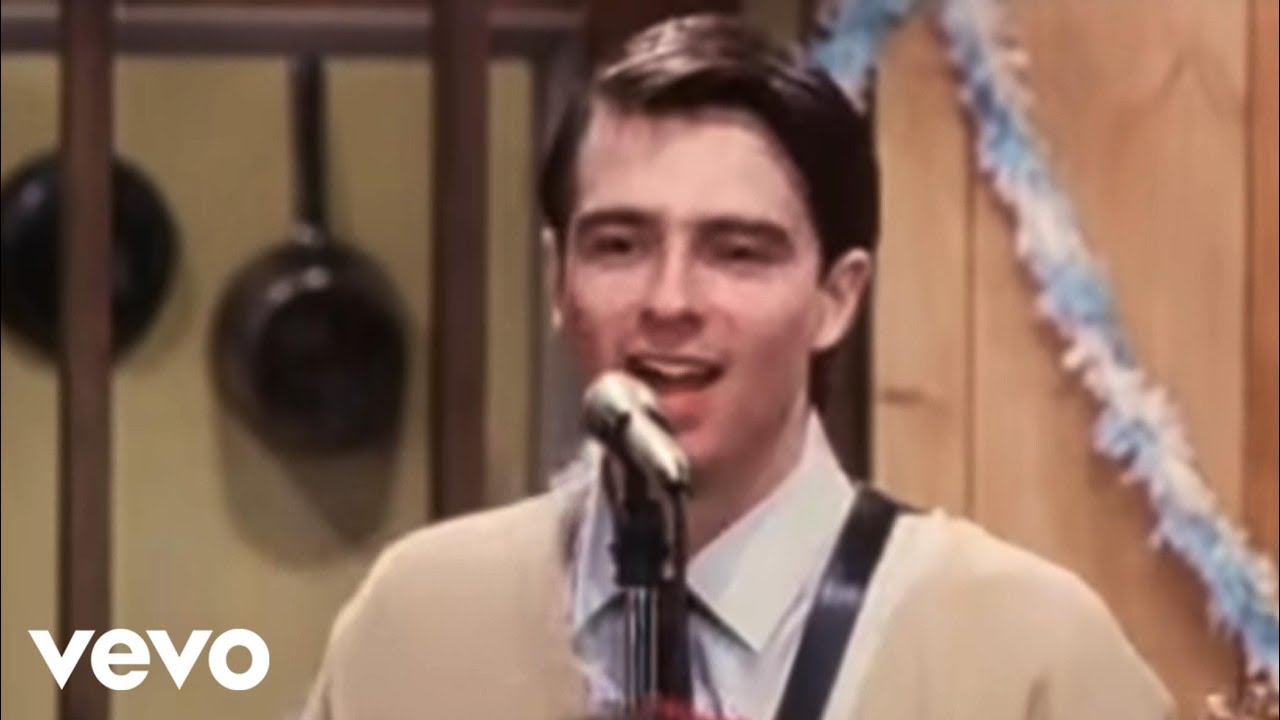
"For the most part, it looked really good," Wilson told Rational Alternative Digital. "I think the thing that makes it really come off is the fact that Al is in it."
Remarkably, the video was included as a bonus feature on the Windows 95 installation CD-ROM. The band were initially unaware that the label allowed it to be included in a 'Fun Stuff' folder on an estimated 40 million copies.
I seriously thought we were the next Nirvana.
Rivers Cuomo
“I was furious because at the time I was like, ‘How are they allowed to do this without our permission?’" Wilson told Magnet. “Turns out it was one of the greatest things that could have happened to us. Can you imagine that happening today? It’s like, there’s one video on YouTube, and it’s your video.”
Yet despite the massive surge in popularity, the band's newfound success and perception following the Buddy Holly video led Cuomo to question Weezer's place in the world and felt resentment at having to go on tour.

“I seriously thought we were the next Nirvana,” Cuomo told Rolling Stone. “And I thought the world was going to perceive us that way, like a super important, super powerful, heartbreaking heavy rock band, and as serious artists. That’s how I saw us.”
Despite dropping out of the Guitar Institute of Technology before Weezer's debut was released, the frontman decided he wanted to go back to school to resume his music studies. He enrolled at Harvard to study classical composition, but changed his major to English Literature. Even though he enjoyed a life of relative anonymity there, he quickly realised he wanted to return to the band.
"I remember having a conversation with some other kids and one of them said, ‘So, what are you doing for the summer?’," he told Conan O'Brien. "I was like, ‘Uh, we’re going on tour with No Doubt. I’m in Weezer.' Minds were blown at that moment.”

