




In 1969, the Allman Brothers were in Jacksonville, Florida, staying at the home of a friend. In the middle of the night, Gregg Allman woke from a dream with some music and lyrics in his head. Because bandmate Berry Oakley was in the next room with his wife and new baby, Gregg knew he had to be quiet if he was going to get his idea down.
He couldn’t find a paper or pen, so he ended up writing lyrics and notes using the only things available – an ironing board and the burnt end of a matchstick. It was the seed of the song that would become Whipping Post. For a number about a man who’s helplessly awaiting more torture from the woman who betrayed him, words scrawled in ash seemed an appropriately poetic beginning.
As with many classic songs, Whipping Post had a different feel initially. Guitarist Dickey Betts recalled, “It was a ballad when Gregg brought it to us. It was a real melancholy, slow blues.” Bassist Oakley’s intro bass lick – worked on all night, but only five seconds long – soon propelled the song in a new direction. Unusual for rock, Whipping Post had an unorthodox time signature. Or two, really – 11/8 on the intro, 12/8 on the verses.
“I just stumbled onto ‘em,” Allman later said. “I didn’t know exactly what I was doing. I just did it. My brother said, ‘That’s good, man. I didn’t know you understood.’ I said something intelligent like, ‘What’s 11/8?’ and Duane just said, ‘Okay, dumb ass, I’ll try to draw it up on paper for you.’”

Recorded at Atlantic Studios in New York in August 1969, the song took an entire day to get down on tape. It clocked in at five minutes and seventeen seconds. But once the band took it on stage, it quadrupled in length, a mélange of blues, rock, funk and fusion jazz (the 22-minute version on 1971’s At Fillmore East is definitive).
"We just felt like we could play all night and sometimes we did,” says Betts. "We could really hit the note. There’s not a single fix on Fillmore. Everything you hear there is how we played it."
If one song epitomises their concept of “hittin’ the note,” that interplay and musical telepathy they were famous for, it’s Whipping Post. The Brothers played it at every show they ever did, and no two versions were exactly alike.
They encored with it at their final show at New York's Beacon Theatre in 2014, Gregg Allman ended his last UK show with the same song the following year, and in 2020, when the surviving members of the final Allman Brothers Band lineup reunited as The Brothers at Madison Square Garden in New York, Whipping Post was the final number in a mammoth set. In 2025, they repeated the trick over three nights.
Whipping Post also developed an unlikely relationship with none other than Frank Zappa. During a 1974 show in Finland, an audience member famously disrupted Zappa by repeatedly screaming a request for the song. Zappa didn't know it, but improvised a response by playing his own track Montona while altering the lyrics to mock the request, which he subtitled Whipping Floss. This interaction became known as 'The Helsinki Incident'.
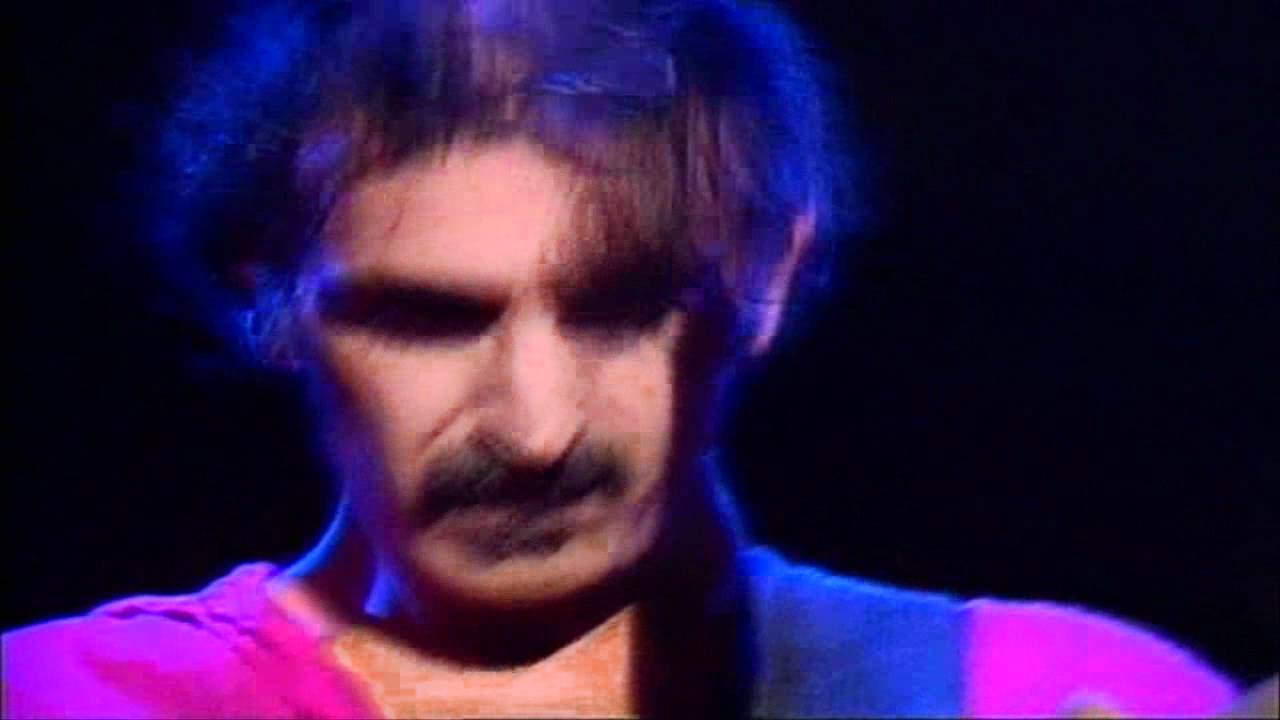
"We didn't know it, and I felt kind of bad that we couldn't just play it and blow the guy's socks off," Zappa told Guitar Player in 1983. "So when [pianist/vocalist/saxophonist] Bobby Martin joined the band, and I found out that he knew how to sing that song, I said, 'We are definitely going to be prepared for the next time somebody wants Whipping Post – in fact we're going to play it before somebody even asks for it.'"
Zappa eventually released his own satirical-yet-virtuosic cover of it on his 1984 album Them or Us, while Gregg Allman would rerecord the song for his 1997 album Searching for Simplicity, ignoring the original's mix of time signatures and rendering it in good old-fashioned 4/4.
While the Allman Brothers Band were rightfully proud of the song and its improvisational legacy, they remained resistant to easy labels. “I’ve heard that damn expression ‘jam band’ so many times,” Gregg told Classic Rock in an interview. “It’s b.s. The Brothers are not a jam band. We’re a band that jams."

