




It all started with a Flaming Volcano. One night in 1976, five artsy friends – Fred Schneider, Kate Pierson, Keith Strickland and siblings Cindy and Ricky Wilson – went to a Chinese restaurant.
“We couldn’t afford a meal,” Schneider tells Classic Rock, “so we shared this huge tropical rum cocktail called a Flaming Volcano, with five straws. It was a pretty strong drink, with like ten shots of alcohol in it.”
“And the Flaming Volcano exploded into a creative conjunction!” Pierson told me in 2024. Giddy and loose, they adjourned to the house of a friend who had some musical instruments lying around in his cellar.
“We started jamming,” Schneider recalls. “And I said: ‘Hey, let’s do a song called Killer Bees. [Schneider had read about the South American winged invaders in the Weekly World News tabloid paper.] So I made up lyrics from all these strange things that were in the ‘Killer Bees’ article.”
“That became the template for how we would write all our songs,” Pierson says. “Just jamming, laughing and having fun.” It was so much fun that they decided to continue, although Schneider says they had “no thought of it ever becoming a career”. The B-52s (slang for ladies’ bouffant hairdos that looked like a bomber’s nose cone) played their first gig, a house party, on Valentine’s Day 1977.
“All our friends came, and danced so hard that someone had to hold the PA speakers from falling over,” Pierson remembers. Schneider: “We thought: ‘Hey, if our friends are going crazy like this, maybe we’ve got something.”

All of this was unfolding in the most unlikely time and place. Athens, Georgia in the mid-70s was a smallish city with rural farms, and a bunch of bars dotted around the main campus of the University of Georgia. Even with a progressive arts program, Greek life ruled the campus. Playboy regularly rated it one of America’s top party schools.
“But we really had to make our own fun,” Schneider says, “because we definitely weren’t the fraternity types, and we definitely didn’t go for the southern rock and boogie you heard in the bars. But when somebody like Captain Beefheart came to the university, then we’d go see them.”
“We were outsiders, and our inspirations were really diverse,” says Pierson. “The university had a great library of international music that we raided; we’d check out Aka Pygmy music, Nino Rota soundtracks, Pérez Prado, Yma Sumac. We had an eclectic palette, and one goal – to be a dance band.”
To that end, they started jamming five days a week. Whenever they weren’t working, that is. Kate had a newspaper paste-up job. Ricky and Keith loaded baggage at the Greyhound station. Fred washed dishes at a vegetarian restaurant, Cindy made milkshakes at the Whirly-Q luncheonette. Still, they devoted every spare moment to writing songs. And they did it all in a disused funeral home.
“It was a bloodletting room,” Schneider says with a laugh. “Concrete, with one tiny window, and canals at the side, where the bloodletting once happened. It had no heat. It didn’t even have electricity. We had to run a line to the restaurant next door. I think rent was like fifteen or twenty bucks a month. I remember Kate playing the keyboards with mittens on. But we were troopers. People say: ‘Oh, you had it so easy.’ Not really.”
“It was scary and cold in there, but it’s all we could afford,” Pierson says. “That’s where we wrote Planet Claire, Dance This Mess Around, Rock Lobster, all our early songs.”

Fifty years on, those songs continue to enchant. They’re part of our pop culture, played at weddings, frat parties, on cruise ships, by tribute acts, and by The B-52s themselves, most recently during their Las Vegas residency in April. Sure, the songs are kooky and danceable. But they’re also musically singular.
Consider that the highest calling for any artist is to develop their own unique language. The B-52s took pop and R&B, stripped it to the studs, and refashioned it with decades of high and low influences – spy, surf, soundtracks, spoken-word, a real post-modernist grab bag.
“Our songs were always like these mad collages of all different ideas,” Pierson says.
But has the kookiness prevented the band from being taken more seriously?
“Maybe. But we don’t care,” says Schneider. “We know who we are. And we always struck a chord with all the people who are different – gay people, introverts, outsiders. They’ve all told us how our music opened up their whole appreciation for music and art and other ways of looking at things.”
“Even when we were singing about lobsters and volcanos, we always sang like our lives depended on it,” Pierson adds.

The music was complemented by a retro-kitsch fashion flair assembled from charity shops. “We had no money,” Pierson says, “and there was a thrift store in Athens that was a mine for fabulous sixties clothing. Our aim was not to look glamorous, so we put on all kinds of ugly wigs and bizarre outfits. It was just fun, and inspired by Fellini movies. We thought: ‘Let’s do this ‘outsized’ kind of look."
After establishing themselves in Athens (“One minute we were jeered at by fraternities, the next we heard Planet Claire blasting out of their frat houses,” Pierson says), they set their sights on New York City, the US punk/new wave epicentre.
“New York in the late seventies was a dump, but a vibrant dump,” remembers Schneider. “The music scene and the art scene were colliding, and it was dangerous and exciting.”
“Our first gig at Max’s, there were maybe fourteen people there, some just leaning against the wall, with their arms crossed, in leather jackets,” Pierson says. “Then all of a sudden our friends from Athens swooped in and started dancing like crazy.”

Within the year they were packing Max’s, Hurrah and CBGB. They were sharing daiquiris with Debbie Harry and Chris Stein of Blondie at their apartment (Pierson: “They had all these gold records lying around, leaning against the wall”), palling with Talking Heads, and meeting David Bowie (“We were all agog!” Schneider says, “but David was so nice – and he was a fan!”).
Major labels came calling. After a bidding war, the band signed with Warner Brothers. Soon they jetted off to Compass Point Studios in the Bahamas. “One week I’m washing pots and pans at the restaurant, and the next I’m flying down to the Bahamas, where we all had our little cabins, good food and golf carts to drive around,” Schneider remembers.
Pierson says they were convinced that producer Chris Blackwell (Island Records’ founder, who established the studio) would give them a “bigger and fuller sound”. “But there he was in a captain’s hat, feet up on the console, with a massive spliff, saying: ‘I just want you to sound like you sound.’”
When the band heard the playbacks, they were shocked. “It sounded really thin and rinky-dink,” Schneider recalls. “But I guess that’s what people like about us. I suggested we put ‘Play Loud!’ on the top left corner of the album [laughs].
Released in July 1979,The B-52s’ self-titled debut came in an eye-catching yellow Pop Art sleeve. The band’s logo, designed by Ricky’s guitar tech (and Cindy’s future husband) Keith Bennett, got him an ‘F’ in his college art class. Warners paid Bennett $200 for the rights, and it has appeared on every B-52s album.
From Saturday Night Live (Dave Grohl said that appearance “opened a whole new world” for him) to discos to frat parties, singles Planet Claire and Rock Lobster were inescapable. Famously, John Lennon tuned into Rock Lobster’s groove and Yoko Ono wails, saying it inspired his return to music.
“When we found that out, it floored us,” Schneider says. “We were all huge Beatles fans.”
“And Yoko was always an inspiration for us,” says Pierson, “and Cindy’s part at the end of Rock Lobster is pure Yoko!”
That autumn, the band hit the road, opening for Talking Heads.
“That first fame thing was all kind of a blur,” says Schneider.
Were they as wild off stage as on?
“Fred was the one that kept the party flag going,” Pierson says with a laugh. “He loved to start a conga line. But we weren’t party animals, tearing up hotel rooms. We drank and did our share of whatever came around, but we were still nerds. Once, we got mad at a promoter and threw donuts at the wall backstage. Then we cleaned it up, because we felt guilty,” she adds, with a laugh.
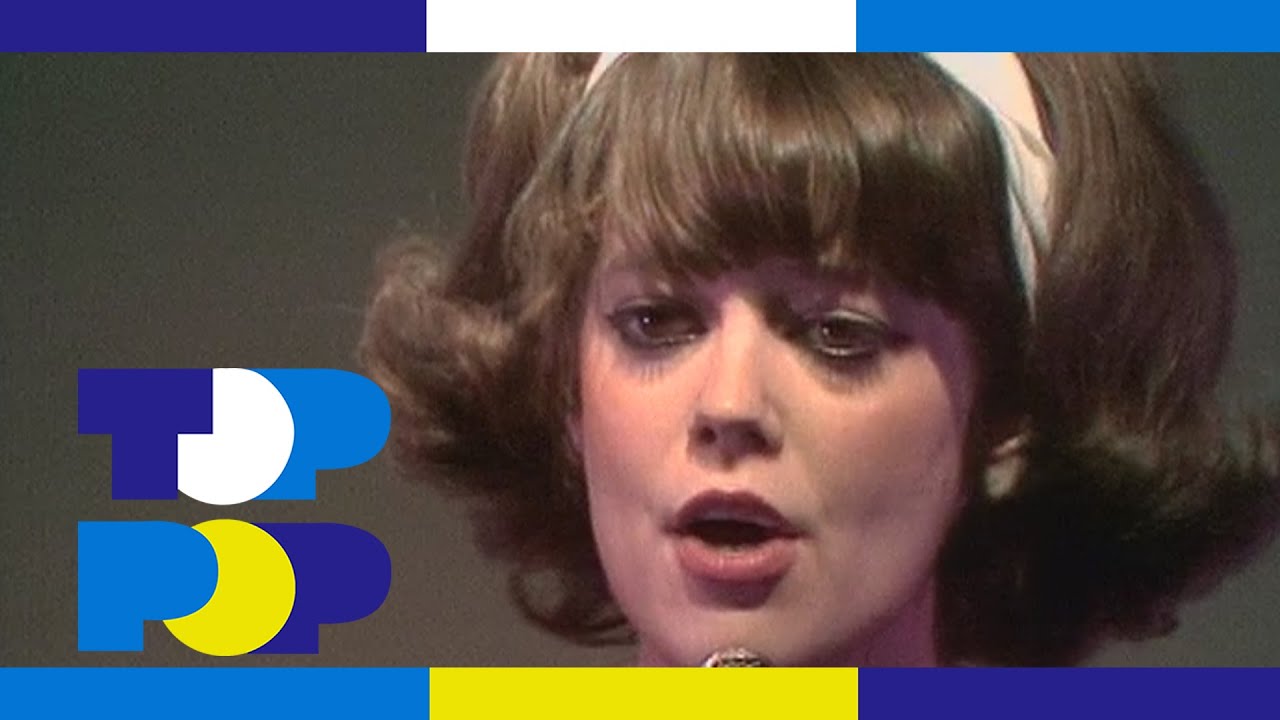
A year later they followed with Wild Planet. Because of a prolific crop of songs from the bloodletting room, they avoided any second-album slump. All the songs were about being in motion of some kind – Party Out Of Bounds, Private Idaho, Give Me Back My Man (Cindy’s finest moment). With Strickland’s clockwork drumming, Wilson’s open-tuned guitar aggro and the inimitable three-headed vocal attack – Schneider’s campy speak-sing set against Wilson’s pastel softness and Pierson’s octave-spanning flights - it’s the band’s most cohesive album.
“It felt like kind of a letdown, though,” Pierson says. “It was well-received, but at the same time, like, ‘Oh, they didn’t change their sound.’”
That shook their confidence, at least recording-wise. While the David Byrne-produced mini-album Mesopotamia and the synth-led Whammy! had their moments, the band thrived mostly as a touring act.
“We never paid much attention to record sales, because our expectations were low,” Pierson explains. “Artistically they were high, but celebrity-wise low. We just kept to ourselves, made the music we wanted to make. We were very insular.”
After two years off, they began sessions for what would become Bouncing Off The Satellites. But the old magic was missing. Schneider calls it “our White Album, with everyone bickering, and off on solo tangents”.
Like many bands in the mid-80s, The B-52s got swayed by the Fairlight CMI, a sampling keyboard which rendered perfection at a vibe-killing cost. Their kookiness suddenly sounded stiff.
“It was a weird time,” Pierson remembers. “Fred did his first solo record, which was great for him. But that created a kind of split. We weren’t working together like we used to.”
When they presented the new album’s finished tracks to their label, they got: “Go back and write a hit.” Pierson says. “So, we kept trying to write a hit. This was when we noticed Ricky was ill.”
They didn’t know how ill. Although the first news story about Aids and HIV had appeared in 1981, in the gay newspaper New York Native, the virus was only just becoming part of the national conversation. Pierson recalls: “Keith called and said: ‘Ricky’s in the hospital, and I think he’s going to die.’ And I was like: ‘Oh my god, no!’ It hit us like a thunderbolt. We thought: ‘Well, this is the end.’
“It was a real devastating blow,” says Schneider, “because he was Cindy’s brother and Keith’s best friend since high school.”
For the next three years, they grieved.
“We were lost, and we all sort of went bankrupt,” Pierson says. She moved to Woodstock, as did Strickland, who decided the best way to honour his childhood friend would be to respectfully step into his shoes.
“Keith had always played guitar, but he started writing music,” says Pierson.
“And his music was – and is - brilliant,” Schneider adds. “Things started to really fall into place again, and we got a rhythm going and got songs going that we were really proud of. It was like a whole different sound for us, but still us.”
Pierson: “It was a very healing experience, conjuring up memories of Athens. It felt like Ricky’s presence was with us.”
Before they entered the studio, they made a pact.
“We decided that we weren’t going to try to please anyone but ourselves,” Schneider says. “And that made the music stronger.”
With production split between Don Was and Nile Rodgers, 1989’s Cosmic Thing was nostalgic (Deadbeat Club rhapsodises their Athens beginnings) and, thanks to dancefloor monsters Love Shack and Roam, both a comeback and a complete makeover.
“People took us more seriously,” Pierson says. “It was a relief to get out of the corral of indie, to be thought of as mainstream. Some fans probably resented it. But it was very gratifying to have that kind of success.”

Before 1992’s Good Stuff album, Cindy Wilson decided she’d had enough. “She wanted to start a family,” says Schneider. “We were totally cool with that, and said: ‘You can always come back if you want to.’”
Schneider made another solo record, and the band “kept touring and touring, just for the fans”. Over the next 15 years, the remaining three tried several times to reignite their songwriting flame. “But it wasn’t happening,” Pierson says. “It felt like our creativity was on hold.”
Wilson returned for 2008’s Funplex, and the story since then has been more roadwork, with the occasional solo project.
Pierson: “It’s no secret that everything has changed in the industry. Nobody buys records. Touring is the bread and butter, the only way for bands to keep going.”
In 2025, The B-52s teamed up with Devo for the highly successful Cosmic De-Evolution show, which comes to the UK for a few dates this month. Schneider sees a creative connection between the two groups that went from art students in a basement to stadium-level bands.
“In the late 70s, new wave was such a broad category,” he says. “Because you had typical bands that played typical rock, but with a little new wave twist. And then you had bands like ours and Devo who rocked, but in totally different ways. We were weird and fun and artistic.”
At the same time, don’t look for a world tour.
“We have our residency in Vegas and just some one-off shows,” says Schneider. “But that’s not touring. Touring means you get on a bus for weeks. I’m not doing that. And Kate and Cindy don’t want to do that either.”
With a band documentary in the works, various solo projects and the 50-year anniversary of the Flaming Volcano’s creative conjunction, Pierson says the reason they’ve stayed together so long is “because we get each other, we know each other, and we still, to this day, love each other. Which is a beautiful thing. And we achieved our one goal – to be a dance band.” And then some.
The B-52s play Glasgow on Thursday with The Rezillos, before shows in London on Saturday and Manchester on Sunday with Devo. For tickets, visit the B-52s website.

