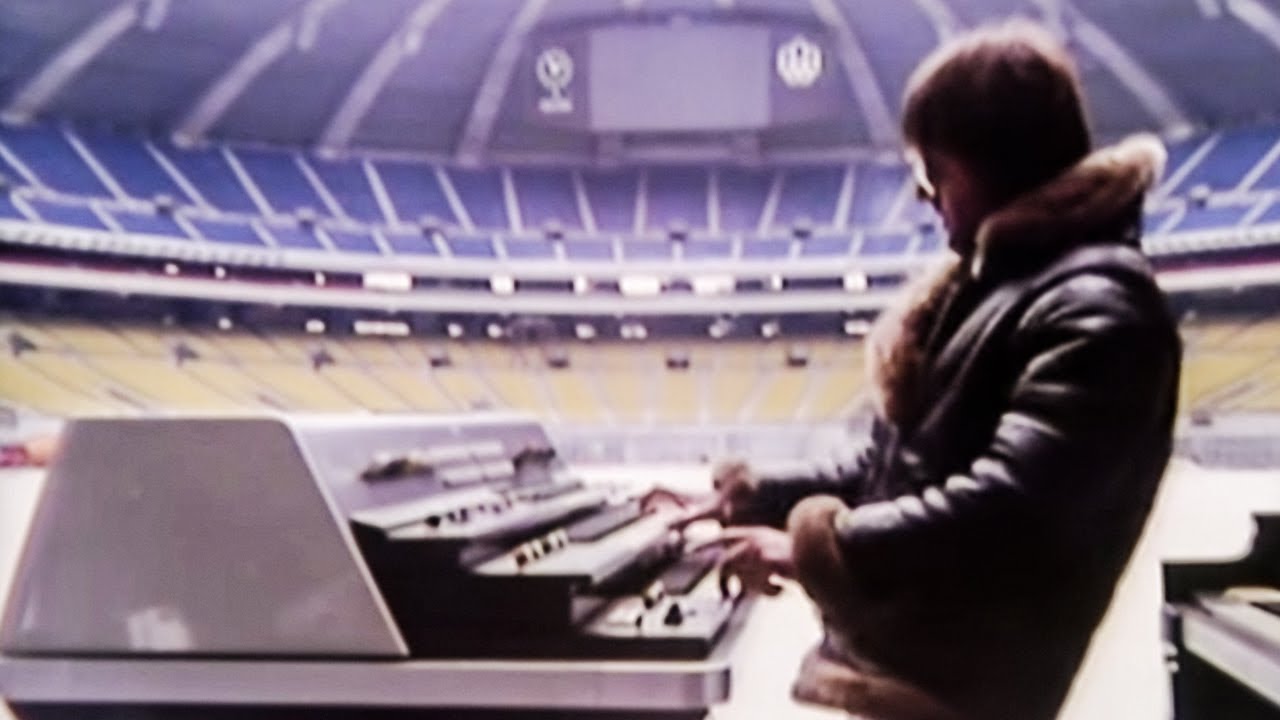





Fanfare For The Common Man was the eighth single released by Emerson, Lake & Palmer, and its arrival at No.2 in May 1977 made it their only big singles chart success. The original composition by Aaron Copeland was about three minutes long, but ELP expanded it to over nine minutes – although the single edition was cut back to three minutes. When the piece was played on the Christmas edition of Top Of The Pops that year, dance troupe Legs & Co. performed a routine around a festive tree.
In 2010 Keith Emerson recalled taking prog to the top of the charts in the year that punk rock ruled, with a track that became one of the most successful instrumental single of all time.
Where did the inspiration for the track come from?
I’d heard it played at the end of Aaron Copeland’s Third Symphony. We’d previously done his Hoedown on our Trilogy album, and when I found out he’d actually written 10 fanfares, I thought we should do his Fanfare For The Common Man.
It needed transposing – I wanted to improvise in a key that was sort of bluesy. So I did that first, and it ended up in E. The rest of it was straightforward; in order to get the shuffle sound the timing had to be changed, but it was common sense.
We had to get permission from Aaron Copland himself to do it. The publishing house told us to forget it. But I didn’t give up so easily – I got Mr Copland’s home number, called him up and he was very friendly.
He said, “Send it to me; let me listen.” And he loved it. He called me back and said, “This is brilliant! This is fantastic! This is doing something to my music!”
What was the reaction to it?
Of course, it became a staple of the ELP live set, and it was a fan favourite – even though the single version was edited down quite a lot.
Did its success make you feel like pop stars?
Not at all! That was never something we considered. But the hit did get the attention of other musicians outside of prog, and made us a little more well known.
I know one disco group got in touch with Mr Copeland to ask his permission to do their own version, after they heard what we’d done. But he refused. I don’t know whether this is true or not, but he’s supposed to have once said that, because ELP had a hit with Fanfare, most people thought I was the composer and not him!
Was having a hit a blessing or curse?
I’ve never even thought about it, to be honest! To me, that sort of thing is irrelevant. All that mattered was being able to play the great man’s music and have him approve.