


“Everybody wants a song in a Martin Scorsese movie, right?” says Lemonheads frontman Evan Dando. He’s talking about The Lemonheads’ fuzzed-out, full-tilt cover of Simon & Garfunkel’s 1968 hit Mrs. Robinson, which was used in Scorsese’s 2013 film The Wolf Of Wall Street, behind a climactic scene of the lead character’s financial downfall.
“Hearing our record in that movie put the whole experience in the positive column for me. It redeemed itself with Scorsese. So now I’m completely pro the whole thing of Mrs. Robinson.”
It wasn’t always so. In the past, Dando said he hated the song, along with its author Paul Simon (word was that Simon hated The Lemonheads’ cover, while Art Garfunkel liked it). And despite it being a ubiquitous early-90s hit for The Lemonheads, the band rarely played it live.
The story of how and why they came to record it in the first place is a bit convoluted. In 1992, when they were just one of many rising grunge-pop bands, The Lemonheads were reportedly asked to cover the song for a 25th-anniversary home video release of The Graduate. But were they? And by whom?
“What I remember is that we were playing a festival in Berlin,” Dando recalls, scratching his beard like Dude Lebowski, “and after, we went into this really nice studio there with Julian Standen [producer], recorded and mixed the song in three hours – we learned it, hit ‘record’ and that was it. It was easy and fun.”
Taken at almost double the speed of the original, with pounding tom-toms, John Entwistle-style lead bass and ragged electric guitar, it’s a pure dopamine rush of a record. Sweetening the deal for the young band, there was some financial incentive.
“We made twenty grand or something to do it for these Japanese people who had allegedly bought the video rights to The Graduate, and wanted to get the song out to promote it,” Dando says. “But really, I think the whole thing might have been made up [laughs].”
Still, the track’s instant success on the radio was very real. The band’s label hastily added it as a single to their already-released album It’s A Shame About Ray – without Dando’s blessing.
“I have a theory that it’s the pureness of music that makes the music business so fucked up and sleazy,” he comments. “It felt like a bait-and-switch thing, because they put it on a single really quickly. Back then we were seen as a band that wouldn’t last, so I think they wanted to milk us for everything we were worth.”
Towards that end, their much-played MTV video for the single was like an ad for The Graduate, cutting between the band rocking out aboard a yacht and scenes from the film. “We just went along with it, because it helped publicise the tour we were doing,” Dando shrugs.
Weirdly, there’s a parallel in the story behind the Simon & Garfunkel original and how random its creation was. Despite being synonymous with The Graduate, it was not written for the film. In an interview on The Dick Cavett Show, Paul Simon said: “Mike Nichols was almost finished with the film, and convinced us to do the music. What would happen is, in order to fill up a scene, we would take a piece of music and put it there, just to hear what the music would sound like.”
In the famous wedding day scene, where Dustin Hoffman’s character is racing to the church in a sports car, Simon explained: “They wanted guitar music. So I was just riffing, playing that opening lick. And it wasn’t working. At the same time, I had been fooling around with another song that wasn’t finished.”
In the book Paul Simon: A Life, Art Garfunkel said: “There was no name in it and we’d just fill in with any three-syllable name [Simon was going to call it Mrs. Roosevelt]. And because of the character in the picture, we just began using the name Mrs. Robinson to fit.”
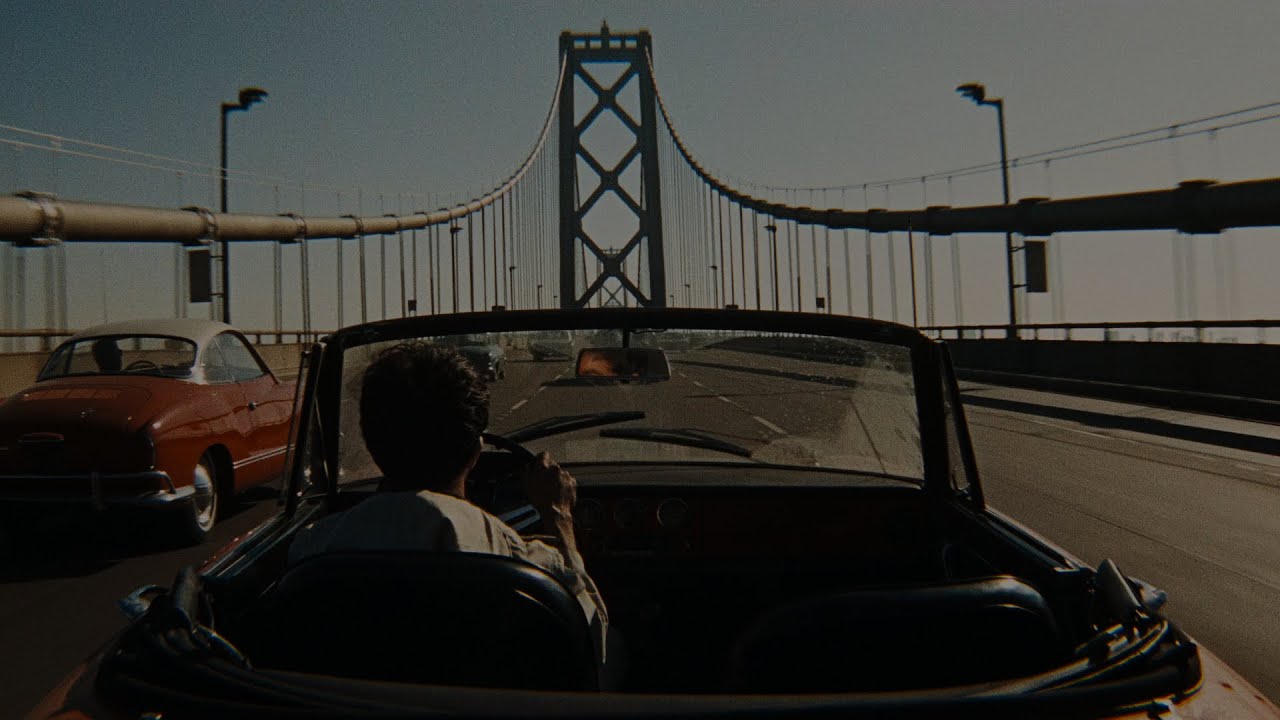
When the duo told Nichols about it, he flipped: “You’ve written a song called Mrs. Robinson and you never told me?” Simon said: “There was nothing but that chorus, and on the spot, we sang the ‘dee-dee-dee’s around it. In the scene, it’s only the chorus. But it worked great.”
Discussing the song’s famous Joe DiMaggio reference, Simon told Cavett that “it seemed strange, like it didn’t fit somehow”. But he was a big believer in “the stream-of-consciousness” style of songwriting. “It’s very pleasurable to write that way,” he said. “And very often you find that what’s in your mind is relevant, though at the moment it doesn’t seem so.”
While Evan Dando is still not a fan of Paul Simon, he does embrace that take on songwriting. “When you just have to do something, and you’re not thinking about it too much, that leads to some of the best shit, absolutely,” he says. “It’s that impulse where you’re not saying to yourself: ‘This is going to be my life statement.’ You’re freed up in a way by that casual worka-day attitude. That’s the way to go.”
Although The Lemonheads’ version is the most successful cover (UK No.19, US No.18 ), Mrs. Robinson has also been interpreted by Frank Sinatra, Bon Jovi, The Indigo Girls and others. It’s also appeared in other films, including Quentin Tarantino’s Once Upon A Time In Hollywood.
It did take some years for The Lemonheads to outrun the cover-song curse – to prove that they were more than just a group that got famous on someone else’s song. Today, Dando sums up his feelings thus: “It was a hit, and it pissed off Paul Simon. So it’s like it killed two pheasants with one ruby!”
That said, he does wonder about the paycheck for the song’s use in The Wolf Of Wall Street. Shouldn’t it have meant a bigger windfall? He laughs and says:“I remember I was like: ‘Why do we only get this much money?’ ‘Oh yeah, because, like, Marty’s a gangster, Evan, remember?’”

