




Released in 1968, The Crazy World Of Arthur Brown’s second single Fire singed the entire world, hitting No.1 in the UK, No.2 in the US, and top tens all over the planet. But the million-selling track – which defined Brown as “the god of hellfire” for ever – endured a difficult transition into a prog rock staple, as he explained in 2022.
How did the Crazy World Of Arthur Brown form?
I’d been singing in Spain and France, my first professional engagements, mostly in clubs run by various Mafia. It led to me doing the theme music for Roger Vadim’s movie La Curée [aka The Game Is Over], which starred Jane Fonda.
Back in England, I ended up in a bohemian rental house, and one day I heard from upstairs the sound of a rather good boogie piano. I went up and said hello to the guy who was playing, and asked him what else he played. He went through modern jazz, then into the classics such as Rachmaninoff and Liszt – he had a huge stretch of the fingers. Then some comedy music.
He hadn’t done any soul at that point, but I played him a record, and then there it was! And that was Vincent Crane. We had long conversations about the type of music we’d play. He had an endless combinational ability with chords. If I wanted the music to move in a way that was different from normal, I’d say, “This is what the guy in the song is feeling now, and we’re going to emulate it like this [gestures with his hands]. No, a bit more like this [more gestures].” That was how Vincent and I wrote – it was like freeform jazz.
The Crazy World had an edge to it as well, influenced by music hall songs on 50s TV, which were very upfront about things that people wouldn’t normally express. Almost a Kurt Weill-like darkness.
Your stage act and persona were completely unique for the day.
When I came back from France, my intention was to start a surreal multimedia club, but I couldn’t get the money. So I put that the into the band instead. At gigs, I wore what had become one of the hallmarks of my concerts in Paris – a crown with candle holders that somebody left at my hotel room door after a wild party.
Jimi Hendrix took it around to all the DJs – he walked in and said, ‘You’ve got to play this!’
An artist called Mike Reynolds did our lighting. We had long conversations about old pagan symbolism and how we could put that into the act, which is where the death’s-head makeup comes from. There were also travelogues on TV of people going to Africa and seeing tribal dances, which I adapted.
We changed the black and white death mask into something more tribal – you could imagine African warriors coming at you with that face! And our landlady had a huge trunk which contained some old stage outfits, including a big orange zen master’s robe, which became part of the iconic imagery we came up with for Fire.

You signed to The Who’s Track Records and began recording your debut album. How was that?
We went into the studio with The Who’s manager, Kit Lambert, whose father was a classical composer. Kit appreciated this was an album with repeated themes. He said, “Vincent, you play classical music – why don’t you use strings and put that kind of power into the music?” He really upset the sound engineer, because he’d push the overall sound to where it was “raaaarrrrrhhh!”
Fire was the last song to be written for the album. A lot of the other stuff was improvised, but it took us a long time to get the right music. Fire has always been important to me, from living in the East End when it was actually on fire, to our house in Whitby being blown to dust in the war.
I spent lots of time looking into fire, both as a form of entertainment and as a kind of a meditation, where you could go beyond the thinking mind and reach this point of purity and stillness. So I wanted to write about fire as a poetic image, using a new kind of language.
What was it like to suddenly have this huge hit single and to become the god of hellfire in the public eye?
I didn’t like Fire at first, because it was poppy and I was a blues and jazz guy. But then we had people coming up at the end of gigs to say, “I really liked that Fire tune!”
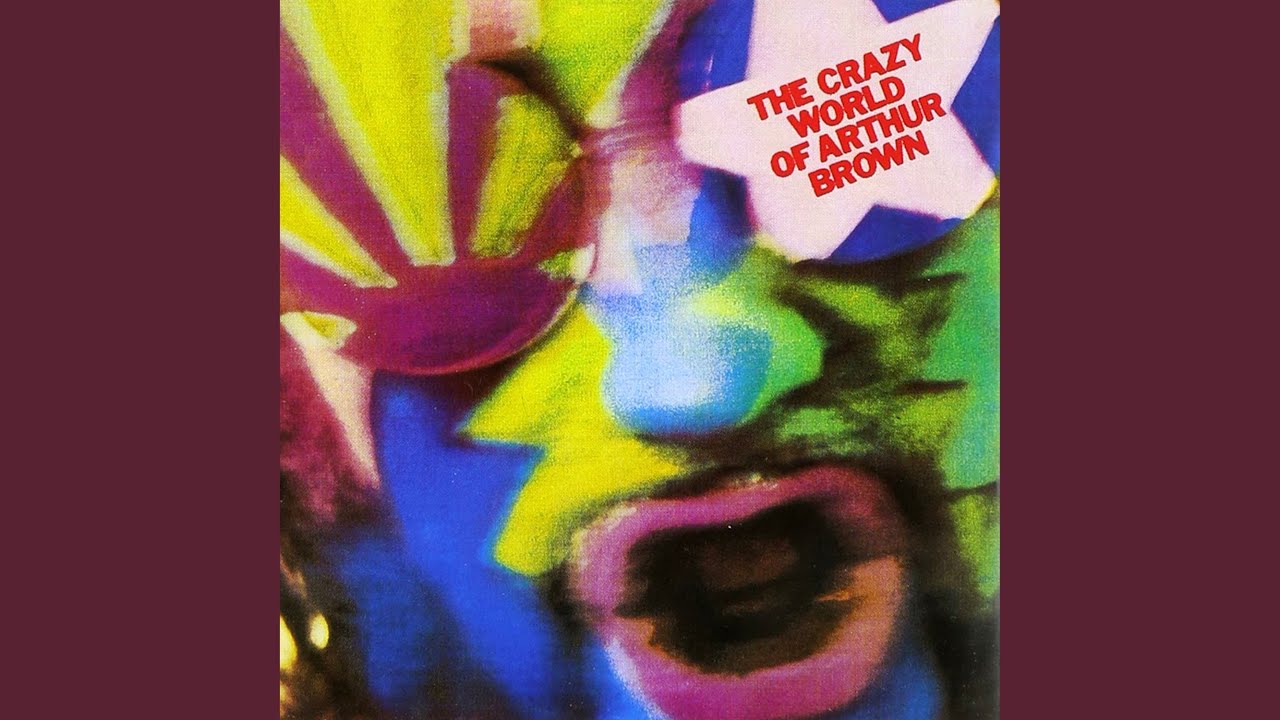
In England, the radio stations played it as a novelty record, though John Peel played it as something new from somewhere else. In America, Track got Jimi Hendrix to take it around to all the DJs on the important stations. Hendrix walked in and said, “You’ve got to play this!” And it became a hit. Then when they saw the image as well, we couldn’t lose.
We were pleased – it meant that our music, including its more experimental side, had become a valid and accepted thing. Fire was a great calling card to get on things like the Tom Jones TV show. Yet at the same time, there were pressure to only play the set we’d written, and we preferred to improvise. In fact, all of our act eventually became improvisation.
What led to unhappiness in the band?
We got the album acetate while we were on tour in America, while the label was still trying to decide whether to promote us as a comedy act or something darker.
Drachen Theaker, our drummer, and a real fan of electronic music, felt that the album needed to be more avant-garde. He listened to the first two tunes, then ran over to the machine, picked up the acetate and smashed it against the wall. And that was the only one we had! They should have just recorded our trio – we were much more on the edge without all these strings.

