

Metallica were up to all kinds of madness in the 90s, from writing the biggest metal album of all time, to taking inspiration from U2 and Nick Cave on an album that featured blood and, ah, other fluids on its cover, to doing an entire concert with an orchestra, it was a wild time. So it should have been no surprise to anyone that when they when they released their first ever song with a guest feature, it wasn’t with a thrash metal peer or a guitar shredder; it was with a 60s folk singer who most of their fans only knew as Mick Jagger’s ex-girlfriend.
The gap between Metallica's 1991 cultural behemoth The Black Album and 1996’s hugely divisive Load meant that no one was really expecting new material from the band in 1997. So it was something of a shock to learn that Metallica weren’t actually finished with the Load sessions.
These records belong together...we want them to be twins
James Hetfield
“These records belong together,” frontman James Hetfield told Guitar World in 1997 when asked why his band were releasing a new album, titled Reload, so soon after their previous effort. “They should have come out at the same time, but the songs weren't all done. We're putting this one out a year later, now that we've had time to finish it, but we want them to be twins.”
Anyone who was bummed out by the hard rock direction Load had taken the band in and had their fingers crossed for a return to Metallica’s thrash roots on the album were going to be disappointed.

"Over the past few years we've all really developed our own personalities and our own points of view," said guitarist Kirk Hammett in the same interview. "In the new songs, you can hear how those four personalities play off each other. We just throw it all into one big melting pot, and when you pour it out, this is what you get."
That meant the influence of the blues, indie, Americana and classic rock all fighting for space alongside Metallica’s trademark heavy metal crunch. Metallica themselves were still completely unapologetic about their change in direction, Hetfield giving short shrift to the idea that they were trying to “kill metal” when quizzed by Kerrang! In 1997.
“We kill a lot of stuff, but we're not out to kill metal!” he snorted. “I think we're bulldozing through a lot of crap. The metal monicker is a big question mark to us all: what does it really mean? I think we've taken it places that it doesn't belong, thrown away that heavy metal rule book.”
We've taken metal places it doesn't belong
This desire to take metal to places that it “doesn’t belong” could not have been more evident than in the first single from Reload, the haunting, lurching hard rock banger The Memory Remains.
The song had started life as a studio jam between Hetfield, drummer Lars Ulrich and producer Bob Rock. Hetfield had no lyrics to a piece he was fooling around with and filled in the blanks with a simple “La-la-la-la".
"Randy Staub, our engineer, said, 'You know what? It sounds pretty cool when there's no lyrics there,'” Hetfield told Loudwire. “'I'm sure you have a vision of writing lyrics for that part one day, but the "la-la'" bit sounds pretty cool.' I kinda thought about that for a while."
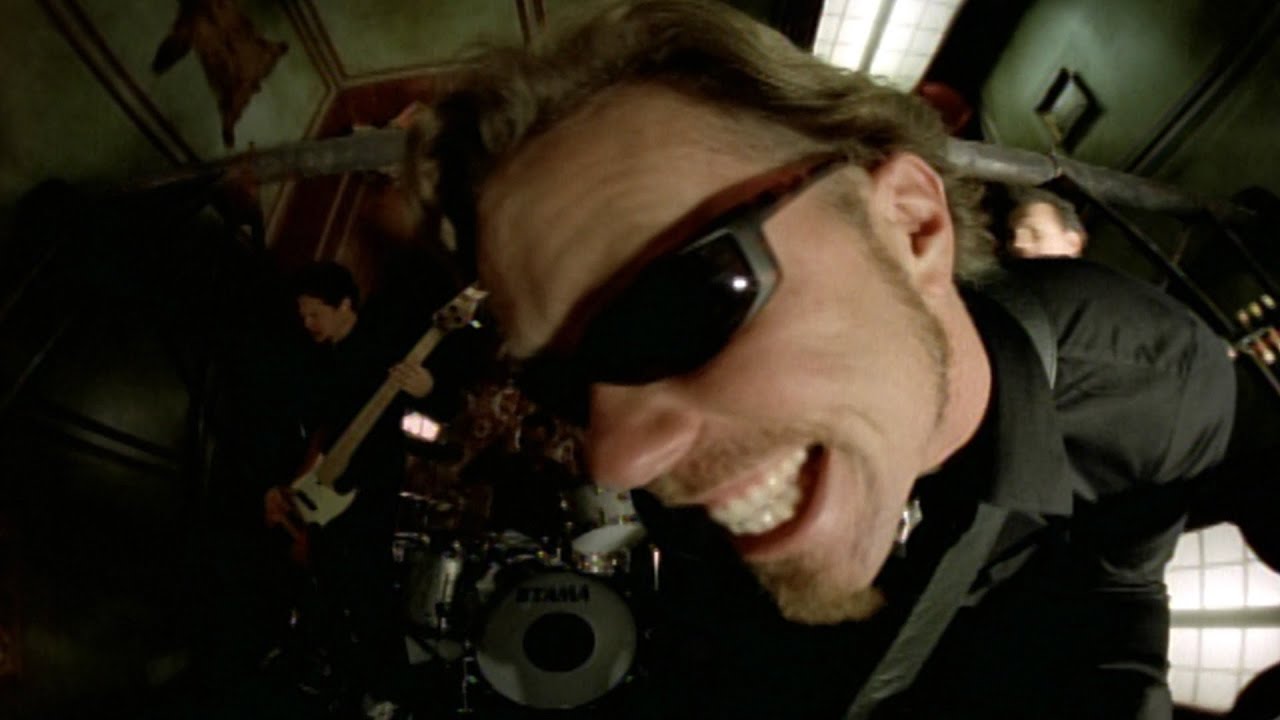
Hetfield began to write lyrics about an artist that is slowly being driven insane as their fame and stardom begin to fade away. The frontman soon realised that Metallica could use another voice to accentuate the narrative of the song; it’s here that Bob Rock suggested the name Marianne Faithful.
“I didn’t know much about her at all,” Hetfield told CMJ New Music in 1997. “Bob Rock introduced me to her, and the stuff that I had heard was the old 20th Century Blues CD, which was really cool – all the old standards.”
Faithful may not have been an obvious choice for a Metallica collaborator, but she was a perfect fit for the song. Having been a prominent folk singer in the 1960s, she had established a cult following, but her popularity had waned in the years since. So much so that to casual music fan in the 90s, she was more associated with her previous relationship with Rolling Stones frontman Mick Jagger than she was with her own music. Regardless, Metallica were sold.
“It was a bit avant garde, but she had the voice we were looking for,” Hetfield continued to CMJ New Music. “That weathered, smelling-the-cigarettes-on-the-CD kinda voice. I thought ‘Fuck! This is exactly what is needed for this part!’ She was the voice, and she was a very intense character.”
Faithful was contacted and was delighted to become the first ever non-Metallica member to sing on a Metallica song. Her raspy, quivering tones juxtaposed with the might of Metallica’s riffs; for all their famous experimentation, this was unlike anything the band had put their name to before.

“I was in Ireland, living in my little house, when I got the call saying, ‘This is Lars from Metallica. We want you to do a song.” She told Classic Rock in 2009. “I knew who Metallica were; I never thought they’d want me to do something with them. At first, I didn’t believe it, but they were really serious.”
Faithful understood the remit and why she had been chosen, even though she argued that she didn’t entirely fit the stereotype of the song's protagonist.
“I could understand immediately what they wanted me to do,” she continued to Classic Rock. “I think they wanted the ‘wounded woman’. Of course, I was never really as wounded as everybody thought, so they had to get over that.”
I was in Ireland in my little house, when I got the call saying, ‘This is Lars from Metallica.'
Marianne Faithful
The Memory Remains was released on November 10 1997, as Reload’s lead single a week before the album dropped. It received mixed reviews, as was expected for what was probably Metallica’s most unusual single to date. Even bassist Jason Newstead gave it a kicking in 2002; when asked if he’d have bought Reload by Classic Rock he replied: “Not if I’d have heard The Memory Remains first.”
Still, the song did well, charting at number 13 in the UK and number 28 in the US, and when Reload was released, it immediately topped the US Billboard 200.
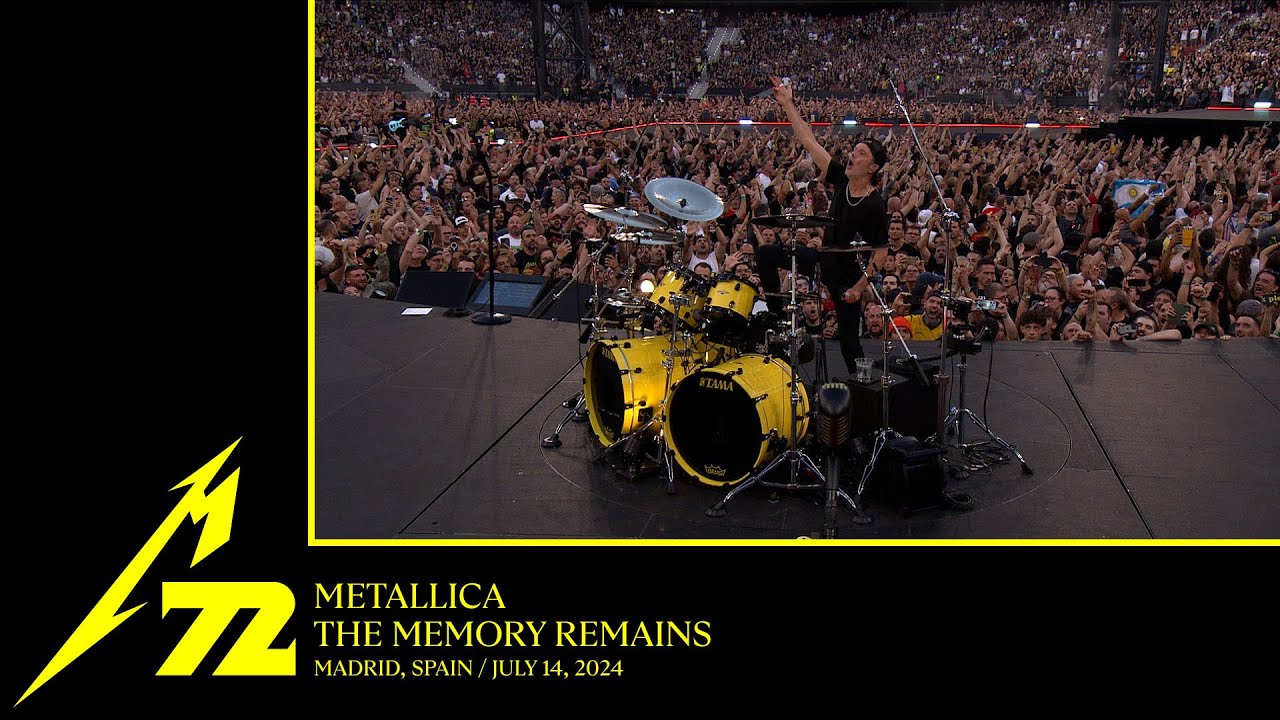
Since then, there has definitely been a reappraisal of the song; it has been used in The Sopranos, was a theme for Wrestlemania XXVIII in 2012 and has become a staple of Metallica’s live show; the extended “la-la-la-la" as sung by the crowd, taking Faithful’s part, is now as iconic a piece of the Metallica concert experience as fireworks before One or the call and response of Seek and Destroy.
The mutual respect between Faithful and Metallica continued all the way up to her passing in 2025; she even joined the band one last time to perform the song at their 30th anniversary in 2011, telling Classic Rock that “they were really great, I really like them. We’re still very good friends.”
For all of the risks that Metallica took in the 90s, The Memory Remains is one that certainly paid off.