


All too often, the terms ‘legendary’ and ‘iconic’ are applied to artists and bands that don’t merit either description. But in the case of Thin Lizzy, both are appropriate. And yet, even at their commercial peak in the late 70s, there was a sense in which they were under-appreciated.
“We were always the support act,” their former guitarist Brian ‘Robbo’ Robertson says today with a chuckle. “Even when we were headlining, we were still considered the underdog, slightly outside the mainstream. I like being that way. Phil didn’t mind either, although he craved the big stardom bit.”
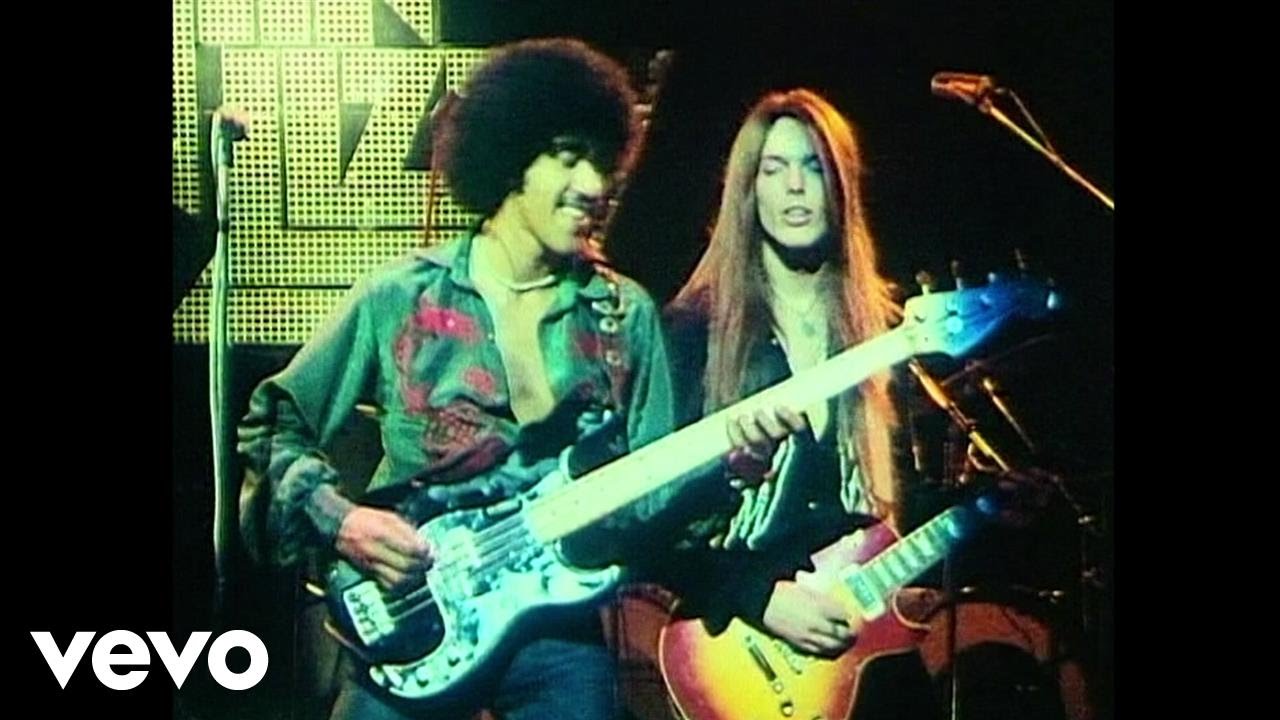
A talented lead guitarist and multi-instrumentalist, Glaswegian Robertson joined Lizzy in 1974 (along with guitarist Scott Gorham), aged just 18, and formed a close bond with frontman Phil Lynott.
“He looked after me a lot,” Robertson reflects. “Even though we butted heads a lot, I was still his little brother.”
After a tempestuous four-year hot streak during which Lizzy recorded their most celebrated albums, in 1978 Robertson left and formed Wild Horses, a band whose evident potential was swiftly extinguished by a combination of bad breaks and bad decisions.
Then, in a move no one saw coming, Robertson gamely joined Motörhead, partway through a US tour in 1982. The melodic direction of his sole album with the band, Another Perfect Day (1983), failed to convince fans, and by the end of the year he was asked to leave.
Robertson then began a long stint with old friend Frankie Miller, cut short by Miller’s brain aneurysm in 1994. Having worked as a session musician since the 70s, Robertson then focused predominantly on studio work for the next two decades, racking up an impressive list of credits as both player and producer.
Since the release of his well-received solo album, Diamonds And Dirt, in 2011, Robertson has kept away from the spotlight. Today he’s happily retired, in excellent health, and enjoys customising his trademark Les Paul guitars in his workshop.
For decades after the death of Phil Lynott in 1986, media attention invariably focused on Lynott’s addictions, and the band’s predilection for hard living, rather than on Thin Lizzy’s enduring legacy of classic songs. Thankfully, in recent years, a series of box sets and the documentary Phil Lynott: Songs For While I’m Away (2020) have redressed the balance. Does Robertson feel that Lizzy’s wild, brawling, streetgang reputation was exaggerated? “Entirely, yes,” he says, laughing. “Some of us were a bit wilder than others.”
Robertson’s own wider legacy is also the focus of renewed attention. With the Wild Horses box set, Standing Our Ground - Complete Recordings 1978- 1981, released in February, the day after his seventieth birthday, and an expanded reissue of Diamonds And Dirt later this year, Robertson grants Classic Rock a rare interview.

Some biographies state that your dad was a jazz saxophonist who played with the renowned American jazz drummer Art Blakey. Did he encourage you to play music?
That was during the war, before I was born. All I heard were the stories of him playing with Art. It was actually clarinet he played, mostly. His influence was more the records he was playing – Glenn Miller, Muggsy Spanier, Benny Goodman.
Did you pick up any influences from those records?
Yeah. Glenn Miller especially, the melodies and the arrangements.
What do you remember about your early days gigging around Glasgow?
My brother Glenn and I had a band called Rue Morgue. I was fourteen, fifteen probably, so [it was] early seventies. We did the school dance, all covers - Argent, Hold Your Head Up, some Wishbone Ash and Cream.
You were friends with Thin Lizzy roadie Big Charlie McLennan. Some accounts say you attended a Lizzy gig at Glasgow University in February 1974, met drummer Brian Downey afterwards, and played him some of your band’s songs.
The first time I met them was in the bar at my local hotel, where they were staying. I didn’t go to the gig. I’d been rehearsing and had my guitar with me. Charlie introduced us. I’m sure Brian just saw a young kid with a guitar and came to talk, because that’s the sort of guy he is, really gregarious. Phil was busy talking to some birds. I went up to Downey’s room, had a few drinks, and played a few songs for him. I was a big fan; I love Vagabonds Of The Western World. I used to listen to Kid Jensen on Radio Luxembourg, because he used to play a lot of Lizzy.
You moved to London in 1974, and auditioned for Lizzy at Club Iroko.
Charlie had an insight that things weren’t going to pan out with Gary [Moore, who joined in 1974, replacing Eric Bell]. He started pushing: “You’ve got to come down.” I was staying in a squat in Kensington, with the Lizzy roadies. They were auditioning every day, so I had to wait a couple of weeks until there was a space for me.

Was there an obvious chemistry between you when you started playing?
Yeah, certainly with Downey and I. I’m very drummer-oriented. It didn’t matter what song they said to me - “I’ll play any of them.” I threw Gonna Creep Up On You back at them, because that’s got that great drum break. Downey went: “Oh, jeez, not that one”.
You got the gig slightly before Scott Gorham joined. What made him the right choice?
It was Phil’s decision, because he liked his look, and he was American.
You’ve said that you could be argumentative and sometimes aggressive back then, but that it was a cover for you feeling insecure. It’s often forgotten that you were only eighteen when you joined Lizzy. Do you feel that people around the band didn’t appreciate that?
Yeah, I do. The management pounced on the fact that I was young. They just saw my age as a marketing tool. I probably felt pretty hard done by sometimes, because I kind of knew they were doing it.
In the early days Phil liked the fact that you’d argue with him if you thought something wasn’t right. That eventually led to friction, but you remained close friends to the end of his life. Setting aside your working relationship, how do you look back at your friendship with him while you were in Lizzy?
He was kind of big brotherish. He looked after me a lot. Even though we butted heads a lot, I was still his little brother.
Was there an element of a kind of sibling rivalry?
Yeah, that’s probably closer to the truth.
You shared a flat with Phil. Do you have any favourite memories of him that might surprise people?
When we shared the flat in West Hampstead, he always used to get me to go to the dry cleaners with his shirts. “Robbo, take this up the road and get it cleaned for us, will you? And while you’re out, get some fish and chips” [laughs]. He always had you running about, doing things for him. We were sharing the flat because I’d split up with my girlfriend. She’d gone off with the guitar player from Ian Dury’s band, so Phil said: “Move in with me, Robbo.”

What caused the friction between the two of you?
It was never arguments for argument’s sake, it was always to do with the music. He had definite ideas about how he wanted to do certain songs, nd he wasn’t about to change. And I’m similar in that respect. So we clashed. Don’t Believe A Word was a classic - that was the plus side.
You’ve said Phil’s original version wasn’t as developed as the blues version he later did with Gary Moore on Moore’s album Back On The Streets. It was just Phil playing it as a ballad on acoustic guitar?
Yeah. There was no riff, or anything to get your teeth into. Downey and I just went: “Nah, not doing that” [laughs]. Because we’d already got Still In Love With You in the set. Phil threw a wobbler and walked out. When he came back, and Downey and I had put it into a shuffle, he reluctantly went: “Ah, okay. Nice one.” Although he had to go back to the slow version eventually [laughs].
Your first two albums with Lizzy, Nightlife and Fighting, have just been remastered in the ’74-75 box set. Some of the tracks have been remixed. It’s well known you didn’t like Ron Nevison’s production of Nightlife.
Yeah, the new mixes are certainly better, probably a little edgier. It shows a better side to what was put down. Fighting was a strong album at the time, showing the way to Jailbreak. It’s not as much of a leap of faith as Nightlife was.
In March 1975 Lizzy toured the US with Bob Seger and Bachman Turner Overdrive, playing stadiums and arenas. Was it a steep learning curve, trying to present yourselves on stage in venues that big?
It was quite scary, because we were used to small clubs, and the college scene. We got used to it quickly, because Phil loved it. And if he’s out there doing it, you think, “Right, I’ll do it.” When you’re younger, you don’t tend to get quite as scared. It’s like: “Ah, fuck it.”
Lizzy’s manager Chris O’Donnell said he encouraged Phil to push the aggressive side of his stage persona and the heavier material, because it went down better live. A lot of people have said that Phil was quite sensitive, in contrast with the image he projected. Do you think that image trapped him, in having to live up to it?
Chris was right in that respect. Images trap everybody. It happened to me as well. At one time they were all going: “Robbo, with the bottle, drinking. He’s out of control.” Same thing happened to Phil.

After two unsuccessful albums, 1976 was a watershed year for Lizzy – Jailbreak and Johnny The Fox were hit albums, and The Boys Are Back In Town cracked the singles charts in both the UK and US. When you finished recording Jailbreak, did you know you had something special?
I did. I can’t speak for the boys, but I think we all knew it was a good album
You’ve said you were responsible for Lizzy’s signature guitar harmonies.
Yeah. I would look for a riff or a melody line, and then I’d show Scott the harmonies.
You’ve spoken respectfully about Phil being a gifted songwriter, but you’ve also said that other band members weren’t always credited for their contributions.
That should have happened on a lot of material. I approached the management about publishing, because I didn’t know anything about it. I was told: “Phil writes the chords and the lyrics. That’s fifty per cent for the chords, fifty per cent for the lyrics.” I’m going:“Yeah, but if I take my guitars off, it’s not the same song.” They went: “No, it’s just the law.” That’s when you hear the arrangement side of things. You can hear the difference when I leave. The sound changes drastically.
The Boys Are Back In Town unexpectedly hit No.12 on the US Billboard chart in May. As the band toured the US that summer, Jailbreak climbed to 18 on the album chart. That must have been an incredible high point…
That was a hard-work tour. I wasn’t really aware of it, to be honest. I wasn’t a chart watcher. You just did your job. I felt very cut off on the road.
The US tour was cut short just before a run of dates supporting Ritchie Blackmore’s Rainbow, when Phil got hepatitis. Years later, it was revealed that he’d contracted it sharing a needle while injecting heroin. What do you remember about the cancellation?
That hit us pretty hard. We were made lepers at that point, even though it wasn’t the contagious hepatitis. They had to make out it was, as opposed to the drug-induced one. They didn’t want the real [story] out there. I couldn’t even go down to see Rainbow. At that time, Jimmy Bain was playing bass. Jimmy came to see us at the hotel. I knew him before he joined Rainbow.
Did you notice a decline in Phil’s health after the hepatitis?
Yeah. His asthma got a lot worse. I’d go round the house and he’d be using his inhaler all the time, which was distressing. I saw a very fast decline in him.
The Johnny The Fox album was released just seven months after Jailbreak. It’s well documented that on the eve of the band’s US tour in November 1976, you sustained a hand injury at London’s Speakeasy club, protecting your friend Frankie Miller, when Gordon Hunte, from the band Gonzalez, tried to glass him. You’ve made it clear you were sober at the time.
I certainly wasn’t drunk. I’d only had a couple of whiskies. I’d already packed, and there was nothing to eat in the flat, so I though: “I’ll nip down there and get a steak. Frankie was well pissed. Gordon smashed this glass and went for his face. I put my hand in front of Frankie’s face. Years later, I was at a studio, demoing some stuff for an act that my wife, Dee Harrington, was managing. She said: “There’s a guy called Gordon outside who wants to talk to you.” He apologised profusely, and said he didn’t know what came over him. I forgave him, and we had an embrace. Never seen him since.
Afterwards you assumed you had been fired from Lizzy, and began putting Wild Horses together with Jimmy Bain. After the cancelled tour, Lizzy landed a support slot with Queen in early 1977, on which Gary Moore replaced you. You were then asked to return for Bad Reputation. There seems to be a lot of confusion regarding your status in the band, and the extent of your contribution to that album.
I went into that album as a session player. I said to my management: “I’m not going to dump Jimmy and stop the ball rolling on Wild Horses.” So they put Jimmy into the studio to do his own stuff. I played on the whole album. When I was played the backing tracks, there were no guitar harmonies. It was just straight riffs.
You left after the tour on which Live And Dangerous was recorded. That album was reissued in box set form in 2023, with the untouched source recordings, disproving producer Tony Visconti’s claims that the album was heavily re-recorded in the studio. Did you feel vindicated?
Yeah, he got found out. I was quite pissed off about that. The tweaking on Live And Dangerous was minimal. We prided ourselves as a live band. We knew on a good night we were pretty much untouchable.
You played Waiting For An Alibi and S&M from Black Rose live with Lizzy before you left, but there’s also video footage from a soundcheck of you playing the title song, including the medley of traditional Scots and Irish folk songs. That’s usually associated with Gary Moore.
Yeah. I hated it. But I could understand why Phil wanted to do it. He explained it to me: “We want Will Ye Go, Lassie, Go, for the Scots, and then the Irish…” He was trying to cover all the bases. But I didn’t like it.

Was there ever any talk of you staying on with the band permanently?
No, it just fizzled out. It was time to go back to Wild Horses.
Jimmy Bain, your partner in Wild Horses, was seen as a bad influence on Phil with regard to heroin. You’ve also said that Bain’s behaviour during the making of the second Wild Horses album caused the split. Despite the problems, the new Wild Horses box set shows that you had a strong songwriting partnership with Jimmy.
Yeah, we enjoyed writing together. It’s all very raw to me, because it brings back a lot of bad memories. We were like brothers at one point, the two musketeers. It got to the stage it got to because of heroin. He wasn’t a bad person, but drugs do something to people. Especially that drug.
Did you really turn down Steve Perry when he offered to join as vocalist?
Jimmy lived in LA at that stage, and said he’d spoken to Steve about it. It was just at the time he was going to join Journey. Jimmy asked me about it, and I didn’t know who he was. If I’d known how good he was I wouldn’t have gone: “No, we’ll do it ourselves [laughs].” If that was true, that was a cock up.
Is it possible that Jimmy made it up?
Yeah, Jimmy did like a story.
The first Wild Horses album had some fine material, and the twin-guitar harmonies showed what you’d brought to the party with Lizzy. It reached No.38 in the UK, but EMI hadn’t pressed enough copies to meet the demand, and it quickly fell off the chart.
That was really bad news. It said to us they really don’t give a shit. The funny thing was, months before this, me and Jimmy actually did a PR thing at EMI’s pressing factory. So it was a double header that they hadn’t pressed any.
Things for the band deteriorated rapidly. You were funding Wild Horses, and pulled the plug because of Jimmy’s drug-induced behaviour during the recording of second album, 1981’s Stand Your Ground, when he was adding bass synths to the tracks, and lying to keep you away from the studio.
The heroin was taking over. He said the tape machine had broken down. I went down to the studio. I could hear music, so I shouted through the letterbox, “I know you bastards are in there.” I said: “That’s it,” and sent some roadies to get the gear the next day. You only have to look at the album cover – I was having to stand there with Bain, and all I wanted to do was beat the shit out of him.
The two albums have been remastered and remixed for the new box set, and your social media lit up when it was announced. Fans obviously remember Wild Horses fondly. Has that affected your view of the band?
It’s a nice feeling, because I had a bit of a downer on it in the past. It’s given Horses a second life to me. I’m looking at it in a better light.
You joined Motörhead in 1982, replacing ‘Fast’ Eddie Clarke during a US tour. Lemmy said drummer Phil ‘Philthy Animal’ Taylor suggested you. How long had you known them?
I’d known them for years, hanging out at the same clubs. Lemmy was always on the one-armed bandits at The Embassy. Fans loved the line-up of Motörhead with Lemmy, Phil and Eddie the same way they loved the line-up of Lizzy with you in it.
As well as Eddie leaving, the band were also suffering a backlash after the Iron Fist album, which was considered disappointing. Were you aware of the pressure when you flew over to join the tour?
I wasn’t aware of it, because I wasn’t a fan. The only thing I knew was Ace Of Spades. I knew it was going to be rough when I started trying to listen to the material on the flight, because I couldn’t distinguish one track from another. I went to Toronto first, trying to sort out the visas. When I eventually got to [New York], I was met at the airport, straight into the rehearsal place, with Lemmy going into his bag of speed. After the rehearsal, they said: “We’re getting on the bus.” We went back into Canada, all the way to Calgary, for the first gig.
How did it go?
I said to Phil on the side of the stage: “What the fuck are we going to do? I can’t distinguish between the songs.” I thought: “Right, I’ll just get on there and do it.” They didn’t tell me they had pyrotechnics. I ran to the front of the stage, hit the first chord, and I was standing over a fucking flash bomb [laughs], and it goes off. I think I just played the same song the whole night.
Did no one notice?
No. Phil said: “That was great, Robbo.” I said: “That was fuckin’ bollocks, Phil! [laughs].”
How did Motörhead compare to being in Thin Lizzy?
Total opposite. They didn’t like rehearsing, didn’t like soundcheck, didn’t like being in the studio much. We liked to party [in Lizzy], but Motörhead was non-stop.

You famously wore green satin shorts with Motörhead when they played an all-dayer at London’s Hackney Stadium, organised by the Hells Angels. Were you winding Lemmy up?
That was winding everybody up. It was boiling hot, and I was in these shorts. I had my jeans at the side, getting ready to go on. Lemmy said: “You’re not going on like that, are you?” And I went: “Yes, I fucking am, now you’ve mentioned it [laughs].” I’d have put the jeans on if he hadn’t said anything. It didn’t go down well with him – or the Hells Angels.
Did you get on with Lemmy?
I didn’t really clash with Lemmy. I enjoyed my time with Motörhead. He was such a great lyricist. He’d just do it on the fly. His sense of humour was hilarious. He wrote Back At The Funny Farm in about ten minutes. He went into the vocal booth, and we hadn’t heard the lyrics. He got to that line: ‘What was that injection? Cos I think it’s going wrong/ I really like this jacket, but the sleeves are much too long.’ Me and [producer] Tony Platt had to stop the tape. I’ve never laughed so hard in my life. And Lemmy’s going: “Let’s get on with it!”
Another Perfect Day was considered by many to be too radical a departure at the time of its release in 1983, but it’s come to be regarded as one of Motörhead’s best albums. Your songwriting broadened the scope of their sound. How do you look back on it?
I like Another Perfect Day. Musically it’s one of their better albums. I wrote most of the music on my own, in the rehearsal studio. It had a nice effect on Lemmy to an extent. I think he looked at melody a bit more.
Lemmy said things fell apart during the tour. Did you leave, or were you asked to leave?
I was asked to leave. But things weren’t going well. During that last European tour, we weren’t selling tickets. So they came up with this idea: that somebody had to get ill, so we could pull the tour and get the insurance. I was the one picked. So I stayed up for two nights with the road crew in my room. They got this doctor – who the promoter had in his pocket – to come in and sign a certificate for the insurance company. I was obviously fucked up at that point. We came back to London, and [Lemmy and Philthy] came down and said: “We should part company.” I was totally okay with it, because I was looking out for other things. We never really fell out.

You tried to put a band together with Philthy and Phil Lynott, after Lizzy split. You and Philthy went to Phil’s place in Kew to rehearse, but you left having done nothing.
It was just to go into his little studio and see how things went. There was no big plan. I went into Phil’s bedroom to try and get him up, and saw that he was in bad shape. I came back downstairs, and Philthy said: “I’m out of here. I’ve been sitting here for two hours. Fuck that.”
You spent quite a lot of time with Phil towards the end of his life. You’ve said you actually grew closer after you’d left Lizzy.
Yeah. There wasn’t the elephant in the room, so to speak.
You visited him with your partner at the time, Krissy Wood, and her son Jesse James. You weren’t involved with the heavy drug scene that surrounded Phil at his house. Do you think your visits gave him some relief from that?
Certainly, because I used to go there quite regularly, and he would make time for me. We lived within walking distance. Phil had a train set in one of the front rooms, and he and Jesse would go in there and play. It was nice to see Phil leave those hangers-on for a bit.
Did he ever talk to you about putting Thin Lizzy back together?
Yeah, but he said that to a few people. He would have had to go into rehab, and with the people that were hanging around him at the time, I couldn’t see it happening, much as I would have been up for it.
Why do you think Lizzy were not invited to reunite to play at Live Aid, given Phil’s friendships with the organisers, Midge Ure and Bob Geldof?
I think it was the right call. Don’t get me wrong, Midge and Bob would have loved to have seen that man on stage, but they knew what state he was in. Of course they knew. And they knew that it would have been a mess. They were thinking about him.

Did you try to speak to Phil about his drug use?
Yeah, I did. But you couldn’t tell Phil what to do. Especially not me – remember, I’m the little brother. That Christmas Eve, when I went down there with Jesse James to give him a present, Phil’s mum answered the door: “He’s got the flu. He’s upstairs.” I went into his room, and I could tell that he was on the edge. I went downstairs, and said to Philomena [Lynott], “You need to get a doctor, now, because your son is… he’s going.” [Pauses] I told her straight away. I had to get Jesse and leave.
When Phil died, in ’86, he was treated appallingly by some sections of the media, and it took years for the focus to shift from his lifestyle to celebrating Thin Lizzy’s legacy, their music.
Yeah, I’m happy they focus more on the actual music and his legacy now, rather than the shit that went on. That’s more or less been put aside now.
After Motörhead, you played with Frankie Miller on and off, until he suffered an aneurysm in 1994. You’ve been friends with Frankie since 1974, when he sang backing vocals on Lizzy’s Still in Love With You. The band also featured Simon Kirke (Free, Bad Company) on drums, and Frankie’s long-term bassist Chrissy Stewart. You’ve said that the blues-rock style of Frankie’s band set the direction for your own music after you left. What did you enjoy about that band?
It was total freedom. I guess I was doing the right thing, because Frankie let me do what I wanted. To have a drummer like Simon and a bass player like Chrissy - when that band was on, it was really on.
Frankie made an amazing recovery after being in a coma for five months, which showed amazing tenacity and character. Did he always have those aspects to his personality?
I wouldn’t have expected anything less of Frank. He’s your archetypal Glaswegian. He’s exceptionally dogged, and he’s got so much heart and fight in him. I get bits of news from his missus and Davy Arthur [Miller’s biographer], and he’s doing okay.
You’d done session work since the seventies, and were involved in the production of Wild Horses’ albums. In the nineties you formed Yodel International Productions with Rob Jeffrey from the pop band Let Loose, and split your time between the UK and Sweden. What prompted you to change direction and focus on studio work?
I’d been sitting around doing nothing for a while, and I was introduced to Rob. I was told he was a big fan. He wanted me to do some demos with him for Let Loose. I went down to stay with him, and we built a studio in his garage. I play keyboards, so I’m thinking: “Let’s get into doing film and TV work. If something live comes up, great.”

You had a long friendship with Gary Moore. You effectively replaced him when you joined Lizzy, then later he later replaced you, but there didn’t seem to be any sense of rivalry between you.
The press engineered this rift between Gary and I, which is absolute nonsense. From the very start of Nightlife, I refused to do a solo on top of Still In Love With You [the album featured Moore’s solo from a demo recorded prior to his departure]. And the fact is I wasn’t good enough to do it anyway. I always had the utmost respect for the man.
Do you have any favourite memories of Gary?
After a gig, while he was playing with Colosseum II, Gary and I went back to his room in a hotel in Amsterdam, full of old people. We set the fire alarm off, then locked ourselves in the room with a crate of brandy. Everybody was evacuated, and the police arrived with the fire engines. They were threatening to break the door down with hatchets. Gary and I eventually came out. Needless to say both him and I were in hot water with the individual bandleaders. I think Phil was secretly impressed that his two guitar players had done that, but he wasn’t going to admit it.
In 2011, Brian Downey said in an interview that he’d asked you to be involved when he and Scott Gorham started gigging again under the Thin Lizzy name. Why did you decline?
I didn’t really think they should have been doing it without Phil. If it had been under a different name, then I would have certainly considered it. But under the Thin Lizzy logo, I thought that was a bit disrespectful.
You’d carried on writing songs while doing sessions through the noughties, and released your first solo album, Diamonds And Dirt, recorded at ABBA’s Polar Studios in Stockholm, in 2011. It was inspired by the blues-rock direction you’d enjoyed with Frankie Miller’s band, and featured contributions by members of Europe and Treat, who had been influenced by Lizzy. It’s due to be reissued this year, along with a previously unreleased instrumental album on which you played all the instruments.
I had a real blast on Diamonds And Dirt. I think it deserves another listen. It didn’t get the support it deserved. We only had the one gig, the Vibe For Philo thing that we did in Dublin [a one-day festival on the 25th anniversary of Phil Lynott’s death, in January 2011]. I’m hoping this time round it will do better. Especially as it’s being put out there with another album, which I’m more excited about than Diamonds And Dirt. It’s such a leap away from everything else I’ve done.

It’s quite a departure, mixing your blues roots with drum loops and elements of other genres.
Yeah. It’s either going to bomb or do really well [laughs]. That was done at Yodel Studios, with Rob from Let Loose.
You’re now happily retired, and have been away from the spotlight for a while. Did you have any plans to follow up Diamonds And Dirt, or were you happy to step back at that point?
I didn’t consciously give up then and there. It’s just how it all transpired, organically. I’m very open to doing some more recording now, in the vein of the new album that comes with Diamonds And Dirt.
As you approach your seventieth birthday, are you happy with what you’ve achieved musically so far?
Yes, generally I am. I was looking at my discography on Discogs, and I’d forgotten some of the albums I’d played on [laughs]. Playing with different musicians was fun.
When you look back your time with Thin Lizzy in the mid-seventies, are you surprised or relieved that you, Brian Downey and Scott Gorham survived it all?
I’m surprised to an extent, because all three of us have been close to not being here. I know Scott has. And I wasn’t too well at one point [laughs].
Thin Lizzy’s legacy has been celebrated with box sets and documentaries. Are you happy that the quality of the songs is now the main focus, as opposed to the way the band were perceived in the past?
It’s nice that people are looking at the material, and the band as an entity, rather than all the bullshit they went on. And I’m happy that this stuff has been re-released for younger people to appreciate. At the guitar shop where I get my Les Pauls, there’s youngsters who work there coming up to me, going: “I got turned on to Lizzy by my dad.” They’re totally into Live And Dangerous. It’s great.
Wild Horses: Standing Our Ground – Complete Recordings 1978-1981 is out now via HNE/ Cherry Red. Diamonds And Dirt Redux will be released later in 2026. Special thanks to Per Olsson.

