


Among Roger Hodgson’s most treasured and valuable possessions is a book containing hundreds of his own songs. When starting work on a new album, the former Supertramp singer and piano player leafs through its pages, reassessing the untried material of yesteryear for potential use.
In 1974, a song from on one of its pages was soon to transform Supertramp into huge stars. Slow sales of the British band’s first two albums had caused Stanley August Miesegaes, a Dutch millionaire who’d bankrolled their formation, to cut his losses. But Hodgson insists he felt no pressure for Crime Of The Century, the album that many consider the band’s best.
“There had been no hits, so we had nothing to live up to,” Hodgson shrugs affably. “It was a wonderful time of writing and recording for sheer pleasure. At around the same point, I came up with Breakfast In America [recorded in 1979], It’s Raining Again [1977], A Soapbox Opera [1975] and various others.”
In fact the song that kick-started Supertramp’s career dated back three years to a time when a partnership with cofounding vocalist/keyboard player Rick Davies was still fresh and new.
“Rick and I had just bought the band’s first Wurlitzer electric piano, and Dreamer just exploded into my head down at my mother’s house [in Portsmouth],” Hodgson recalls fondly. “With no drums, I made a demo on a two-track tape recorder by banging away on cardboard boxes and lightshades, then adding a whole bunch of harmony vocals. It sounded magical."

When the group’s early attempts to do Dreamer justice failed dismally, the song was saved for a rainy day. Then in 1974 Hodgson tried again. David Bowie’s producer Ken Scott recorded the song in small segments and linked them together, and his experience proved crucial.
The success of Dreamer can be put down to a number of ingredients, notably the use of xylophone and flipping its lyric of putting ‘your hands in your head’ during the last verse. Hodgson’s idiosyncratic, high-pitched vocal style was equally important. “Then, as now, it was something that people adored or loathed,” he chuckles.
Oddly, Dreamer is credited jointly to both Hodgson and Davies. “We wrote separately so it seemed more democratic to list everything as co-writes, the way Lennon and McCartney did,” Hodgson explains. “It was only later that the financial repercussions became apparent.”
It had been three years since Supertramp’s previous album, so A&M Records were hardly awaiting Crime Of The Century with bated breath. “Because Indelibly Stamped had disappeared into obscurity, the record company barely even knew who we were,” Hodgson grins. “When we took the demos into them, they said: ‘You’re Super-Who?’”
With help from John Peel and an appearance on BBC TV’s The Old Grey Whistle Test, Dreamer was a smash single in the UK, and helped propel the Crime Of The Century album to No.4. In America the song wouldn’t become popular until Breakfast In America five years later went to No.1 there.
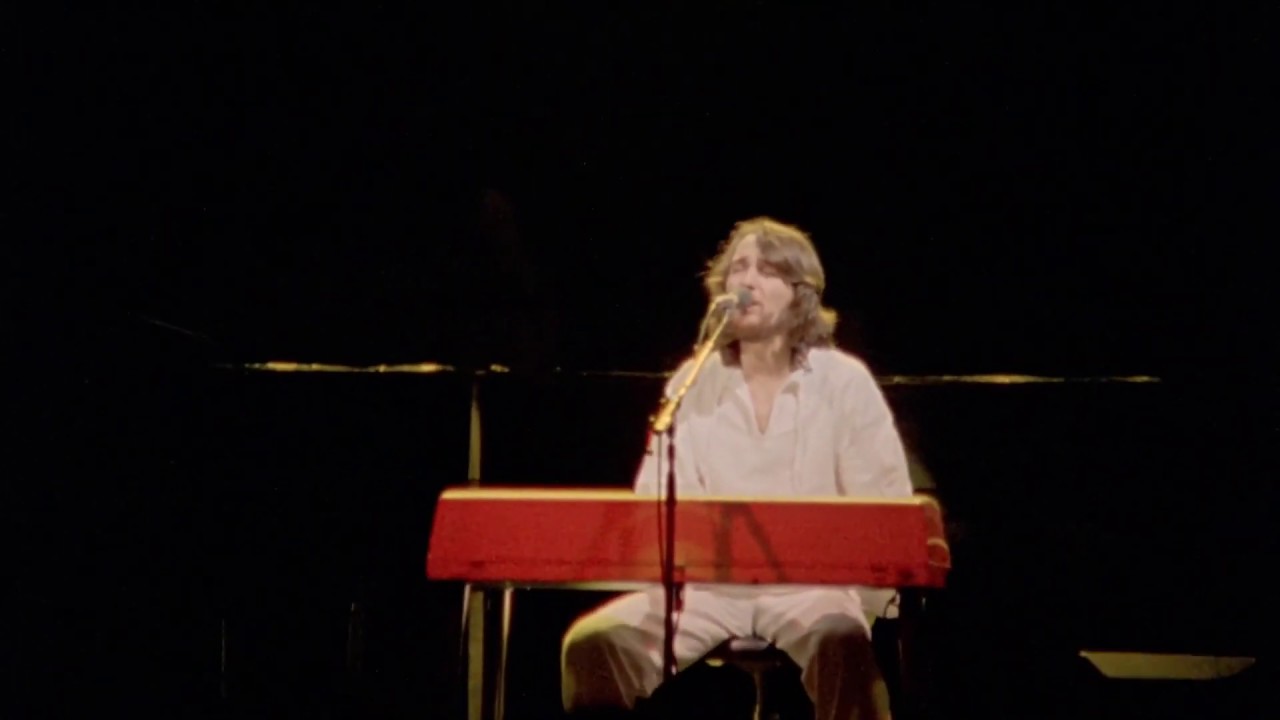
In 1983, upon deciding that Supertramp had gone as far as they could, Hodgson quit for a solo career and to spend more time with his family.
“It’s a decision that I’ve sometimes regretted,” he admits, “but the unity and passion of the Crime Of The Century era was missing.” That became even more apparent years later when he saw Supertramp in concert without him. “They didn’t play Dreamer, though,” he points out with a knowing smile. “It’s too difficult to do, even for them.”
Hodgson withdrew from an attempt to reunite Supertramp in 1990 when “the business became more important than the music”. When he brought up the subject again with Davies in the early noughties, once again key subjects couldn’t be agreed upon. “It’s a situation that I’d never say never to,” Hodgson said. “But at the moment I’m very busy having a reunion with my fans and my songs.”
That process began in 2000 with Open The Door, his first solo release in 13 years, and he played live most recently on the Rock Legends Cruise in early 2020 – while performing in front of 60,000 at Wembley Stadium and a global TV audience of millions at the Princess Diana memorial concert in July 2007 significantly enhanced his profile.
“I had laryngitis and didn’t know whether I’d sing or squawk, but I was happy to accept Princes William and Harry’s invitation to appear,” he says. “We never met, but I’ve nothing but admiration for Diana and all she stood for. Prince William told me that as kids they sat around and sang Supertramp songs with their mother, which touched me deeply. They both filled me with hope for England’s future."
The original version of this feature appeared in Classic Rock 111, in August 2007. Rick Davies died in 2025.

