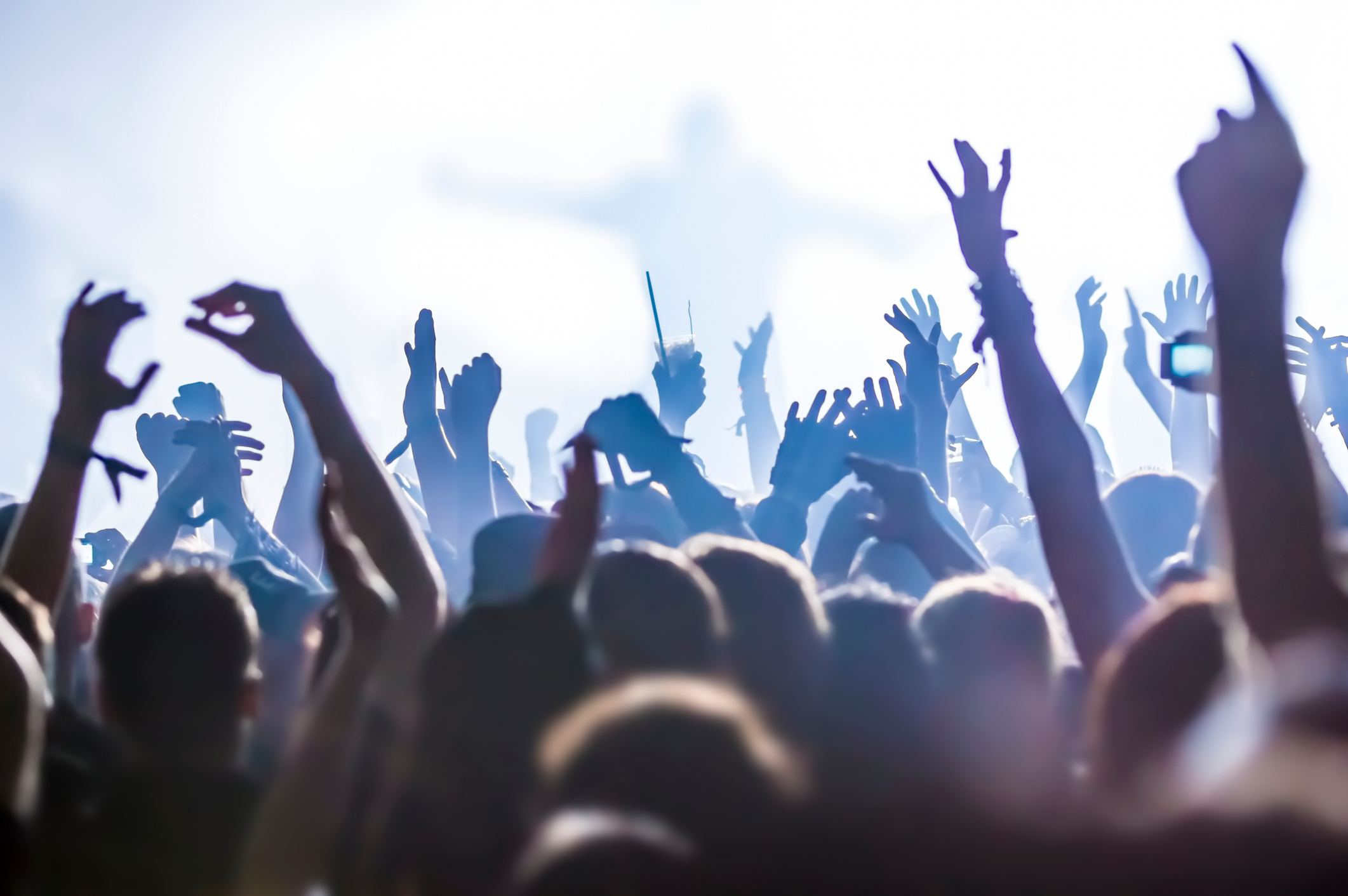


October 25, 1996 was the day metal stepped back from the edge of oblivion. On that hot Friday, 20,000 people descended on the Blockbuster Desert Sky Pavilion, an outdoor amphitheatre in Phoenix, Arizona, to watch 12 bands give the middle finger to the gatekeepers of cool and prove that a genre that had struggled for mainstream attention during the first half of the decade was not just still relevant but was about to reassert itself like never before.
The bill at the Desert Sky Pavilion combined the old guard and new blood. Slayer and Danzig were mid-90s metal royalty. Below them were Sepultura, Fear Factory, Biohazard and Neurosis, bands who were dragging the scene into an electrifying new era, even if none of them had broken out of its boundaries. On the second stage, the new generation were represented by the likes of Coal Chamber and Powerman 5000, relative unknowns who had yet to make an impact but soon would.
Hovering over them all at the very top of the bill, with arms outstretched like a benevolent Dracula, was Ozzy Osbourne, a man who had proved as impervious to shifting trends as he was to the long-term effects of booze and drugs. It was Ozzy who gave his name to this gig, and to the identical one that took place the following day at the Glen Helen Blockbuster Pavilion in San Bernardino, California: Ozzfest. Ozzfest – or The Ozzfest, as it was officially named in that first year – was the point on which the entire decade pivoted for metal.
It arrived at a tough time for the genre, but Sharon Osbourne was having none of it. Ozzy formidable’s wife and manager took a snub by the organisers of hugely successful travelling alt rock festival Lollapalooza as the impetus to create her own rock’n’roll circus. That initial two-day event ballooned into an era-defining touring juggernaut, producing a new breed of bands and fans that ensured metal would become bigger and more dominant than ever before: The Ozzfest Generation. This is how it all began.
With the exception of Metallica, the days of metal bands selling millions of albums were over by 1996. This once-dominant musical force had been superseded by grunge and alternative rock and was in danger of becoming commercially irrelevant.
Max Cavalera (ex-Sepultura): “At that point, metal was out, like, ‘You guys are done!’ All people wanted was grunge. Black shirts, leather jackets, that shit was fucking over. It was flannel shirts, Seattle and rain.”
Dino Cazares (Fear Factory): “In 1995, when [Fear Factory’s second album] Demanufacture came out, Sharon and Ozzy took us under their wing for a world tour. We heard through Sharon that Lollapalooza had turned Ozzy down, claiming he was ‘too metal’.”
Sharon Osbourne: “Ozzfest came from Lollapalooza. I wanted Ozzy on Lollapalooza, and the response back was, ‘He’s not relevant.’ Because Lollapalooza, when it started, was all very grand and all very Seattle – they were musical snobs. So I said, ‘Fuck off, we’ll do our own and it will be a metal festival.’”
Billy Graziadei (Biohazard): “Lollapalooza was never gonna have a band like Biohazard or Slayer. To be honest, we didn’t give a fuck. Biohazard was used to not fitting in.”
Sharon Osbourne: “Lollapalooza had singing monks… they had Tom Jones… they had all of this alternative shit. Fuck that.”
Billy Graziadei: “When we toured Europe, I was amazed by how well-organised the festivals were. I never understood why we didn’t have them in the States. The few we played in America were poorly run in comparison to anything in the UK.”
Sharon Osbourne: “I knew this could work because I knew that people were waiting for it. The music press wasn’t writing about metal, but the music press only wants to talk about the new taste of the day. Metal wasn’t dead, no way.”

Sharon’s conviction wasn’t misplaced. This new festival was tailor-made for bands who found themselves shut out of Lollapalooza, such as Slayer, Sepultura and Danzig. It helped that the green shoots of a new scene were starting to emerge in LA, centred around bands such as Fear Factory, Coal Chamber and Korn.
Sharon Osbourne: “I didn’t have any resistance, because the people I was going to were metal acts, and they were, like, ‘Yeah, fantastic.’”
Dino Cazares: “They asked if we were available. When Sharon Osbourne asks you to play a new festival, you say, ‘Fuck yes!’ Even though Demanufacture was out, we were broke at the time, so we jumped at any opportunity for exposure.”
Dez Fafara (Coal Chamber): “We heard rumblings that it was coming. So we hit up a gentleman called John Fenton, who is Sharon’s right-hand man, and said to him, ‘Hey, is this happening? If there’s any way we can be part of it, that would be great.’”
Billy Graziadei: “I love what Sharon and her team built with Ozzfest, but to be straight up, at the time I didn’t feel like there was that much demand for it in America. In Europe, you’d be at festivals and you would see fans wearing a Bon Jovi patch right next to a Slayer patch. Music in America was still so segregated back then, so I didn’t think everything was aligned properly for it to work. Shows how much I knew.”
Sharon Osbourne: “Ozzy was nervous about it. He said, ‘Oh fuck, if this fails we haven’t just got egg on our faces, we’ve got the whole omelette.’ And I’m, like, ‘It’s going to be fine, just go for it.’”
Billy Graziadei: “There were definitely some egos involved. There had been tension when new bands were added to the bill and altered the line-up order. There was also a feud between Sepultura and Slayer at the time over stupid comments made in interviews. But looking back now, the things that seemed like the end of the world back then are so insignificant.”
The Ozzfest was scheduled to take place on October 25 and 26 in Phoenix and San Bernardino. They would mark the climax of Ozzy’s successful Retirement Sucks! comeback tour, which had begun 16 months earlier in the UK.
Sharon Osbourne: “There was so much riding on it that we were all shitting ourselves. But when those gates opened in the morning on that first day, there was no feeling like it – when that crowd comes rushing in, they’re all pumped, they can’t wait, and it’s like, ‘Yes, this is what it’s about!’ It’s about seeing those fans come running in with big smiles on their faces. Yeah, that’s absolutely what it’s about.”
Dino Cazares: “We rolled up in a van, and what struck me immediately was the lack of corporate restrictions. Nowadays, festivals require five different wristbands just to walk anywhere. Back then, it was open, relaxed and everyone was together. They literally told us to park our van right next to Ozzy’s tour bus!”
Billy Graziadei: “When we pulled up to the first show in Arizona, we waited on the bus for a long time to get our credentials. The first day was a bit chaotic. The second day was much more organised and fluid.”
Dino Cazares: “There was total camaraderie backstage. Every dressing room and bus door was wide open. We were close with Sepultura, Biohazard, Danzig, Slayer and Coal Chamber. Most of us were LA locals or shared management. It was one big happy family right from day one.”
Billy Graziadei: “We were very close with Sepultura – they were actually the best men at my wedding. So it was like being with family, alongside the guys in Danzig and Ozzy’s band, ’cos we’d just toured with them.”
Dez Fafara: “You would be walking around, and there’s Slayer stood over there. That was the point where I thought, ‘We’re in the big boys’ club now – let’s act like we belong here with all these legendary bands.’”
Billy Graziadei: “Sharon was like the tour mom. You knew she ran things, but she was always cordial, polite and very welcoming. She was great.”
Sharon Osbourne: “All the bands were so well-behaved. I didn’t have to bollock anyone or threaten to send them back to their mom. There was none of that.”
Even without the likes of Metallica, Megadeth and Pantera, the Ozzfest bill carried an impressive weight. Several bands on the Main Stage had supported Ozzy on the Retirement Sucks! tour, including Fear Factory, Biohazard, Sepultura and Danzig, who were joined by Slayer and Neurosis.
The second stage featured straight edge flagbearers Earth Crisis, plus Coal Chamber, Powerman 5000, long-forgotten alt metallers Cellophane and King Norris, fronted by Howard Stern sideman Fred Norris. And then, of course, there was Ozzy.
Billy Graziadei: “Both shows were at outdoor amphitheatres, so they weren’t massive open fields like Castle Donington in the UK. It did feel like a big deal, but there were empty seats – it wasn’t completely packed.”
Dez Fafara: “The line-up that first year was incredible, it really was. It was the first time I ever heard Neurosis. That fucking changed my life.”
Dino Cazares: “We played second or third on the bill, and the crowd was going insane. People were crying and dying of excitement because there was finally a festival dedicated to them.”
Sharon Osbourne: “Oh, wait, I did bollock somebody. It was the merchandising company, because we’d run out of merch at two in the afternoon.”
Dez Fafara: “The second I stepped offstage someone said to me, ‘Sharon Osbourne wants to meet you.’ I’m, like, ‘What?! What the fuck are you talking about?’ So, I get taken down to Sharon’s backstage area and she handed me a big chrome bracelet, which I still have to this day, and she said, ‘I want to manage you.’”
Billy Graziadei: “In those amphitheatres, there were fixed seats up to the stage and a 10-foot barricade. With seats, there is no pit and nobody can move, people just stand there. It was really weird for us, and it sucked out all the energy. You had to dig deep to get them to move. Years later, venues learned to remove the first 40 or 50 seats to create a general admission pit, but at that moment, it was a real stick in the mud.”
Dino Cazares: “That was the first time I ever saw people lighting giant bonfires in the middle of the field during Slayer’s set and doing massive pit circles around the fire! People were ripping up seats and throwing them around – the energy was pure intensity.”
Billy Graziadei: “Sepultura, Danzig, Fear Factory and Slayer were all at the absolute top of their game.”
Sharon Osbourne: “There was so much going on, I didn’t really have time to stop and take in the atmosphere.”
Billy Graziadei: “Ozzy’s set felt like the peak of not just that day, but that whole tour. Everybody was on point, and Ozzy was just shining like a fucking diamond.”
Sharon Osbourne: “Was it a success? Oh, one thousand per cent. If I were a drug taker, I would probably have got out of my fucking head at the end of it all! But I don’t take drugs. It was just, like, ‘Fuck you and your precious genres! [Emphatically] Fuck you!’”"
If the first Ozzfest was a test, it passed with flying colours. It returned in expanded form the following year, retooled as a full 22-date tour headlined by the reunited Black Sabbath and featuring Ozzy pulling double duty with a solo set. Over the next few years, it’d grow even further, in terms of size, scale and success.
It didn’t revitalise metal single-handedly – bands such as Korn, Deftones, Limp Bizkit and Slipknot undeniably played their part – but it gave the modern genre a platform and identity it badly needed. Other similarly loaded tours sprung up in its image: Korn’s Family Values extravaganza, Limp Bizkit’s Anger Management tour, Linkin Park’s Projekt Revolution festival.
Ozzfest had a great run, but its lustre was fading by the late 2010s. The final Ozzfest took place in 2018 as a one-off indoor show at the LA Forum. Except it turns out that wasn’t the end. Sharon Osbourne has announced plans to resurrect Ozzfest in 2027.
Dino Cazares: “It went to the next level in 1997, especially having Pantera on the bill! Dimebag Darrell and Vinnie Paul set up a barbecue grill outside their bus, cooking food for everyone and keeping ice chests packed with beer. Everyone was bus-hopping from one band’s bus to another. It felt like summer camp for metalheads.”
Billy Graziadei: “I was sceptical at first, not about Sharon’s ability to succeed, but because I didn’t have faith in the underground subculture in America to sustain it. When it gained popularity, I remember thinking, ‘Cool, I was wrong.’”
Max Cavalera: “It was huge, man. Ozzfest made metal important again. It made it relevant.”
Dino Cazares: “Ozzfest launched a whole new movement – System Of A Down, Slipknot, Limp Bizkit and Disturbed all launched their careers there. It was a massive resurgence for the entire genre.”
Max Cavalera: “I love the European festivals, and America’s getting pretty good at festivals as well, but there’s not another Ozzfest. Somebody should do it again.”
Dez Fafara: “The idea of Sharon bringing it back fills my heart with joy. What would Ozzy want to do? He’d want to bring the fucking Ozzfest!”
Sharon Osbourne: “Ozzy was so proud of what we did with Ozzfest. It was about keeping metal alive and passing the torch to the younger generation. This is the genre of music that won’t die. It’s not dead.”
Ozzfest returns in 2027 with events announced in Milton Keynes (UK), Glen Helen Amphitheater in San Bernardino, CA and Estadio GNP Seguros in Mexico.

