


Look, you know why we’re writing this article now, and we know you know why we’re writing this article now. On December 31, Iron Maiden joined the rich lineage of 80s artists, including Metallica and Kate Bush, to have a song prominently featured on Stranger Things. At the victorious end of the season finale of Netflix’s biggest-ever English-language series, The Trooper blared out, soundtracking the moment Hawkins High School’s students graduated after years of dealing with sci-fi/horror bullshit.
A spot on the hit streaming show has led to a new generation of fans for veteran acts, and time will tell whether Maiden enjoy the same fortune. But, either way, The Trooper – taken from the band’s 1983 album, Piece Of Mind – is and will remain the band’s most listened-to song. Despite not even cracking the top 10 of the UK Singles Chart and being banned when it first came out, it endured as a fixture of Maiden’s live shows. Now, through its four Gold certifications, it’s become their ultimate sleeper success.
The song, like many Maiden essentials, was the brainchild of founder and bassist Steve Harris. An avid reader, he based the track on the Charge Of The Light Brigade which took place during the Battle Of Balaclava in 1854, itself a part of the Crimean War of 1853 to ’56. The charge was a disastrous manoeuvre from the British side, who mounted a full-frontal assault against their Russian opposition, only to have hundreds of their horse-riding men killed or injured by gunfire. The blunder became especially infamous after inspiring Lord Tennyson’s poem, also called The Charge Of The Light Brigade, later that year.
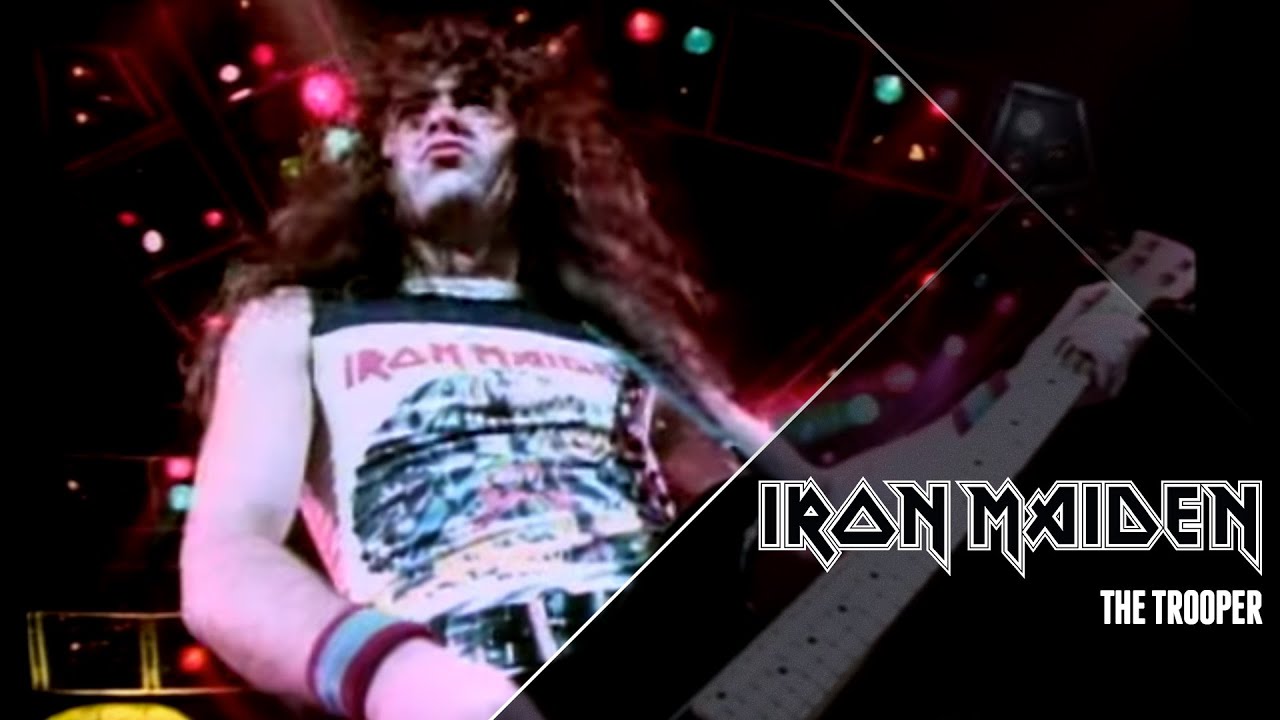
Talking to Rolling Stone in 2019, Harris, who grew up in a London that was barely 10 years removed from the end of World War II, said that he wrote The Trooper because he was fascinated by the notion of military men following orders without question.
“I grew up loving history,” he explained. “It was one of my favourite subjects at school, so a lot of it stems from that. And it’s just a fascination with the awful things people are capable of doing to each other and the positions normal everyday people get put in that they wouldn’t normally have to deal with. I have respect for anybody that has to go and do whatever they have to do to protect their country.”
The lyrics were the warts’n’all account of a fictional soldier from the charge. They avoided positive or negative language in favour of the literal and descriptive, even as the protagonist laid dying at the song’s conclusion. Longtime frontman Bruce Dickinson explained in 2008 that Maiden have mixed emotions when it comes to armed conflict.
“War is senseless, it’s stupid, and in the end you could end up dead, and there’s no point in that… but at the same time, in some ways it is glorious,” he told The Orange County Register. “You can’t tell me that Apocalypse Now doesn’t sum up both the absurdity and the glory of war… you know, the napalm and those helicopters coming in at tree-top height. You think, ‘Wow, that’s exciting.’ But then you see the end results of it, and you think, ‘Yeahhhh, OK. Maybe we should just cook up war as a video game,’ you know?”
The music of The Trooper mirrored that sense of excitement. Harris employed his trademark ‘galloping’ playing technique, while guitarists Dave Murray and Adrian Smith used a series of high-speed hammer-ons and pull-offs to evoke the feeling of rushing into battle. The chorus didn’t even have lyrics: it was simply a primal, melodic wail from Dickinson, evoking the same mindless exhilaration. Eventually, the hook became one of the band’s most iconic, as it transcended language to get live crowds all over the world whoa-ing along. That’s despite Dickinson previously having a bit of a tough time with the powerful shout.
“[The Trooper] was a vocal twister indeed,” he told Canadian journalist Martin Popoff. “As we’ve played it over the years, it’s gotten progressively faster and faster, and I’ve taken more chunks off the end of my tongue as my teeth have collided with it.”
The Piece Of Mind album came out in May 1983, and The Trooper was released as a single the following month. At the time, Maiden were flying high, buoyed by their unintentional reputation as one of the most dangerous bands in the world. Their ’82 single Run To The Hills marked their breakthrough and its parent album, The Number Of The Beast, reached number one in the UK. Meanwhile, across the pond, the record riled up the Christian right, who accused the band of devil-worshipping and burnt vinyl discs en masse.
Initially, The Trooper didn’t build on that momentum. It reached number 12 on the UK charts, where Run To The Hills had made it to seven and Piece Of Mind’s lead single, Flight Of Icarus, had made it to 11. The drop was even starker in the US. Flight… made it to eight on the Mainstream Rock chart over there, then The Trooper barely limped its way to 28.

If anything, though, the band had a bigger issue with the TV stations than they did the radio. The Trooper was accompanied by a music video that included footage from the 1936 Errol Flynn film The Charge Of The Light Brigade, which was just too grisly for the tastemakers at the BBC at the time. The broadcaster refused to air the clip unedited, to the chagrin of manager Rod Smallwood. “Anyone would think we’d killed the horses ourselves instead of using an old Errol Flynn movie,” he moaned in 1985 book Running Free.
Still, Maiden refused to leave a good soldier behind. When the band kicked off their Piece Of Mind tour in 1983, The Trooper was part of the setlist, and they’ve carried it everywhere with them ever since. At time of publication, it’s been played a whopping 1,735 times (according to setlist.fm), even though it’s caused more than a little bit of trouble on the road.
Shortly after Dickinson returned from his hiatus from Maiden in 1999, he added a theatrical flair to the song, wielding a massive Union Flag and sporting a Crimean War uniform especially for those four minutes. According to a review in Q magazine, the waving of the British standard was met with torrents of booing and expletives during a 2003 Dublin gig. The journalist wrote: “Dickinson seems blissfully unaware of the inappropriateness of the imagery, but the jarring drums and guitars suggest the band are a little shaken.”
In 2005, Dickinson was in the same patriotic get-up when Sharon Osbourne and her crew started pelting the band with eggs. Osbourne, amidst a feud with Dickinson stemming from comments that the singer had made about her reality TV show The Osbournes, later alleged that the flag was disrespectful to US troops in Iraq. Then, in 2016, one of the conditions of the band playing in China was that the singer couldn’t bring his flag onstage.
Nonetheless, the band have always stood by the fact that The Trooper is historical fiction rather than a display of nationalism, and nowadays it’s hard to imagine a show without that song as part of the proceedings. Despite its initially middling commercial response, it’s now the biggest Maiden track on Spotify, boasting more than 570 million listeners. (Their next-biggest hit, Run To The Hills, has 450 million.) Then, yes, came the Stranger Things endorsement, and it’s currently unclear how much that will add to this whirlwind story.
The Trooper has overcome more than the vast majority of songs, yet it’s emerged as arguably the essential Iron Maiden tune. It’s a testament to what can happen when a band sticks to their guns (pun intended) and keeps a track at their side no matter what. And, after recent events, those deafening whoas at their concerts may get even louder.

