




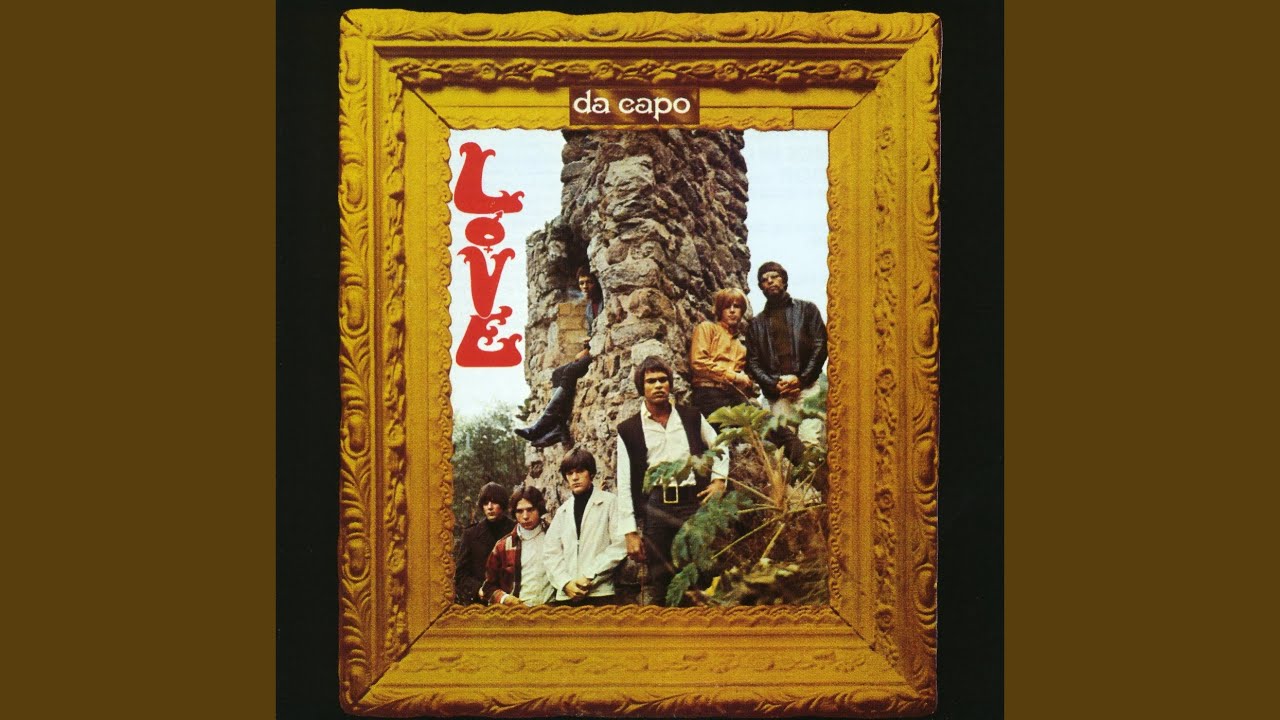
The phrase “da capo” means “from the head” – and that’s exactly where Arthur Lee was coming from when he created Love’s second album, 1967’s Da Capo. We explored its progressive tendencies in 2018.
In September 1966, Love went into RCA Studios on Hollywood’s Sunset Boulevard to record the follow-up to their self-titled debut album. The LA group employed Dave Hassinger, the same engineer as the Rolling Stones, but the record that emerged was light years away from mainstream contemporary rock.
For Da Capo, lead singer, songwriter and multi-instrumentalist Arthur Lee decided to sail uncharted territory. He confounded fans, record label Elektra and his own band in the process.
Lee expanded the line-up from five musicians to seven, bringing in Tjay Cantrelli on saxophone and Michael Stuart on drums. They sounded more like a small orchestra than a garage band.
Lead guitarist Johnny Echols had played with Jimi Hendrix and Miles Davis, while rhythm guitarist and songwriter Bryan MacLean had learned everything he knew by association with The Byrds. It was a formidable crew.
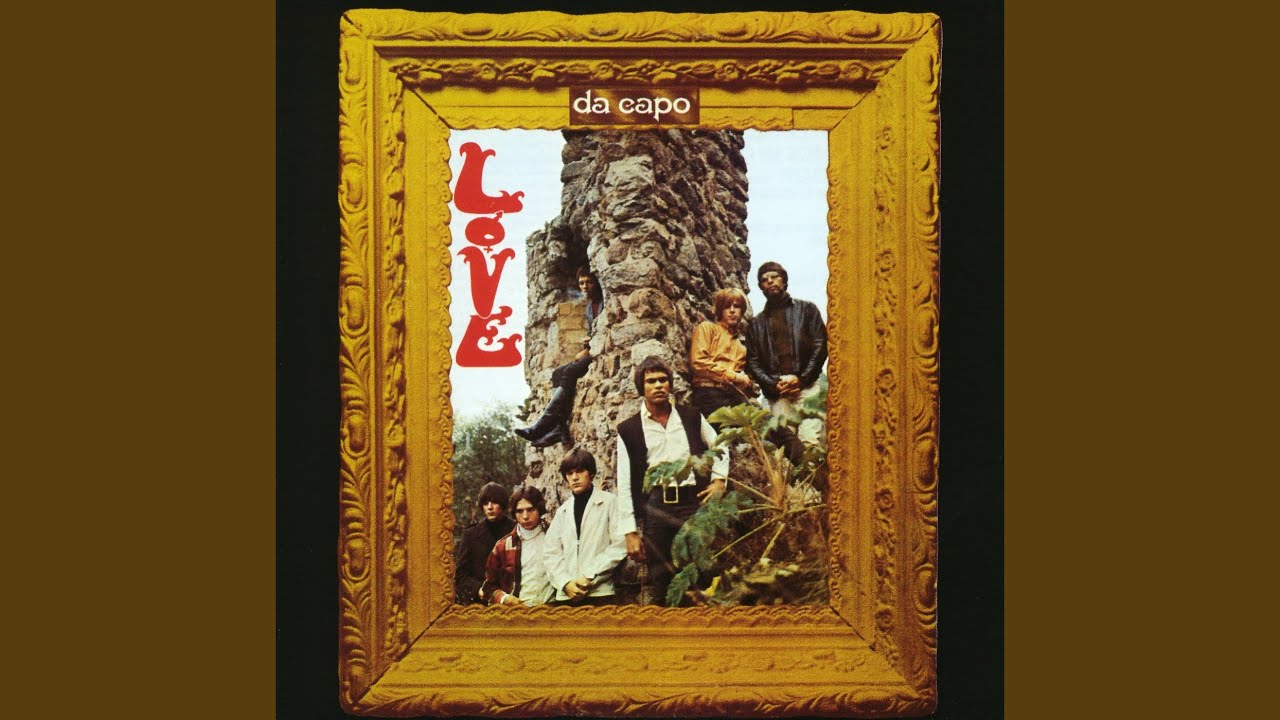
Da Capo means ‘from the head’ and Lee’s was very much at the creative controls. 7 And 7 Is, already out on 7-inch, was a ferocious shot across the bows.
With its galloping pace, sustained drumming, harsh vocals and psychodramatic lyrics about Lee’s childhood, it tore up the book on what a hit single could be. The title is never heard during the song and its controlled chaos ends in a gunshot slowed down to sound like a bomb exploding.
Stephanie Knows Who begins with similar urgency but softens into a jazzy free-for-all as guitars, sax and electric harpsichord all collide. Lee’s aggression contradicts the dreamlike romanticism of Orange Skies, all Moody Blues-style flute and lyrics about carnivals and cotton candy.
Another ‘pretty’ acoustic guitar-dominated song, The Castle, inspired by the band’s communal residence, became the theme tune to BBC travel show Holiday. Perhaps it wasn’t that far a stretch of the imagination from Laurel Canyon debauchery to British teatime TV.
Side one’s finale, She Comes In Colors, is an exquisite, delicate piece of psychedelia (the Rolling Stones' She's A Rainbow, which also features the line 'She comes in colours,’ came out the following year in 1967).
The Love song was covered by Malcolm Young’s pre-AC/DC band, the UK-based (but Aussie by birth) Velvet Underground, although it was released the year before Malcolm joined.
The most divisive aspect of Da Capo is Revelation, nearly 19 minutes long and taking up all of side two. The combination of electric harpsichord, John Lee Hooker-influenced blues jamming and a meandering melee of John Coltrane-style jazz honking inspired either devotion or derision. Only Bob Dylan and Frank Zappa had got away with anything similar.
The imaginative intensity of Da Capo set in motion a seismic shift from the rock’n’roll framework, incorporating jazz, Latin, baroque, enigmatic lyrics and peculiar tempos.
Most of Lee’s crew jumped ship soon after its release. Other musicians were watching from the shore, however, ready to undertake their own voyages of musical discovery.

