




In 2023 Prog looked back on King Crimson’s groundbreaking 1973 album Larks’ Tongues In Aspic, made with a new line-up of Robert Fripp, John Wetton, David Cross, Jamie Muir and Bill Bruford. In the article, drummer Bruford shared his memories of the time – including one of the most important moments of his early career.
The original line-up of King Crimson had split up in December 1969, less than three months after the release of their debut album. In 2012 Fripp said, “It was heart-breaking; but there was still something there to be pursued and I knew that whatever we did in the next two years – this was Peter and myself – would be wrong. But we had to do it to get to the other side.”
The “other side” was the fifth incarnation of King Crimson. It was heralded in July 1972 by the surprise announcement that drummer Bill Bruford had quit Yes to join the group. But it was of no surprise to Bruford, who’d been a fan since their earliest days.
“I played fairly easy to get,” he admits . “I kind of stuck myself in front of Robert and said, ‘I’m here.’ Yes and King Crimson had played together on the same bill [in the US in 1972], but for several months it was, ‘Not yet, Bill,’ and then eventually it was, ‘Okay, Bill, let’s do this’ – as if I’d been a tomato ripening upon the vine ready to burst forth with goodness!
“I was thrilled to be part of it, although I’m not sure I really knew what I was getting myself into. I didn’t know Robert very well. I just jumped in and hoped for the best. I don’t mind doing that, but of course it can go wildly wrong.”
The Melody Maker gossip column The Raver from August 5, 1972 included this entry: “Bill Bruford quitting Yes was strange timing... Gigs with KC don’t exactly last, at least on present form.” Did Bruford share those sentiments in any way? “I didn’t,” he says. “I was a romantic, and saw the positive gloss over potential pitfalls. I was aware that I had done my best in Yes; it was time for a change. I thought Robert could provide a space where I could grow and learn, and I was right.”
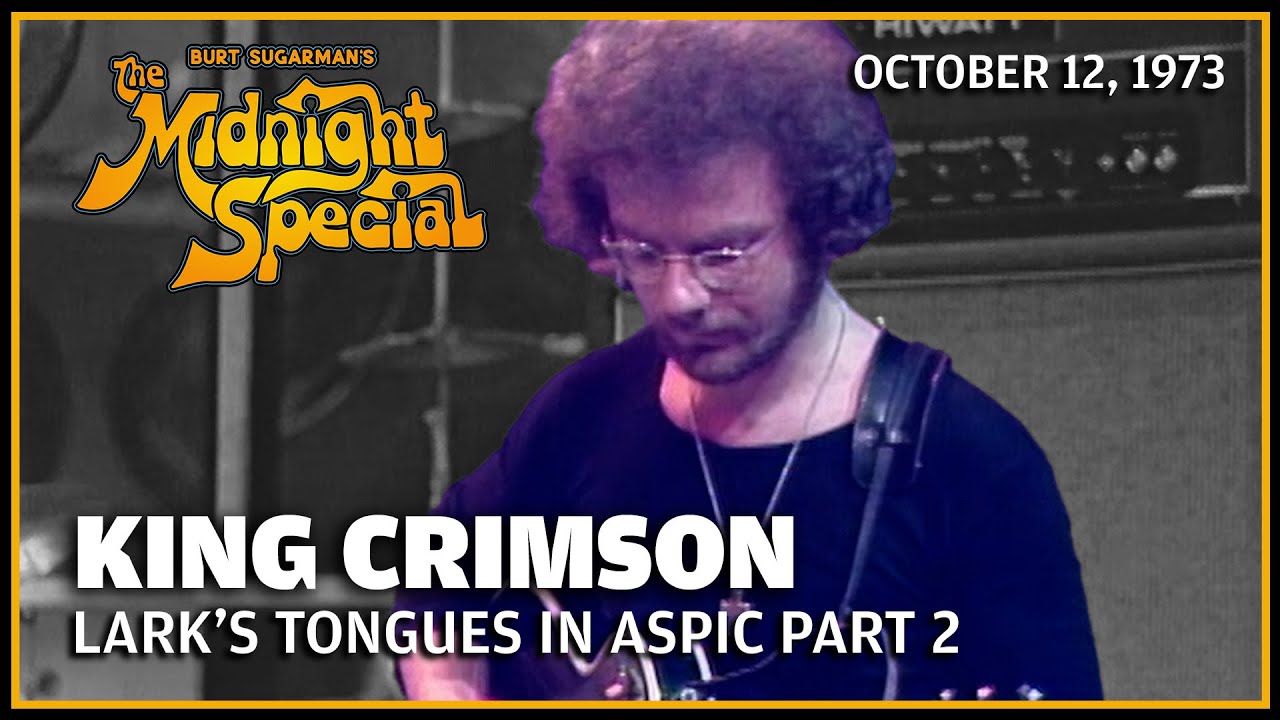
The drummer quickly established a working relationship with bassist and vocalist John Wetton. “I think John and I were very simpatico,” he says. “We used to play Herbie Hancock records – Crossings had just been released that summer – and figure out how they worked, and built this powerful unit.
“Robert would sometimes refer to it as ‘the flying brick wall’ – you know, ‘play with it or duck.’ Highly unflattering! But we definitely had some muscle. We weren’t a wimpy group at all.”
The unique element in the new line-up – as he would have been in any group – was Jamie Muir. He’d been drawn to improvised music for its intricacy and detail, but later said he’d wanted “to make myself more predictable.” By the time he joined King Crimson in the summer of 1972, it was debatable if that statement held up.
He’d amassed an enormous percussion setup. Looking like some strange art installation, it included a standard drum kit, rattles, bird calls, car horns, chimes, bells, gongs, metal sheets, tuned drums, plastic bottles, and other hitables too numerous to detail.
Muir said in 1991: “Bill Bruford and I got on very well together musically, it seemed to me. He was a solid, tight, thinking studio type and I was very much into doing imaginative odd things.” But while rehearsing at Richmond, Muir gave his fellow drummer a public dressing down that practically reduced him to tears.

“Jamie was older than me and a powerful guy,” Bruford recalls. “First of all, his instrumental arsenal was about five times the size of mine and occupied most of the rehearsal space. He gave me one of my first and best drum lessons. At one point he stopped the proceedings and said, ‘What you’re playing is crap!’
“I thought what I was doing was quite good, because I had the fastest paradiddle in Sevenoaks, Kent, and being the young man that I was, I was determined to deploy it at every possible opportunity. And Muir quite quickly had seen right through that. He said, ‘What you don’t understand is that the music doesn’t exist to serve you. You exist to serve the music.’
“It was all a bit fraught, to start with,” he continues. “I think part of Robert putting the band together was a bit like Miles Davis – you pick five interesting guys, lock them in a room together, and try to extract a collision of experiences from them. And if they make an album without actually killing each other first, it will at least be an interesting album.”

