


“I’m incredibly proud of that song. To have ownership of something that powerful is something I’ll never be able to get used to,” Eric Clapton said of Layla in 1988. “It still knocks me out when I play it.”
One of the most recognisable rock songs, Layla begins with a seven-note riff of awesome expectancy, followed by an intense, intoxicating cry of unrequited love: ‘What’ll you do when things get lonely?’
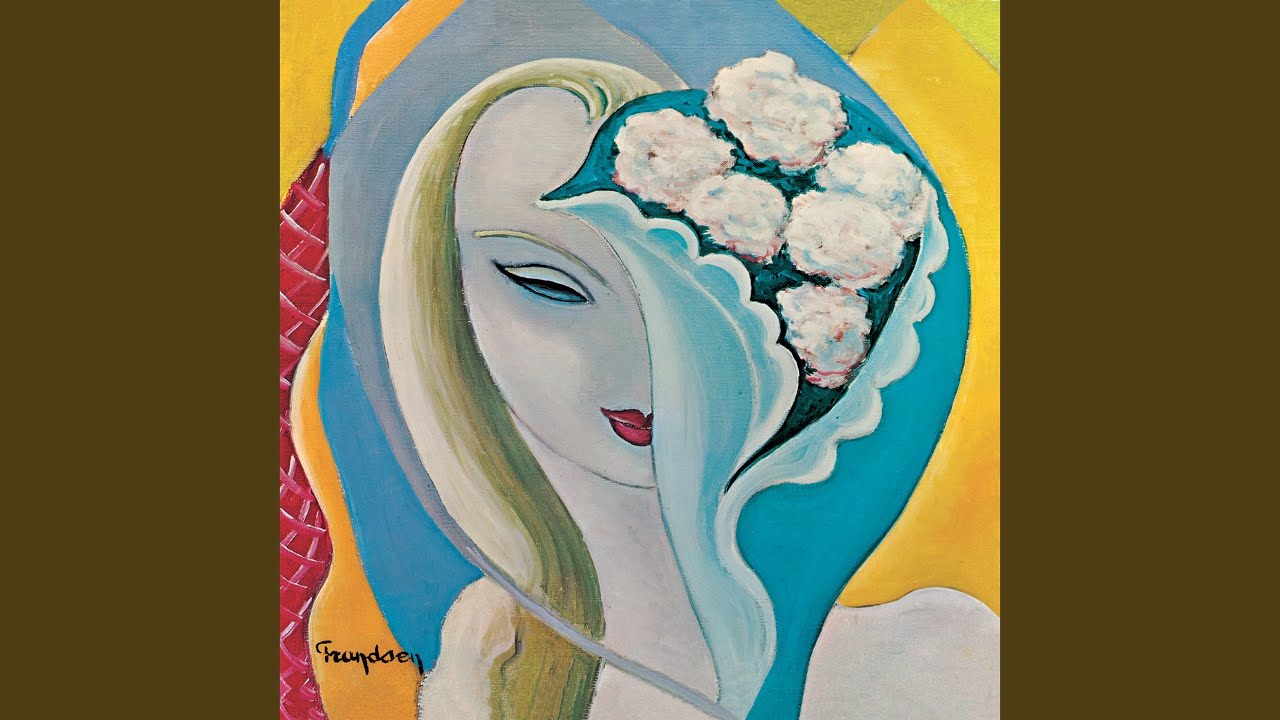
It was directed at Pattie Harrison, wife of then-Beatle George Harrison. Clapton was trying to lure her away from her husband, with whom he was good mates. That wasn’t widely known when the song appeared in 1970 on the Derek And The Dominos album Layla And Other Assorted Love Songs, but it was certainly obvious to all concerned.
Layla was inspired by a book Clapton had been reading, The Story Of Layla And Majnun, the 12th-century tale of an Arabian princess whose father marries her off, leaving her true love in despair that turns to madness.

Most of the songs Clapton wrote for the Layla album were co-written with Bobby Whitlock, an American keyboard player who’d recently quit Delaney & Bonnie, a band Clapton had befriended and toured with. But Layla is credited to Clapton and Dominos dummer Jim Gordon, who came up with the lengthy piano coda.
Speaking to Classic Rock in 2012, Whitlock – who died in 2025 – recalled that Clapton already had Layla when they started writing together: “He wrote that song by himself at home”.
The opening riff was also there – taken from Albert King’s As The Years Go Passing By – but the song was much slower than it finally appeared. “Eric took the song to Miami with him. We’d gone through it before,” said Whitlock. “Eric brought that seven-note lick with him to the recording sessions. And then Duane stirred ’em up.”
Duane Allman, guitarist with the Allman Brothers, was introduced to Clapton by producer Tom Dowd soon after sessions began on the Layla album at Criteria Studios in Miami. According to Dowd, the sessions had been sluggish before he took Clapton to an Allman Brothers concert. Afterwards, Clapton invited the band back to the studio, where they jammed for the next 18 hours. Within days, Duane Allman was playing at the album sessions, transforming the atmosphere as he and Clapton brought the best out of each other.

Whitlock said the album was recorded pretty much in the order you hear it, and Layla was recorded towards the end of the sessions. “It wasn’t like, ‘We’ll do this one first and then this one, and we’ll leave Layla for last’, he explained. “It just happened naturally.”
There had to be some kind of telepathy going on, because I’ve never seen spontaneous inspiration happen at that rate and level.
Bobby Whitlock
Nevertheless, the fact that Layla gave the record its title and is the climax to the double album suggests that Clapton regarded it as a special song even before Allman added his masterstroke.
What Allman did was to change the song’s dynamic by speeding up the opening riff. Some people even maintain that it was Allman who introduced the opening riff into the song, although Whitlock disagreed. “[It] was already there,” he stated.
But it wasn’t just the riff. Tom Dowd recalled layering six guitar parts on the track. “There’s an Eric rhythm part, three tracks of Eric playing harmony and the main riff, one of Duane playing that beautiful bottleneck, and one of Duane and Eric locked up, playing counter melodies,” he said. “There had to be some kind of telepathy going on, because I’ve never seen spontaneous inspiration happen at that rate and level. One of them would play something and the other would react instantaneously. Not once did either of them have to say: ‘Could you play that again, please?’ It was like two hands in a glove.”
Whitlock’s appreciation of Allman’s playing with Derek And The Dominoes was more measured. While he credited him with some inspirational performances – “The majesty of those opening chords on Little Wing is all Duane for sure” – he had a problem with some of his other contributions.
“Layla would have been just as great without Duane on it,” he said. “In many ways it would have been better. Both the slide parts he put on to the coda are out of tune. If Eric had been playing them it would have been different.”
Such remarks are heresy to Allman fan club devotees, but there are reports of an unreleased out-take of Layla that was abandoned because of “tuning issues”.
Jim Gordon’s piano coda, added three weeks after the song had been recorded, further irritated Whitlock. “It taints the integrity,” he sighs. “It has nothing to do with the rest of the song. It just sounds like a mess. It’s like Guitar Wars – you’ve got three or four guitars and everybody’s going all over the place.”

Whitlock also claimed that Gordon stole the piano part from Rita Coolidge, his then girlfriend. It certainly sounds similar to the Coolidge-penned Time, released by Booker T. and Rita’s sister Priscilla in 1973.
The piano coda was not on the version of Layla released as a single in the US in 1971, which reached No.51 there. When the full, seven-minute version came out the following year it made No.7 in the UK and No.10 in the US. By which time Derek And The Dominos had been broken up by drug-fuelled paranoia, and Clapton was sinking into full-blown heroin addiction.
In fact the recording of the album had been characterised by conspicuous drug consumption. “We didn’t have little bits of anything,” said Whitlock in 2025. “There were no grams around – let’s put it like that.”
While Layla has since become the ritual climax to a Clapton concert, it was played live by Derek And The Dominos only a couple of times, when Allman guested with the band. Whitlock said that was just a coincidence. Or maybe not.
Originally published in Classic Rock issue 177 (October 2012)

