"The epitome of American rock'n'roll." Nine Little Feat albums to listen to and one to avoid
Despite musical excellence and fans in high places, Little Feat were a classic case of commercial underachievers
Little Feat were a match for anyone in their 70s pomp. Led by the inimitable Lowell George, the LA sextet perfected a loose-limbed mix of swampy soul, country, urban blues, gospel and second-line funk, justifying guitarist Paul Barrere’s claim that they were “the epitome of American rock’n’roll”.
Their peers tended to agree. The Rolling Stones, Eric Clapton, Bonnie Raitt, Linda Ronstadt and Led Zeppelin were among those who sang Little Feat’s praises. Indeed, Jimmy Page declared them his “favourite American group” in a Rolling Stone interview in 1975, while Robert Plant revealed that fellow hotel guests at the LA Plaza had complained about them “playing Little Feat records too loud”.
Yet famous fandom didn’t always translate into sales. Little Feat instead became something of a cult passion, their music too limitless for any cosy commercial fit. As keyboard player Bill Payne points out: “People like to put you in a box, so playing the kind of music we did hurt us from the business side of things.” Allied to a band chemistry that often bordered on the volatile, Little Feat’s relative lack of commercial success resulted in several quick-fire break-ups and reunions.
It all began in 1969, when singer and slide guitarist George left Frank Zappa’s Mothers Of Invention, bringing with him his first great composition, Willin’. Initially conceived as a four-piece, Little Feat debuted on Warner Bros. with 1971’s self-titled album, but it wasn’t until 1973’s Dixie Chicken that they truly found their all-inclusive métier. Crucially, that album also heralded the arrival of their classic line-up of George, Payne, Barrere, bassist Kenny Gradney, drummer Richie Hayward and percussionist Sam Clayton.
A sensational live band, they blazed a trail through US cities and towns as the decade wore on. British audiences finally experienced Little Feat up close in January ’75, when they blew away headliners the Doobie Brothers on a Warner Bros package tour.
Tragically, Little Feat’s world came crashing down just four years later, when George – a man of hedonistic appetites, both boozy and chemical – suffered a fatal heart attack aged just 34. The band eventually regrouped in 1987, with Pure Prairie League’s Craig Fuller stepping in as lead singer. It’s a testament to their resilience (and unwavering devotion to the cause) that Little Feat continue to thrive, with Payne, Gradney and Clayton still at the core.
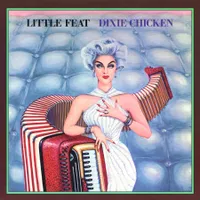
Dixie Chicken (Warner Bros, 1973)
After a personnel shake-up that involved the addition of guitarist Paul Barrere and percussionist Sam Clayton, and new bassist Kenny Gradney in for Roy Estrada, Little Feat minted their signature sound on their third album, assimilating the secondline rhythms of New Orleans funk into their potent brand of bluesy roots rock.
Standouts include the strutting title track, a vivid tale of boozy misadventure and mysterious Southern belles, and the tragi-comic Fatman In The Bathtub, in which a baleful Lowell George is tormented by unrequited sexual desire. The band’s cover of Allen Toussaint’s smouldering On Your Way Down is pretty definitive, too.
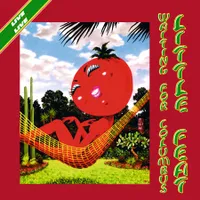
Waiting For Columbus (Warner Bros, 1978)
The classic Little Feat line-up might have been a formidable studio proposition, but they often surpassed themselves in a live setting. This astonishing double album – recorded during a run of shows at two venues in 1977 – London’s Rainbow Theatre and the Lisner Auditorium in Washington, DC – captures the band at their intuitive peak.
The Tower Of Power horn section provide extra muscle as the band lay down thrillingly elastic versions of treasures like Willin’, Spanish Moon, Sailin’ Shoes and an epic Dixie Chicken. Among the starry cameos, ex-Stones guitarist Mick Taylor adds slide to A Apolitical Blues.
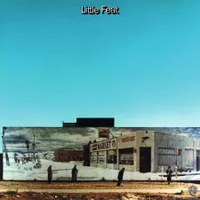
Little Feat (Warner Bros, 1971)
Grounded in the blues, but also venturing into country rock and American folk, Little Feat’s arresting debut is marked by George’s surreal humour, not least on the vaguely trippy Brides Of Jesus and the outstanding Willin’. The latter, a wry trucker’s anthem involving dope, erratic weather and clandestine people-smuggling, was the song that landed the band their Warner Bros deal.
Covers medley FortyFour Blues/How Many More Times (with Ry Cooder on bottleneck guitar) is a striking illustration of George’s love of Howlin’ Wolf. The album might have been a commercial dud, but critics were quick to applaud.
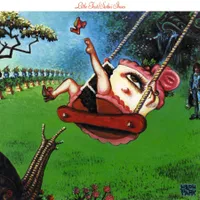
Sailin’ Shoes (Warner Bros, 1972)
The band’s second studio album marks an incremental shift towards the more groove-oriented sound that would become their trademark.
Willin’ is reworked to suit, but the finest moments lay elsewhere. Underscored by electric piano, the title track is a gospel-blues master class; the swampy Cold, Cold, Cold is as disconsolate as it is plain irresistible; Easy To Slip (co-written by George and his ex-Factory bandmate Martin Kibbee, and later covered by the Black Crowes) is a livewire beauty. Richie Hayward and Bill Payne contribute Tripe Face Boogie, featuring one of George’s most memorable slide solos.
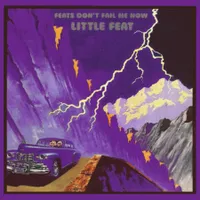
Feats Don’t Fail Me Now (Warner Bros, 1974)
Dixie Chicken might have been a masterpiece, but disappointing sales left the band’s future in disarray. Having poured their energies into session work, the various members regrouped as Little Feat in early ’74, essentially picking up where they left off with a syncopated stew of swamp-blues, country and southern funk.
Rock & Roll Doctor and the feverish Spanish Moon stand among George’s finest achievements, while Payne and Barrere excel on Oh Atlanta and Skin It Back, respectively. Guests include Bonnie Raitt, Emmylou Harris and the Tower Of Power horns.
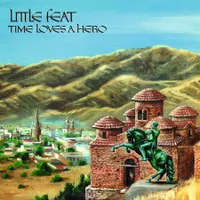
Time Loves A Hero (Warner Bros, 1977)
Having contracted hepatitis, George missed the initial sessions for Little Feat’s sixth album, ceding greater creative control to Barrere and Payne in the process.
The fusionist jazz tendencies of Time Loves A Hero continue to divide opinion among hard-core fans, although there’s no denying the rhythmic power of the title track and Old Folks Boogie. Of the six-minute instrumental Day At The Dog Races, with Payne’s synth lines at its core, a nonplussed George remarked: “What is this, fucking Weather Report?” His own Rocket In My Pocket is a playful return to the classic Little Feat groove.
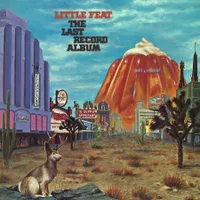
The Last Record Album (Warner Bros, 1975)
Little Feat split again (albeit briefly) following Feats Don’t Fail Me Now, with Barrere later claiming it was George’s attempt to blackmail their label into offering the band better support. Whatever the truth, George’s enthusiasm seemed to have waned by the time they reconvened in 1975.
That said, the undoubted highlight of this fifth LP is Long Distance Love, an exquisite blues ballad in which he bemoans the impossibility of meaningful romance. Barrere and Payne step up on the sinuous jazz-fusion of All That You Dream and One Love Stand, the latter covered by Carly Simon the following year.
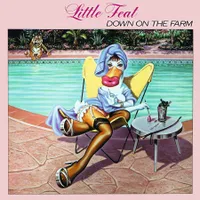
Down On The Farm (Warner Bros, 1979)
George was preoccupied with finishing his solo album Thanks I’ll Eat It Here (a project he’d begun as far back as 1975) when Little Feat began sessions for their seventh studio album. His final input into that Feat record was therefore diminished, although he’s served well by songs like Front Page News (alongside Payne) and the countrified SixFeet Of Snow, the latter co-written with Grateful Dead’s Keith Godchaux. Barrere’s agile title track, in which the guitarist also takes lead vocals, is pretty impressive too.
Alas, George was already dead by the time Down On The Farm was finally completed.
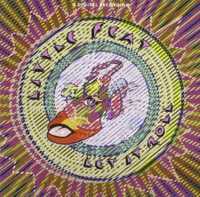
Let It Roll (Warner Bros, 1988)
Post-George, Little Feat’s first album in nine years showcased the band’s new lead singer Craig Fuller, a co-founder of Pure Prairie League. The rest of Little Feat clearly had plenty of faith in their latest addition, with Fuller co-writing eight of Let It Roll’s 10 songs. Guitarist Fred Tackett, a regular Little Feat collaborator, was also promoted to official member.
The resulting album is perhaps better than anyone might have expected. Hate To Lose Your Lovin’ carries a signature groove, while the carefree title track is a breezy ode to the pull of the highway. Bob Seger, Bonnie Raitt and Linda Ronstadt add distinctive vocal harmonies
...and one to avoid
You can trust Louder
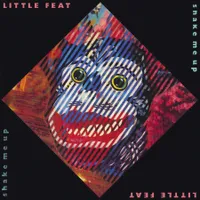
Shake Me Up (Morgan Creek, 1991)
Navigating Little Feat’s Georgeless catalogue can be tricky. 1990’s Representing The Mambo, for example, feels like a band content to simply go through the motions; 2000’s Chinese Work Songs is padded out with a handful of uninspired covers; 2008’s Join The Band is redeemed only by the contributions of various big-name collaborators.
But Shake Me Up, their final album with Craig Fuller, is almost totally devoid of sparks, forgoing the group’s earthy swing for overly smooth production and an unfortunate propensity for AOR. Even guests Bonnie Bramlett and soon-to-be Little Feat frontwoman Shaun Murphy can’t save it.
Sign up below to get the latest from Classic Rock, plus exclusive special offers, direct to your inbox!
Freelance writer for Classic Rock since 2008, and sister title Prog since its inception in 2009. Regular contributor to Uncut magazine for over 20 years. Other clients include Word magazine, Record Collector, The Guardian, Sunday Times, The Telegraph and When Saturday Comes. Alongside Marc Riley, co-presenter of long-running A-Z Of David Bowie podcast. Also appears twice a week on Riley’s BBC6 radio show, rifling through old copies of the NME and Melody Maker in the Parallel Universe slot. Designed Aston Villa’s kit during a previous life as a sportswear designer. Geezer Butler told him he loved the all-black away strip.