


The sweeping strings and cascading drum rolls that began Tonight, Tonight was a grandiose statement of intent for The Smashing Pumpkins, a sign that Billy Corgan & co. were entering a whole new realm on 1995’s Mellon Collie And The Infinite Sadness. It’s for that reason, you imagine, that the track was placed right up top on their double-disc third album, the first song proper after the instrumental introduction of the title track.
Mellon Collie… is packed with some scintillating rock moments, most notably Zero, Bullet With Butterfly Wings and Thru The Eyes Of Ruby, but you could argue that the Pumpkins had reached their epic guitar zenith on 1993’s Siamese Dream. Certainly, there was a different tact on Mellon Collie… compared to the layered, labyrinthine dynamism of the shoegazing-inspired guitar sound on that record, something a little more barbed and metal in its menacing directness.
Tonight, Tonight was the sound of Billy Corgan demonstrating he could make just as monumental a sound with an orchestra. During their golden era, Pumpkins rarely went into anything without trying to shoot for the moon but here was a song where their lofty ambition was met with perfect execution.
That certainly wasn’t the idea originally, though. Whilst still in the middle of touring Siamese Dream, Corgan and his bandmates entered a Chicago studio to get some ideas down for what might make the cut for their next record. Tonight, Tonight, which had a working title of Tonite, was one of those sonic sketches. At the time, it was only the three-chord sequence that would eventually become the chorus (albeit in a different key) and Corgan envisioned it as what he described as a “Mod throwback”.

“For months we just played the one riff and developed a little bit of language and then it would go nowhere,” he said. “Originally, we called it “Who ’65” – very busy drums, which are still in the track,” he told American Songwriter, revealing that his initial idea for where the song might go was to channel the widescreen rock of Pete Townshend and the gang in the mid-60s.
But as the song unfurled into something else, Corgan began to hear its potential for a sound that was more symphonic and grand, the track naturally finding its way towards a track that transplanted a classical setting in the middle of a bombastic rock song. “We were working on the song and over time, it felt like, ‘There’s this other song here but we don’t know what it is'. We started saying, ‘We should put an orchestra over the top of it’.”
The majority of the recording for Mellon Collie… was done in daylight hours but aptly Tonight, Tonight was laid down during a rare night session. The pre-orchestral backing track wasn’t laboured over, with only their second go at it being the one used on the album and even then it wasn’t recorded to a click track. Producer Flood was particularly keen for them to give it another crack. “Flood came out of the other room and said, ‘You’ve gotta do more takes!’. I said, ‘That’s the take’,” recalled Corgan. “It’s totally not perfect but somehow we were like, ‘That’s the take’.”
Then came the all-important final flourish, those gliding string parts that would elevate Tonight, Tonight into an all-time Pumpkins classic. The Pumpkins already had a few songs in their back catalogue with strings on, such as Disarm, Daydream and Spaceboy, but nothing like Tonight, Tonight, where the strings needed to sound like they were in the driving seat.
Audrey Riley, an English cellist and string arranger, arrived from the UK to conduct the Chicago Symphony Orchestra. Naturally, Corgan immediately began butting heads with her. “I spent four days arguing with her about what could be done with an orchestra,” Corgan recounted.
“And then she conducts a 30-piece orchestra which, by the way, I’ve never heard until the moment it’s being laid on… Ot’s the first time I hear this congealing of the orchestra over the top that she has to conduct without a click track to line up with the band that’s trying to play like The Who, and then you get this beautiful thing where it does come together and you’re like, ‘OK, there it is’.”
Corgan remembers the string section recording as both “harrowing” and one of the most rewarding experiences of his career, with one player telling him the unorthodox score reminded him of the Austro-Bohemian composer Gustav Mahler. Not bad, given Corgan was more influenced by The Who and Cheap Trick.
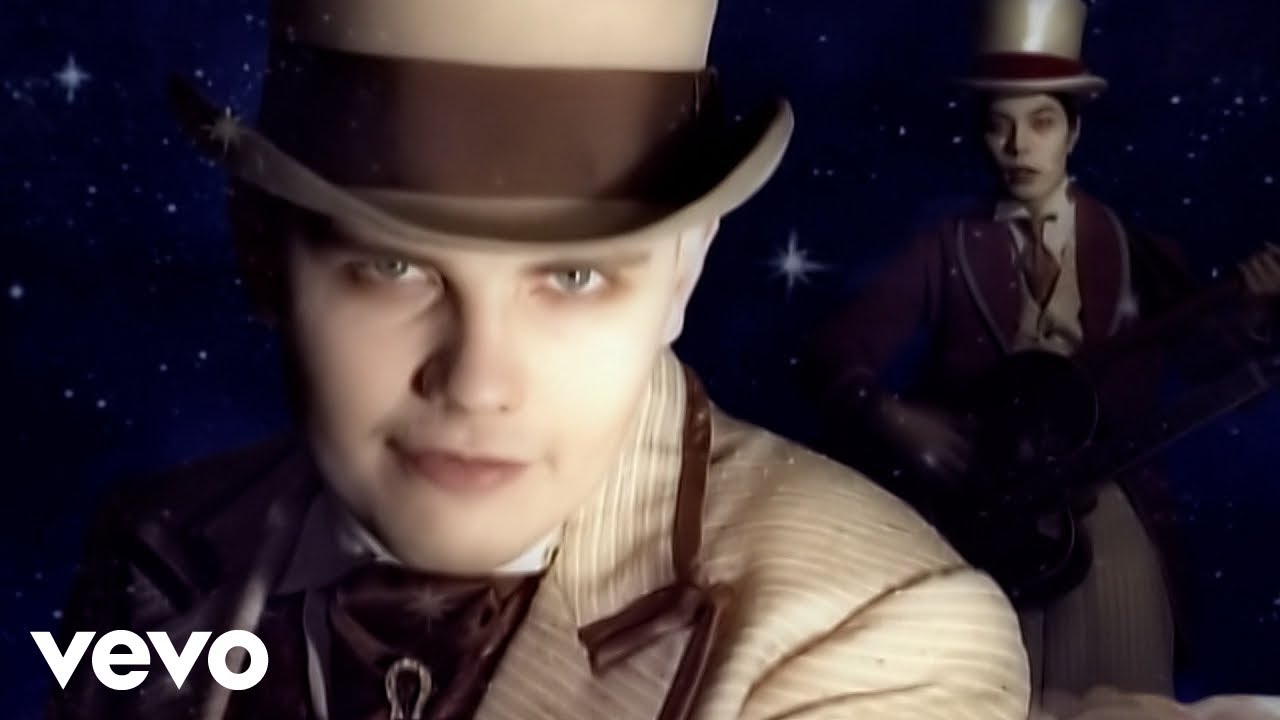
Released as a single in May 1996, Tonight, Tonight’s iconic video strengthened its status as a Pumpkins classic. Inspired by Georges Méliès 1902 silent film A Trip To The Moon, it sees a string of characters dressed in turn-of-the-century as a zeppelin takes off into space with encounters various fantastical diversions throughout.
Director Jonathan Dayton had to get creative when it came to the costumes due to the fact James Cameron’s Titanic was shooting in LA at the same time and had gobbled up all the period costumes. “All we were left with was the dregs,” said Dayton, who took what he could get and had designers embellish them.
Funnily enough, the promo clip’s central duo was played by real life couple Tom Kenny and Jill Talley – Kenny would go on to voice SpongeBob SquarePants, with Talley providing the voice for the show’s antagonist, Karen Plankton.
Over 30 years since its release, Tonight, Tonight remains one of the Pumpkins’ most exhilarating songs. Corgan reckons it gets better with age. “Every time we play it live it’s one of the highlights of the night,” he said in the liner notes to the 2012 reissue of Mellon Collie….
“It’s funny because in doing the reissues, listening to the demos, it reminds me what I was thinking at the time,” he continued. “I thought it was a pretty good song, but I didn’t necessarily think it was exponentially better than anything else. That’s just one of those songs that really connects with people – the chords, the message, everything. And somehow the song continues to hold that power.”

