




Following on from Phil Collins’ memories of his early days, he goes on to tell Prog about the progress Genesis made from a group of seeming misfits to a streamlined organisation capable of creating 23-minute masterpieces.
After you joined Genesis, the band went on to prove a productive, enduring blend of talents.
It was strange at first. I lived with Mike and his parents while we rehearsed in what was then a derelict farm. Just the four of us – before Steve Hackett – running through their ideas.
It’d be going fine, but suddenly someone would stand up, walk out, disappear for half an hour. I’d think, “What happened? Did I blink and miss something?” They were highly strung individuals, who could very easily get on each others’ nerves.
A lot’s been made of that in the past. But look, everybody is a totally different person now. Everyone’s mellowed out! We’re all a product of the way we’re brought up. They were raised to be officers and gentlemen; I was just living by the skin of my teeth. But that story’s become something of a cliché. That was just the early days.
You made extraordinary things together – not least Supper’s Ready.
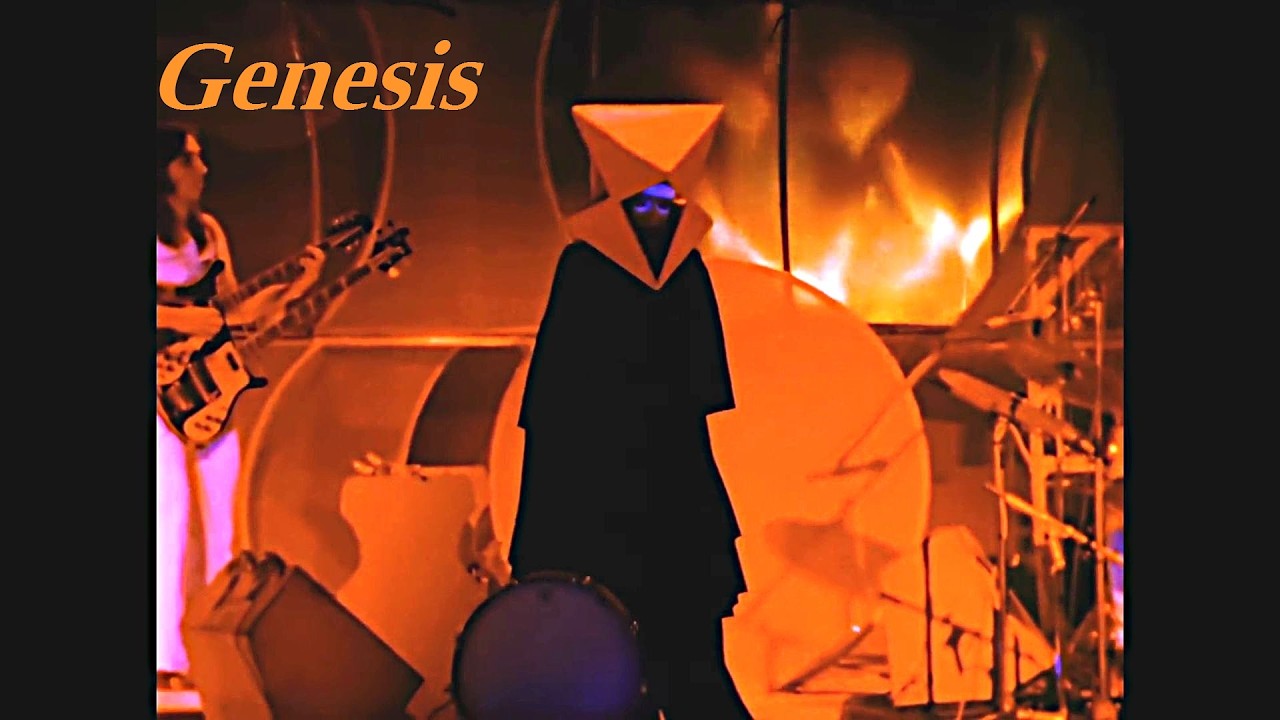
We always pushed the limitations of a record. A 23-minute song was a cutting engineer’s nightmare! Our writing was... meandering. I was more of an arranger at that stage. I could see how things could be adapted or reprised. But we did like to stretch. Not with endless solos though – We never had that “let the guitarist go mad for ages” thing, ever.
Supper’s Ready was the first time we decided we could go that long. When we first heard it all edited together at Island Studios, later Trevor Horn’s place, we thought, “Oh, that’s great!” We were slightly surprised!
I always think we were better live, as we used to tense up in the studio when the light was on and the clock was going. When we got our own studio, of course, that changed.
Apocalypse In 9/8, at the end, is one of my favourite pieces of music that we did. Mike and Tony were playing in different time signatures, so sometimes I’d join in with one, sometimes the other – whichever I fancied! It all sounds very clever and arranged but it was a stroke of luck, really. Genesis were really good at that: playing together, improvising. It all started as free-flowing stuff, then we’d hone it.
The band itself streamlined as time went by, it’s fair to say.
Yeah, and I always used to get the blame for that, because it kind of coincided with me being the singer. People think the singer does everything! Not true. A band like Genesis is a writing commune, really. And as they’ve said, in the early days, before I even joined, they wanted to write hit singles.
We all grew up with The Kinks, Beatles, Stones: three-minute blasts. It’s just we weren’t very good at it! We were good at something else, so that’s what we did. Later, occasionally, we struck gold with something in that format, like I Know What I Like (In Your Wardrobe) and Follow You Follow Me. But they were written first and chosen as singles second.
It didn’t matter if there was a bit of click or hiss. It’s more a case of, “Is it good?” I’d seen Eno do that
After Brian Eno contributed to The Lamb Lies Down On Broadway, did you play on his record as a kind of trade-off?
That’s right, no money involved! But that sparked a lovely friendship. Eno and I got on pretty well, and he called me to play on not just Another Green World but Before And After Science and Music For Films – me, Percy Jones from Brand X, Robert Fripp, all kinds of interesting musicians.
Eno would come in with something he’d done the night before at home, just an abstract idea, and we’d use that and play with it. The fact that he brought things from home intrigued me. So when I started to do my music – basically trying to find something to do with my time because I was going through that post-divorce thing – I started working at home in my little studio.
And I was quite happy – in fact I became insistent – on using my home demos, copying them onto the multitrack. It didn’t matter if there was a bit of click or hiss. It’s more a case of, “Is it good?” I’d seen Eno do that. So the demos became the foundation of Face Value. And the same with subsequent albums.
By the time of Both Sides, which was ’93, my equipment had got more sophisticated and I did most of the album in my bedroom upstairs. Doing it when the mood strikes. It’s very freeing.
I’d sing rubbish until I sang something that felt right. Sometimes when the moon’s in the right place and all that stuff, you come up with something. In The Air Tonight was mainly improvisation. That’s what I sang when I opened my mouth that particular day. It’s like verbal jazz: when a saxophone player gets up and plays, he’s just playing what he plays. Often that was the case with my voice and words.

