


By August 2021, Dymna Lotva frontwoman Katsiaryna Mankevich had been in hiding in her home country of Belarus for almost a year. The previous summer, she and her bandmates – along with more than 100,000 other people – had taken to the streets to protest against the country’s authoritarian president, Alexander Lukashenko.
The government had started arresting anyone associated with the protests, and banned Dymna Lotva’s gigs. Katsiaryna understood she would soon have to leave behind everything she knew.
“They searched for me for about a year, but nobody knew my address,” she recalls. “I would not even answer phone calls from my mum. When the police came for our guitarist, we understood that it was time to run. So, in the next three days, we escaped with one bag, one guitar and my cat.”
A landlocked country in Eastern Europe, bordered by Russia to the east, Ukraine to the south, and Latvia, Lithuania and Poland to the north and west, Belarus is widely considered ‘Europe’s last dictatorship’. Since 1994, it has been ruled by Alexander Lukashenko, who took control in the first free election since Belarus declared independence from the Soviet Union.
Although elections have been held in the decades since, these have widely been dismissed as shams. In the run-up to the elections in August 2020, two of his rivals were prevented from running and jailed, while one fled. Lukashenko won a landslide victory, but there were allegations of vote-rigging.
The European Union said it did not recognise the results. Members of the public, already angry about the way Lukashenko handled Covid-19 – he suggested tackling it with vodka, saunas and hard work – enacted the largest anti-government protests in Belarus’s history, but the authorities quickly cracked down. One man was found hanged in the woods – police said there was no evidence of foul play – land was seized from those who fled the country, and authorities ordered banks to seize money raised to help protesters.
“Every presidential election after his first one has been stolen,” Katsiaryna outlines with fierceness. “It’s not normal. Opposition has been put in prison, some of them murdered, hanged in the forest. Murders, repression, stolen money, stolen land: that is dictatorship in Belarus.”
Katsiaryna, who goes by the stage name Nokt Aeon, is speaking to Hammer from Poland, where she now lives with her cat, fellow Belarusian refugee Beelzebub. She, bassist Jaŭhien Charkasau and guitarist Mikita Stankevich were granted international protection status in the country in 2022. But their home government has not forgotten about them.
In December 2025, several of their music and concert videos were labelled ‘extremist materials’ by the Belarusian authorities, joining a thousands-long list that includes books, political manifestos and even TikTok accounts. Now, anybody in Belarus who shares those clips or engages with Dymna Lotva runs the risk of imprisonment.
“We feel like we’re in good company!” Nokt says with an impish grin and flash of the Devil horns, despite the ordeal she’s been through. “You just need to go through that list if you want to find new bands and new books.”
![Dymna Lotva - Zory [Official Music Video] - YouTube](https://img.youtube.com/vi/Pni8QNVja4c/maxresdefault.jpg)
Drawing inspiration from the history and culture of Belarus, Nokt and Jaŭhien formed Dymna Lotva in 2015. On their first two albums, The Land Under The Black Wings: Swamp and Wormwood, they evoked the mystical fog and ancient marshes of their homeland, Nokt Aeon’s terrifying howls set atop shiveringly cold and desolately beautiful instrumentals that bridged post-black metal, doom and Belarusian folk.
In conversation, Dymna Lotva don’t seem like scary radical extremists. The three Belarusian members of the band – along with Polish drummer Bocian, who joined when they settled in the country – are regular, down-to-earth metalheads.
Their teenage influences are relatable to many further west, with Nokt crediting HIM and the crepuscular appeal of Ville Valo for getting her into metal, while Jaŭhien nods to the nu metal era of Slipknot and System Of A Down. Belarus has had some metal bands, but Lukashenko’s administration has repeatedly squashed them.
“So many bands have been imprisoned for playing metal music,” Nokt explains. “You cannot organise any underground concert, clubs are forcibly closed. Every generation starts new bands who are then forced to emigrate or disband. It’s a miracle that we have one metal band who have played since the end of the 80s: Gods Tower.”
Our friend had to escape at night through the swamp between Belarus and Russia like in some Hollywood movie.
Nokt Aeon
While Dymna Lotva weren’t explicitly an anti-regime band at first – their initial idea was to write music based on the fiction of Edgar Allen Poe – they have reclaimed parts of Belarusian culture that Lukashenko’s predominantly Russian-speaking administration has tried to suppress.
“He hates our culture and language,” Nokt spits. “I’ve been in love with Belarusian culture since I was a teenager, and I started to collect books about native language and pagan traditions. We based our lyrics and concepts on legends, literature and history.”
2020 was a real turning point for Dymna Lotva, as they threw themselves into the mass protests, performing music and opening their homes to offer food and medicine to those who were injured. But Dymna Lotva knew their time in Belarus had run out when two members of the band Irdorath, and singer Lesley Knife of Gods Tower – with whom they’d recorded the protest song, Да Волі (‘To Freedom’) – were arrested.
“We had some shows planned, and the promoters called us to say that someone from the Ministry of Culture had pressured them to remove us from their events, else they would be imprisoned and their clubs closed,” says Nokt. “We started to live places we weren’t renting officially, so that they would not find us. Eventually, we knew it was time to go.”

The band decided to go south to Ukraine, but couldn’t travel directly due to tight security on the border with Belarus. They planned to go via Russia instead, where they could cross without visas. To call the journey tense would be an understatement.
“We got into Russia by train, and there was a document check near the end of our journey,” Nokt reveals. “We stayed and hid inside the train a little longer! Our journey was easier than Lesley’s. He had to escape at night through the swamp between Belarus and Russia like in some Hollywood movie.”
If we had gone to the nearest official shelter to our flat, we would be dead.
Nokt Aeon
In August 2021, the band settled into their new home in Irpin, a city on the river in northern Ukraine, 30km from the capital, Kyiv. But just six months later, their world was flipped upside down again when Russia invaded, killing more than 450 civilians in the city of Bucha, 5km away.
Without a vehicle, the band were unable to escape, and found themselves under Russian occupation. Understandably, they’re reluctant to go into detail about the two weeks they spent in hiding there.
“It’s changed our lives,” Nokt considers quietly. “It was terrible. Even in Irpin, you could compare different streets and how they were treated, and we were lucky. Yes, it was cold with not much to eat, together with people we didn’t know, but nobody died. If we had gone to the nearest official shelter to our flat, we would be dead right now, because it was bombed and nobody survived.”
Dymna Lotva eventually escaped with other civilians in Irpin by perilously wading through the river from which the town takes its name. The band went to Poland, the one neighbouring country allowing non-Ukrainians to enter without an EU visa.
Finally able to restart the business of being a band, Dymna Lotva released a third album in 2023, The Land Under The Black Wings: Blood, and made an emotional return to the stage at Germany’s Prophecy fest.
“We had just released our new album, so we thought that nobody had heard about Dymna Lotva,” Nokt says. “When we came to the stage and saw this big crowd, it was like, ‘Whaaaat?!’ Our bassist Jaŭhien was in Warsaw, because his new Polish documents weren’t ready in time. So we placed his bass on the stage, put the Belarusian national flag on it, and I told the public our bassist is a ghost.”
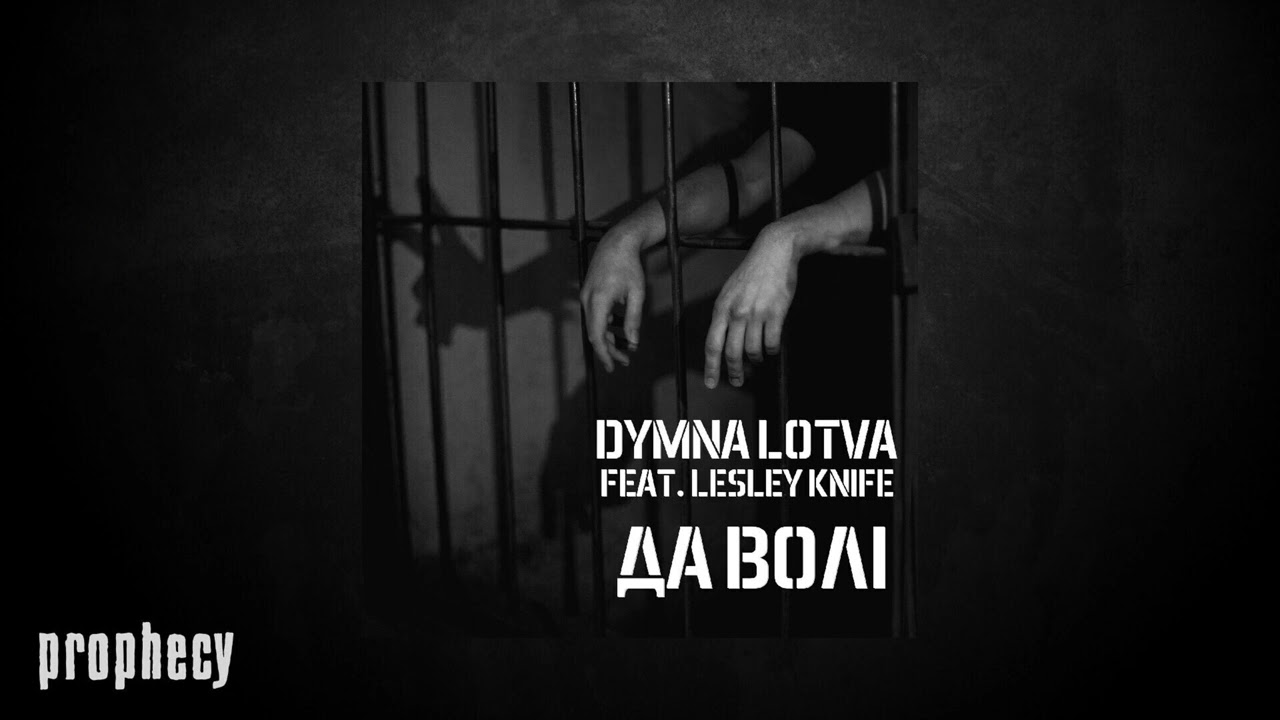
Although Dymna Lotva left Belarus half a decade ago, news still reaches them from their old lives. In Ukraine, two interim guitarists for Dymna Lotva and their sound engineer are now fighting in the Ukrainian army. Things are more complicated when it comes to home, with significant risks for any friends or family who might want to help them out.
“We need to take care of their safety,” Nokt says. “But we meet Belarusians and Ukrainians at every concert, in every country.”
The Belarusian government’s ban on Dymna Lotva’s music has made them determined to continue, and they’re currently writing their fourth album. It incorporates their experiences, using a concept about passage through the Underworld as an allegory for emigration out of one’s country due to war and oppression.
Settled in her Polish apartment with Beelzebub, Nokt is doubtful as to whether they’ll ever be able to play in Belarus again – though she will always long to return.
“Every year we are further away from Belarus,” she admits. “Two years ago, all of us would have said, ‘Yes.’ Now, we’re not so sure. I definitely want, when the regime falls, to stage our own metal festival in Belarus. I want to go home and make something good for the scene there. It would be hard though, because most of the people we love are not in Belarus anymore.”
She pauses. “I have already found a good place for my grave, though. When I die, I’ll be in Belarus.”
The Land Under The Black Wings: Blood is out now via Prophecy

