


Attila Csihar remembers the exact date when his life was irrevocably changed. On May 23, 1992, he was out in his native Budapest with a friend, smoking weed, when he had an epiphany. It’s hard to describe exactly, he says, but he had a vision of the sun, and an understanding of it as something material, but spiritual too, as a universal source of life, but belief as well.
“It wasn’t the weed,” the Mayhem frontman recalls now. “I’ve smoked it millions of times without this experience, but I didn’t know what was going on. Before, I’d always been searching for something, but then something opened in my mind, and it definitely defined my life. I got in sync with nature, and I’ve been reading and researching since.”
What follows is a long digression about neutrinos, sun cults, the Baalbek monolith in Lebanon – where Attila once recorded an album named after it for his Void Ov Voices solo project – and the advanced, non-human civilisations who, it stands to reason, had the sole means to build them.
At one point during his discourse, he brings out a spoon looped in on itself by a Reiki master in front of him, later presented to his current Mayhem band members to varying degrees of credulity. As much as he can give Blood Incantation a run for their money in the cosmic conspiracy stakes, it all amounts to one fundamental principle.
“What it all is, is a mystery, and that’s my biggest driving force, one that’s very deep inside of yourself. It opens your mind and it releases something in you. I still don’t know exactly what happened, but something profound changed in me, and maybe the sun is just a symbol of it.”
Attila is speaking via Zoom from a hotel room in Buenos Aires, Argentina. Mayhem, the foundational and sometimes notorious black metal band he’s fronted on and off since late 1992, and whose history encompasses death by suicide, church burnings, murder and the creation of a groundbreaking debut album, De Mysteriis Dom Sathanas, have just played here as part of a world tour to commemorate their 40th anniversary.
Even if the shaved crown of hair cradling the back of his head and short tufts of moustache sprouting from each side of his mouth suggest an aristocrat in exile from a world governed by different laws of grooming to our own, he’s far more down to earth than you might expect. Constantly walking around the room as he holds his phone, he’s chirpy, chatty and, at 54, buzzing with genial energy.
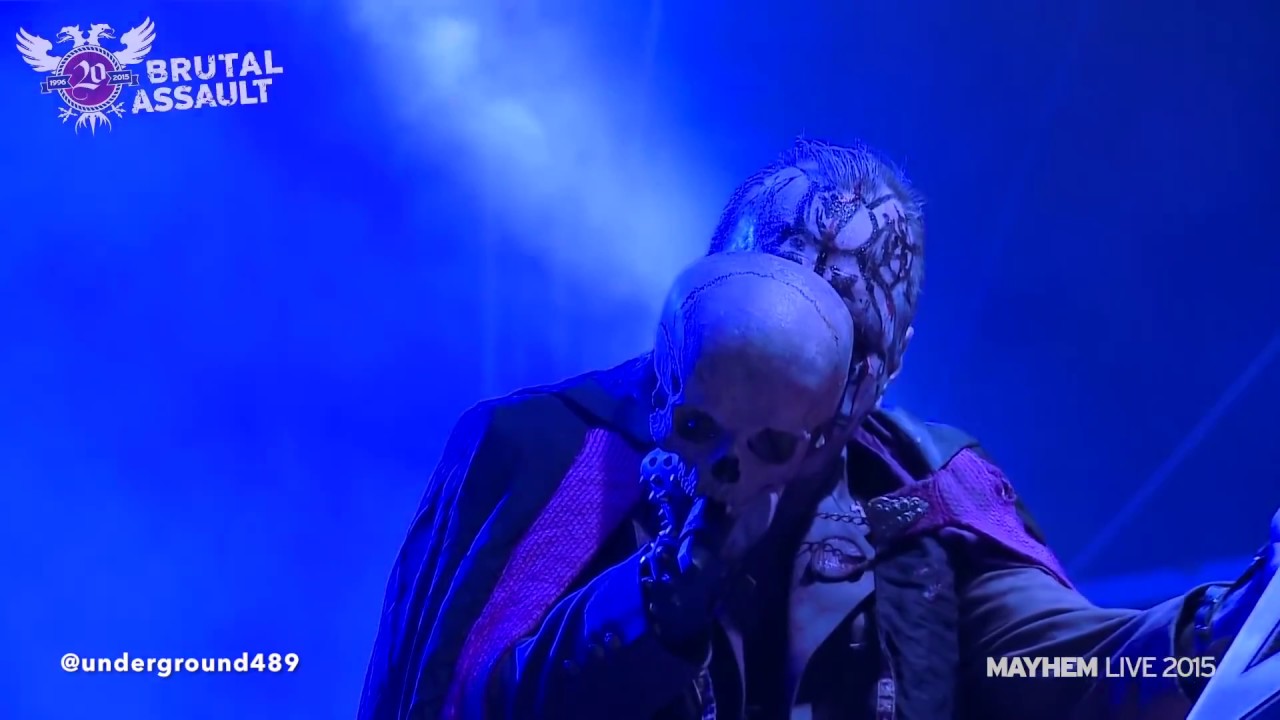
The playful glint in his eyes suggests that the various wild guises he’s adopted onstage over the years – from decomposing anti-Pope to cowled wicker man, mirror monster, alien-birthing fish creature and mummy – aren’t just mediums to channel dark energy so much as stuff he still can’t believe he’s gotten away with. As he puts it: “Somehow I’ve always been dealing with the dark side of nature, and that’s pretty strange, because I’m not a dark person in life, it’s just part of the channel I have.”
"It’s a dedication to Dead and Euronymous, but we also have to face up to all parts of our past."
Attila Csihar
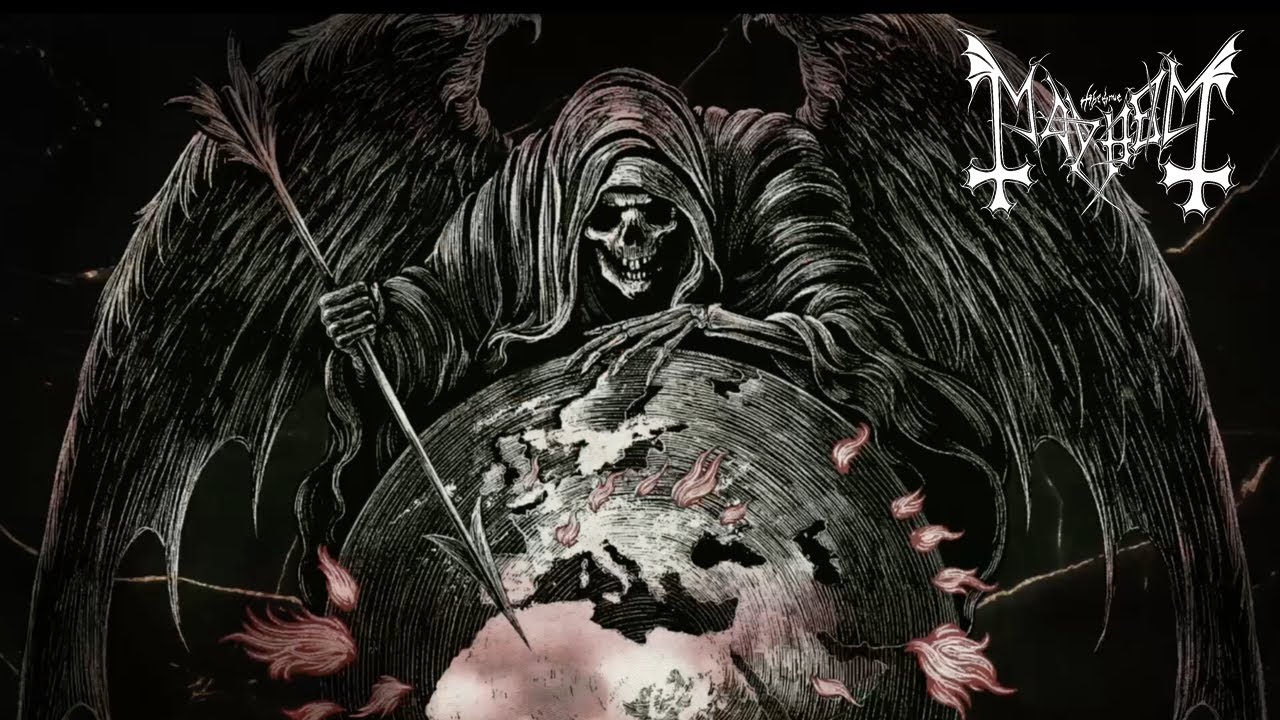
True to form, Mayhem’s seventh album, Liturgy Of Death, marks a band still deeply in touch with their roots, yet still pushing the envelope for what black metal can be and still do. Sweeping in its scope, it’s a turbulent whorl of revelations scoured by Attila’s possessed, otherworldly croak as if a stormfront were taking on demonic form, and girded with cold-steel riffs heralding a terrifying new age to come.
“I always felt like Mayhem was futuristic somehow,” says Attila. “When people talk about why De Mysteriis Dom Sathanas is evergreen, it’s not just about everything that happened around it, it’s also that musically it was so advanced. There have often been futuristic elements since. We have our roots, and it’s good to be related to the past, but this album has a balance. It has old elements, but it’s still present-sounding, and it’s still futuristic.”
While some of their contemporaries have left black metal’s incendiary past behind them, for Mayhem it’s inescapable. They’re willing to take on the role as black metal standard bearers and chroniclers for the extraordinary legend they gave rise to.
The 40th anniversary tour, which will wrap up in Australia a month after we speak, has featured guest spots from original drummer Manheim and former vocalist Maniac, the latter of whom briefly fronted the band in the late 1980s before returning for a longer stint between 1995 and 2004, when he was replaced by Attila.
The tour also features footage of the three former members who lie at the heart of the Mayhem mythos: original vocalist Dead, whose 1991 death by suicide still reverberates throughout the scene; guitarist and black metal lore-giver Euronymous; and the man who stabbed the latter to death in 1993, arch villain and far-right ideologue, Varg Vikernes.
“It’s very emotional,” says Attila. “It’s a dedication to Dead and Euronymous, but we also have to face up to all parts of our past.”

Attila’s own, pre-revelation roots lie in proto-black metal primitives Tormentor, the band he founded in 1985 in his mid-teens, while going under the fortuitous stage name of Mayhem. His love of metal had been instilled by an Iron Maiden show in 1984, which took place in a parking lot of the Budapest Sportcsarnok stadium after Hungary’s then-Communist regime refused to let them play inside.
But he found his true calling after he discovered Venom’s Black Metal album in an underground shop. Tormentor’s first show was at a talent competition, with Attila sporting a “crazy” mask and black cape borrowed from a theatre school (remarkably, they got through to the second round). But as they gradually started gaining popularity within Hungary’s isolated metal scene, they were also receiving attention from the country’s crumbling regime. Official gigs had to be sanctioned by the state, and lyrics parsed for political content.
“The officials were more concerned about the punk bands,” Attila remembers, “but even then, we recorded an album, Anno Domini, and I had to send them the lyrics. But then the Communist system collapsed, and in all the chaos, the album never got released anyway.”
One of the album demos he’d handed out had made its way to Norway via the tape-trading network. In 1991, Attila got a “very polite” letter from Euronymous asking if he would be up for joining Mayhem because their singer had recently died. Euronymous sent him two tapes, one for their already released EP, Deathcrush, and the demos for what would eventually become De Mysteriis Dom Sathanas.
“I remember when I first heard that demo,” Attila recalls. “I was like, ‘Holy shit, I never heard anything like this ever.’ I never heard riffs like that before, I never heard drumming like that. Some of my friends thought they’d sped up the tape. This was something really special.”
"Everybody disappeared, and I thought they were on vacation."
Attila Csihar
Although Hungarians were allowed short trips to the West every three years under the previous regime, Attila’s first trip to Norway turned out to be a bit of a culture shock.
“Euronymous and Varg [then Mayhem’s bassist, having replaced Necrobutcher, who left temporarily following Dead’s suicide] met me at the train station. Euronymous was wearing a bullet belt, but Varg was in chainmail. He was really serious about it, he said he was wearing it to protect himself.
“We stayed at Euronymous’s place for a few days, and it was kind of gothic inside, with red curtains. We travelled up to Bergen to stay at Varg’s place. He had a very fucking nice flat. He had a washing machine and a dishwasher. He was definitely from a more wealthy background. He was still like a metal dude. He was more into Tolkien, fantasy worlds, and the dark stuff. Completely different to what he later became.”
With the wave of church burnings yet to begin, Attila’s outsider status left him largely unaware of the scene politics and growing fanaticism that were brewing at the time. Still reeling from the vision he’d recently experienced, and immersed in books about Egyptology, his newfound awakening became a germinating factor that took De Mysteriis… into realms not even his new bandmembers could have contemplated.
Rather than the screech that would become de rigueur among black metal vocalists, Attila produced a gnarled, throat-singing rasp – a fever dream of incantations contorting itself as if to bring something unbidden into being.
“I knew I wanted to do something different from what Dead had done, and I was also a bit influenced by [Slovenian avant-industrialists] Laibach,” says Attila. “But I was also under the influence of that mystery energy I’d encountered. I did the vocals with all the lights off, surrounded by candles. I didn’t know of course what the album would become, but I knew it was going to be something very special.”
It was, though it would be overshadowed by events before it even came out. On August 10, 1993, Varg Vikernes was driven from Bergen to Oslo by Snorre Ruch of solo BM project Thorns and stabbed Euronymous to death. Back in Budapest at the time, Attila was initially unaware of what had transpired.
“I didn’t know what was going on at all, everybody disappeared, and I thought they were on vacation,” he says.
“It wasn’t until October that someone pointed out a small news section in a Hungarian music paper that said Euronymous had been killed. I couldn’t fucking believe it. I totally lost my way for a few years after that. I thought the cosmos was against me.”
Euronymous’s murder meant that the release of De Mysteriis Dom Sathanas was delayed until May 1994. With their guitarist and animating force gone, Mayhem were no more. Instead, Attila began working on his own experimental projects, before rediscovering his love of industrial music by joining Italian electro-black metallers Aborym as guest vocalist on 1999’s Kali Yuga Bizarre album, subsequently becoming their full-time vocalist for two more records. By 2003, he was collaborating with Sunn O))), touring with them and appearing on 2004’s White2 album.
“Stephen [O’Malley, one half of Sunn O)))] invited me to play on their first European tour,” says Attila. “The first show was in Linz in Austria, and there were, like, seven people there, but that was a really cool show. It taught me that it doesn’t matter how many people are in the audience, you have to always give your best, because you never know what’s gonna happen. That was one of the best lessons in my life.”
Nevertheless, a return to Mayhem was never out of Attila’s mind, not just because of the way his initial stint had dissipated without resolution, but also because Necrobutcher had been intermittently in touch since the band reformed, floating the possibility of a reunion if circumstances allowed.
After tensions with then-singer Maniac reached a head in the mid-2000s, Attila met with his ex-bandmates at a Mayhem show in Italy. His second stint in the band began in 2004.
“I never got any money from De Mysteriis… because of what happened, but I wasn’t trying to fix the past – it was important to me to bring the energy of where I was then,” says Attila. “I was proud to be back in Mayhem, but also because we could all explore together again.”
He’s subsequently recorded four albums with Mayhem (2007’s Ordo Ad Chao, 2014’s Esoteric Warfare, 2019’s Daemon and the new Liturgy Of Death). But Attila’s seemingly unquenchable curiosity is reflected in the breadth of his work outside of the band. He’s been a guest presence for a host of other artists, from Norway’s Keep Of Kalessin and Ulver to Skitliv - the band created by Shining (SWE)’s Niklas Kvarforth and Maniac – and former Swans vocalist Jarboe.
"I still think of Joey Jordison every day."
Attila Csihar
Yet the project that still weighs on Attila is Sinsaenum, the death metal-orientated band he joined as co-vocalist in 2016 at the behest of ex-Slipknot drummer Joey Jordison. Their initial meeting came a decade earlier, following an eventful Mayhem show.
“Joey was at the Gates Of Metal festival in California in 2006, where we caused a bit of a scandal,” he recalls.
“For that I was the mad doctor, with a leather face that was actually the skin of a pig’s head I got from a butcher. I got called by a Norwegian newspaper the next day and I told them I was vegetarian, and that the pig must have thought humans were its god because it was feeding them, but then they slaughter you and throw your head in a bin. I think the pig would be happy that his head was freaking humans out after that. The reporter was like ‘Uh huh…’”
Blown away by the show, and sharing a love of 80s industrial bands such as Skinny Puppy, Joey suggested the pair put together a project he described as “an evil Rammstein”. The drummer was talked out of it by Slipknot’s management, but then contacted Attila again a decade later when he was forming Sinsaenum. He appeared alongside co-singer Sean Zitorsky on 2016’s Echoes Of The Tortured and 2018’s Repulsion For Humanity.
But as with Mayhem two decades earlier, Sinsaenum’s career was curtailed by the premature death of a key member – in this case, Joey Jordison.
“I still think of him every day,” says Attila, who appeared on last year’s posthumous In Devastation album. “When we do Mayhem shows, he’s one of the people I make an offering to, along with Dead and Euronymous. Everything he did was so much from the heart. I still have demos of the industrial stuff we did together, but since Joey is gone, I don’t know who to approach to ask about releasing them. I have respect for everybody and the family too, but I don’t know if they’d be cool with it. I’d put it out for free, or donate any royalties to them, but it’s something I’d just like to do for him.”
Beyond Mayhem, Attila still has new projects in the works, with long-time Tormentor fan Iggor Cavalera, and with Rhys Fulber from seminal Canadian industrialists Front Line Assembly.
“I’m still searching, still discovering,” says Attila of his inexhaustible muse. “It’s something in me. So I never stop. I can’t stop.”
Liturgy Of Death is out now via Century Media.

