"Determined to expand beyond the restrictive confines of goth, they were victims of their own ambition." Nine albums by The Mission to listen and one to ignore

The Mission, studio portrait
(Image credit: Paul Cox/Avalon)

The Mission were formed by guitarist Wayne Hussey and bassist Craig Adams after the notoriously acrimonious fracturing of the Sisters Of Mercy following their 1985 debut, goth’s holy grail First And Last And Always. They initially called themselves The Sisterhood (just to deliberately aggravate sole remaining Sisters member Andrew Eldritch) and poached Red Lorry Yellow Lorry drummer Mick Brown plus ex-Artery/Pulp guitarist Simon Hinkler to complete the original line-up. Thanks to an immediate post-Sisters hard-touring ethic, they rapidly built up a devoted and loyal fan base.

In direct contrast to Eldritch’s po-faced, image-militant, Suicide-influenced, bleak post-apocalyptic cold and clinical drum machine-driven drama, The Mission embraced the mid-80s rock excess of sex, drugs and rock’n’roll with wild abandon. Hussey himself, like a goth Captain Jack Sparrow, revelled in the limelight with a phenomenal amphetamine appetite that would have got him kicked out of Hawkwind as quickly as their early-70s bassist.

Likewise, the music wore both its heart and influences on its paisley print sleeve. As principal songwriter, Hussey indulged his adoration of classic rock, especially his beloved T. Rex and Led Zeppelin. (The latter might have been unhip in the mid-80s, but the Sisters were diehard fans and used the appropriately histrionic Kashmir as their walk-on music for gigs.)

The First Chapter, a collection of The Mission’s earliest singles, was released in 1987 to build on the success of debut God’s Own Medicine, and included their hallmark melodramatic covers of Neil Young’s Like A Hurricane and Patti Smith’s Dancing Barefoot. The US edition also included covers of The BeatlesTomorrow Never Knows and Free’s Wishing Well. Hussey has stated that David Gilmour, Mick Ronson and Wishbone Ash’s Andy Powell and Ted Turner are also his guitar inspirations.

Industry veterans by the late 80s, it’s no surprise The Mission hit the ground running with a front-loaded album discography. But determined to expand beyond the restrictive confines of goth, they were victims of their own ambition. Musical differences and internal friction meant the original line-up was history by mid-1990. With partial reunions among the hiatuses, the founding members (except Brown) came full circle and returned to their gothic rock roots for 2013’s The Brightest Light and their latest, 2016’s Another Fall From Grace.

Lightning bolt page divider

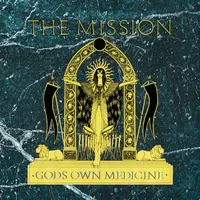
God’s Own Medicine (Mercury, 1986)

God’s Own Medicine (Mercury, 1986)

With exuberant momentum and positive creative arrogance, the debut was recorded in just five weeks. Hussey’s unashamedly pretentious spoken-word intro (a studio microphone level test ad-lib) leads into the signature Wasteland that recalls his previous work on the Sisters’ Marian.

Garden Of Delight’s lush string arrangement and the piratical Stay With Me both became Mission classics too. Backing vocals from All About Eve frontwoman Julianne Regan on Severina plus Hussey’s Page-influenced 12-string mastery also helped lighten the post-Sisters sonic palette to create a new strain of flower power goth.

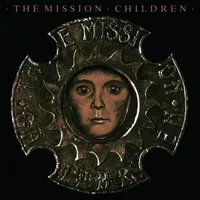
Children (Mercury, 1988)

Children (Mercury, 1988)

Their grandiose second album was The Mission’s commercial peak. To all intents and purposes, it was Hussey’s Led Zep IV. In contrast to God's Own Medicine, Children was recorded in three months at Richard Branson’s luxe residential Manor Studios.

John Paul Jones produced and played keyboards. He even lent fanboy Hussey his vintage Martin acoustic that Jimmy Page used on Stairway to play the very Zep-like Black Mountain Mist. A paen to the band’s fans, the gradual ascent of the eight-minute epic Tower Of Strength, along with a rare political number, Beyond The Pale, saw the band on top form. Less nobly, Kingdom Come is about Hussey’s sexual appetite. Ew.

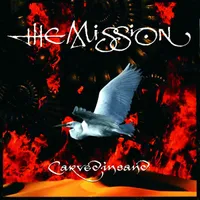
Carved In Sand (Mercury, 1990)

Carved In Sand (Mercury, 1990)

Following the indulgence of the Children sessions, the band returned to a leaner recording strategy for their third, re-hiring God’s Own Medicine producer Tim Palmer. Carved In Sand demonstrated a confident mainstream rock sensibility.

U2-style opener of Amelia, Revolver-era alike Sea Of Love and fan fave Deliverance helped shift The Mission beyond goth’s cul-de-sac, building on the success of Children. Reeves Gabrels (of Tin Machine and later The Cure) adds guitar on two tracks, and Guy Chambers plays piano on Hussey’s affectionate ode to Julianne Regan, the warm embrace of Butterfly On A Wheel.

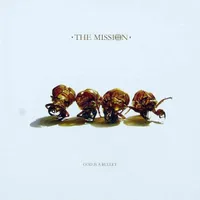
God Is A Bullet (Cooking Vinyl, 2007)

God Is A Bullet (Cooking Vinyl, 2007)

A return to form, the eighth Mission album featured something of a supergroup in its Mission all-star line-up, offering a 15-tracker epic ambitious in scope. And it delivered.

Guitarist Mark Thwaite and new bassist Rich Vernon both contributed to songwriting. Hinkler reappeared on the riff-heavy darkness of Grotesque, ex-All About Eve/ Sisters guitarist Tim Bricheno played on three, and Julianne Regan lent her ethereal angelic vocals. Hussey sounds like he’s having fun again on the joyous Keep It In The Family, the poignant pop of Blush and the classic Mission of Running With Scissors. Their most underrated album.

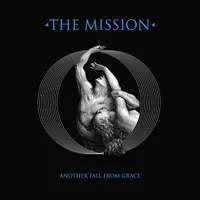
Another Fall From Grace (Eyes Wide Shut, 2016)

Another Fall From Grace (Eyes Wide Shut, 2016)

Reunited with producer Tim Palmer, the latest Mission album to date deliberately harked back to the mid-80s post-Sisters/ embryonic Mission era.

Hussey uses an approximation of the guitar line he originally laid down on what eventually became the Sisters’ Dominion on the needling throb of Met-Amor-Phosis (with Ville Valo providing guest vocals). He even returns to the 12-string he largely abandoned after God's Own Medicine to reanimate the classic goth template. Adams’ bass was re-fuzzed (the title track is akin to the Sisters’ cover of Emma). Hussey sings of regret and time’s cruelty while offering homilies.

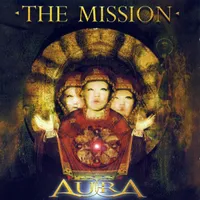
Aura (Playground, 2001)

Aura (Playground, 2001)

Following his remix and solo projects after the band’s first hiatus, Hussey eventually re-formed The Mission at the end of the 90s with Adams back on bass and Mark Thwaite on guitar. Scott Garrett from The Cult replaced Brown.

Live shows fed into sessions that made up Aura, a style reminiscent of Carved In Sand. The Cult-like riffs and lyrics of opener Evangeline, yearning emo power ballad Shine Like The Stars and the heartfelt Dragonfly are as respectable as anything from The Mission’s commercial heyday. Hussey’s work on keyboards provided Aura with multi-layered vibrancy despite its muted production.

The Brightest Light (Oblivion, 2013)

The Brightest Light (Oblivion, 2013)

On which Hussey finally reunited with fellow founding members Adams and Hinkler. Brown was conspicuous by his absence, but new drummer Mike Kelly was made a permanent member.

Sisters’ First And Last And Always producer David M Allen was hired to authenticate the album’s 21st-century gothic and indie rock revivalism. The Brightest Light is influenced by both The Cult (Everything But The Squeal is reminiscent of Big Neon Glitter) and The Wonder Stuff (The Girl In A Furskin Rug). With Hussey’s mean and moody vocals, it’s not classic Mish, but the band would find their feet again with follow-up Another Fall From Grace.

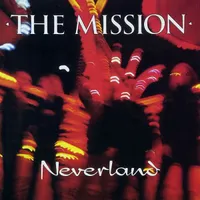
Neverland (Dragnet, 1995)

Neverland (Dragnet, 1995)

Bringing in ex-The Children/ Spear Of Destiny/Theatre Of Hate guitarist Mark Thwaite and new keyboard player Rik Carter helped return The Mission to a more rock-based heartland following the bravado of Masque.

Staggered recording sessions and a revolving door of bassists meant Neverland lacked an overall cohesion and focus despite the Deftones-meets-Nine Inch Nails drama displayed by the mighty crunching riffs of Raising Cain, Swoon and Afterglow (Reprise). Neverland should have fared better in the prevailing post-grunge, alt.rock and trip-hop era of the mid-90s. All of which suggests that it could be overdue for a reappraisal.

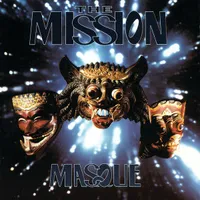
Masque (Vertigo, 1992)

Masque (Vertigo, 1992)

With band members all pulling in different directions, it was inevitable that the fourth album (originally intended as a Hussey solo project) would be a curate’s egg. Hinkler had already left. Brown had embraced dance music. Hussey had adopted folk rock. Adams left after its release, unhappy with the band’s new direction.

Its diverse electronica ‘n’ fiddles ‘n’ sax indie pop was a valiant stab at expanding their style, but ultimately it was one that began a commercial decline – it’d be 24 years before another Mission album made it into the Top 40. Still, the Cure-like psyche dream pop of You Make Me Breathe is Hussey’s mum’s all-time fave Mission track.

...and one to avoid

You can trust Louder Our experienced team has worked for some of the biggest brands in music. From testing headphones to reviewing albums, our experts aim to create reviews you can trust. Find out more about how we review.
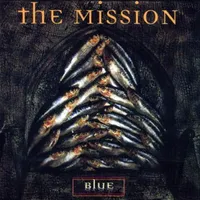
Blue (Equator, 1996)

Blue (Equator, 1996)

Even Hussey himself has said he hates Blue. A contractual obligation, it marks the original demise of The Mission, with Hussey and Brown disbanding after an atypically brief Mission tour in support of the album.

Coming across like a questionable grebo biker-rock album a decade too late, the Zodiac Windwarp/Gaye Bykers On Acid-adjacent sound of Coming Home, the horrible lyrics of Get Back To You… let’s not go on. Album closer Evermore And Again is a reworking of Forevermore, originally a B-side of third single Stay With Me. Enough evidence that Hussey needed to take stock after The Mission’s frantic first decade.

Alex Burrows

A regular contributor to Louder/Classic Rock and The Quietus, Burrows began his career in 1979 with a joke published in Whizzer & Chips. In the early 1990s he self-published a punk/comics zine, then later worked for Cycling Plus, Redline, MXUK, MP3, Computer Music, Metal Hammer and Classic Rock magazines. He co-wrote Anarchy In the UK: The Stories Behind the Anthems of Punk with the late, great Steven Wells and adapted gothic era literature into graphic novels. He also had a joke published in Viz. He currently works in creative solutions, lives in rural Oxfordshire and plays the drums badly.