




Bauhaus were one of the founding fathers of goth, burning brightly for just five years in the late 70s and early 80s before flaming out. But their influence was immense, inspiring generations of black-clad bands that followed, and they returned for a series of sporadic if ultimately temporary reunions between 1998 and 2022. In 2012, during one of their hiatuses, singer Peter Murphy, bassist David J and drummer Kevin Haskins looked back over their maverick career.

The wind howls. Clouds as black as ravens haunt a bruised sky as I wend my way along the cracked, lonely road towards the ominous facade of the hotel. Upon arrival, the concierge, taciturn, unblinking, directs me to the elevator, which carries me upwards. I negotiate a corridor as dark as day allows, its countless secrets withheld. I knock on his door. There is no response; the silence is that of a centuries-old tomb. My heart beats like the wings of a giant crow.
Sticking my courage to the mast, I knock once again. The door creaks open. Peter Murphy, who has been sleeping the sleep of the just, rises and pokes his head out. His eyes pierce the gloom, he breathes deeply. “Oh, right, yeah, the interview,” he says. “I’ll be down in a minute, mate. Meet me in reception, yeah?”
Settled with a cappuccino, the man once known as the Godfather of Goth begins a magnificent monologue, ignoring attempts to interject with questions. He digresses on everything from Marilyn Manson (“a Munsters version of something that was once pure and new and British”) to the thin line between genius and autism; from Turkey and religion to Bowie and technology. He begins by saying he’d rather discuss his recent solo album, Ninth, than talk about Bauhaus, but inevitably takes grand detours into the history of the band that he once fronted and that made his name.
“We were termed ‘gothic as a brick’ by one paper. This was 1981, when the press either built you up or killed you, so I almost believed it. But look at it now – we were minimalist, never used colours, yet were theatrical and artistic, in a raw way. We were very, very alternative. I was a bastard Nijinsky. We were the antithesis of everything that was fashionable then: all that screaming-about-nothing protest that was punk. They were flailing to find something to scream about, and ran out after five minutes. We were original. We were glam. And we were beautiful.”

‘I dare you to be real/ To touch a flickering flame.’ Double Dare
Formed in Northampton in 1978, Bauhaus swiftly rose to heroic levels of cultdom, labelled the first goth band. “It’s undeniable there was a gothic element there,” says their ex-guitarist, David J. “We did have a fascination with the darkly romantic. But there were so many other sides to the band, so the term became somewhat limiting. Sometimes we’d purposely go against what was expected of us in that regard, which was a lot of fun. See? We had ‘fun’!”
“Yes, we chose to wear black and our first single was about a vampire and our music for the most part was dark,” says his younger brother, drummer Kevin Haskins. “But we didn’t feel we belonged in that or any other movement.”
Bauhaus blazed briefly, before splitting in ’83. Considerable US success followed for the Haskins brothers and guitarist Daniel Ash, first as Tones
On Tail then, more notably, as Love And Rockets; years of diverse solo and collaborative work followed for Murphy, who moved to Turkey and converted to Islam in the 90s.

Bauhaus re-formed for a tour in 1998 and again (with Nine Inch Nails) in 2005. After a fifth, final album, 2008’s Go Away White, they nailed down the band’s coffin lid, their disagreements climaxing or appeased (depending on which party you believe) by Murphy walking into the studio and, in glorious Bauhaus style, spitting rose petals at the other three.
I was a bastard Nijinsky. We were the antithesis of everything that was fashionable then: all that screaming-about-nothing protest that was punk.
Peter Murphy
“I spat roses at the others rather than argue with them. I just didn’t want any more bad stuff, or kick-back,” he says. “It was very emotional being in that band, especially after re-forming. Making great music was the least of our worries. But you had four people who were very repressed anyway, because we’re British. We’re from the Midlands, we’re very polite and respectful. There were two camps: the Celtic-Irish Catholic boys, me and Daniel; and the Church of England boys, the other two. The Catholic boys felt guilt, we were the passionate ones; the others didn’t feel anything. So rather than go through those tensions again, to try to placate and dissipate all that energy, I did a very Bauhaus thing. I spat roses at them.”
How did that go down?
“They were shocked. Stunned. Thought I was crazy. Which essentially is why we should never have got back together. It’s a great story, and it’s authentic! After we recorded the last album in 18 days we didn’t even have a chance to review the desk mixes, we moved on. Classic Bauhaus. It was like: ‘Well, darling, I permitted you to work with me again, and surely if I can bear you, you can bear me. Besides, I’m far more pleasant to look at, even if I am difficult.’”
So it wasn’t amicable?
“Oh, I wasn’t going to go here – I knew I’d talk too much. Let’s just say there was ineptitude and a gaping hole of unconsciousness as to what Bauhaus was about, what it meant. I mean, you’re not in Bauhaus, but even you understand it better. I’ve lived those issues three times already. There was no appreciation. Ego’s fine, but how can you shit on Bauhaus? That’s their golden egg! It’s not my golden egg – I’m the goose.”
“The spitting roses story is true, but we had different interpretations of what went down,” Kevin says. “I’m proud of what we accomplished.”
Even more diplomatically, David says: “Oh there were many ‘incidents’. Spitting roses? That’s Zen.”
Everyone tells me Daniel Ash will prove impossible to get hold of. And he is.

‘The bats have left the bell tower.’ Bela Lugosi’s Dead
What can’t be rattled by later ructions is the impact and influence of Bauhaus. They may accidentally have spawned a stream of lesser goth outfits, but in their prime they created not just breathtaking, grand guignol visuals but also a new genre, mixing glam flourishes, Krautrock, funk and post-punk.
Yes, we chose to wear black and our first single was about a vampire. But we didn’t feel we belonged in that or any other movement.
Kevin Haskins
After just six weeks together they released their debut single, Bela Lugosi’s Dead, nine minutes of hypnotic horror lyrics and trippy dub which resided in the indie charts for two years. It may have meant they were the butt of Count Dracula jokes for the rest of their career, but even now it’s an alarmingly brilliant first record, sounding like little else above ground. “We were elated and excited that we were capable of conjuring forth such a beautiful monster,” says David. “I remember having chills running up my spine,” recalls Kevin. “We all knew that we’d recorded something very special.”
David J had chosen the band name (originally Bauhaus 1919, after the German art movement). “It occurred to me that our sound, and to a degree our aesthetic, was stark and stripped-down. Everything was honed so as to exclude excess. Which is ironic, as that’s the opposite of gothic.”
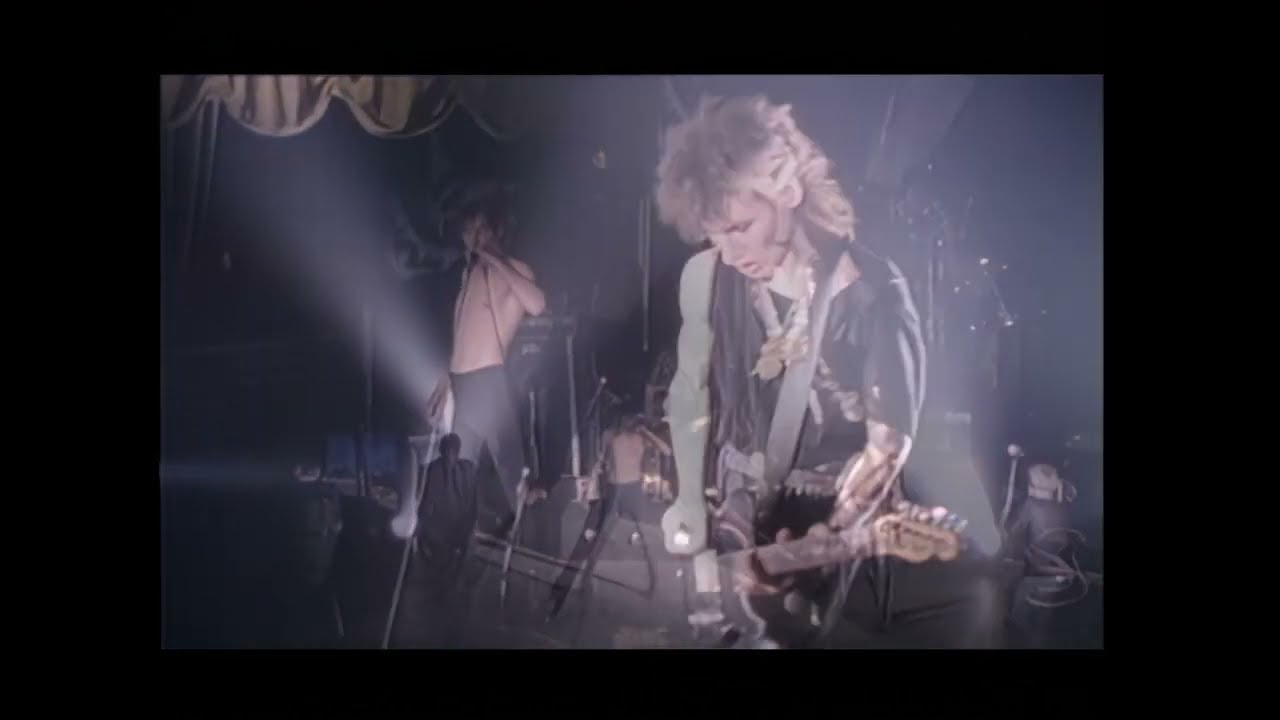
After singles like Dark Entries, Terror Couple Kill Colonel and a cover of Telegram Sam, Bauhaus released their first album, In The Flat Field, in 1980 on 4AD. They’d soon outgrown the nascent imprint, and signed to parent label Beggars Banquet. Kick In The Eye, The Passion Of Lovers and the album Mask built momentum. Their third album, The Sky’s Gone Out, came in ’82, the year in which an audacious cover of Bowie’s Ziggy Stardust saw Bauhaus in the Top 20. They tore up Top Of The Pops with a performance that showed four young men seizing the moment they’d always dreamed of and squeezing every drop of narcissistic joy from it. That will probably remain the second most defining Bauhaus moment on film.
The first is the opening sequence of Tony Scott’s 1983 film The Hunger. As vampires Catherine Deneuve and David Bowie lure unsuspecting victims to an evening of filthy sex and gory bloodshed, Bela Lugosi’s Dead plays stealthily over the narrative, while a stellar-looking Murphy writhes, lip-syncs and throws convincing shapes to camera. It’s not just a great Bauhaus moment, it’s a great moment in the history of arthouse-highbrow-porn-chiller cinema, the band stealing the scene from their own hero, Ziggy himself.

Needless to say, Scott’s focus on Murphy’s striking image bred a little resentment from the others. “I went to see the film with Daniel and Kevin,” recalls David. “We were joking on the way: ‘I bet it’ll be all about Murphy.’ And surprise, surprise. It was funny, but we were a bit miffed.”
When I walk on stage, I am Shakespeare. I am Jim Morrison, I am Ziggy. I really am Frank Sinatra. I’m Muhammad Ali.
Peter Murphy
“I understood that his performance was great theatre,” Kevin allows, “and it served the movie well. When the three of us saw it we were going: ‘Oh, there’s the end of my guitar!’ ‘And look, there’s my kneecap!”
Bauhaus were a rare live presence. They offered fantasy, escapism, flair; a marriage of fatalism and celebration. Just as they often recorded studio tracks in one spontaneous, improvised take, (Murphy: “We’d tell the engineer to press “Record”, with nothing in our heads, and commit to that”), David reckons there was something quite delirious about a Bauhaus live performance.
“We’d be teetering on the edge of a kind of divine madness, which could just as easily implode into abject chaos. Coming from Northampton, we felt like complete outsiders, alienated, from day one. Our aim was to transcend our oppressive, mundane, received working-class existence. To escape what we called the ‘flat field’. Bowie and Bolan and Roxy were our starry trinity of influences, and we were thrilled to have an audience to play to. Yet it was stressful too, because we always felt outside of the time we were existing in. You listen to the records now and they have a naive, reaching-for-the-stars spirit.”
“We were the kids who didn’t fit in at school, having our day,” suggests Kevin.
“We were willing Ziggy casualties,” Murphy offers. “We’d been fans ourselves, and we believed. Bowie shouldn’t go around saying it was an intellectual art exercise, detached and removed – c’mon, man, own it! We were that. In the raw. That’s why when we did Ziggy it was better than the original. Because it was Ziggy. On that Top Of The Pops, I was aiming to be Ziggy for three minutes. It was a fantasy that we’d swallowed whole. And we became beautiful. We became the progeny of this Messiah-like being. As kids we didn’t understand if it was a theatrical device. It was just pure charisma, pure enigma. And we wanted to be that, not to talk about it.
“Any live show is all about the moment, about being taken out of yourself. Music cuts through the rational. You create a trust so you can reach euphoria. It’s theatre, yes, but it’s also instinctive for me now. So when I walk on stage, I am Shakespeare. I am Jim Morrison, I am Ziggy. I really am Frank Sinatra. I’m… I’m… Muhammad Ali. Part of me, in my head, is going: ‘No, no, no…’ On one level it’s outrageously egocentric to say that. But you have to go the place where the magical presence is. Otherwise, what’s the point?”

When the kids had killed the man…’ Ziggy Stardust
By the fourth album, Burning From The Inside, Murphy was ill with viral pneumonia, and other members took some vocals (“with his blessing, contrary to popular belief,” David insists). The 1983 split came after a Hammersmith show that David ended by saying, to the shock of fans: “Rest in peace.”
We’d be teetering on the edge of a kind of divine madness, which could just as easily implode into abject chaos.
David J
“We all knew it was over,” he says. “We’d made the decision the night before the gig, so there was intense focus on stage. It was poignant and sad, but ultimately liberating.”
Kevin: “I suppose we didn’t tell the audience beforehand because we didn’t want to get all sentimental about it. It was bitter-sweet, a dichotomy. Like having to end a relationship with someone that you love, because you know it just can’t go on.”
It would be 15 years before Bauhaus rose again.
“People would stampede like wildebeest towards the stage,” Murphy recalls of the comeback tours of ’98 and then ’05. “They’d go wild. We’d think: this is what it’s about. It was like the Stones, The Doors, Zeppelin… It was those moments you only hear about. But we were there. We got it. I was the apex of the triangle. The body of the pyramid is the band and the music, but at the front you’re what it all comes out of. And it wasn’t flagrant ego. It was smarter, more artistic, more erotic.”
“It was, in general, glorious,” Kevin recalls of the ’98 dates. “From the very first show of the Resurrection tour, I felt invincible. What really got to me was seeing teenagers, who were toddlers when we formed, down the front, singing along. Then there was Peter’s amazing entrance, hanging upside down like a bat.”
“After some initial squabbles there was a very positive spirit abroad,” mulls David. “We were delighted by how young audiences were. By the 2005-06 tours we were playing better and with more edge than in ’98, but that edge was fuelled in part by intense internal friction. Which inevitably resulted in us disbanding, this time for good.”
Roses were spat; Bauhaus were finally laid to rest. “The chemistry of the band is just too volatile to be contained,” David adds. “It was all or nothing.”

‘The thing I am becomes something else: part character, part sensation.’ Mask
The legacy of Bauhaus is, for Kevin Haskins, their influence on “many artists and musicians. When we heard our first single on Peel; when we got the call to do Top Of The Pops; supporting Magazine on our first tour; playing I’m Waiting For The Man live with Nico; headlining our own tours; playing at Coachella in front of 50,000 people… those were fun times. I feel very blessed.”
Peter Murphy pauses for breath for the first time today. “Do Bauhaus still resonate? Well, every band would like to think that. It’d be wonderful. Sometimes, though, I ask myself: am I falling for flattery, vanity? The records do sound good, yes, but every artist thinks that of their own work. So I question it. To me, it’s like you’re saying: ‘Your eyes are blue and they’re beautiful.’ I look in the mirror and think, they’re just my eyes.”
We stand up and I go to pay for the coffees.
“But yeah,” he says, “I agree.”
Originally published in Classic Rock issue 167 (January 2012)

