


While playing a show at The Sylvee in Madison, Wisconsin, last June, Cullen Moore was forced to defend himself in the pit.
“I was crowdsurfing and someone was just shoving their finger in my butt,” says the Sleep Theory singer. “A lot of people saw it happening, and a lot of people were trying to stop it. And so, I said in the mic, ‘Hey, stop.’ She acknowledged it… and she kept doing it, so I looked at her and I kicked her in the face. She finger-blasted me, I kicked her in the face. We’re even. I can sleep good at night now.”
This is the kind of thing Cullen has to deal with now that Sleep Theory are on the rise.
“I’ve never really been one to let things like that get to me,” he continues. “In the moment, obviously, it’s frustrating, but it doesn’t sit on me throughout the next hour, weeks, days and months. Setting boundaries and not feeding into it goes a long way. I don’t dwell on anything.”
Today Cullen is speaking to us via Zoom from the chilly backstage area at the 9,000-capacity Coca-Cola Coliseum in Toronto, where Sleep Theory are supporting Papa Roach and The Used. Bundled up in a warm hoodie, he’s polite and friendly, albeit lacking in his usual effervescent energy. Sure, we’ve called him earlier than his usual wake-up time of 5pm – “I’m very hard to wake up,” he chortles tiredly – but it’s not just that.
Since Sleep Theory went viral on TikTok, there’s barely been a moment for him to catch a breath. On January 13, 2023, Cullen woke up to find his life had changed forever. The night before, he’d been umming and ahhing about posting a video to his TikTok account, before finally pressing the button and going to sleep – only to wake eight hours later to his phone going crazy with notifications.
The clip was Sleep Theory performing their kaleidoscopic debut single, Another Way – later released on EP Paper Hearts. Within 36 hours, it had reached half a million views. Not bad for a band who were, at the time, completely unknown.
“I posted that video on a whim,” he tells us today. “I had uploaded Another Way before on Spotify. It was on there for a month or two and only got maybe 8,000 views and then I took it down…”
He knew the track was special and, the second time around, it found its audience.
“I don’t think it was just algorithm,” he says. “I think people just connect with that song. Even now, people just love it.”
That initial hype has ballooned into 2.4 million listeners on Spotify, and the band have since played huge festivals across the USA and supported Beartooth on tour. Their first UK tour sold out in 30 minutes flat.
“It’s exactly what I wanted the project to be – exactly what I was working towards when I started being a musician,” Cullen says with a smile. “I wanted something massive. I want to be able to say that we are the next big thing.”
Sleep Theory’s success can be partly attributed to Cullen’s determination. Having grown up on R&B, as a teenager he was introduced to My Chemical Romance and Fall Out Boy and tumbled headfirst down the metal rabbit hole, discovering nu metal, pop-punk and post-hardcore bands such as Scary Kids Scaring Kids and Dance Gavin Dance. He started writing music when he was just 12, and formed his first band at 14. The son of an army veteran who was a country musician as well as a Lieutenant Colonel, Cullen caught the bug young.
“My dad made a music video with my mom for a song that he wrote for her. And as a kid, whenever I saw that, I thought it was the coolest thing,” he smiles.
Still, he tried other things. He went to college and dropped out, before eventually following his dad into the military in 2015, where he spent three years in the National Guard, stationed outside of Mississippi. While his stint spanned two presidents – Trump and Biden – his motivation to join was not political, and he prefers not to go into detail about that period. It’s the only time in our interview he seems guarded and keen to move onto another topic.
“I’m not a political person. I do not enjoy political talk or anything of that sort,” he explains.
Despite spending his adolescence around the military, he was initially reluctant to sign up.
“I always told my dad I’d never join the military,” he says. “Obviously, I respect my dad. I always want to follow in his footsteps in some capacity. But with the army, the reason I didn’t join under his advice or influence is because if I did it and I hated it, then I’d be like, ‘Dad, this is your fault.’ But if I do it on my own terms, then I can’t blame anybody but myself if I don’t like it.”
In 2018, with his contract up, he left the military and formed Sleep Theory. Initially a solo studio project, it began to blossom when he recruited bassist Paolo Vergara in 2021.
“I will never regret my decision to join the military,” he says. “But I will never regret not going for another contract. I’m glad to be done.”
In May 2025, Sleep Theory released their debut album, Afterglow. It’s stacked with slick metal bangers that nod to the anthemic bounce of A Day To Remember and I Prevail’s knack for an electronic-powered hook, effortlessly combining grit and gloss with pop, hip hop and nu metal influences, while Cullen’s excellent vocals power unstoppable choruses.
Afterglow, he says, explores the hardest part of a break-up – the aftermath – and trying to mend the void left behind. As he sings on the title track: ‘I told you I’d be better off alone… And now I know I’ve never been so wrong / Like you left with half my heart somehow.’ Cullen attributes the band’s rise to their authenticity and the lyrical message.
“I believe that it just comes down to being very personable,” he says. “That’s another reason why there’s so much traction with the band, because people can connect to us. The biggest thing that I always said is just, ‘I’m not going to change myself for anybody.’ If I have to fake it, if I have to change myself or act a certain way, it’s not for me.”
While some of the subject matter comes from personal experience, he also wanted to write something that would strike a chord on a mass scale. “All of our songs are very relatable, they hit home.”
Commercially savvy, he finds it odd when people use mainstream ambition as a stick to beat bands with. Instead, he embraces the obvious perks that come with reaching across genre boundaries.
“Some people want to write songs that they enjoy first, and then as their career builds, they want to start writing to further their career. There’s nothing wrong with that,” he acknowledges. “I’m just choosing to write to further our career first… We’ve seen comments from people like, ‘Oh, you guys are just an [US radio station] Octane-core band, you just write radio songs.’”
He nods when we point out that writing memorable songs that are also relatable to thousands of people is hardly a skill to be sniffed at.
“Let them criticise,” he shrugs. “Their comments bring views. We’ll use it!”
Ask Cullen if he’s been caught off guard by Sleep Theory’s whirlwind success, and he’ll tell you no. What’s more, you fully believe him when he says it. He exudes the kind of matter-of-fact confidence that contains no trace of arrogance, and can only come from unshackling yourself from the opinions of others.
“I value people’s opinions, but I don’t care about people’s opinions,” he says. “At the end of the day, I’m still going to do what I’m going to do. I figured out that the things that I was self-conscious about were the things that made me cool. Just be yourself – that’s the biggest thing that people can learn to do.”


Timing has played a big part in Sleep Theory’s success, too. Alongside other genre-fluid bands such as The Pretty Wild and Dayseeker, Sleep Theory have found themselves caught up in the rise of ‘baddiecore’ – defined by podcaster/Stray From The Path’s Craig Reynolds as “bands like Sleep Token, Bad Omens and Spiritbox… metalcore with enough pop music crossover and sex appeal that normie hot people like it”.
Contrary to the keyboard warriors who want to maintain a narrow view of what metal should be, it’s a shift Cullen sees as beneficial.
“It opens up the scene to people who may not have heard of a band like us, or heard our music before,” he says. “I don’t really put too much thought into genre or where we would fit, because I feel like once you put too much thought into where you may fit, that’s when you start writing towards fitting in that place. I don’t let labels get to me. People are always going to use their own terms to describe what we do, and that’s totally fine.”
But there’s also a dark side to baddiecore fandom. Some people are so devoted that they have developed parasocial relationships with bandmembers, escalating to the point where they feel entitled to personal information or physical closeness. The birth certificate for Sleep Token bassist III was reportedly shared online, while Bad Omens’ Noah Sebastian told Hammer that fans had tracked down baby photos of him from a distant relative’s Facebook page. He later deleted his social media accounts. As well as being groped at a show, Cullen recalls other violations.
“At one gig, a drunk girl put her finger in her mouth,” he says. “She got a bunch of spit and stuck it in my throat.”
Cullen Moore is a different type of baddiecore vocalist than we’re used to. Vessel hides behind a mask, sometimes cries during gigs and doesn’t give interviews. Noah Sebastian is often photographed in shadows, and mostly lets the production of Bad Omens’ shows do the talking. Courtney LaPlante is more at home on the stage than sharing her private life. Meanwhile, Cullen is a self-confessed goof-off (“I’ll be driving on a street and I’ll just roll the window down and just start screaming at random people. I’ll just start barking!”), who’s not averse to a little schadenfreude.
“I enjoy people getting hurt, honestly. I think it’s so funny,” he laughs. Wait, do you mean…? “Obviously, I don’t want people to be incapacitated, but I mean, as long as we know they’re OK… I post people falling off skateboards all the time. I post people falling down stairs. I post people getting hit with things. Don’t break a leg around me, because I’ll come over to you and be like, ‘Hey, are you OK?’ You’ll be like, ‘My leg is broken.’ I’ll be like, ‘Are you dying? No? OK, this is hilarious.’”
And he can laugh at himself too, which is a welcome departure from the seriousness of some of his baddiecore peers. A few months ago, a video of Cullen smashing his dirt bike into a parked car, after a somewhat barbed conversation with fans in a car park, went viral on TikTok. Most of us would have shrivelled with embarrassment afterwards, but not him.
“You show yourself as being more confident when you can just laugh at yourself,” he says.
Later, he uploaded spoof videos of the incident online with the caption ‘All gas, no brakes!’ The band also projected the clip onto the backdrop of one of their gigs.
“It’s not about always having to keep this persona of being this person in this band… and if that’s shattered, then you’re a failure,” Cullen says of the experience. “No, man, just be yourself. Have fun. If you run into a car, get up and laugh about it.”
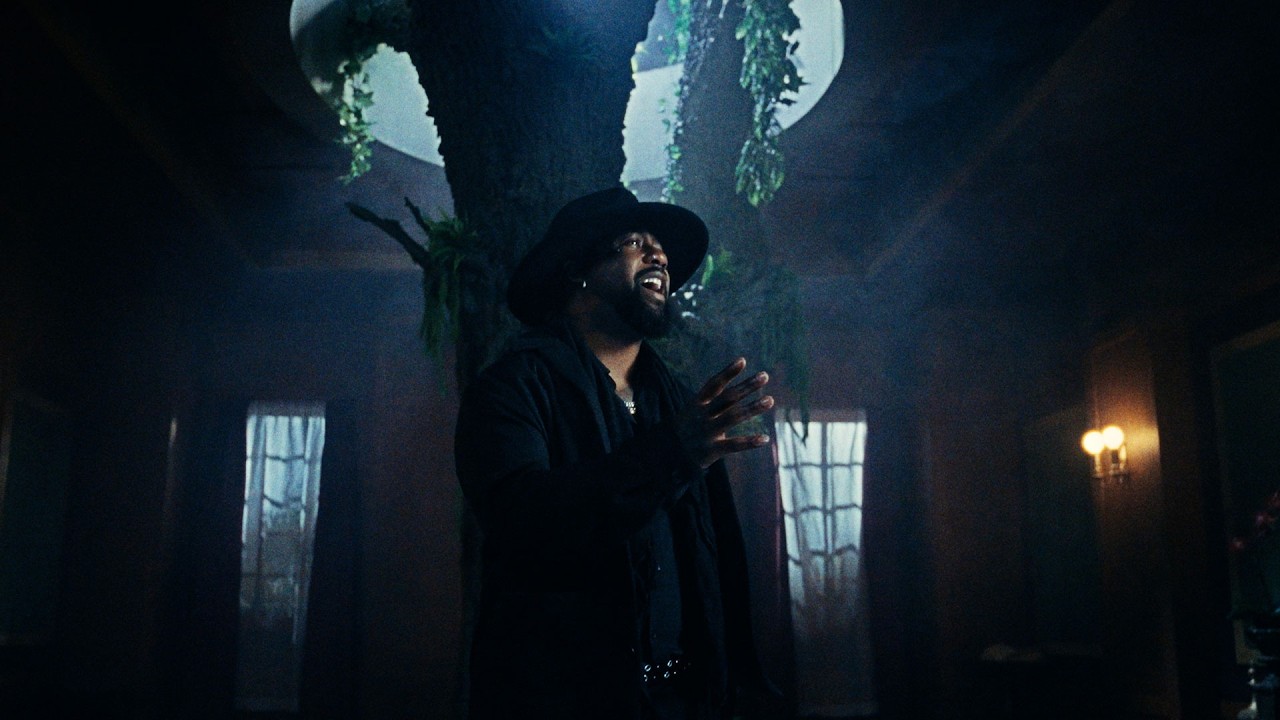
It’s all part of being in the public eye – something that Cullen is not only handling, but welcoming. Many of the venues on their first UK tour were upgraded more than once, and the London show was at the 2,300-capacity Kentish Town Forum. Cullen isn’t putting a limit on the heights Sleep Theory could reach.
“Any time that I set a goal, once I get there, it’s moved,” he says. “So I’m just operating. I know that I want to go as far as I can go. People would be like, ‘Oh, I want to play Madison Square Garden,’ but I feel like that’s just capping off where I could go. Why would I sell myself short?”
Instead, he’s got his eye on the bigger picture.
“I think true influence comes by action,” he says. “And if you can influence people to somehow mimic your actions, that’s when you really have influence. I don’t care about popular places to play. I care about true influence and bringing back pop culture influence.”
It’s a vision that goes right to the core of baddiecore: blurring the boundaries and rewriting the rules on what it means to be a modern metal superstar.
“I’m not a trend person,” he says. “I don’t really care to say, ‘Look at me’, or post so other people can see what I’m doing so they can feel in competition. I’m here to play music. I’m here to have a good time. I’m enjoying the music that we write now, but I want a sound that’s even larger.”
A steely determination appears in his eyes.
“I don’t want anything less than larger than life.”
Afterglow is out now via Epitaph. Sleep Theory play Download Festival on Friday June 12.

