




You can trust Louder Our experienced team has worked for some of the biggest brands in music. From testing headphones to reviewing albums, our experts aim to create reviews you can trust. Find out more about how we review.

Down On The Street
Loose
T.V. Eye
Dirt
1970
Fun House
L.A. Blues
A half-century on and we’re still riding the ripples of The Stooges’ second album, Fun House. It’s a beautiful thing, a seven-track study in the feral and unhinged.
Essentially, but for its rock-friendly elements (guitar, bass, drums, vocals, attitude), it’s a record that’s got far more in common with the free interpretations of contemporary jazz than with the uniform strictures of the punk scene that it apparently sired.
Against the brute minimalism of the rock-solid yet instinctively fluid Stooges, Iggy Pop’s voice extemporises, blurts, explores and punctuates like Miles’s trumpet in full-on gonzo shaman mode, sounding like a savage messiah left for dead in a dumpster on droning psyche-punk classics like Down On The Street, TV Eye and 1970.
Scott Asheton’s drums are a stoned, tribal thump that seems determined to raise the dead or soak the ground with Devil’s rain, while Ron Asheton’s guitar is a looping, feral acid trip that throbs like a war wound.
Marred by the meandering, self-consciously Doors-y title track and the jazz-skronk splatfest LA Blues, as an album Fun House doesn’t quite have the bite of its predecessor, but it’s still a wild ride.

Every week, Album of the Week Club listens to and discusses the album in question, votes on how good it is, and publishes our findings, with the aim of giving people reliable reviews and the wider rock community the chance to contribute.
Other albums released in July 1970
- Cactus - Cactus
- Osmium - Parliament
- Cosmo's Factory - Creedence Clearwater Revival-
- Time And A Word - Yes
- John Barleycorn Must Die - Traffic
- Number 5 - Steve Miller Band
- Devotion - John McLaughlin
- Free Your Mind... and Your Ass Will Follow - Funkadelic
- Full House - Fairport Convention
- Humble Pie - Humble Pie
- James Gang Rides Again - James Gang
- The Last Puff - Spooky Tooth
- On The Waters - Bread
What they said...
"Fun House is where Iggy Pop's mad genius first reached its full flower; what was a sneer on the band's debut had grown into the roar of a caged animal desperate for release, and his rants were far more passionate and compelling than what he had served up before. The Stooges may have had more "hits," but Fun House has stronger songs." (AllMusic)
"The Stooges appeal to me intellectually – their monotonousness obviously transcends competence and the introduction of a saxophone on this record represents a nice synthesis with new thing jazz – but I have to be in a certain mood of desperate abandon before I can get on with them musically. Can that be good?" (Robert Christgau)
"Unhinged is too weak a word for the wildest moments of Fun House, especially closer L.A. Blues, a fiery freakout that's more heroin than LSD and makes no pretence of song structure. Saxophonist Steven Mackay adds a nasty edge to the album's second side, blazing right along with the rest of the band to create a texture that sounds exactly like the album cover – Iggy tossed in a flaming sea, possibly hell. (Pitchfork)
What you said...
Zak Browne: I have to go 9.5. It's not perfect, but it's really close.
Chris Elliott: I kind of appreciate this record. It's a bit like art that's interesting/challenging, but you wouldn't want it in your living room. I love the albums that followed (once Bowie made them play songs). This is raw garage, and its energy is undeniable. There are a couple of great tracks, but it's a jam band being self-indulgent (albeit at speed) for great chunks.
Nigel Mawdsley: I've not listened to Fun House for over 40 years, since a friend lent me his vinyl copy. I'd forgotten how good this album was.
This album must have influenced so many music genres: punk, glam, new wave, to name but a few, and hundreds, if not thousands of bands, from Motorhead to The Boomtown Rats; from New York Dolls to The Sex Pistols (that's only 4) must have fed off the raw power (see what I did there) of this album. Great!
Andrew Cumming: Fabulous album. Still sounds great today. I guess the fact that it was so raw and unpolished at the time has given it a kind of timeless quality. The songs on side one are punchy and intense, TV Eye probably the best known, but Loose is just as good. After side two kicks off with 1970, the whole thing spirals into oddness with Fun House and LA Blues. Heaven only knows what they were thinking as they wrote and recorded the songs, but it worked then, and it still works now.
Mark Herrington: I remember first seeing one of Henry Moore’s sculptures in Kew Gardens. I could clearly see it was well executed, but it literally did nothing for me.
I feel the same way about this week’s album.
It sounds ahead of its time, full of energy and steering clear of the crowd, but I find little here that actually moves me. It is obviously influential and one of the early trailblazers.
However, when I put Sabbath's debut on from the same year, 1970, and it still reaches down deep and resonates across my musical core, I know where my heart lies.
Evan Sanders: I really like this pick, especially with it coming not too many weeks after what many considered the first-ever punk album, Never Mind The Bollocks. If that is true, then Iggy Pop and The Stooges were proto-punk multiple years before Johnny Rotten was finding ways to insult the Queen.
From the opener of Down On The Street, straight through to the title song, then L.A. Blues, I find the songs to be an assault of unpolished guitars and vocals, in a good way. At a time when rock was fracturing after the Beatles' break-up, albeit with strong rockers such as Paranoid, Layla, and Live at Leeds, we see that the Stooges kept to an even more raw sound. A worthy one for the playlists. 7 or 8 out of 10.
Gary Claydon: Released amid the post-Altamont death throes of the hippy zeitgeist, and this sure ain't no summer of love, baby. Raw, chaotic and looser than a lactose-intolerant person at a cheese tasting, a vibe reinforced by Gallucci's 'live' production. Iggy bestrides Fun House like the colossus he is, but the Ashetons and Dave Alexander rarely receive the credit they deserve for providing the unrelenting sonic superstructure that the frontman climbs all over.
Largely ignored at the time, over the years, Fun House has, rightly, come to be regarded as seminal proto-punk/alt. rock.
Ben Smith: Can we just skip to the ratings already? It’s a 10
Greg Schwepe: Every music scene seems to have its epicentre; Birmingham, New York, Seattle, and London, to name a few. And the epicentre and fertile ground for Midwest garage rock is Detroit. And while The Stooges technically hail from nearby Ann Arbor, it’s close enough to have that Motor City vibe.
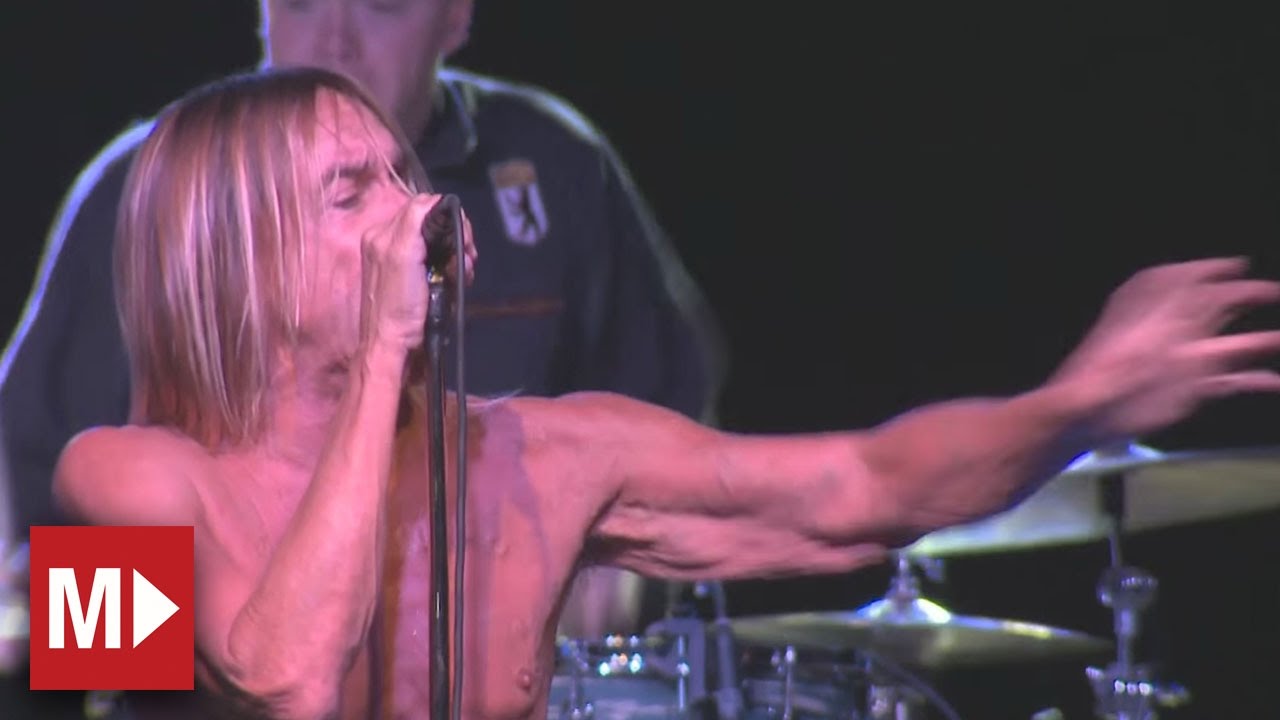
Fun House and its sound fits the gritty, hardworking ethic of the blue-collar Motor City region: Don’t fuck around, just hit me with power chords and a 4/4 beat, get to the point, and then we’ll knock down a few Stroh’s Beers when we’re done. Led by the shirtless, sinewy, gyrating vocalist Iggy Pop, his antics keep your attention, even in the studio.
The first three tracks, Down On The Street, and T.V. Eye really kick out the jams, to borrow a line from another famous band from that area. This part of the album has more of a proto-punk vibe, like you’re getting smacked with a two-by-four. Short and sweet, nothing extra.
Then we start to get a little drawn out. Dirt is maybe the only song where the beats per minute are less than 200. Maybe more of a slightly psychedelic take here. The band gives us all a chance to catch our breath here, because the last three tracks will test your mettle.
Here’s where it’s not three minutes and outta here. 1970, Fun House and L.A. Blues are where things get a little more strung out. 1970 is a rave-up with lots of wah-wah guitar and a lot of sax. Fun House brings more sax, urgent drums and clocks in at eight minutes. The closing track L.A. Blues reminds me of nothing to do with L.A. or the blues… so maybe that’s the point here. A little irony in the title. A lot of random grooves with Iggy working hard to shred his vocal cords. Who knows, this could have been the producer going, “Hmmm… we got enough space left for one more track, whatcha got? Anything? Go!” as he hits the record button. Five minutes of frenetic sounds to finish out the album.
7 out of 10 on this one for me. I get what The Stooges are doing here; some won’t! The first third of the album is of more interest to me, but it all works.
One slightly funny sidebar to end this. I saw Iggy Pop open for The Pretenders in the late 80’s. The wife of the couple that went with us said, “This will be fun. The last concert I saw was James Taylor back in college.” “Oh, she will be in for a real treat when she sees Iggy!” I thought to myself. I look over halfway through his set as the usual shirtless Iggy is writhing and gyrating across the stage; my friend’s wife’s eyes have bugged out to the size of grapefruits, and her jaw is firmly sitting on the floor. A look of shock on her face! And that, my friends, is rock and roll.
Iain Macaulay: It’s raw, it’s messy, it’s loose, and with seven songs at 36 minutes long, it’s over before you realise. Yes, there are a couple of long songs, but for the most part, each track is its own entity, with its own style and flavour. And, you could say each track was the ground zero for several different music genres that were still way off in the distance.
This is the sound of four guys realising they made it past the first album and found themselves still alive, so they revelled in the glory of doing what they wanted without worrying about any kickback, because they knew it wasn’t going to last much longer, and it didn’t, for that incarnation of the band.
The album was recorded live to get the aggressive sound that got them noticed, and you can’t deny that it worked, warts and all. There are many better live recordings of these songs throughout Iggy's solo career with different lineups of musicians, but each lineup shows how well these stripped-back songs were written in the first place, because they still stand up.
John Davidson: Fun House starts out sharply with a punchy groove and some aggressive guitars on Down On The Street. Loose continues the groove and accidentally invents both indie and stoner rock along the way. TV Eye continues in a similar vein but is less well executed Dirt finishes off side one and sounds like The Doors more than anything else. Side two is less successful, devolving into noise by the end of LA Blues.
I can't think of any other bands from 1970 that would have sounded like this. Most of the British heavy rockers were classically trained or steeped in the blues, or in Hawkwind's case, stoned out of their minds.
Side one is pretty intense and sets up the template for a lot of music that came after it – mixing raw vocals, heavy guitars, prominent bass and a steady groove – while side two devolves into pure aggression.
Interesting to think this was made in 1970, and while I doubt I'll add it to my regular listening, it really is a standout album.
Philip Qvist: You get albums that take months to record, with every note polished and re-recorded until you get that perfect sound, and then you get albums that take mere days to record and produce, leaving you with a raw sound, complete with a take-it-or-leave-it attitude. I'm not sure which approach is the better option (I am more the middle ground type of person when it comes to music), but there is no doubting under which circumstances Fun House was recorded.
It is loose, raw and spontaneous, which is both its strength and weakness. Side one benefits from that minimal approach, with the likes of Down On The Street and TV Eye, but it then starts to get irritating when the saxophone makes an appearance on side two. I guess Iggy Pop and co were having fun at the time and probably playing by ear, but the closing track LA Blues, was just a mess, although the seven-minute title track was okay enough for me.
I have never been a huge fan of The Stooges, but at least I have now listened to one of their albums. Although it is one record that I will probably never listen to again, I will still give Fun House a decent enough score, because it was fun enough to listen to.
Mike Canoe: A friend once described the Stooges' Fun House as "stumbling into a tent revival sermon to find a preacher hollering about sex and drugs instead of Jesus."
Inherent crassness of that statement aside, it's a great description. Fun House is transcendent, ecstatic, powerful, cathartic, an overwhelming sense of being enveloped by a higher power you can't fully understand, but you put your faith in it because it makes you believe. And who better to lead this worship than the original manic street preacher, Iggy Pop?
Even without any visuals, Iggy Pop is utterly captivating and transfixing. I will argue here and in the hereafter that Iggy is not only one of rock's greatest frontmen but one of its greatest singers. His voice can do all the things: whoop with joy, howl and growl with lust, wail with ecstasy, and even croon with genuine emotion and feeling.
Like any band with a magnetic and charismatic frontman, it's easy to forget the Stooges were a band. Iggy wouldn't have sounded nearly as good without the sonic tidal wave that the Stooges allowed him to surf on top of. Ron Asheton's guitar sound is truly revelatory, brute force repetition that suddenly careens wildly like an Oldsmobile on an icy Detroit road without ever actually crashing. Brother Scott Asheton and bassist Dave Alexander lay down a groove as deep as the Mariana Trench and keep the proverbial wheels from falling off.
It seems limiting to refer to the tracks on Fun House as mere "songs." They have more in common with the way jazz sessions were recorded at the time. TV Eye, obvious classic, but so are Down On the Street and Loose, with Dirt destroying power ballads before they ever even existed. Side two is when the freak out really starts with the pummeling 1970 and the orgiastic title track bringing in Steve Mackay to contribute some wailing, never flailing saxophone.
Closer L.A. Blues is the hardest one to digest, but I hear it as the final exhilarating climax of a rock concert where everybody is just bashing the crap out of everything, only stretched out to song length. It's not much on its own, but it is a fitting chaotic closer to the album.
This is the one that actually had all the raw power, but the title Fun House fits it so much better. Ten out of ten, only because I can't give it infinity.
Final score: 7.94 (53 votes cast, total score 421)
Join the Album Of The Week Club on Facebook to join in. The history of rock, one album at a time.

