


The 30 best British Blues Rock albums ever
The best British Blues Rock albums: Direct from the Delta to Dartford and beyond, the Blues turned British rock on its head
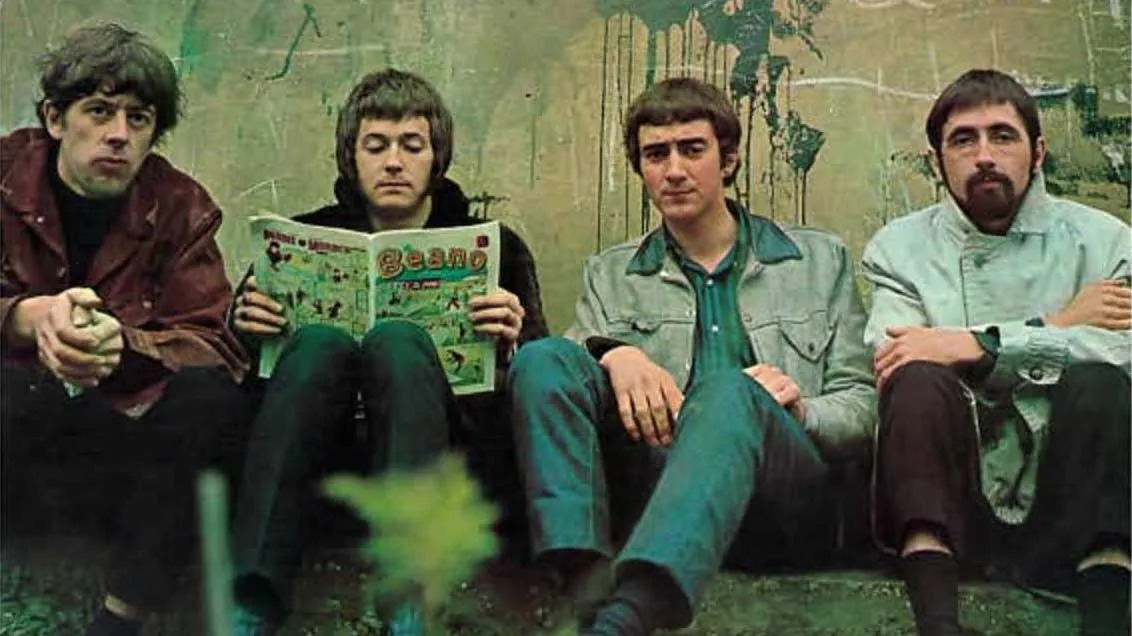
The British Blues Boom found its fullest expression in late 60s releases from the likes of The Yardbirds, Cream and the Rolling Stones, when the blues-fuelled energy of the mod clubs in the earlier part of the decade had drifted and all-night dancing had been replaced by a laid-back, dope-smoking vibe.
Key players such as John Mayall, Eric Clapton and Peter Green reached a crossroads in their careers, as the blues scene split between purists and those taking the path towards out-and-out rock. Meanwhile, the likes of Free, Led Zeppelin and Jethro Tull took their first steps towards 70s greatness.
From Spooky Tooth to Chicken Shack to Ten Years After and beyond, we look back at the albums and bands that really left their mark.

30. Frankie Miller - The Rock (Chrysalis, 1975)
You can trust Louder Our experienced team has worked for some of the biggest brands in music. From testing headphones to reviewing albums, our experts aim to create reviews you can trust. Find out more about how we review.
Frankie Miller - The Rock (Chrysalis, 1975)
Already hailed as one of the finest Scottish soul singers of the 70s, Frankie Miller was despatched to San Francisco to record his third album with producer Elliot Mazer and a band that included guitarist Henry McCullough and keyboard player Mick Weaver from the Grease Band.
The Rock’s underlying Stax feel proved what a great singer/songwriter Miller was with the Memphis Horns kicking (br)ass and the Edwin Hawkins Singers laying down backing vocals on the brilliant A Fool In Love.
Ain’t Got No Money was covered by Bob Seger and Cher, but Miller’s inability to hold on to his band for any period of longevity denied him the success he deserved
29. Humble Pie - Safe As Yesterday Is (Immediate, 1969)
Humble Pie - Safe As Yesterday Is (Immediate, 1969)
Formed by Peter Frampton and Steve Marriott in the wake of the Small Faces demise, Humble Pie were stuffed to the gills with promise that they never fulfilled.
But as their debut album shows, they could rock. Frampton and Marriott bend their guitar strings round each other with passion and sensitivity while bassist Greg Raidley and drummer Jerry Shirley do the same with the rhythm section.
And they took it in turns to add piano or organ overdubs. It’s a masterful blues rock workout. All it lacks are some decent melodies to go with the songs.
28. Taste - On The Boards (Polydor, 1970)
Taste - On The Boards (Polydor, 1970)
Unwisely hyped as the new Cream (they even supported them at the farewell Royal Albert Hall shows) just because they were a trio, Taste, featuring a youthful Rory Gallagher, had their own ideas and breathed fresh into the already hackneyed heavy blues scene.
On The Boards, their second album, adds some jazz influences, particularly when Gallagher plays a saxophone solo on It’s Happened Before, It’ll Happen Again. There’s also a folksy tinge to Railway And Gun and If The Day Was Any Longer.
But rock is what they do best as I’ll Remember, Eat My Words and the opening show-stopper What’s Going On demonstrate.
27. Spooky Tooth - Spooky Two (Island, 1969)
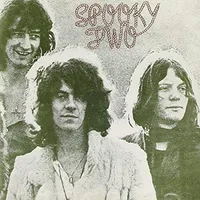
Spooky Tooth - Spooky Two (Island, 1969)
It was Spooky Tooth’s misfortune to be sandwiched between Led Zeppelin and Free’s turbo-charged, all-pervasive ascents. A couple of years later and the band’s thoughtful but solid style would have found room to grow.
Keyboard player Gary Wright shares vocals with Mike Harrison, a strong, complementary pair of voices, and also writes most of the songs including the memorably catchy Better By You Better Than Me, later rescued from oblivion by Judas Priest.
The tracks on their second album are an eclectic bunch, blending the blues with folk, country, gospel and even prog. And they sound better now than they did then.
26. Juicy Lucy - Juicy Lucy (Vertigo, 1969)
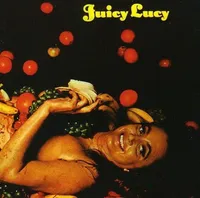
Juicy Lucy - Juicy Lucy (Vertigo, 1969)
Juicy Lucy took their name from a character – a prostitute, in case you were wondering – in Virgin Soldiers, Leslie Thomas’s novel about troops serving in the Far East. Formerly a psychedelic combo called The Misunderstood, the Juicy crew struck gold with the first single from their self-titled debut album.
Who Do You Love?, a crazed hard rock cover of a Bo Diddley song which got to No.14 in the UK, and stayed in the chart for three months.
These days their first album is remembered for another thing entirely: its cover, depicting a naked woman surrounded by fruit. Talk about squeeze my lemon, baby.
25. Chicken Shack - 40 Blue Fingers Freshly Packed And Ready To Serve (Blue Horizon, 1968)
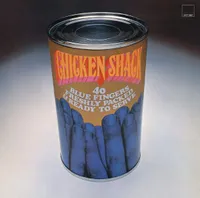
Chicken Shack - 40 Blue Fingers Freshly Packed And Ready To Serve (Blue Horizon, 1968)
Whichever way you look at it, Chicken Shack guitarist Stan Webb is chronically under-appreciated. His band is always name-checked as the group that gave the world Fleetwood Mac’s Christine McVie (back when she was Christine Perfect), but Chicken Shack were at the cutting edge of British blues rock.
Stan’s intricate, understated blues lines – heavily influenced by Freddie King – compliment his sometimes OTT vocal performance. Just check out his version of King’s The Letter on this debut Shack record.
Perfect gives hints of Mac to come with her laid back When The Train Comes Back, the perfect antithesis to Webb’s frantic instrumental Webbed Feet.
24. Manfred Mann - The Five Faces Of Manfred Mann (HMV, 1964)
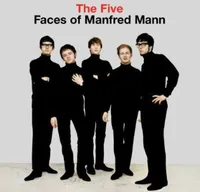
Manfred Mann - The Five Faces Of Manfred Mann (HMV, 1964)
Everyone knows the Manfred Mann hit parade. Less well known is their accomplished take on R&B that was neatly caught on their strangely hit-free debut album.
Keyboard player Manfred, sax/flute/guitar player Mike Vickers and drummer Mike Hugg had a jazz background in common, while singer/harmonica player Paul Jones and guitarist Tom McGuiness hailed from the blues scene.
The resulting fusion is sharp, intelligent and played with style – check out Muddy Waters’ Hoochie Coochie Man and Got My Mojo Working or Howlin Wolf’s Smokestack Lightning. They also come up with some sprightly songs of their own like I’m Your Kingpin and Don’t Ask Me What I Say.
23. Blind Faith - Blind Faith (Polydor, 1969)
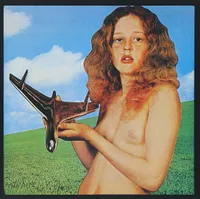
Blind Faith - Blind Faith (Polydor, 1969)
Like Cream’s debut, this (the only) album from Eric Clapton and Ginger Baker’s post-Cream dream-teaming with Steve Winwood, was never going to live up to the huge expectations. It’s patchy and inconsistent, certainly.
Alongside a pair of fine Winwood tunes in Had To Cry Today and Can’t Find My Way Home, there’s a sprightly cover of Buddy Holly’s Well Alright and the moody, slow-burning Sea Of Joy with Winwood’s soaring vocals bang on the money.
But the everyone-gets-a-solo Do What You Like is stretched paper-thin. The highlight is Clapton’s Presence Of The Lord, his guitar playing up there with the most spine-tingling in his catalogue.
22. Graham Bond Organisation - There’s A Bond Between Us (Columbia, 1965)
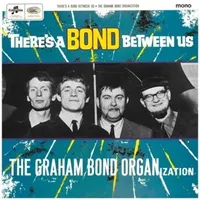
Graham Bond Organisation - There’s A Bond Between Us (Columbia, 1965)
Before the demons dragged Graham Bond down (and under a tube train in 1974), he piloted a musically inspired but personally fractious band that included Jack Bruce and Ginger Baker, who would of course become two thirds of Cream. Catching their uncompromising and expressive brand of R&B in the studio was not easy and this album is not among producer Robert Stigwood’s finest career achievements. But Bond’s passionate, wailing voice and Hammond is able to cut through the flat production, particularly on Walking In The Park. Bruce shows his innovative song writing credentials with Hear Me Calling Your Name while Baker previews Toad on Camels And Elephants.
21. Blodwyn Pig - Ahead Rings Out (Chrysalis, 1969)
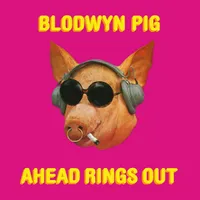
Blodwyn Pig - Ahead Rings Out (Chrysalis, 1969)
The band guitarist Mick Abrahams quit Jethro Tull for after This Was, Blodwyn Pig was another quartet, this time pairing Abrahams with sax/flute/fiddle player Jack Lancaster.
But the contrast with Tull couldn’t be greater on their wildly diverse debut. There’s a freewheeling, rocking abandon of It’s Only Love and Sing Me A Song That I Know, the sweet, gentle Dear Jill, the laid back blues of Up And Coming and the heavy metal of Ain’t Ya Comin’ Home Babe?
The only direct comparison comes on the jazzy, flute-driven Leave It With Me, taking over where Ian Anderson left off after Dharma For One.
20. Robin Trower - Bridge Of Sighs (Chrysalis, 1974)
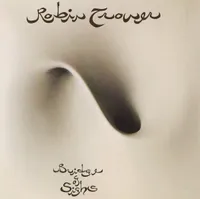
Robin Trower - Bridge Of Sighs (Chrysalis, 1974)
Who would have thought that the “backroom” guitarist with the stately keyboards-led Procol Harum would become one of the great blues rock guitarists. And it was the second of his power trio’s superb trilogy of back-to-back albums in the mid-70s that sealed his reputation.
From pounding opener, Day Of The Eagle, to closer Little Bit Of Sympathy, it’s a beautifully balanced, dynamic record filled with quality songs, masterful playing from Trower (Bridge Of Sighs, Too Rolling Stoned) with his overdriven, reverb-drenched, swirling psychedelic sound and Hendrix inflections, plus some outstanding performances (About To Begin, In This Place) from peerless blues rock vocalist Jimmy Dewar.
19. Climax Blues Band - Plays On (Parlophone 1969)
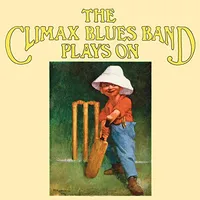
Climax Blues Band - Plays On (Parlophone 1969)
These Staffordshire blues terriers sounded a bit too much like John Mayall & The Bluesbreakers on their first album but the follow-up, Plays On, branched out in several directions.
The addition of a mellotron to the mix brings a progressive dimension to the sound, notably on Mum’s The Word based on Also Sprach Zarathustra (the 2001 theme). But there’s also Colin Cooper’s jazzy playing on the smoky instrumental Flight, the whiff of psychedelia on Hey Baby… and the Latino-tinged Cubano Chant.
And there’s still room for some solid blues on So Many Roads and the rip-roaring Twenty Past Two/Temptation Rag.
18. Savoy Brown - Blue Matter (Decca, 1969)
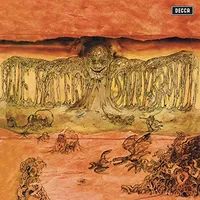
Savoy Brown - Blue Matter (Decca, 1969)
Frequent restructuring blighted Savoy Brown’s career but founder/ guitarist Kim Simmonds got the blend right on their third album, Blue Matter, with solid, reliable guitarist “Lonesome” Dave Peverett and Chris Youlden whose distinctive voice was matched by his bowler hat and monocle.
The album is worth it for the slow-building opener, Train To Nowhere which is a classic of the era. A simple guitar riff over a bass line sets the scene for Youlden’s soulful vocal, picking up steam with drums and piano before the whistle blows.
Tolling Bells comes close but sadly Youlden isn’t featured on the live tracks on (what was) side two of the album.
17. The Groundhogs - Thank Christ For The Bomb (Liberty, 1970)
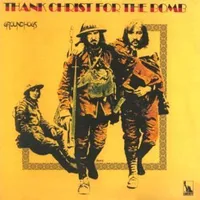
The Groundhogs - Thank Christ For The Bomb (Liberty, 1970)
Breaking out of an increasingly moribund blues scene at the end of the 60s, Tony McPhee swapped his mellow boogie for something heavier and came up with the semi-conceptual Thank Christ For The Bomb.
It seemed a risky move but he had no trouble making the switch. The songs are briefer but each one packs a punch, even when the emphasis is acoustic. And when the band stretches out on the title track, adding layers of sound after a slow start, McPhee rips out a solo that would not disgrace an MC5 album.
The reward for such bravado was the first of three Top 10 albums.
16. Rory Gallagher - Tattoo (RCA, 1973)
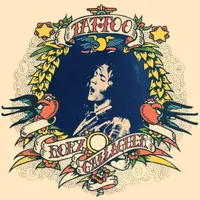
Rory Gallagher - Tattoo (RCA, 1973)
His mercurial nature makes is hard to choose the definitive Rory Gallagher album but Tattoo comes close, mainly because after four solo albums he’s finally locked in tight with his band.
After grabbing you first by the heart with the evocative, medium-paced Tattoo’d Lady and then by the balls with the full-tilt Cradle Rock, Gallagher eases back and mixes things up a bit with blend of Delta blues guitar and jazzy piano on 20⁄20 Vision or the impressively melodic, languid ballad, A Million Miles Away.
But the cornerstone is a pair of stretched out rocking blues, Sleep On A Clothes Line and Who’s That Coming?
15. THEM - Them (Deram, 1965)
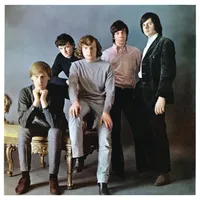
Also known as The Angry Young Them, the debut album from Belfast’s rabble-rousers begins the way most albums end – with a hell-for-leather jam and the vocals only appearing over a minute into the song.
Van Morrison was contrary right from the start! From the same school as The Rolling Stones, the Morrison-fronted Them covered John Lee Hooker, aped Howlin’ Wolf, and with stonkers like Gloria, influenced hell-raising garage bands and pub-rockers everywhere.
If You And I Could Be As Two, meanwhile, could be the birth of Van’s lost-in-music, high-kicking, pianoshaking, soul man schtick.
14. John Mayall & The Bluesbreakers - A Hard Road (Decca, 1967)
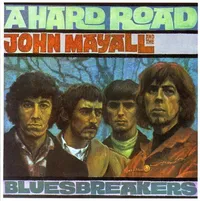
John Mayall & The Bluesbreakers - A Hard Road (Decca, 1967)
Replacing Eric Clapton with Peter Green was John Mayall’s masterstroke. While the guitarist stayed less than a year he left an indelible mark on A Hard Road with the instrumental The SuperNatural – exploring the sustained tone he’d use for Albatross in Fleetwood Mac – and The Same Way, which was an embryonic Man Of The World.
Mayall had moved on too. There’s an unexpected zest to Leaping Christine and he jousts on bottle-neck with Green on Elmore James’ Dust My Broom.
New drummer Aynsley Dunbar freshens up the rhythm section but its Mayall’s blend of original songs and covers that gives the Bluesbreakers their own identity.
13. Bad Company - Bad Company (Island, 1974)
Bad Company - Bad Company (Island, 1974)
Bad Company had their fare share of detractors when they burst on to the scene in the mid 70s. Ex-Free men Paul Rodgers (vocals) and Simon Kirke (drums) were criticised for following a more commercial path, despite the fact that their former band had enjoyed several hits.
Completed by Mick Ralphs (guitar, ex-Mott The Hoople) and Boz Burrell (bass, ex-King Crimson and Snafu), Bad Company had Zeppelin’s Peter Grant as their manager – and the American market in their sights.
They struck the bullseye. Can’t Get Enough might have had a tasty Top 40 sheen but it was expertly rendered blues rock to the core.
12. The Animals - The Animals (Columbia, 1964)
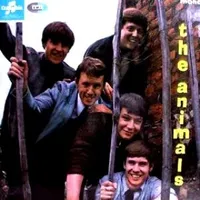
The Animals - The Animals (Columbia, 1964)
They wrote very little material themselves but the Animals reworked their covers so thoroughly they probably thought they had written them.
So while their debut consists mainly of the standard R&B repertoire – Chuck Berry, Ray Charles, Little Richard – you learn more about the Geordie band’s uninhibited character than many bands who wrote their own songs.
Eric Burdon in particular was prone to personalise any song he fancied and John Lee Hooker’s I’m Mad Again becomes an extended grievance of his own. And The Story Of Bo Diddley is a glorious shaggy dog story that incorporates his skewed version of the history of R&B.
11. Alexis Korner's Blues Incorporated - R&B From The Marquee (Ace Of Clubs, 1962)
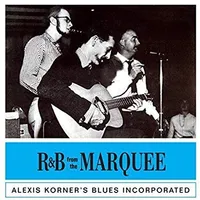
Alexis Korner's Blues Incorporated - R&B From The Marquee (Ace Of Clubs, 1962)
Credited as the inspiration behind John Mayall and The Rolling Stones, several of whom played with him, guitarist Alexis Korner began pioneering the blues in the mid-50s, often in tandem with revered harmonica player Cyril Davis.
R&B At The Marquee qualifies as the first British blues album, drawing on country blues and Chicago electric blues with a particular fondness for Willie Dixon songs.
Blues Incorporated’s approach is unpretentious but still academic compared to the young Turks who would soon consign Korner to yesterday’s man. But without him it’s arguable whether The Stones, Manfred Mann or even the Small Faces would have got started.
10. Fleetwood Mac - Mr Wonderful (Blue Horizon, 1968)
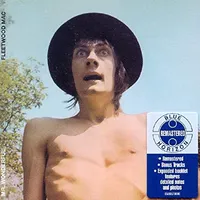
Fleetwood Mac - Mr Wonderful (Blue Horizon, 1968)
For many people, Fleetwood Mac’s second album was something of a disappointment after the marvellous debut that established the group as the best British blues band of the day, for which guitarist/ vocalist Peter Green can take most of the credit.
Mr. Wonderful doesn’t have the strength in depth of its predecessor, and guitarist /vocalist Jeremy Spencer’s Elmore James fixation (Dust My Broom, Coming Home…) was one track away from sinking the ship with an overload of copycat slide playing, but its highlights include some of Mac’s most magic moments.
Shuffle opener Stop Messin’ Round is energetic, loose but controlled, featuring some tongue-curling licks from Green – as much fun as you can have with a guitar without getting arrested. Lazy Poker Blues is in a similar vein and adds the kind of doubleentendre lyrics you might expect from a song title with the word poker in it.
Elsewhere, Need Your Love Tonight is an already fine blues ballad given a velvet coating with the surprisingly effective addition of an orchestra. Love That Burns highlights Peter Green’s breathtaking playing – one second incisive and biting, the next soft and exquisitely delicate. Completely mesmerising.
9. Free - Tons Of Sobs (Island, 1968)
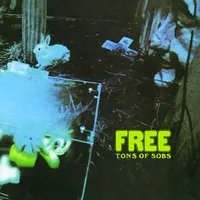
Free - Tons Of Sobs (Island, 1968)
Free’s blues heritage is undeniable. Guitarist Paul Kossoff and drummer Simon Kirke came from a blues combo called Black Cat Bones. Vocalist Paul Rodgers arrived from the similar sounding Brown Sugar and bassist Andy Fraser had been a Bluesbreaker. Free was a formidable coming together of raw British blues rock talent.
And they didn’t disappoint, coming up with their own distinctive brand of blues on their debut. They didn’t pummel like Zeppelin, caress like Cream or strut like The Rolling Stones. Rather, Free loped and grooved, driven by Kossoff’s aching guitar, Fraser’s throbbing bass and Rodgers’s sonorous voice.
Tons Of Sobs begins and ends deceptively with the pastoral sounds of Over The Green Hills (parts one and two). But in-between there are all-time blues rock classics such as Worry, Walk In My Shadow and I’m A Mover.
Such is their authenticity, these songs sound like they were recorded by crusty old blues legends instead of raw new kids on the block. (Andy Fraser, let us not forget, was barely out of his school uniform at the time of the album recording.)
The standout track on Tons Of Sobs is The Hunter, a swaggering version of the blues rock staple originally written for Booker T And The MGs.
8. Jeff Beck - Truth (Epic, 1968)
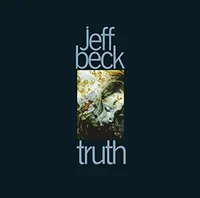
Jeff Beck - Truth (Epic, 1968)
By 1968, Jeff Beck had become a major pioneering force on the electric guitar, following Clapton in the Yardbirds, before clocking up two pop hits with Tallyman and Hi-Ho Silver Lining. By the time he was assembling the band for Truth (only later dubbed ‘The Jeff Beck Group’) he determined to make an album for himself.
With Ronnie Wood on bass, Rod Stewart on vocals and guests like Jimmy Page, John Paul Jones and Keith Moon popping up for guest spots on Beck’s Bolero, it was an album that not only helped establish the British blues rock sound, but featured many of its best exponents.
Audacious and experimental, it smashes genre conventions at every turn. Willie Dixon’s You Shook Me and I Ain’t Superstitious are masterfully reinvented, even Broadway hit Ol’ Man River and the Henry VIII-authored Greensleeves are dragged into Beck’s musical vision.
Record company execs, meanwhile, thought that Beck was actually Rod: “They said, ‘We always knew that Beck would make it. By the way, who’s the fellow on guitar?’” Beck grimaced later. “They actually said that. I’ve still got those words ringing in my ears.”
7. Ten Years After - Undead (Deram, 1968)
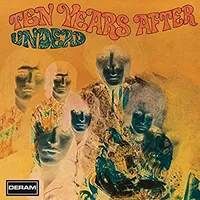
Ten Years After - Undead (Deram, 1968)
After the John Mayall/Eric Clapton’s Bluesbreakers album had catapulted producer Mike Vernon into Britain’s premier R&B scout, he spotted the potential of Ten Years After, spearheaded by the guitar pyrotechnics of Alvin Lee.
The band’s self-titled debut album in 1967 was the springboard that enabled them to leap from the UK to America. Suddenly their US record label was demanding a follow-up to maintain the momentum.
Hastily recorded at Klook’s Kleek in West Hampstead, conveniently next door to Decca’s recording studio, Undead catches the sweaty, small-club atmosphere and Ten Years After’s free-form approach to the blues with the jazzy, flashy I May Be Wrong But I Won’t Be Wrong Always and Woodchoppers Ball, and the moody blues of Spider In Your Web.
The encore was a youthful but already potent I’m Going Home that would become their defining anthem after it was featured in the Woodstock movie. “Basically, that album put it in a nutshell,” says Alvin Lee. “I was so happy with it. When I first heard it I thought, ‘What are we going to do next?’”
6. Yardbirds - Five Live Yardbirds (Columbia, 1964)
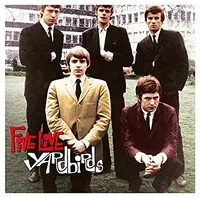
Yardbirds - Five Live Yardbirds (Columbia, 1964)
In the mid 60s live recording was struggling to reach embryonic status. The technology required had not yet been invented. But the Yardbirds were a hot live band that had failed to capture their vitality in the studio. And London’s Marquee Club, their regular gig, had a recording studio backstage. So they decided to give it a go.
You can get a flavour of the chaos that surrounded the recording of Five Live Yardbirds by the frantic, stumbled introductions by compere Hamish Grimes at the beginning of each side of the original album. Mercifully the Yardbirds were unaffected by the mayhem and delivered their typical high-energy set.
With the exception of Eric Clapton on lead guitar they were not the most proficient R&B band around. But they more than made up for it with their enthusiasm. And they had a secret weapon: the rave-up, where they speeded up into a frenzy that drove the audience wild every time – on Howlin’ Wolf’s Smokestack Lightning, the Isley Brothers Respectable and Bo Diddley’s I’m A Man and Here Tis.
Clapton sets it all up with a blistering Too Much Monkey Business but Five Live Yardbirds is actually a team effort from Keith Relf’s wailing harmonica to Paul Samwell-Smith’s driving bass.
5. The Jimi Hendrix Experience - Are You Experienced? (Track, 1967)
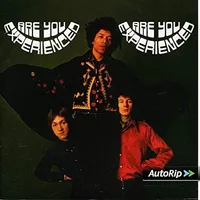
The Jimi Hendrix Experience - Are You Experienced? (Track, 1967)
As Ronnie Wood commented to Classic Rock recently, “It was really Jimi Hendrix who invented that hard rock stuff”. Electric Ladyland tends to get all the plaudits but, with Foxy Lady, Manic Depression, Red House, Fire and the title track, Hendrix’s first album is like a greatest hits collection, with almost every track an instantly recognisable, timeless rock classic.
It would be nice to say that Are You Experienced? set the blueprint for rock as we know it – this was a year before Led Zeppelin, three years before In Rock, while Jimi’s tone, riffs and groove make Clapton and Jeff Beck seem like lumbering dinosaurs – but the truth is that few people have even come close to matching the blueprint.
Of the lesser known tracks, Remember would be a straightforward R’n’B crotch-thruster if it wasn’t for Mitchell’s stuttering drumming.
May This Be Love trips out beautifully, Third Stone From The Sun bounds into the psychedelic jungle like a horny panther, while the title track comes on like a four-minute invitation to an orgy to remember. ‘Have you ever been experienced?’ asks Jimi. ‘I have. Let me prove it to you…’ And then he unleashes a solo that snaps and writhes like a wounded cobra.
4. Cream - Fresh Cream (Reaction, 1966)
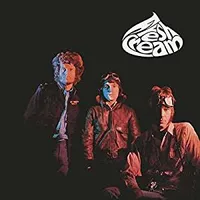
Cream - Fresh Cream (Reaction, 1966)
Given the reputations of Eric Clapton, Jack Bruce and Ginger Baker, the feverishly anticipated debut album from this power trio was always going to struggle to live up to expectations. And even though it didn’t, it is still one of the most important albums in 60s blues rock, and its influence on what came afterwards is immense.
Fresh Cream is a melting pot of ideas, many of which would subsequently be developed and combined with flair and vision to some stunning effect in the following decade.
There’s the colourful, musically informed psychedelic pop of Dreaming; the stripped-down, energetic Rollin’ And Tumblin’ powered along by Bruce’s bluesy wailing vocal and honking harmonica; a bouncy reworking of Robert Johnson’s Four Until Late; and six and a half minutes of Willie Dixon’s Spoonful on which Cream give a taste of their improvisational skills and Clapton shows flashes of real brilliance.
The real rough diamond, though, is Sweet Wine, in which Clapton gradually builds a dense, swirling psychedelic cloud of feedback and sustain that remains as stunning today as it was original then.
Fresh Cream and Cream were the sparks that ignited the blues rock explosion, and without them who knows how many of rock’s family jewels would not exist today.
3. Rolling Stones - Rolling Stones No.2 (Decca, 1965)
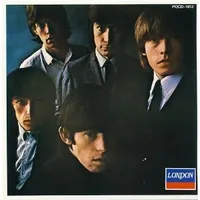
Rolling Stones - Rolling Stones No.2 (Decca, 1965)
It was a love of the blues and early American R&B that forged the friendship between a teenage Mick Jagger and Keith Richards down Dartford way, so it’s only fitting that the Rolling Stones’ second release continued to rely upon these building blocks.
Consequently, we’re treated to the fledgling Stones’ take on Chuck Berry’s You Can’t Catch Me, a fairly faithful rendering, but with Jagger’s decidedly English sneer and Richards’ rolling, ramshackle riffery adding to its original charm.
The Jagger/Richards songwriting partnership also gains momentum, with three composition credits to their name – Off The Hook with its Yardbird-esque guitar motif and relentless refrain; What A Shame is a bluesy bruiser and gives bassist Bill Wyman a moment to shine under Brian Jones’s sparse bottleneck, while Grown Up Wrong pays real homage to their hero Mr Berry.
But in terms of solid blues prowess, it’s the band’s interpretation of Muddy Waters’ I Can’t Be Satisfied that truly impresses – Brian Jones’s fluid slide playing on this track was seldom bettered.
No.2 was a monster hit in the UK, and deservedly so as it convincingly straddled the bridges between the blues and rock’n’roll and set the blueprint for the relentless Rolling Stones march into the future.
2. Led Zeppelin - Led Zeppelin (Atlantic, 1969)
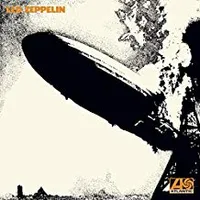
Led Zeppelin - Led Zeppelin (Atlantic, 1969)
There’s a great misconception about the first Led Zeppelin album. Many cloth-eared clowns and charlatans regard it as a heavy metal record. How very wrong they are.
Alright, so Robert Plant had the long, tousled hair and the silver-throated scream. Jimmy Page had the raw licks and the feral riffs. And John Bonham had a kit hewn out of solid granite.
But Zep I wasn’t metal. It was blues rock at its most epic, awesome and sprawling. It was full of power, passion and pride. It wasn’t just an exercise in vocal and guitar pyrotechnics, with liberal doses of gut-rumbling drum-work on the side.
When this album hit the streets in 1969 it left a crater a mile wide that reached down to Earth’s molten core. Zep I was less an isolated collection of tracks and more a searing segue of songs packed with brutal soul and uncompromising emotion.
No one had heard anything like it before… or had they? Zeppelin’s tactic of taking hoary old blues classics and mangling them into fearsome beasts of their own creation came in for fierce criticism. But really, the moans mainly came from blues purists.
After all, when Willie Dixon wrote I Can’t Quit You Baby, we’re pretty certain that he had absolutely no idea what he was about to unleash.
1. John Mayall & The Bluesbreakers With Eric Clapton - Bluesbreakers (Decca 1966)
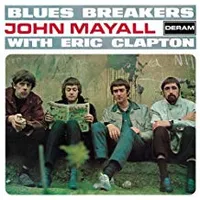
John Mayall & The Bluesbreakers With Eric Clapton - Bluesbreakers (Decca 1966)
There isn’t a British blues rock guitarist around whose ears weren’t pinned to the wall the first time they heard Bluesbreakers.
John Mayall was already an established player on the British blues scene. Clapton had joined him a year earlier to find purist heaven, first by devouring Mayall’s unrivalled collection of blues albums and then by turning up his guitar and developing the coruscating style that had people scrawling ‘Clapton Is God’ on walls around London.
When the band entered Decca’s West Hampstead studios in April 1966 Clapton set up his gear the same way he did on stage, causing pandemonium in the control room. Producer Mike Vernon and engineer Gus Dudgeon (both of whom would become legendary studio figures) asked him to turn down but Clapton refused.
In what proved to be a landmark decision, Vernon and Dudgeon opted to cope with the distortion and adjust the other levels to try and get a balance. What they ended up with was the raw power that can still shock and awe 31 years later. From the opening note of Otis Rush’s All Your Love, Clapton’s Gibson Les Paul pierces at mic-shredding volume. After Bluesbreakers all British blues albums would be guitar-dominated.
It helps that Clapton is in white-hot form, blazing with the arrogant bravado of youth and self-belief, justifying his ‘God’-like status. After the slow/fast/slow cut and thrust of All Your Love he tears into Freddie King’s instrumental Hideaway with a mature fluidity and bleeds all over Mayall’s own Double Crossing Time with almost reckless abandon.
His vocal debut, on Robert Johnson’s Ramblin’ On My Mind, is timid compared to his guitar playing but the song has remained a staple throughout Clapton’s career. And the short sharp Steppin’ Out instrumental was turned into a 15-minute epic in the days of Cream.
But his pièce de résistance comes on the six-minute Have You Heard, another Mayall original where Clapton effectively redefines the slow blues guitar solo for the next decade. There are many who will argue that Clapton never played a better, more inspired solo.
Mayall’s contribution to Bluesbreakers should not be underestimated. He gives Clapton his head but he’s still emphatically the band leader and a forceful character, whether he’s singing, playing keyboards or blowing harmonica, which he does on a couple of solo showcase tracks, Another Man and Parchman Farm.
And then there’s bassist John McVie, paying his dues before Fleetwood Mac and anchoring the rhythm alongside Hughie Flint (still playing in the Blues Band), a lighter drummer than most of his blues rock successors but more than good enough for the job. Producer Vernon believes that Mayall never bettered that album.
“The energy that was created by that band when Eric was with them was special,” he told writer John Pidgeon. “We were lucky. We captured it on that one record. The chemistry was right.”
Bluesbreakers was the first blues album to chart in the UK, reaching No.6 in the summer of 1966. By then Clapton had already left to form Cream. Things were moving fast.
Want to find your way around John Mayall’s far-reaching back catalogue? Then try the Buyers Guide.
Sign up below to get the latest from Classic Rock, plus exclusive special offers, direct to your inbox!

Classic Rock editor Siân has worked on the magazine for longer than she cares to discuss, and prior to that was deputy editor of Total Guitar. During that time, she’s had the chance to interview artists such as Brian May, Slash, Jeff Beck, James Hetfield, Sammy Hagar, Alice Cooper, Manic Street Preachers and countless more. She has hosted The Classic Rock Magazine Show on both TotalRock and TeamRock radio, contributed to CR’s The 20 Million Club podcast and has also had bylines in Metal Hammer, Guitarist, Total Film, Cult TV and more. When not listening to, playing, thinking or writing about music, she can be found getting increasingly more depressed about the state of the Welsh national rugby team and her beloved Pittsburgh Steelers.
