


Size isn't everything.
When historians look back over the US alternative rock scene of the 1990s, they will naturally focus on the scene's biggest hitters - Nirvana, Pearl Jam, Smashing Pumpkins, Soundgarden, Nine Inch Nails, etc,. But that won't be the whole story, with some of the finest bands of the decade - Shellac, Hole, Girls Against Boys, The Flaming Lips, Fugazi, Living Colour, Tad, Babes In Toyland, etc,. - having their own fascinating and indelible contributions to the musical landscape.
The Afghan Whigs are one such band. From 1992's Congregation, their second album on Sub Pop, through to 1998's 1965, their sixth studio album and final major label record, the Cincinnati, Ohio band never took a wrong step, never failed to deliver.
Led by frontman Greg Dulli, the suavest motherfucker in alternative rock, the group blended influences from punk, funk, soul, gospel music, and old school R&B into some of the decade's most compelling music. Dulli, a one-time Catholic altar boy, seemed to have an encyclopedic knowledge of sin, and first-hand insights into man's deepest, darkest desires, making the central characters in his band's richly-textured songs figures as dangerous as they were seductive: that Dulli chose Gentlemen as the title of the band's 1993 album was obviously loaded with irony when you read into his lyrics.
In 2001, The Whigs split, allowing Dulli to go deeper into cinematic, after hours rock with The Twilight Singers, The Gutter Twins (alongside his good friend and one-time room-mate Mark Lanegan) and his own solo albums. Ten years later, the Whigs returned, better than ever: their forthcoming tenth album, the excellent Soft Control, coincides with their 40th anniversary.
"I don't have to do this," the ever-charming Dulli says when Louder sits down with him in a Kings Cross bar. "I made a series of investments in my younger days that mean I don't need to play music to pay the rent. So if I didn't get off on doing this, I wouldn't be doing it. And here we are. People know who we are, people know that we're pretty untouchable in what we do, and people know not to fuck with us. That's all I need."

There's a quote in your band's latest biography where you admit to having been an "angry young man" once upon a time. Looking back, where do you think that anger stemmed from?
I had daddy Issues. And I came from a tough part of Hamilton, Ohio, and I had to punch my way out of there. You find yourself looking for snipers, and not trusting many people. Forming this group and becoming friends with the original guys went a long way in beginning to soften me. But like a lot of young dudes I was pissed off. And sometimes you don't even know why you're pissed off.
Hamilton is an industrial town, and would have had a working class/blue collar culture I'm guessing. That sort of environment isn't always the most nurturing for young men and women with artistic sensibilities, and aspirations to do something creative.
Yeah, I had a good group of friends when I was a kid, but we were constantly defending ourselves. There were a bunch of other angry young men there that you literally had to take on. There's frustration that builds in places that don't have a lot of resources. And you had to present confidence to survive. Where I lived, if you were seen as 'beta' or if there were perceived weaknesses in you that could be exploited, you were going to face problems.
Back then you'd walk down the street and somebody would start fucking with you. So you could either run away or get into it, and even if you got your ass kicked, that person wouldn't fight you the next time, because they know you'll fight back. I got my ass kicked a lot until I started kicking people's asses, and now you can walk down the street and you're safe.
I believe you were a heavy metal fan as a teenager.
I was. Metal shows were the only shows that came to our part of town because again, it's the Rust Belt, it's industrial America. I actually grew up on R&B and country and western music, from my grandparents, but I got into metal, and I love the energy of metal. I saw Judas Priest six times. I would never miss their shows. They were phenomenal shows, super theatrical, and they had very catchy songs, and an amazing frontman. But I've always been omnivorous about music, I love punk, and reggae and classical and jazz too. There's only two kinds of music: good music, and bad music.
And when did you first see a band that could be classified as punk, or to your understanding of what punk was at that time?
Maybe The Damned, then Hüsker Dü, and then the Ramones. It was my freshman year at college, and there was a venue in Newport, Kentucky, called The Jockey Club where I saw those bands, and Killing Joke and Violent Femmes and whoever. I'd grown up with a lot of kids who loved Rush, and they could play super technical, complex music which was intimidating to me: I knew I couldn't do that, and I never wanted to do that. Then I moved to California, and saw The Dream Syndicate, and seeing them made me think that playing in a band wasn't out of reach, that I could do this.
![The Afghan Whigs - Miles Iz Ded [OFFICIAL VIDEO] - YouTube](https://img.youtube.com/vi/gG1qCDsuZGI/maxresdefault.jpg)
What was your early vision for the band?
I just wanted a band. I'm not sure that I specifically planned what kind of band we were going to be, at the start you just want to be a band to get over the boredom. But the first drummer we had was a guy named Steve Earle [who played on the group's first four records] and he came from a metal background, so whatever kind of jangling music we wanted to play, we all had to get distortion pedals just to be heard over him.
But it was probably when we did Congregation that I thought we could be a unique band. To me, that was when we became The Afghan Whigs. When I listen to that record it doesn't sound like anybody else. We are now a unique entity, and we do what we do. That was the moment that I thought this is something that I could take somewhere. And I have not had a straight job since that album.
Were there bands on the circuit at the time that you felt an affinity with, outlook-wise or personality-wise?
Peer-wise? Yes, of course. I'll give you a perfect example, The Flaming Lips. They came to town, we opened for them, and they liked us, and brought us along for some more shows, That was the band that kinda underlined the attainable for us. They did everything themselves. They had no roadies. They loaded their own gear. They drove their own van. They did their own light show with foot switches and stuff. It was really remarkable and impressive, and absolutely inspiring.
So the so-called alternative rock 'revolution' kicked in in the early 90s, post-Nevermind. How did that change the the ground for The Afghan Whigs?
Well, I correctly anticipated that there would be a feeding frenzy after Nirvana. The world changed. It doesn't make me a genius that I saw that, but it was clear that if you were under 25, played alternative or punk rock, and had an audience, they were coming to look for you. I probably had dinner with 15 different labels, taking my first ever first class flights at their expense, and raiding everybody's CD closets. And after that, we signed to Elektra. Nirvana blew a hole in the wall for the rest of us to walk through.
Nirvana blew a hole in the wall for the rest of us to walk through
Greg Dulli
How hungry were you for that? Did you aspire to that level of success, or did you always know that that level of success was going to be damaging?
I don't know that I thought that. I think, like anyone, you would like as many people as you can to love your music. But I've never wanted something I didn't have. Our audience was very organic, and, again, our style was not like everyone else. We were outliers, and we liked that. But that was the moment that I thought that I could do this for.... until I'm talking to you today.

The way you were portrayed in the media circa Gentlemen and maybe even Black Love was as this handsome, seductive, charming but slightly dangerous and deviant lothario. Did you recognise that character as being you?
Honestly, that stuff you just have fun with at that point. I could be less than honest in my interviews just for fun, and just to help them perpetuate a myth. In reality, I'm a pussy cat, but I'm also a fan of mischief, misdirection and manipulation, whatever that says about me or any kind of sociopathy I may have. It was all in good fun. You can't control what people say about you, and what they write, so if you can step in and amp it up a little bit, where's the harm?
Did that image get you into any awkward situations in real life though? Because not everyone is going to be relaxed about Mr Steal Your Girl walking into the local bar.
I went to Street University, so fucking bring it on if it was going to become anything like that. I don't condone fighting, it's really an unhealthy way to live. The last fight I was in was 25 years ago, and I hope I'm never in another one, but what I do remember about that one is that I had this strange adrenaline that lasted like almost six months after that. I did not like the way I felt, it was detrimental to my mental health. So for the rest of my life, I'll walk away from someone saying something disparaging about me or calling me a name that's less than pleasant. I would rather that clang off of whatever armour I've built and walk away and not take the bait. Obviously, if like I was physically attacked and had to defend myself, different story. But if it's name calling or something like that, not biting on that anymore.
There was a lot of 'indulgence' going on in the '90s alt. rock scene, and a lot of musicians using drugs to help alleviate boredom or to maintain a sort of chemical level of dopamine hits. I know you dipped your toes in that world, but did you ever find yourself in danger of being pulled under?
Yes, I did, and a lot of people do, for the exact reason you said, boredom. You're on tour, and between sound check and the show, you are fucking around, and you better start getting into some good books, or get into checking out museums, or find constructive ways to spend your time in that downtime.
Additionally, when you're playing shows, and especially if your shows are going well and are well attended, and the audiences are responsive, you like that dopamine feel that you get. And when you don't have it, and you can artificially stimulate yourself that way, its tempting. As that old warning goes, the devil finds time for idle hands.
What I'm saying is that it's endemic to the profession, and whenever it happens to someone, no one's shocked. It's literally almost like a rite of passage. I had to talk to people in my own band... until I became the person getting talked to. I got past it, but I have a lot of friends - not just in rock 'n' roll - who didn't make it out.
On a business level, as that famous essay from Steve Albini [The Problem With Music] brutally illustrated, a lot of bands got fucked over in their dealings with major labels in the '90s. How was your relationship with Elektra?
Our honeymoon lasted for one record. We had a decent relationship during Gentlemen, and then there was a regime change, and then it was, from their side, 'Who the fuck are you?' In England, working with Mute was good for us, we felt protected, and understood. America was not like that. Like, I had developed a side project called The Twilight Singers and I had given Elektra some of the demos, which I had been really, really airtight with, and so when they slipped out into the trader market, and at that point my trust in them was zero, you can never tell me that it wasn't someone at Elektra who leaked that.
And when The Twilight Singers came into view, with the first album emerging in 2000, The Afghan Whigs went on hiatus.
Oh, there was no hiatus, we broke up. I moved into The Twilight Singers as a full-time deal. [Bassist] John Curley had a baby, [guitarist] Rick McCollum had moved to Minnesota with his girlfriend, and so we were in three separate states, doing our own things. We felt like we had taken the band as far as we could.
So where did the impetus come from to put the band back together in 2011?
Well, so every time that The Twilight Singers went through Cincinnati, John Carley would get up and play with me on a Whigs song or two, and it was fun and made people happy. Then on my first solo tour in 2010, I said, What are you doing tomorrow? We're playing Chicago, do you wanna come? And he got in the vehicle with us, and went to Chicago. Now John Curley and I had not been on a stage outside of Cincinnati at that point in 11 years, so when I introduced him in Chicago, the response of the crowd was deafening. And I was like, Wow, they're tripping, they really missed this guy, and missed us being together. And that put it in my mind. Then I asked him if he wanted to come do the West Coast thing with us - LA, San Francisco, Portland, Seattle - and it was the same reaction every night. We didn't get back together right away, but we did two years later. And it's been pretty great ever since.
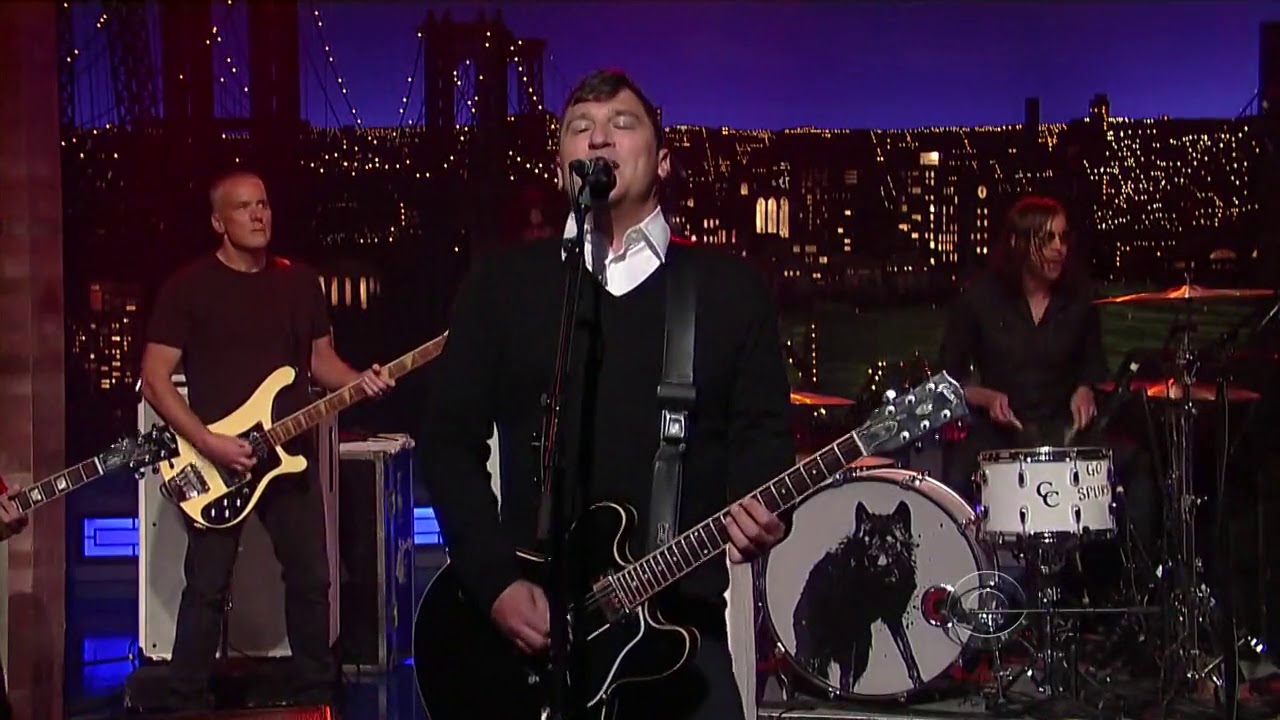
Let's circle back to the angry young man who started The Afghan Whigs: If that guy was looking at Greg Dulli today, do you think he'd be pretty happy with how things worked out, and how he'd found his place in this world?
The answer to that question is that I would be happy that I like myself now. Because I think I had to move into that. I had to feel deserving of love, deserving of good things, deserving of you know friendship, just the basic tenets of life. And that young person would also be like, Wow, weed's legal now! Cool!
Soft Control will be released on August 21 via Royal Cream/BMG


