


Until his death in March 2023, Gary Rossington was the last man standing – the only founding member of Lynyrd Skynyrd still a part of the band. Born on December 4, 1951 in Jacksonville, Florida, Gary dedicated 50 years of his life to Skynyrd, despite suffering terrible injuries in the plane crash that devastated them in 1977. In 2012, he spoke to Classic Rock about his part in their story.
You’ve been a legendary musician for several decades now, but what first made you want to be a rock’n’roll star?
Like every kid in America, I wanted to be a Beatle. The British Invasion came to America in the early 60s and I went, “Wow! I wanna do that.”
You were just 13 years old when you formed a band with school friends including Ronnie Van Zant, a wannabe singer, and Allen Collins, a kid who played guitar.
We all had the same hopes and dreams. We wanted to be in a band, so we learned all together – me and Ronnie and Allen. We didn’t ever think we’d make it real big. I knew a couple of chords, but Ronnie couldn’t sing at all, and we didn’t think we could ever write a song in our whole lives. We thought that took talent!

The band had various names, including The Noble Five and The One Per Cent. And you went through a few different line-ups. At what point did it start getting serious?
That was around ’69, when we saw the band Free. We’d heard about this great band from England, and they played in Jacksonville at a skating rink. After that, we started rehearsing real hard, and that’s when we got into writing.
Was Free’s guitar player Paul Kossoff a big influence on you?
Oh yeah. Kossoff, Eric Clapton, Hendrix and Jeff Beck. Those guys are my all-time favourites forever and ever. And of course we all loved blues. Paul Butterfield, John Mayall, Muddy Waters, Son House and Howlin’ Wolf. Everybody was blues-influenced, because rock’n’roll evolved from blues. Blues is where it’s at.
By 1970, you’d renamed the band Lynyrd Skynyrd – after your high school teacher Leonard Skinner. Did you really think you could make it with a name like that?
At the time it was kinda goofy, but it caught on and we thought, “What the hell?” I think the best band name is ‘The Rolling Stones’. And ‘The Yardbirds’ was a great name.

Every band has a leader. Was Ronnie Van Zant the leader of Skynyrd?
Ronnie was just a born leader. And because he was a few years older than us, he was at that age where he was living life, while we were all still at home with mama. Ronnie taught us how to drive and taught us about girls – all the stuff that big brothers teach. We used to go fishing and hunting and I never did that ’til I met Ronnie. And he was the money source – because he worked or his girlfriend at the time worked.
He was also a tough guy…
Ronnie was the badass of town, the big fighter. He could beat everybody up. And he was dirty as hell. Nobody would fight dirty like him. He’d just pick a lamp up and hit you before you knew what happened. That was his smarts.
So nobody stepped out of line with Ronnie around?
No, no, no. Back in the old days we were scared of him. We wouldn’t come late to practice or nothing.
Was there a competitive edge between you and Allen as guitar players?
Yeah. I had a girlfriend and every day I would go to her house after the band practised. But Allen didn’t have a girlfriend – he’d go home and play, so for a while he was learning quicker than me. I ended up breaking up with this girl so I could play more. The band rehearsed in a cabin with a tin roof, and it got so hot in there that you called it The Hellhouse.
Why did you choose that place?
Every time we practised in a garage or at somebody’s house, the cops would come. So we got this place in the woods and we’d go out there every day because we weren’t working – we’d all quit school to play in the band. We’d got out there at nine in the morning and stay there all day, and it was so hot in Florida. There was no air conditioning in that cabin, and when the sun hit the tin roof it would get even hotter.
We had our amps turned up high, and back in the old days amps had tubes, they’d get hot – it was like sitting by a heater. It was bad! We’d sweat a lot, but it was good in certain ways. We’d play a lot of outdoor shows in summertime, and all these other bands would come off stage and go, “Man, it’s so hot!” And we wouldn’t even be sweating, because we were used to it. We’d be going, “This is great, a little breeze…”
![Lynyrd Skynyrd - Free Bird [HD] | Live at Oakland Coliseum Stadium (1977) - YouTube](https://img.youtube.com/vi/s_fHzTO4cH0/maxresdefault.jpg)
When Allen and Ronnie wrote Free Bird, did you immediately sense that it was a special song?
No. It was just a simple love song about leaving a girl and being a free bird. Ronnie wrote the lyrics like, ‘You gotta wander…’. And at first it was just a guitar song. When we started out playing Free Bird, we didn’t have that big ending and we didn’t have Billy Powell playing piano on it. Billy was still our roadie then. He just set up the equipment and hung out with us. We didn’t even know he played piano, because he played classical – he didn’t even like rock’n’roll!
So how was Free Bird developed into the epic that we all know and love?
It just kind of evolved. We were playing four or five hours a night, four or five sets, and the ending of Free Bird turned into two minutes, then three minutes, then four. And then Ronnie said, “Just go ’til I tell you to quit.’ When we went to record the song, the record company said, “Radio won’t play that, it’s too long” – because songs could only be two or three minutes, like the old Beatles and Stones songs. But we said, “We don’t care.” We really didn’t think that Free Bird would be a big song.
When the band released its first album, Pronounced Leh-Nerd Skin-Nerd, did you think you’d made it?
Not at all. After the first album, we just went back to playing clubs and making no money. Every penny we made went into equipment or gas or something for the band. It wasn’t ’til we went on tour with The Who, when we got exposed to bigger audiences, that our records started selling good and radio stations started playing Free Bird or whatever.
We just wanted to play and be on the road. We thought that was the greatest thing in the world. We watched The Who every night, every second of it. It was great for us. We were like kids in a candy store. That’s all we wanted to do – get down to the coliseum and hang there all day.
The second album featured Sweet Home Alabama, which, like Free Bird, became a timeless rock classic. Did it sound like a hit when you wrote it?
It kind of did. As soon as we recorded that song, our manager said, “That could be a hit!”

Famously, Ronnie’s lyrics for Sweet Home Alabama were a riposte to Neil Young, whose 1970 song Southern Man vilified the South for its institutionalised racism. Was Ronnie simply saying that racism is not confined to the South?
That’s exactly what Ronnie was saying. Racism was everywhere, and people were acting like it was just in the South, because that’s where the last holdout was: they wouldn’t let blacks in schools or nothing. But we were young and we were hip. We loved everybody. So we didn’t understand that end of it. I remember when I was a kid and I had a Muddy Waters album, and my mom said, “What are you listening to that for?” I said, “Mom, it’s not The Devil’s music!”
Neil Young later said that he loved Sweet Home Alabama and stated: “I’m proud to have my name in a song like theirs.” Did he and Ronnie ever meet?
It would have been great if they did. Ronnie wore that Neil Young T-shirt [on the cover of Skynyrd’s 1977 album Street Survivors] because he loved him so much.
Skynyrd toured heavily and made six albums in five years between 1973 and 1977. That’s an incredible work-rate. Did you ever feel like you were running on empty?
It was hard. We’d be touring all year, and when it came time to make an album we’d just run in the studio and we’d write the songs in there. That’s what bands did in the old days – sit around and write all day and then record something… And drink, of course… Well, I don’t drink anymore, thank God. But back in the day… man, the hangovers were tough!
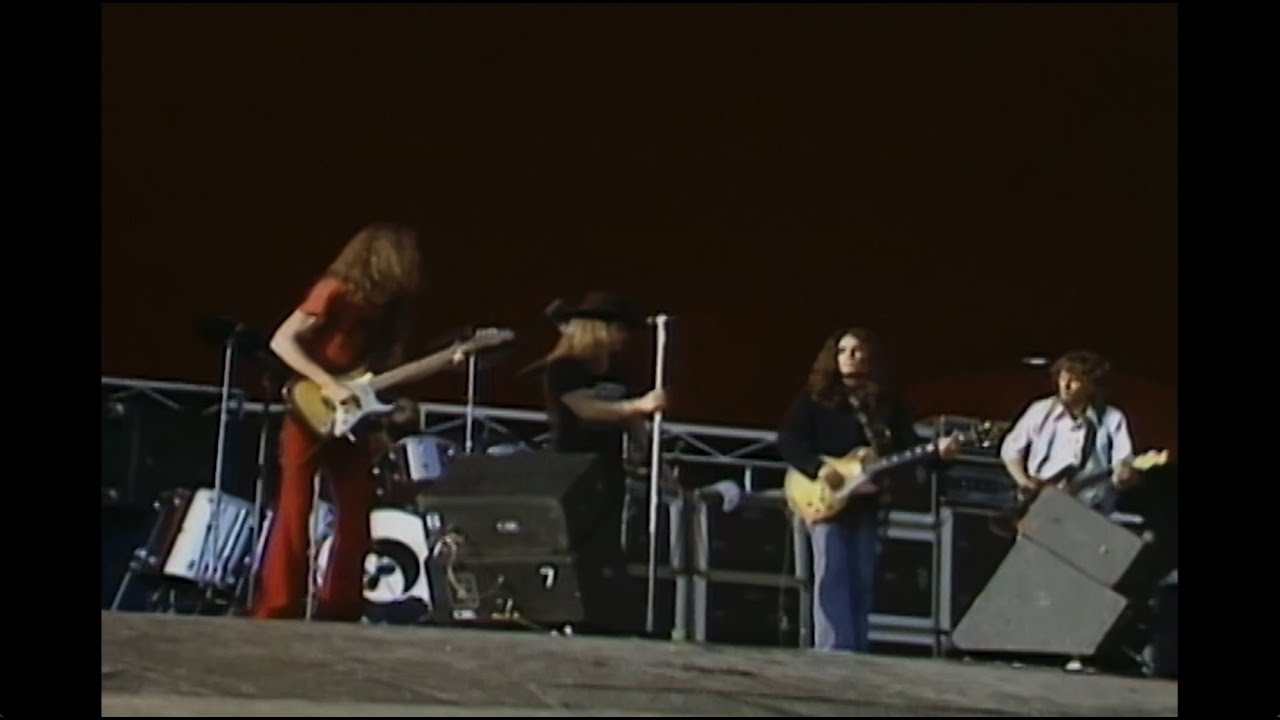
Probably the most famous gig that Skynyrd ever played was as support act to The Rolling Stones at Knebworth in 1976 before an audience of 120,000. And by all accounts, you kicked the Stones’ asses…
We’d never played in front of that many people. We’d played over in Britain before, but never anything like that. When we saw the size of that audience, it was scary as hell. And it was The Rolling Stones – so we tried extra hard. The Stones were kind of out of tune that day. I don’t think they had their best show. And we did.
What album, for you, represents Lynyrd Skynyrd at its peak?
I would say Street Survivors. That was our last album with the original band, but it was when we broke out the gate.
Street Survivors was the first studio album the band recorded with guitarist Steve Gaines. What did he bring to Skynyrd?
Steve was a great guitar player and a great writer. Allen and me, we were more bluesy, but Steve was brought up on soul music, Motown, and he could play anything. He was just a delight. He and Ronnie could write real good together, and quick. They’d get together for a day and write two or three songs. They had so many ideas, they’d just break them out. Steve got a house about a mile from Ronnie’s, but the rest of us all lived 20 or 30 miles away, all over town.
On tour, we’d see each other every day, all day and night, so when we got home we’d stay away from each other a little bit. But Steve and Ronnie would write together every day. Earlier it was always Ronnie and me – or Ronnie and Allen. Some of the songs that Steve would come up with were a little different. And sometimes we’d go, “Well, no.” But then we’d work on them and they’d turn out great.
Ronnie was no saint himself, but on the song That Smell from Street Survivors, he warned of the dangers of drinking and drug taking – and made specific reference to a drunken car accident you had in 1976. How did you feel when you first heard those lyrics?
I didn’t like it, because it was about me. And just before the accident, we’d made a new rule for the band: if anybody did something stupid like getting drunk and missing a flight, or they got hurt and made us stop a tour, they were gonna get a $5,000 fine. So that’s what happened to me.
‘Whiskey bottles and brand new cars/Oak tree you’re in my way’ – Ronnie certainly didn’t spare your blushes in that song.
No, it was all in there. He even said that they called me “Prince Charming”, which was true. Back then, I’d always kiss girls’ hands and open doors for them – and I would emphasise it, just because girls liked it. It made me different. I really didn’t like that song at first. I was like, “Oh, man! Come on!” But I grew to like it. It was funny.

It was on October 20, 1977, just three days after the release of Street Survivors, that Skynyrd’s plane crashed, killing Ronnie, Steve and his backing-singer sister Cassie, and three others...
I don’t like to talk about it, but I will. It was horrible. It was the worst thing that could ever happen to anyone. And especially at that age and at that time – we were just starting to make it big and everybody was real happy. We were the best of friends, we all loved each other and lived with each other and stayed on the road together. It was a big family – a band of brothers. And we were on tour with our own plane and we thought everything was good. And then… boom, it happened.
What was going through your mind as the plane descended?
You think about other people. I was worried about my mother. I was thinking, “I hope my mother don’t freak out.” Other than that, I don’t remember exactly what I was thinking. I just remember being scared.
You survived the crash with two broken legs, two broken arms, broken wrists, broken ankles and pelvis. How damaged were you psychologically?
Allen and me, we had what’s called survivor’s guilt, I guess. Ronnie was sitting right beside me, and he died. And Allen had Steve right by him, and Steve died. We always wondered why.
You were so badly injured – did you think you’d ever play guitar again?
I didn’t think I could play again, and I didn’t want to in the first place. It was a couple of months afterwards when our manager Peter Rudge took me to Barbados with him for a little holiday. We went to a party one night, and I met Eric Idle from Monty Python, and some of The Rolling Stones were there, and Alan Price from The Animals – a great keyboard player. I told all them guys, “I’m not playing no more.”
But there was a local band playing at this party, Alan Price played some blues with them, and he said to me, “Come up and jam with us.” I said, “Man, I don’t wanna play. I quit.” But he said, “Your mates would want you to play. Do it for them.” I was like, “I’d do anything for them.” So I said, “Gimme that guitar!” We played a blues song and I loved it, you know? The party people were having a good time, and Alan Price was playing his ass off, and it was fun.
I couldn’t play very good – I was still hurt and broke up, I was still on a crutch and I couldn’t walk well. I was still healing. My first wife was there and she was crying, because I’d told her I’d never play again. That’s all I’d talked about – never playing again.
In 1979, you and Allen formed The Rossington Collins Band. How hard was it to pick yourself up and start again?
It was very hard. For myself and Allen, it was hard after the crash to want to keep going on. We were so down about what had happened to our career and our friends and our band. That whole situation was real hard to live with. It’s been so long now, I can look back on it without it freaking me out or without wanting to do some drugs or drinking or something. But at the time it was so hard to get through all that.
The singer for The Rossington Collins Band was Dale Krantz, who would become your wife, and is now one of Skynyrd’s backing vocalists.
The band was good – we made two albums. But then a lot more tragedies happened. Allen Collins lost his wife, who was pregnant at the time, and it was real hard for him to get through that. And we were all kind of drugged out at the time, doing too much of bad things and just not living right. So we decided to stop playing for a while. I went out to Wyoming and just recuperated for five or six years until the Lynyrd Skynyrd reunion.
If Ronnie was the boss in the old days, are you the boss now?
I guess. But I’m not really bossy. I’m more laidback. If everybody does what they’re here to do, everything’s cool. But we get little hassles here and there, and somebody’s gotta say yes or no to certain decisions, so I try to do it right. I get Johnny [Van Zant] and Rickey [Medlocke] to help me with any decisions we make, because they’re older and wiser and they’ve been in the business a long time.
Are you a different kind of boss to Ronnie?
It’s black and white. I’m not really a leader. If anything gets out of hand, I straighten things up. But Ronnie was a real leader – he was like our father figure at the time.
What is the best album the band has made since you reunited in 1987?
I think this new one [2012's Last of a Dyin' Breed]. I’m real proud of it. The songs feel like the old band to me – the original band. It’s very cool. And we recorded it the same kind of way we did back in the day, with the whole band together. But any time you do an album, you think that’s your best.
Skynyrd’s music has been hugely influential over the years. Axl Rose once said that when Guns N’ Roses recorded Sweet Child O’ Mine, they listened to old Skynyrd tapes to get that “heartfelt feeling”.
That’s really a great compliment. We met a lot of those 80s bands at the time and so many of them told us they listened to Skynyrd when they were growing up. Like Poison with Every Rose Has Its Thorn, or Jon Bon Jovi. And nowadays, a lot of country acts say they’re influenced by us.
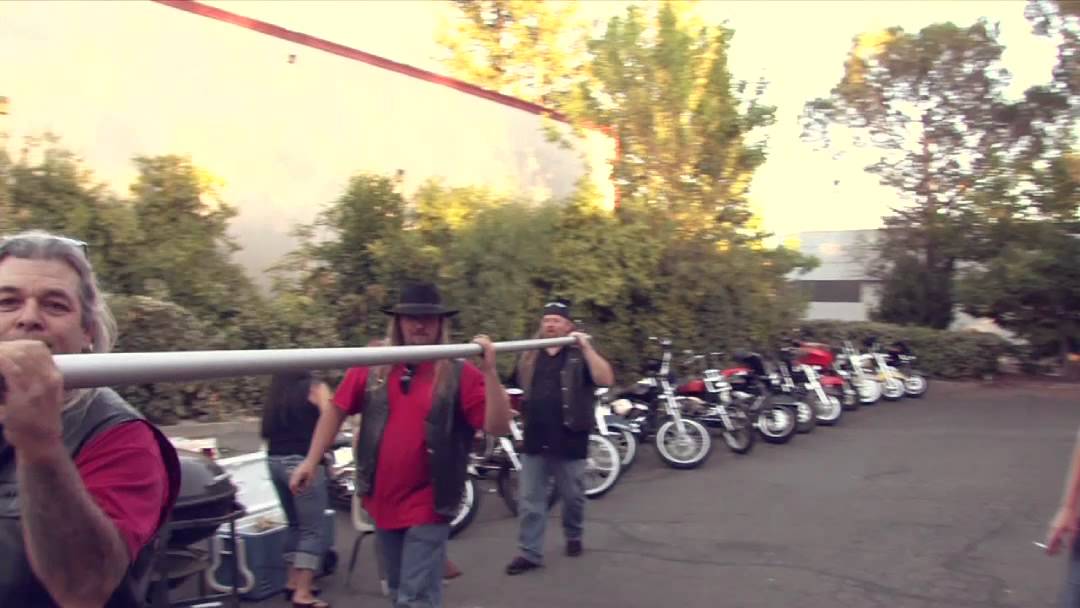
Metallica recorded Tuesday’s Gone for their 1998 covers album Garage Inc. – what did you think of their version?
I loved it. I actually went out to play that song with Metallica on their 30th anniversary back in December. They’re great friends of mine and I’ve had the opportunity to play with them twice and it was great. They’re great musicians and they really do what they’re doing well. They’re really a hard-working band and put their heart and soul into it, and you can really tell when you hear them.
Looking back over the band’s career, which stretches over four decades now, what are you most proud of?
I’m proud of the fact that we made it out of a poor part of town in Jacksonville, Florida. There’s not much around there. Playing music was one way to get out of town and that’s what we were trying to do. We learned to be good enough to get out of there [laughs]. And our dream came true.
Few bands enjoy as dedicated a following as your group – what does Lynyrd Skynyrd mean to its fans?
Oh man, it means a lot. That’s why we keep doing it, because all our fans keep saying such nice things about the band. We’ve had soldiers who’ve been to Iraq and Afghanistan telling us that they’ve played Free Bird when they’ve lost a friend. Some people get married to certain songs, Simple Man or something.
When 9/11 happened it was a Tuesday, and the song everybody wanted to hear was Tuesday’s Gone. They played that song with the images of the two towers smoking and on fire, and it was real heavy. Certain songs mean a lot to certain people and they thank you for it or they say they live by that. It gives some meaning in their life, and it’s always great to hear that. That’s what we do it for.
What, ultimately, would you say is the spirit – the heart and soul – of Lynyrd Skynyrd?
It’s in the music and the songs and the lyrics. Everybody understands those words and sings along. If you come to our shows these days, most of the audience sings right along with it. It’s pretty cool to hear them and see them reciting the words right back.
How would you describe the atmosphere at Lynyrd Skynyrd gigs?
It’s more like a family thing. There’s young and old and little kids – it’s like two or three generations of fans out there and we just love to see that. We meet a lot of people at our shows and a lot of them had their parents turn them on to Lynyrd Skynyrd. They say, “We’ve been listening to your music all our lives.” That’s so cool to have a couple of generations come out to see us.

With so many great songs in the Skynyrd catalogue, how do you go about choosing a set list for your shows each night?
Well, every night when we talk to the fans, somebody will say, “Why don’t you do this song?” And there are so many songs we’d like to play, but we can’t do all of them every night. It’s like The Rolling Stones – I used to wonder how they worked out what songs to play live. Every time I’ve seen them, I always wanted to hear old songs like The Last Time and Time Is On My Side. That’s how fans think, and our fans are no different.
When you play Free Bird now, does it bring back memories?
Oh yeah, a lot of memories. Those songs are fun to play and I look out and see everybody dancing and singing with Johnny, and every once in a while I’ll see somebody crying over Free Bird or Simple Man. It’s pretty cool to see that the music affects people like that. I don’t get tired of playing those songs. It’s always like new.
What is Lynyrd Skynyrd’s legacy?
We’re just a good, hard-working band that’s stuck by our guns and tried to do what’s right. We try to write songs and play songs that make people happy – our fans and ourselves. A good American band – I hope that’s our legacy.
How long can Lynyrd Skynyrd carry on?
We’re gonna keep going as long as people come out to see us. We still get sold-out crowds and it’s really a good thing. Thank God, knock on wood, it’s still going on, and we just love playing. That’s our life.
And after all these years, can you imagine your life without Lynyrd Skynyrd?
I think about sitting around, retired, and I wouldn’t know what to do. We’re just gonna keep on doing it ’til… Well, we don’t know when. Maybe one day we’ll just fade out, man – like a record. But while I’m still alive, I just want to keep the band going, keep the Skynyrd name going, and to let people hear this music.
This feature originally appeared in Classic Rock Presents Lynyrd Skynyrd, published in August 2012. Lynyrd Skynyrd's Double Trouble Vision tour with Foreigner begins in July.

