


As an impressionable platform-booted bairn back in 1978, this Classic Rock writer found himself greatly looking forward to the release of four separate solo albums from the individual members of Kiss – Gene Simmons, Paul Stanley, Ace Frehley and Peter Criss.
The records were all due to hit the stores on the same date – ‘Kissmas day’, September 18. They all had cool covers painted by Eraldo Carugati, reputedly right-hand man to Michelangelo on the Sistine Chapel. They were being backed by a hefty $2.5 million promotional campaign. And they were all ‘shipping platinum’. Whatever that meant. It certainly sounded impressive.
I was working on Sounds music weekly at the time and I received a giant poster promoting the solo albums from Kiss’s record label, Casablanca. The poster was emblazoned with the headline: ‘KISS: A MILESTONE.’ But as soon as I pinned it up on the office wall someone whipped out a bottle of Tippex and defaced it to read: ‘KISS: A MILLSTONE.’ It was a prophetic piece of wanton vandalism.

'Shipping platinum’, I was soon to learn, was merely a term used to indicate the number of solo albums Casablanca Records were sending out to the shops. Once they got there, they mostly languished in the racks before being shipped straight back atcha again. Drummer Criss, so legend has it, woke up one morning to find 999,999 copies of his on the doorstep.
We’re being unfair. Peter’s sappy R&B effort notwithstanding, the others weren’t half bad. Frehley’s was closest to Kiss’s glitter-metal schtick and spawned a hit single to boot: New York Groove. Stanley’s was full of tear-jolting AOR songs like Take Me Away (Together As One). And Simmons’ mixed Beatles influences and thunder rock to fine effect. It was the most successful, reaching No.22 in the US chart.
But looking back, this was the first sign of decline in the career of the ‘classic’ Kiss. The solo albums’ lack of success meant the band had hit the bargain bins for the first time – and let’s face it, no one wants to rub shoulders with dog-eared copies of Frampton Comes Alive.
Shortly afterward the tacky movie Kiss Meets The Phantom Of The Park went on release. Kiss’s 1979 album Dynasty (produced by the aptly named Vini Poncia) was as lightweight as the Space Ace in, er, space. An attempt to go disco by enlisting Donna Summer’s mentor, Giorgio Moroder, and piling on the synthesisers for I Was Made For Lovin’ You was greeted with howls of derision.
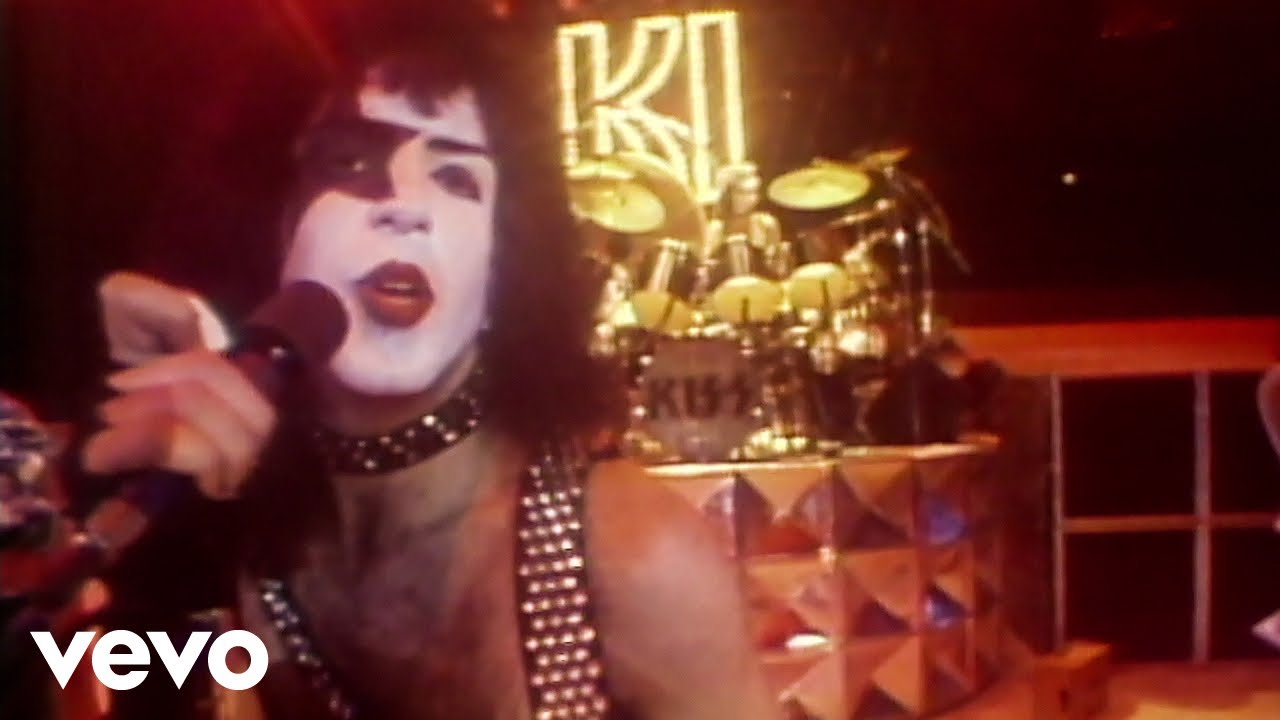
Poncia stayed for 1980’s lacklustre Unmasked (although the track Shandi remains a personal fave). Then Bob Ezrin, who had masterminded 1976’s classic Destroyer, returned for the 1981 concept album (Music From) The Elder. But the results were completely baffling.
Eventually, Kiss unmasked for real. That’s when things turned really ugly…

