




In early 1974, Don Felder was invited to join his buddy Bernie Leadon in the Eagles. As with every other member of the quintessential Californian band, the guitarist wasn't born in The Golden State - a native of Gainesville, Florida, Felder had met Minneapolis-born Leadon in high school, while Glen Frey hailed from Detroit, Don Henley came from Texas, and Randy Meisner was born and raised in Nebraska - but when he joined the country-rock superstars he was living in the mountains overlooking Topanga Canyon. Although not for for long.
“One day my wife Susan put a blanket on the ground outside for our baby boy Jesse to get some sun, and she suddenly saw a rattlesnake crawling towards him,” the guitarist recalled. “She grabbed Jesse and called me and said, ‘We’re moving’. So when I came off the road, I came back not to the house I owned, but to a house she’d rented in Malibu. And that’s where I wrote Hotel California.
“When I first joined the band,” he continued, "my high school band mate Bernie Leadon told me, ‘If you want to wrote songs with Don [Henley] and Glenn [Frey], just make musical beds for them, don’t try to give them full songs with lyrics, because that’s their job.’ So ahead of making what turned out to be the Hotel Califiornia album I wrote 15 or 16 demo songs, based on that approach.
“Truthfully, at the time, Hotel California was just another song on the cassette. I didn’t necessarily think it was the best song, but Don called me up after a few days living with the music and said, ‘I really like that one that sounds like Mexican reggae’, and I knew which one he meant.”
Seeking lyrical inspiration to accompany Felder's instrumental, Don Henley drove around Los Angeles listening to the cassette he'd been given.
“Just sitting in a room and trying to find inspiration can be stifling,” he tells Classic Rock / Guitar World contributor Bill DeMain in the current issue of Classic Rock. “It’s a static situation. Driving, if you’re not in heavy traffic, creates a feeling of flow that can free the imagination and call up memories and images while the music’s playing.”
The lyrics are like little photographs, which, much like reading a book rather than watching a movie, allows you to draw pictures in your mind
Don Felder
“The hotel concept came first, and then the melody,” he recalled. “Some time in May of ’76, Glenn and I had gone to see Neil Simon’s play California Suite in Los Angeles. But that was after we had come up with the hotel concept. Seeing the play was a ‘field research’ trip, just to see if it would help us to flesh out our initial idea. But it wasn’t very helpful; [it wasn’t] dark and spooky enough for what we were after.”
“Glenn came up with the original concept of Hotel California, and then Henley sat down and wrote those fantastic lyrics,” Don Felder told me. “His lyrics are like little photographs, which, much like reading a book rather than watching a movie, allows you to draw pictures in your mind. ‘On a dark desert highway’, that’s five words, but it already puts a picture in your head: ‘Cold wind in my hair’, you can feel it, you can see it.”
Asked what song is actually about, Henley tells Bill DeMain, “the same themes that run through all of our work: loss of innocence, the cost of naiveté, the perils of fame, of excess; exploration of the dark underbelly of the American dream, idealism realised and idealism thwarted, illusion versus reality, the difficulties of balancing loving relationships and work, trying to square the conflicting relationship between business and art; the corruption politics, the fading away of the sixties dream of ‘peace, love and understanding’.”
In a 2013 Eagles documentary, he added, “It's a song about a journey from innocence to experience.”
The band first recorded the song at Criteria Studios in Miami, then at the Record Plant in LA, before cutting the final version back in Florida.
“When I originally wrote the song, it was in the key of E minor,” Felder explained in a Guitar World video. “Then Don Henley went out to sing it in E Minor, and it was way too high for him, he sounded kinda like [BeeGees] Barry Gibb in that high falsetto. So I took a guitar, went out in the studio, and said, Okay let's move it down to D Minor. ‘No that's still too high.’ C Minor. ‘No, a little bit too high.’ A minor. ‘No, that's too low.’ So we just transposed the whole key up to B minor, re-recorded the whole track, and it's pretty much as you hear it on the record today.”
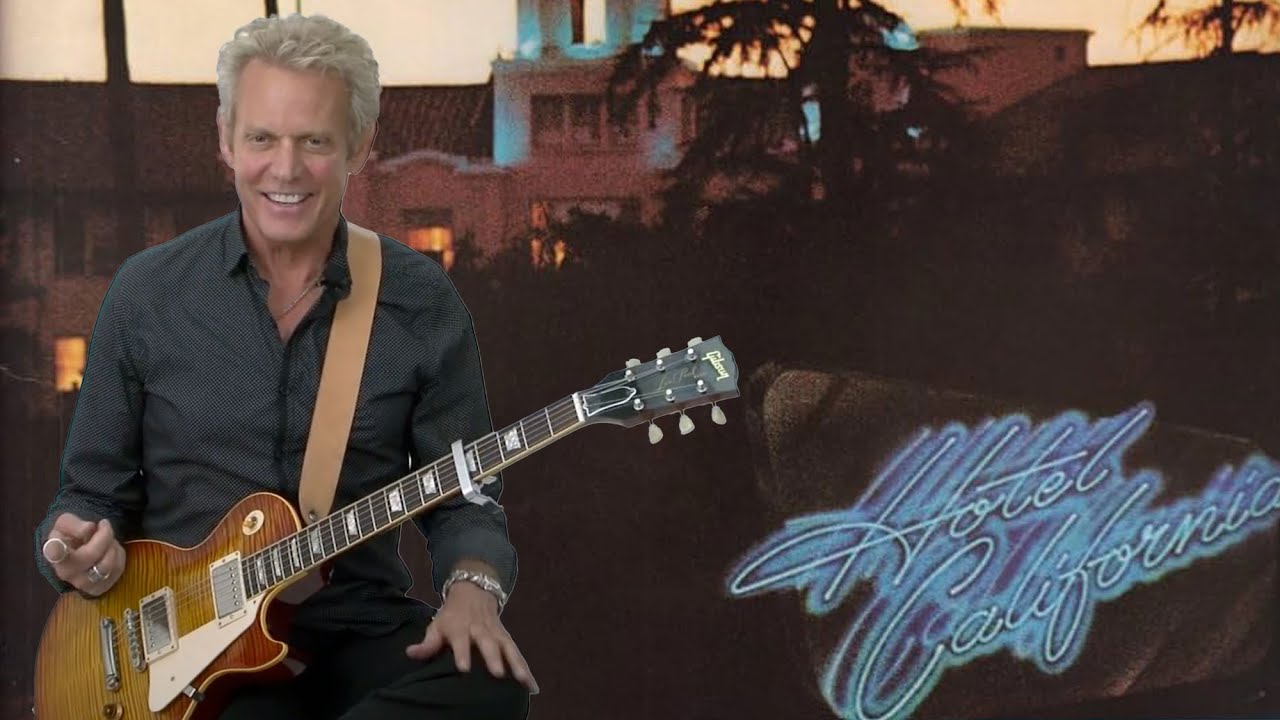
“The guitar solo was straight from my demo,” Felder told this writer. “Joe Walsh and I had played together on [1976 live album] You Can’t Argue With A Sick Mind, before he joined the Eagles, and so I wanted to write something that would incorporate how he and I played together. It was just a guide solo, but by the time we got to make the Hotel California record, Don Henley had been living with that music for over a year, and he wanted the solo done note-for-note, so the solo on the song is identical to what was on the demo."
The Eagles won the 1977 Grammy for Record Of The Year for Hotel California at the 20th Grammy Awards. Released as the album's second single, the song topped the Billboard Hot 100 singles chart for a single week in May 1977: as of today, it has been streamed 2, 231, 609, 454 times on Spotify.
“To be honest, I thought the song was too long,” Don Felder admitted. “In the ’70s, AM radio wouldn’t play songs longer than 3 minutes and 30 seconds, but Hotel California has one minute of music before Don even starts singing, and a two minute guitar solo at the end. It was just the wrong format. But Henley insisted the record company put it out as a single. And I’ve never been so delighted to have been proved so wrong.”
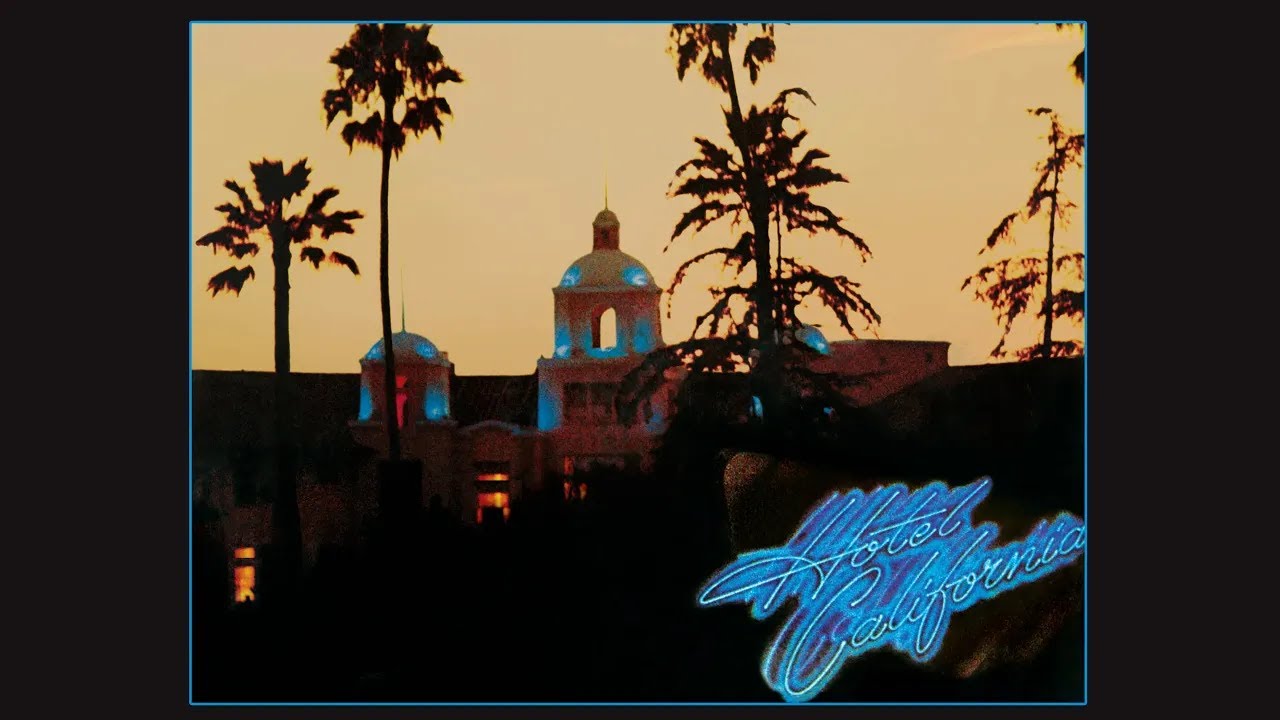
Read the full story behind the making of the Hotel California album in the current issue of Classic Rock magazine.


