


There are surely not many albums in the history of metal that have been as discussed, poured over and debated as much as Metallica’s infamous 2003 effort St.Anger. The lack of solos, the group therapy, rehab, the snare sound, and, of course, “performance enhancement coach” Phil Towle’s jumpers, it’s all gone down in infamy.
But there was a time when St. Anger was one of the most eagerly anticipated albums in metal. It was, after all, Metallica’s first new music of the Millennium, and they delivered a song and video that shocked everyone.
The new millennium brought utter chaos for Metallica. First, there was their legal battle with file-sharing site Napster, a well-publicised lawsuit that earned the band criticisms for being out of touch, as public perception turned on them as millionaires trying to sue their own fans. History - and the progressive erosion of musicians' ability to make any money in music - has proven they might've been right.
Things came to a head at the 2000 MTV Music Video Awards. Napster founder Shawn Fanning wore a Metallica t-shirt (and walked out to For Whom The Bell Tolls) whilst giving out an award, poking fun at the band's stance, while a somewhat tone-deaf skit where drummer Lars Ulrich “borrowed” host Marlon Wayans’ girlfriend contributed and gave an awkward PSA ("Napster: Sharing's only fun when it isn't your stuff") fell completely flat. To make matters worse, when Ulrich got on-stage to introduce Blink-182, he was audibly booed.
Things weren't exactly going swimmingly in the Metallica camp, either. Bassist Jason Newsted departed the group in January 2001, clashing with the rest of the band regarding his new project Echobrain. Newsted had admitted feeling “almost stifled” in an infamous interview with Playboy just prior to his departure that painted band relationships at an all-time low.
Metallica entered the Presidio studio to begin work on their eighth studio album in early 2001, but recording was halted when frontman James Hetfield was admitted to rehab in June of that year.
In a 2003 interview with Kerrang! Hetfield said that, “Going away to rehab taught me about priorities,” explaining that “I didn’t know anything about life. I didn’t know that I could live my life in a different way to how it was in the band since I was 19, which is very excessive and very intense... I didn’t make the best choices for myself.”
It was this period of reflection that would eventually inspire the creation of St. Anger. But for a while, Metallica’s two remaining members, Ulrich and guitarist Kirk Hammett, had to sit and wait for their frontman to return. Frozen in time, with no contact and no idea what was happening to their friend, they feared that the end of their band was upon them.
“Your mind starts to think of the worst that can happen,” Ulrich told Kerrang! In 2003. “I honestly wondered if this was the end for Metallica. I thought, ‘We’d had a good run but that this might be it.'”
On November 18 2001, Hammett celebrated his birthday with a surprise party his wife had thrown him. Through the crowd he saw Hetfield for the first time in months, and was overwhelmed.
“Seeing him was one of the greatest birthdays I ever had,” he told Kerrang! “It was so great to see him again. I’m even getting emotional talking about it now.”
Soon, the members of Metallica began to rebuild their relationships and headed back to the studio. With Hetfield feeling like he wanted to express himself and his experiences more, the bones of St. Anger began to come together.
Although the frontman has never explicitly spoken about publicly about what inspired the lyrics to St. Anger’s title track, many people have assumed that it is an expression of pent-up rage from his past and his attempt to free himself from it; using lines from previous Metallica songs Hit the Lights and Damage Inc. as nods to his previous self, and the religious iconography of wearing “St. Anger round my neck” as a metaphor for the rage he was holding onto.
Of course, as we would later learn in their infamous documentary Some Kind of Monster, it was a fraught and painful recording session. The very different, new sound of Metallica in the early 2000s was painful to birth. Hetfield and Ulrich clashed over everything from time keeping and the sound of the album to the continued presence of Towle, sharing very different opinions on his importance to the process. At the same time, Hammett spoke of feeling marginalised by the decision to rid the album of guitar solos.
For all this inner turmoil, the band remained the biggest thing in metal. On February 24, 2003, it was announced Robert Trujillo - formerly of Suicidal Tendencies and Ozzy Osbourne's solo band - had been hired as their new bassist, and the band set out on the massive Summer Sanitarium tour in stadiums across the US. In support, they had Limp Bizkit, Linkin Park, Deftones and Mudvayne and the band were even honoured with an entire episode of the show MTV: Icon dedicated to them. Things were looking good.
They were certainly putting on a united enough front, with Hammett telling Rockezine.net, “I’m so proud of this album. It freaks me out. I haven’t been this proud of an album since (1991’s) The Black Album.”
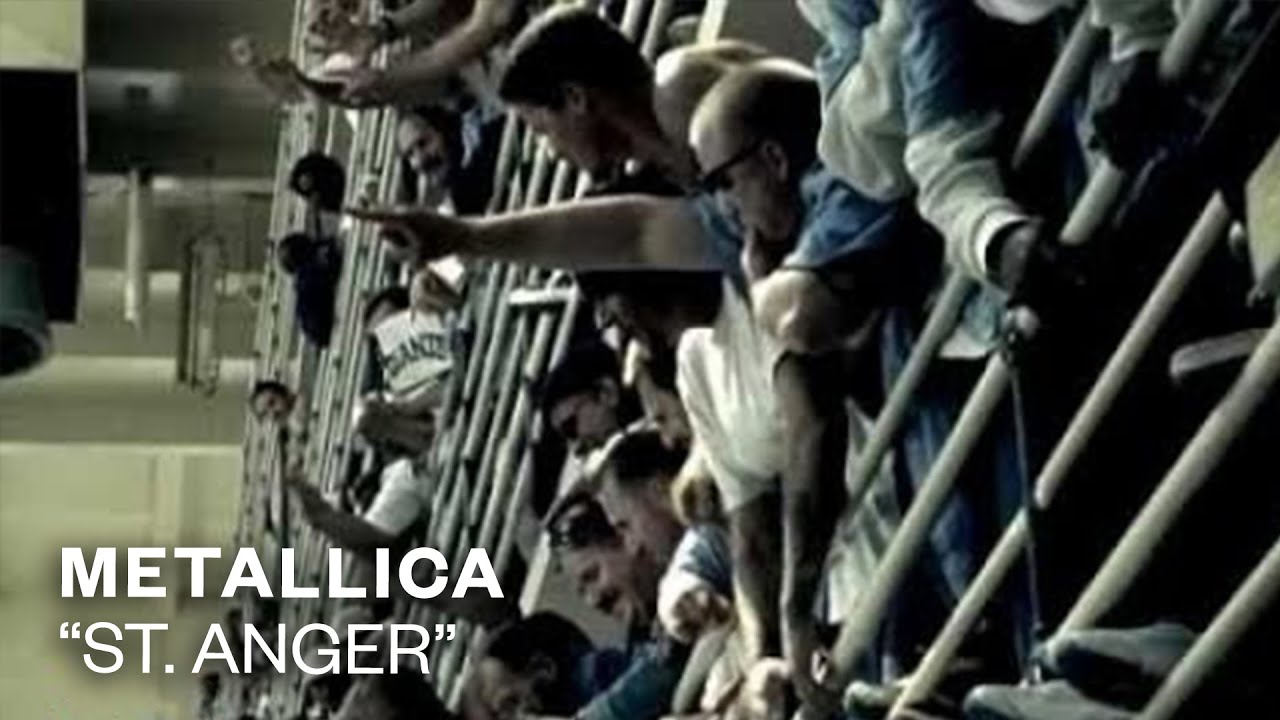
It was soon time for Metallica to showcase their new line-up to the world, and they decided to use the album's title-track as the all-important first single. A video was filmed in San Quentin prison, which is probably the thing from the entire St. Anger era that has aged the best.
Directed by Brendan Malloy, known at that point for his work on videos by Foo Fighters and Blink 182, the video shows the band entering the prison and playing live in front of hundreds of actual inmates. The band look great, Hetfield especially looking lean and attacking his guitar with vigour, and the documentary, guerilla feel and presence of legitimate prisoners giving the video a real sense of danger that has endured decades down the line.
“There were some women who came with us, and they had to be restricted to a certain area because it was just too dangerous for them to even be seen,” Hammett told NME in 2021 of the very real threats they faced.
St. Anger premiered on May 27 2003, a week before the album was released. The response to the new sound was mixed; some delighted to hear the band return to a more aggressive sound after their 90s alt/country focused Load and ReLoad. NME praised the “heroically brutal reflection of fury”, whilst others disliked this alien new sound, particularly that notorious snare sound.
Pitchfork’s scathing review bemoaned that Ulrich, "play[s] a drum set consisting of steel drums, aluminum toms, programmed double kicks, and a broken church bell. The kit's high-end clamor ignored the basic principles of drumming: timekeeping." Before adding, "Hetfield and Hammett's guitars underwent more processing than cat food.”
Still, the album went on to sell over 6 million copies worldwide, hitting the top of the US Billboard 200 in the process. St. Anger was Metallica’s first UK top 10 single since 1996’s Until it Sleeps , peaking at number nine.
As the years have passed, St. Anger’s reputation as one of the weirdest, most divisive albums ever made has continued to grow. But whatever your opinion of the album, it’s worth remembering back to that exciting, confusing first time we saw Metallica in a prison ripping through its title-track. Love it or hate it; it was certainly a moment.

