


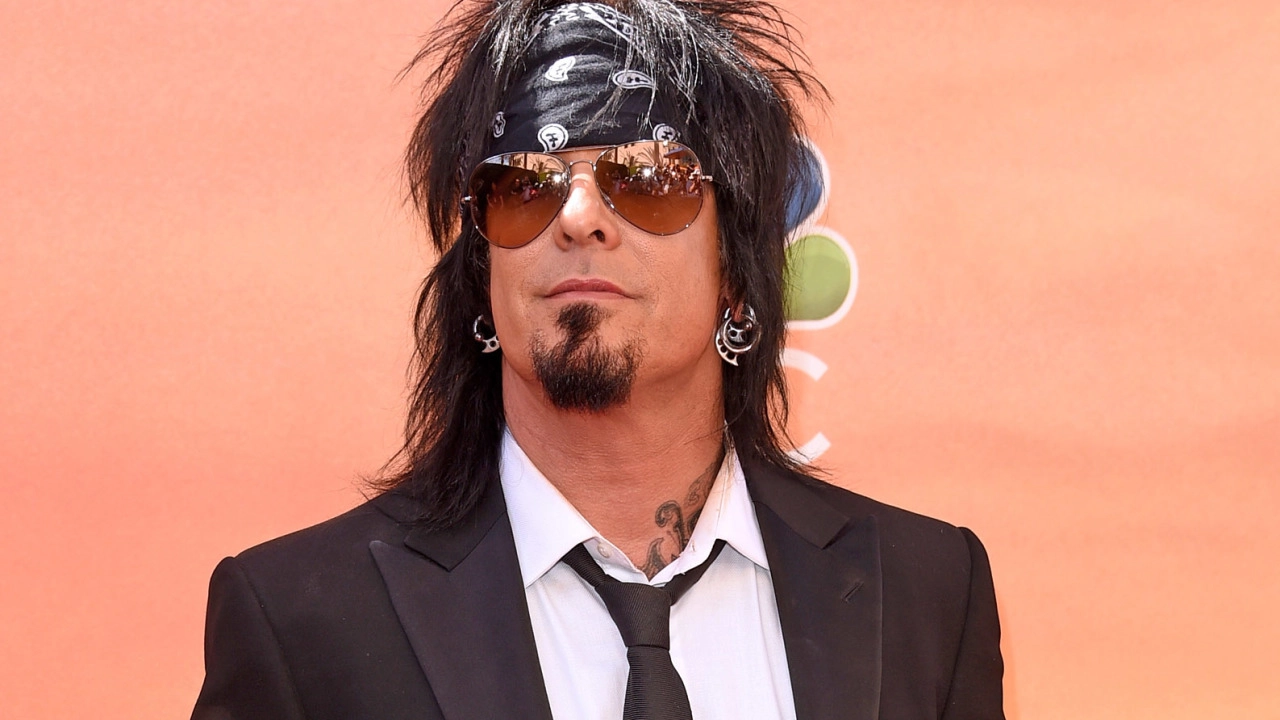
Nikki Sixx has called on musicians to stand up for themselves in royalty battles if their managers and lawyers won’t.
The Motley Crue bassist has taken direct aim at a practice known as “digital breakage” which can be used to reduce the amount of money an artist receives from streaming services.
The concept of breakage arises from traditional media, where record labels covered the costs of manufacturing, distributing and marketing music, and also carried charges associated with the return of unsold and damaged items. Those costs were removed before calculating musicians’ share of income.
Since there are no such costs associated with streaming, it’s possible for labels to use the breakage concept to secure a clear stream of profit without having to share any with artists. The amount of breakage can be extended when labels argue that having their music available via a streaming service increases the value of that service – and once again, none of that income has to be handed on to musicians.
Sixx says: “A record label signs an artist to sell music at different destinations. They license music to streaming companies, and when they do, they get around 70% of the money. On downloads, just like on CDs, they pay a royalty to the artist. But on streaming they don’t – they use a legal loophole called ‘breakage.’
“This is something artist lawyers need to address. They need to be strong and protect the artist, not the labels. We should all get paid for our music and force an honest payment plan that ensures new artists have a future, as well as established artists.”
He accepts some people query whether big-name acts should receive as much income as they do, and counters: “We still wrote the music, performed the music and promoted the music.”
He continues: “But what about the new bands, singers and songwriters? If we continue allowing this one-sided business model to continue, they really don’t have a hope in hell.
“I’d like all artists to do what their managers and lawyers haven’t done – stand up and force a change.”
