


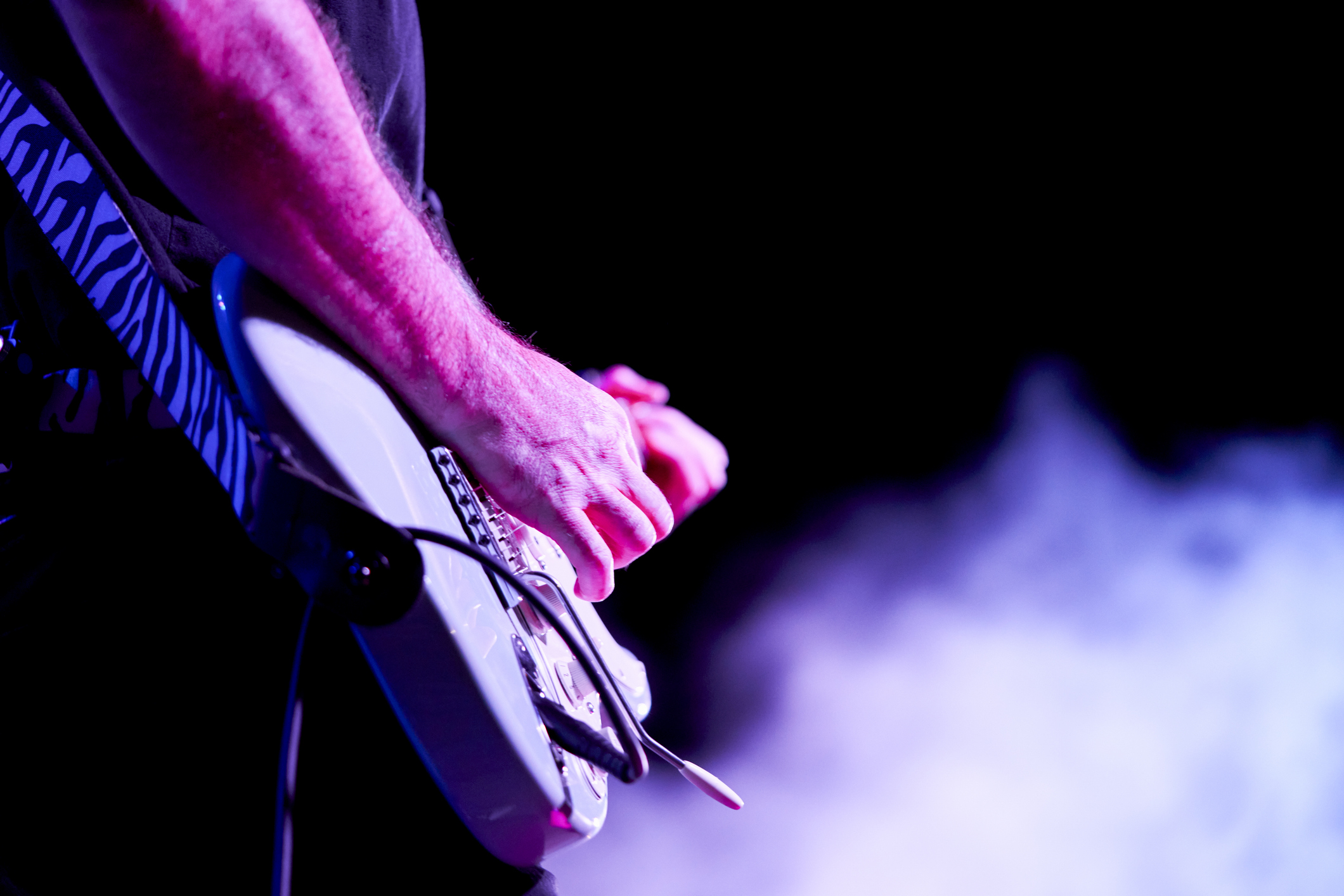


From rock’n’roll to football, the northwest of England has never been shy of celebrating its working-class heroes. Wirral-born Ty Freeman is ready to join them, his tough upbringing now blossoming into a bright future thanks to his bluesy, soulful take on classic rock.
He’s also a master of manifestation. On his EP One Way Love, Ian Skelly and Paul Duffy of The Coral stepped in as drummer and bassist, putting him on a level with his local childhood heroes, who he met at open-mic nights when he was a teenager.
“It just clicked straight away,” he says. “As soon as I showed them the tunes in the studio, we just hit it off.”
Things haven’t always followed such a charmed path. Both of his parents suffered mental health issues, and his father spent time in prison, so when Freeman was seven he and his two younger sisters were taken into foster care.
“The family were fantastic,” he says. “And we were around other kids who were going through the same thing as us. It’s all character building. There were guitars in the corners of the house, and the family were lovely to us.”
His musical education continued when his grandmother sold her home to take the siblings out of foster care. In this more stable environment, his grandfather set him loose in a musical playground, gifting him a batch of records by the likes of Cream and Led Zeppelin. He also left him a Squier Telecaster guitar when he died, which Freeman had thought was lost until a friend turned up with it recently.
By 2019 he was regularly busking in Liverpool, a city that prides itself on its rock’n’roll heritage.
“People just adore music there,” he says. “We celebrate it in the northwest. But I’m pretty sure I wouldn’t have latched on to music as salvation if I didn’t go through those tough times. It was my main source of medicine, because it gave me an escapism and somewhere to put all that emotion. I can’t physically breathe if I can’t play music.”
He means that literally. After lockdown, and a rough but creatively fertile breakup with a German girl, he was living in Hamburg, playing Beatles, Stones, Kinks and Doors covers in bars on the Reeperbahn, when he started having panic attacks. One ADHD diagnosis later, and it all makes sense.
“I have to be physically performing,” he says. “I love going in the studio and writing, but there’s something about playing live; I have to do it, otherwise I do go crazy.
“It’s like leaving your little stamp. Music is total equality for anyone and everyone. That’s the most beautiful thing. It’s something you can always carry with you, and you can always rely on it. No one can take that away.”

