




Prior to the release of Jimi Hendrix’s second single in March 1967, mainstream audiences had yet to enjoy the full Jimi experience. His arrival into the UK the previous September, had caused a sensation among the select few – The Beatles, the Rolling Stones, Eric Clapton, Pete Townshend – who’d encountered him playing live, but his debut single Hey Joe (a relatively sedate blues number written by Billy Roberts) wasn’t entirely representative of Hendrix’s revolutionary modus operandi.
"That record isn't us," Hendrix was keen to point out, "The next one’s gonna be different."
The next one was Purple Haze. The premier release on The Who’s Track Records label, this was the sound of the future. Its dissonant interpretation of psychedelia only seemed to render all previous pop-psych prosaic, redundant and twee.
The first draft of Purple Haze, Hendrix reflected, had sprawled to "a thousand words… I had it all written out", but manager Chas Chandler, eyeing radio, helped prune Purple Haze back to a more palatable three minutes – without sacrificing a lick of what (arguably) nudges Voodoo Child as Jimi’s signature guitar moment.
From its opening deployment of a distorted ‘diabolus in musica’ tritone, to its disorienting fade of spiralling speeded-up guitars and muttered vocal asides, it had an inner darkness at odds with the prevailing ‘it’s all too beautiful’ mood of an imminent summer of love. It was irresistible.

Unusually, Hendrix recorded his parts on a guitar he'd never used before, having bent one of the tuning pegs on his more familiar Strat after stabbing its headstock into the ceiling during a show at the Ricky Tick, a cramped venue above a row of shops in Hounslow, West London. Bassist Noel Redding was dispatched to fetch a replacement, and returned with a butterscotch Telecaster.
"The Purple Haze solos were played on the upper part of the neck and Jimi wasn’t intending to use a vibrato," said Roger Mayer, who built Hendrix's Octavia pedal. "So it didn’t matter that it was a Telecaster."
"The brain to the heart to the hands to the feet, it was one fluid motion," said engineer Eddie Kramer, working with Hendrix for the first time. "There was never any question, never any doubt as to where he would put his hands on the guitar, what sound would come out. And I don't think there is any musician that I've worked with in the last 30-odd years that has ever come close to that."
It helped that Hendrix looked like no one had ever looked before. His exotic ethnic mix (African-American and Cherokee), inability to look bad in any item of clothing, casual blend of shy charm with sexual magnetism and unruly haze of the singularly most psychedelic hair in history (skyward tendrils that gave every impression that he was simultaneously receiving direct communiques from the cosmos while plugged into the mains) was a perfect recipe for instantaneous icon status.
Hendrix represented freedom, licentiousness: cool. Granted, there were musicians who were considered cool prior to Hendrix, but it was Hendrix who ultimately defined the term. And in 1967, Purple Haze was the coolest thing anyone had ever heard.
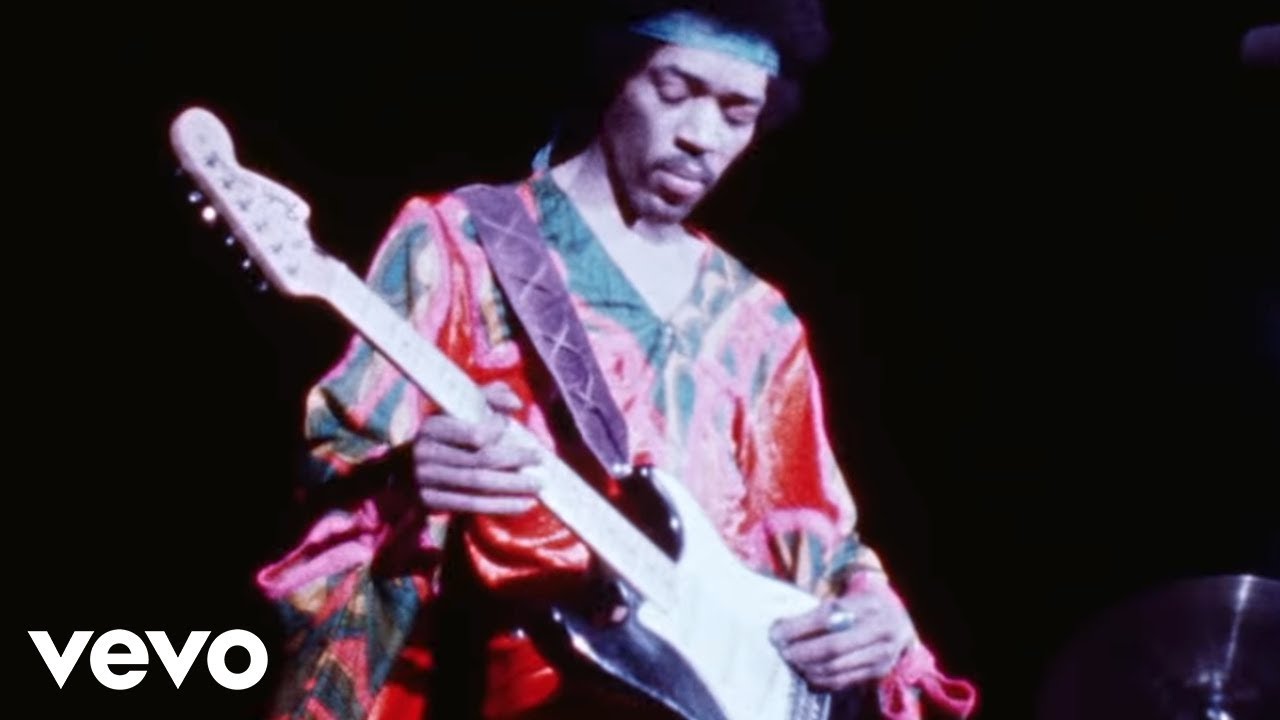
As if that wasn’t enough, when sold by Hendrix on Top Of The Pops or Beat Club, it was also the coolest thing they’d ever seen. As clangorous explosions erupt from his instrument, Jimi’s ‘kissing the sky’, hip-thrusting his guitar from behind, tonguing, tickling, seducing sounds of abandon from over-cranked amps, eyes closed in apparently orgasmic ecstasy. It was a hard watch with parents in the room.
What Hendrix and Chas Chandler did in order to attain the sound of Purple Haze is explicable: there were multiple journeys back and forth to various studios, headphones waved around microphones, half-speed recording, Fuzz-Face and Octavia pedals, but blissfully ignorant of such inconvenient truths, it’s easy to confuse the sound of Purple Haze with the sound of divine intervention.
Purple Haze climbed to number three in the UK chart, before being released three months later in the US, the day after the Experience gave their historic first Stateside performance at the Monterey Pop Festival.
In the years since, it's come to be recognised as one of Hendrix's defining tracks, and has been covered by a plethora of big names, including Frank Zappa, The Cure, Ozzy Osbourne, Winger, Paul Rodgers, Ministry and the Kronos Quartet.
"Everybody else just screwed it up, and thought wailing away is the answer," said Keith Richards. "But it ain't. You've got to be a Jimi to do that. You've got to be one of the special cats."

