


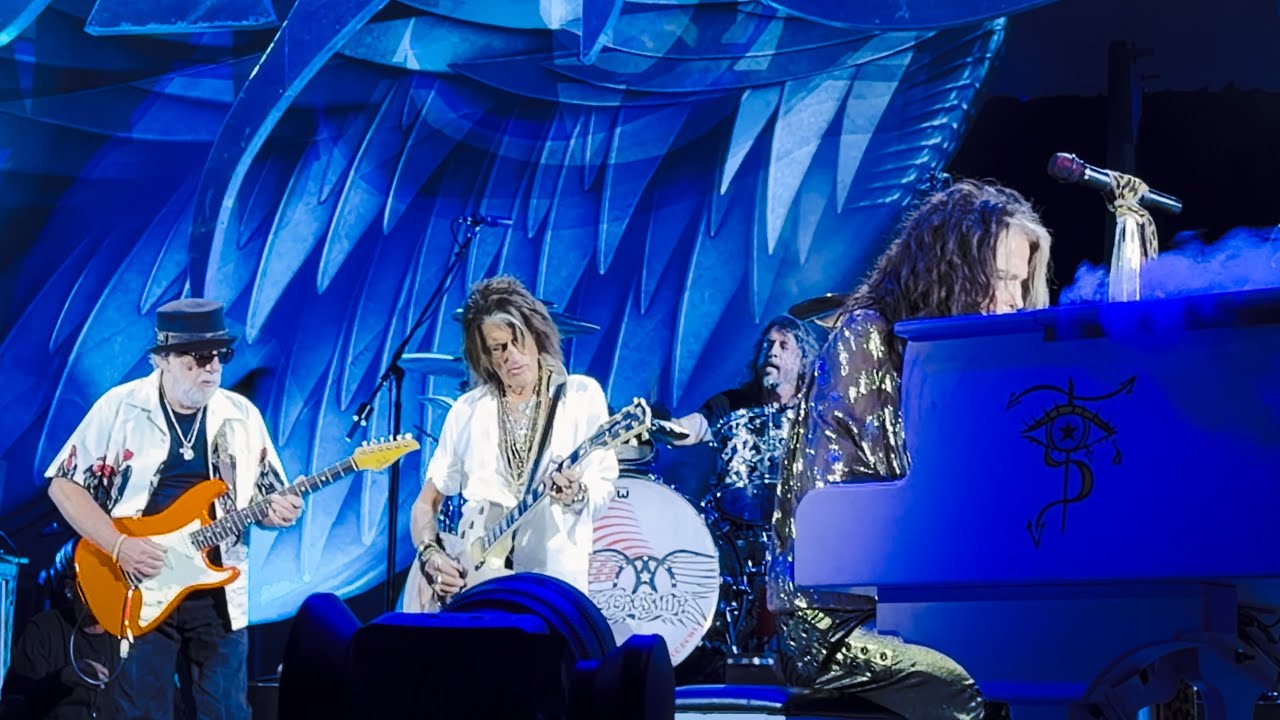
If ever there was a song made for Steven Tyler to climb on top of a grand piano to, it’s Dream On. Aerosmith’s 1973 debut single was at the heart of the Boston band’s six-song mini-sets at their two Hollywood Bowl comeback shows. And there was Tyler, 78 years young, standing astride his white piano with the fearlessness of someone a third of his age as guest drummer Dave Grohl added just a little too much mustard behind him.
Kiss will disagree, but Aerosmith were America’s greatest rock’n’roll band. The run of albums they made between 1973’s self-titled debut and 1978’s clammy, spiral-eyed Draw The Line positioned them as a homegrown Rolling Stones, their riffs filthier than a used hypodermic, their auras vibrating with malevolent juju.
Yet one of their greatest artistic contributions is also their most overlooked. With their 1973 debut single Dream On, Aerosmith inadvertently bequeathed the Great American Power Ballad to the world. This whisper-to-a-scream showstopper brought Broadway dynamics to hard rock and nailed the bad-boys-with-sad-faces trope that guitar bands, rappers and X Factor contestants alike would subsequently exploit whenever they needed a guaranteed heartstring-tugging hit.

That it was written by Steven Tyler, a man who once bragged that he had snorted Colombia and probably wasn’t exaggerating, isn’t as surprising as it sounds. The singer came from a musical family. His Italian grandfather, Giovanni Tallarico, had been a classical cellist, and his father, Victor, was a Juilliard-educated pianist. He may have pushed back against classical music when he discovered rock’n’roll, but it stayed in him.
The beginnings of Dream On predate Aerosmith, who got together in Boston in 1970. “The music for Dream On was originally written on a Steinway upright piano in the living room of Trow-Rico Lodge in Sunapee, maybe four years before Aerosmith even started,” Tyler said in Stephen Davis’ 1997 ’Smiths biography Walk This Way, referring to the resort his family owned in New Hampshire. “I was seventeen or eighteen… It was just this little thing I was playing, and I never dreamed it would end up as a real song or anything.”
Tyler did most of the heavy lifting when it came to songwriting in their early days, and one of the tracks he brought to the band was the song he’d started more than half a decade earlier on his parents’ Steinway piano. He fleshed it out on an RMI keyboard he always claimed to have bought with $2000 he’d found in a suitcase left outside the band’s apartment, which may or may not have been drug money (the story goes that money’s original owners apparently burst into the apartment brandishing guns and demanding their property back before being tackled by the band’s neighbour, an ex-Marine).

Tyler knew the song was promising, but it was only when he workshopped it with Perry and fellow guitarist Brad Whitford that he realised how special it was. “When I transposed it to guitar, Joe played the right fingers and Brad played the left hand on guitar,” the singer recalled. “Sitting there working it out on guitar and piano I got a little melodramatic. The song was so good it brought a tear to my eye.”
Just as the music was at right angles to the crackling, Yardbirds-indebted boogie-blues that made up the rest of their early sets, so Tyler’s lyrics swerved the lip-flapping, sexually-charged jive-talk. “Every time that I look in the mirror/All these lines on my face getting clearer,” sang the frontman, a world-weary early 20-something worrying about the passage of time he’d yet to experience. The song ended with Tyler repeating the phrase that gave it its title, an exhortation to believe himself: “Dream on, dream on, dream until your dreams come true.”
“It’s about hunger to be somebody,” he said. “This song sums up the shit you put up with when you’re in a new band.”
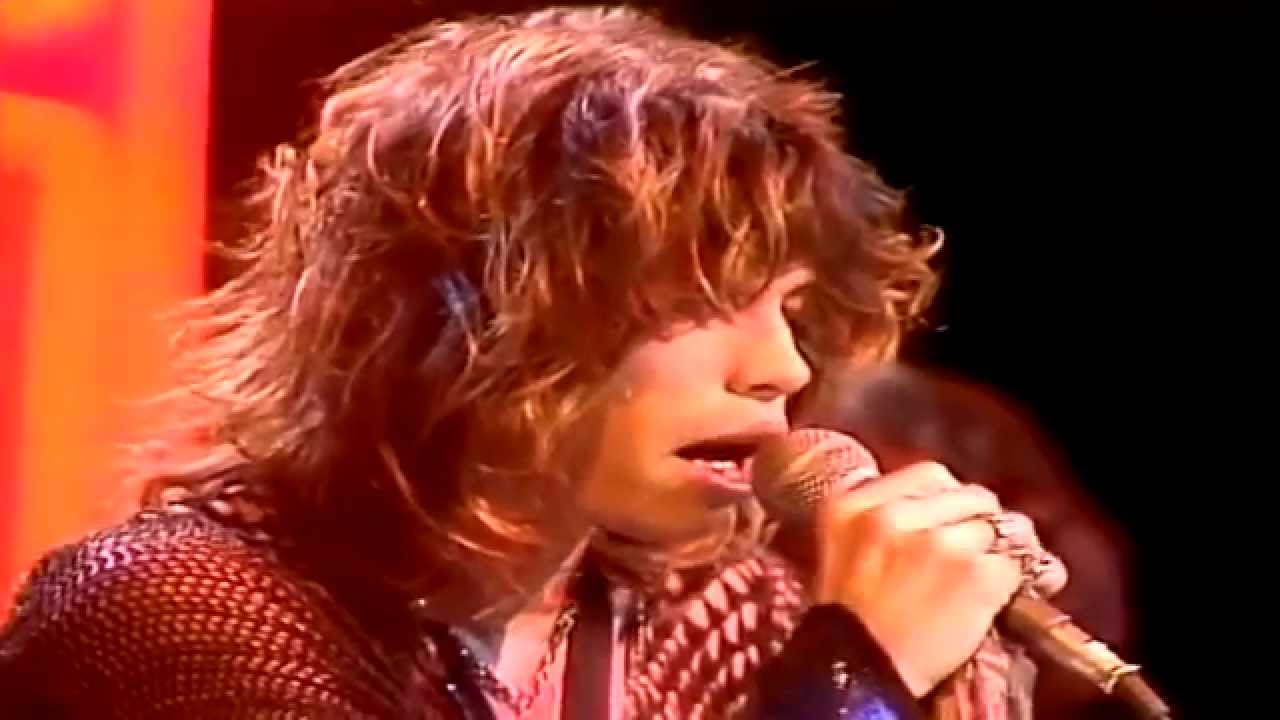
Joe Perry wasn’t as convinced by Dream On as Tyler, but he knew it would be good for his band. “To me, rock’n’roll’s about energy and putting on a show,” he told Classic Rock in 2002. “I didn’t really appreciate the musicality of it until later, but I did know it was a great song, so we put it in our set.”
It was a shoo-in for Aerosmith’s self-titled debut album, recorded at Boston’s Intermedia Studios in late 1972. When it came to laying down his big ballad, Tyler opted for a little chemical assistance. “I put the string section on Dream On sitting at this Mellotron while a friend of mine kept laying out lines of crystal THC that I was snorting while I was playing,” he said in Walk This Way.
The finished song still sounds terrific today. The decorative, weirdly medieval-sounding opening soon breaks out into something much grander, as Tyler’s old-beyond-his-years weariness is overtaken by hope, or at least the anticipation of it. The strangulated croak he adopted for the rest of the album is dialled back here. Instead, the song’s feverish climax is a teaser of what was to come: the Demon Of Screamin’ is in the house.
Aerosmith shimmied onto the shelves in January 1973, with Dream On released as a single in June. The song reached an underwhelming No.59 first time around, but it was a different story three years later, when it was re-released on the back of the success of their third album, Toys In The Attic. (’73 really was Year Zero for the power ballad – Styx’s superhumanly soppy Lady followed Dream On out of the gate a few months later, though it likewise took a couple of years to become a national hit).
Of course, Aerosmith knew they were onto a winner right away. The big tearjerker would become part of their arsenal, and everyone else’s too – no self-respecting rock band through the late ’70s and beyond could resist turning up the dial marked ‘emotion’ to show just how vulnerable they really were underneath it all. It wasn’t just hair-swishing dudes either – Eminem sampled it on his 2002 song Sing For The Moment, you could throw a stone at a random crowd and probably hit an American Idol singer who performed it on the show, and it was memed to high heaven a few years ago when it soundtracked a clip from the God Of War video game (You can’t say the same about Lady. Sorry Styx).
Just as they inadvertently created the Great American Power Ballad, so Aerosmith themselves killed it with 1999’s I Don’t Want To Miss A Thing, a Diane Warren song so ridiculously, meteor-destroyingly over-the-top that no one else could follow it. But the original remains the most significant – a message from the young, (comparatively) innocent Aerosmith to their older selves, with little knowledge of the wild, crazy turns their lives would take in between.
“When I wrote Dream On, I went, ‘Where did this come from?’” Tyler told Rolling Stone in 1994. “I didn’t question it. When I read the lyrics back now, for a guy who was stoned, stupid and dribbling, I got something out of there.”

