


Author’s note: In July 1990 I flew to the Spanish city of Marbella to interview Judas Priest. It was two months before the release of Painkiller, their long-awaited follow-up to Ram It Down, an album that had gone gold in the States but got some stick from the UK press. Some metal critics thought it too polished. They had much the same opinion of Priest’s new stage outfits on the subsequent tour. So Priest decided to take some time to come back with a killer album.
They spent a lot of that time in Europe - recording in France and mixing in Holland – but stayed for what seemed like for ever holed up together in Spain. They’d done something similar when making 1986’s Turbo, staying under one roof in Spain to avoid distractions and to focus on work. This time there was the added task of getting to know their new drummer, Scott Travis, and planning a new live show. I also remember being summoned to interview Priest in an old isolated farmhouse in the ice and snow of northern Denmark, which was chosen for its distance from any rock musician-friendly temptations, but that’s another story.
By the time I got to Marbella, the new album was done and dusted. But the release had been delayed due to a bizarre trial that was under way in Reno in the US. Judas Priest had been accused of hiding subliminal messages in their 1978 album Stained Class that led two suicidal young American men to shoot themselves. The trial was due to begin in August. A few weeks after the interview that follows, Rob Halford was planning to fly to the US and defend the band in court.

I’m sitting in the sun, headphones on, listening to the new Judas Priest album on my Walkman. It’s called Painkiller, and it’s mighty. “Yes, Rob Halford agrees, in that surprisingly gentle Brummy voice of his. “Really pulls the hair off your balls, this one.” Off your head too, judging by his new hairdo and absence of his bleached ponytail. We’re in Marbella on the so-called Costa del Crime in a swanky villa on the beach.
Their nearest neighbours, Priest tell me, are Baron Rothschild from the House of Lords on one side, and Hollywood icon Elizabeth Taylor on the other. Priest’s villa, rented from a German princess, is all glass and chrome and shiny white furniture, with enough rooms to comfortably house Halford, guitarists Glenn Tipton and KK Downing, bassist Ian Hill and Scott Travis, Priest’s new drummer and the band’s first American full-time band member.
Outside there’s a swimming pool, a spotless lawn on which KK has been practising his golf swing, palm trees being hosed down by a gardener, and a clothes line in the back garden where Priest’s undies sway in the breeze.
It might look like they’re on holiday, but the band have been working flat-out. Much of their time in Spain was spent in a valley in a part of southern Spain that tourists, movie stars and bank robbers and the like never see. With only each other for company, they were focused solely on getting the new songs and the new stage show right.
“We really disciplined ourselves,” Halford says. “The whole time, we kept reflecting on what it is that people honestly think of when they think of Priest.”
Which is?
“It’s a combination of a lot of different things, admittedly. But the basic backbone of this group has always been traditional, almost vintage, British heavy metal music. It was on that understanding that we started to write. And the end result is what you’ve got on Painkiller - really hard heavy metal, fast-paced and powerful.
"There are no hits on there,” he adds, laughing. “No singles whatever.”
“We’re giving the fans what they’ve been asking from us,” Downing butts in. “And it’ll please us too, because we’re not happy playing songs that are a bit of a compromise. We love this stuff. When we were putting this record together, we set out to complete what we’d threatened to do with Ram It Down – which was to make the ultimate, out-and-out Priest album. And that’s what we’ve done. And,” he laughs, “it could be the most successful failure we’ll ever have!”

It took the best part of a year to write the songs, and almost the same again to fine-tune and record them. And there we all were thinking that, since we hadn’t heard from them the past two years, they were sitting around in the sun or playing golf!
“Well, I’ve never played golf, Sylv,” Rob bristles. “It’s Ken or Glenn who are the golf fanatics, and Ian. I did try and play it once but I couldn’t get it together; it just wasn’t heavy metal enough for me.”
Okay, then, that for the past two years he was cruising into the sunset on his Harley-Davidson. “Yeah, that’s more what I do. Seriously, though, they think we’re out there in our Rolls-Royces spending money hither and thither with our platinum American Express cards, and nothing could be further from the truth! We are, in one form or another, constantly active doing Priest stuff. It seems to have been like that since 1971 or whenever this thing began.”
This thing began, of course, back in Birmingham, the sweaty, dirty belly button in the middle of England. But here they are, galavanting around the continent (the album was recorded in Holland and in France – a French château no less), hobnobbing with the stars in Southern Spain. Hell, how do they keep the tough industrial Birminghamness through all this that made them what they are?
“It’s in the blood,” says KK. “When you put yourself in a little room with your guitar and records and all the stuff you need, you could be anywhere in the world, really, you just get lost in your own world. And it’s in the blood and it comes out of you. That’s what gives you the mentality to like this style of music in the first place, is your upbringing. A kid that’s grown up with a silver spoon in his mouth or whatever is more likely to like Wet Wet Wet or Bros, that sort of stuff.
"The fact that we like metal is because we came a bit more aggressively through life in the first fifteen years,” he laughs. “You know the old saying? Wasn’t brought up, dragged up. That’s the way I feel about it anyway. It’s imprinted. And not easily burnt off by a bit of foreign sunshine.”

“At the end of the day,” says Rob, “it comes down to your character growing up as a kid and all the things that mould you into the type of person you are. Nobody in this band’s a poseur or a star. I’m only ever a hundred per cent comfortable when I’m in Walsall, my home town. I’ve just been there for the last couple of weeks.”
Which is why you look so pale and miserable?!
“Do I look miserable? I don’t mean to. It’s this bleeding court case looming, pissing me off. I’m actually really up on this album and looking forward to doing the tour.”
The court case you probably know all about, since it’s been all over the newspapers. Five years ago, two young Americans, Ray Belknap and James Vance, took their own lives with a shotgun while listening to Priest’s album Stained Class.
Their families hold the band and their record label responsible, claiming subliminal messages in the lyrics and codes hidden on the album sleeve (one portion of the cover picture, blown up to enormous proportions, shows a series of dots; join them together and they spell ‘SUI’, the first three letters of ‘suicide’ or so says one of the witnesses for the prosecution, a subliminal message ‘expert’ who’s previously managed to find the word ‘SEX’ in the dots on a Ritz cracker) and Priest are leaving tomorrow to spend a month in Reno, Nevada, fighting the case. Why don’t they treat the thing with the contempt it deserves and just ignore it?
“If we hadn’t gone,” says Rob, “they’d have said: ‘That’s an admission of guilt’, they’d have tried us without us being there, and the prosecution, more than likely, without us defending ourselves, would have stung CBS for five or six million dollars, and stung us personally for a few million.”

“They just want our money, is what they want,” says KK. “To be guilty of what they’re accusing us of – deliberately putting things on records to cause deliberate harm to people enough to make them commit suicide – is money the right punishment anyway?”
Right. You should be burned alive on an upside-down cross or something.
“Absolutely! I’m agreeing,” he laughs. “But let’s not put ideas into their heads! It’s just total madness. And it is upsetting, because there’s family men in the group. You don’t want your aunts and uncles looking in the newspaper and reading ‘You’ll pay for the death of our sons’ with a picture of us underneath. Because people don’t understand. It’s entertainment, isn’t it really?
"I’ve said time and time again that books and movies are far more influential than our music. Unless you’re into Judas Priest and you want to hear that style of music, you wouldn’t buy the record anyway. Like you wouldn’t see The Exorcist unless you wanted to get scared. I wouldn’t go and see Love Story, you know? It’s unfortunate, because now people are going to be watching our every lyric.”
That hasn’t stopped Priest from writing songs on Painkiller that will upset every concerned parent, potential psychopath and Satanist-under-the-bed spotter.
“That’s the good thing about this record,” says Rob. “We let everybody see that we will not be intimidated and put on trial for everything we write. We maintain that censorship has no place whatsoever in any form of art. We have to get on with what we’re about as artists and writers and not let this affect us. This court thing is a drag.
"And it only happens in America, which is really very, very sad, because we love that country dearly. I mean I’ve got a home over there and I continue to go there when I get the chance. America is still one of the very important places for Priest. And to have this hanging over our heads has to some extent changed my views and opinions on the America I believed in. It’s a real shame."

As the first step in their plan to take all the people they like out of America and leave the place to the evangelists, the lawyers and the subliminal message gurus, Priest gave the job once held by Dave Holland to American drummer Scott Travis. So what’s up? Is British metal in such a sorry state they couldn’t find a British drummer? And will the first-ever American in the band dilute the band’s Britishness at all?
“Well for so many years Britain was looked upon, and for those of us who have survived it is still looked upon, as producing the best heavy metal bands in the world,” Rob says with a shrug. “It is a pity, isn’t it? I mean, we really looked everywhere in Britain. But if you listen to the work on this record, there really was only one man for the job, and that was Scott Travis.
"He’s absolute dynamite. I don’t really feel his being one of those American-type people [laughs] has any bearing or influence on the way things turned out. The proof of the fact is the drums coming out of those speakers don’t sound ‘American’, they just sound really lethal heavy metal drums, and that’s all that really matters. Coupled with the fact that he’s a really nice guy with a British sense of humour, which is useful, and that he’s been a Priest fan all his life.”
Scott Travis used to be in club bands in Norfolk, Virginia, doing Judas Priest covers.
“I think it was ’81, ’82, Judas Priest played in Virginia,” Scott says later, “the Screaming For Vengeance tour, and I was such a fan. After the band played, I went to the hotel where I thought they were staying. I was trying to meet somebody in the band, basically, to try and get a job with the band!
“At the time, I was just so determined that I didn’t think how ridiculous it was that a group that’s touring is going to take on this guy they don’t know, in the middle of nowhere. They don’t know me from Adam; I could be a psychopath! [Laughs.] I met Glenn Tipton and asked for his autograph and showed him some pictures of my drum set.
"When I saw the band, I saw four guys up front that were really rocking and powerful, and I just thought that if the drums were a little bit more powerful, it would kick the band up another level. Because to me, the drummer is the backbone, especially in heavy metal. Anyway, I enquired how he liked his drummer, and needless to say nothing happened other than him giving me his autograph and talking for a few minutes. But it’s ironic how it’s turned out, isn’t it?”

Dave Holland told them he was going to leave halfway through the Ram It Down tour.
“He came to us,” says Rob, “and said: ‘Look, I’ve got to tell you, this is getting too much for me physically and mentally. I really can’t give the commitment and dedication that being in Priest is all about. So I think at the end of the tour I’ll do the gentlemanly thing and leave the band.’ Which was a bit of a bombshell. But Dave has some fond memories of great years in Priest and we’re still good friends.”
“It was a family thing, really,” says KK. “His father died and he went through a long illness, and I think Dave felt his place after all these years was to be at home and taking care of his mum, which I understand. He just basically reevaluated the most important things in his life.”
Did it make the rest of you reevaluate? I mean, here you are, on your fourteenth record, about to go on a year-long tour?
“I thought about it”, says KK. “It does make you think, certainly. But like I said before, it’s in your blood, and whatever’s going to happen’s going to happen.”
Is it hard coming up with new songs and ideas 14 albums on?
Ritchie Blackmore, for one, has a theory that you’re born with only so many songs, and every time you write one, another one’s gone for good and the pile gets lower. Kind of like women being born with just so many ova, without getting too gynaecological.
“Actually,” Rob laughs, “I’ve always felt that when you make an album it’s a bit like giving birth. Because first of all there’s the creation business when you’re literally pulling things out of thin air, and then you go through the incubation period of making demos and so forth, and then the final stages are in the studio and it’s your baby and it’s getting bigger and bigger and bigger and it’s going to come out into the world any day now.
"And suddenly it’s out. It’s in the shops and it’s gone. It’s no longer yours any more. It belongs to the world. And I always feel a bit deflated afterwards, after we come out of the studio. It’s so intense when you’re in there, and when it’s all over it’s like, that’s that. It’s like post-natal depression. This is really silly, but you started this!
"I think, fortunately for Priest, we’ve still got some songs left and we’re still able to do it. This was a really fun album to do. We were working within a field that we’re comfortable with and we’re good at, and you’ve had all that experience accumulating over the years. Priest has become a bit of a finely tuned thing. It looks like a Rolls-Royce, but it’s got a Ferrari engine!” he laughs. “It really was enjoyable this time.”
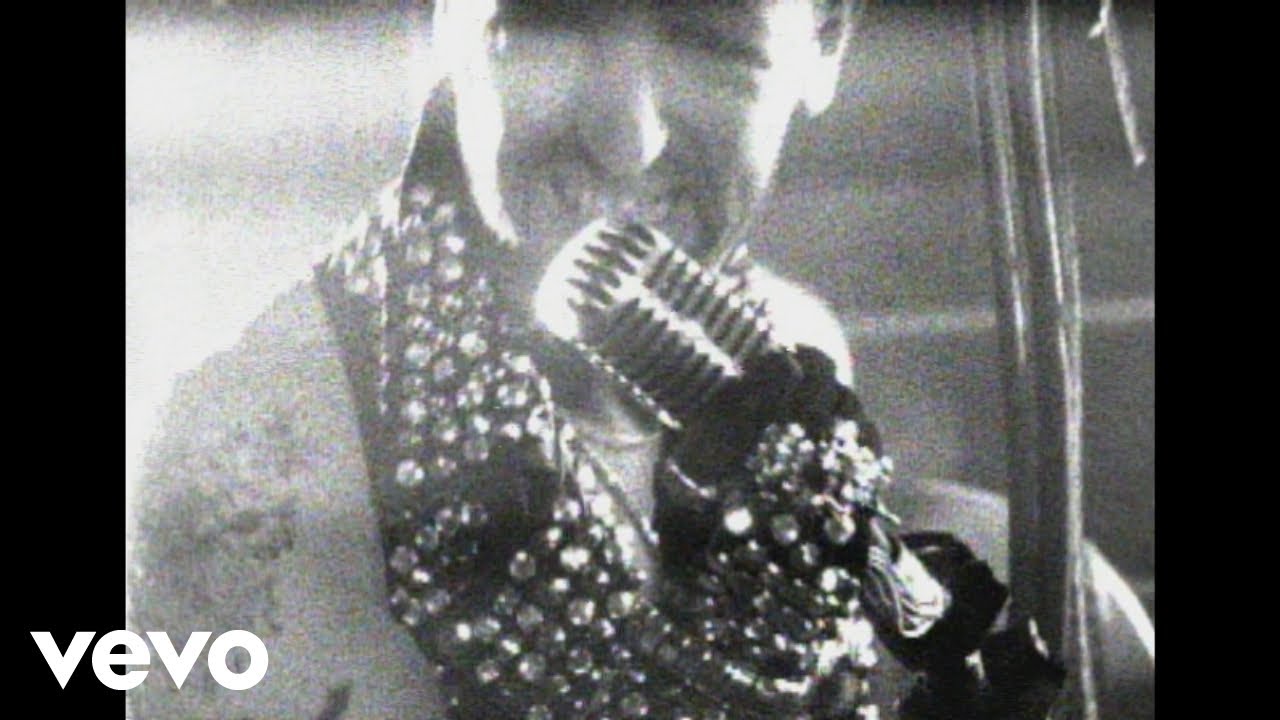
The band co-produced Painkiller with Chris Tsangarides. Those of you who read the fine print on the album sleeve credits album will recognise him as assistant engineer-come-tape-op-come-tea boy on Sad Wings Of Destiny back in 1976.
“Over the years,” says Rob, “Chris has become a very respected producer in his own right, and he always manages to capture this really traditional British heavy metal sound which it was important for us to get on this record. We wanted it to be a no-frills album, in the sense that we all played live together in the studio with a very limited amount of overdubbing and only two what you could call production pieces, Nightcrawler and A Touch Of Evil. The rest are very straightforward. So Chris came down to Spain and we had a meeting.
"Last time we saw him was years and years ago in Tokyo, and the great thing about metal is that when you make true friends, years can go by without seeing each other and when you come back together it’s like you’ve never been away. That personal relationship is very important in a studio, because making a record is a very emotional, volatile experience. I’m glad we did go with him, because it sounds killer.”
Is there any relevance to the title?
“Yes, because we think that’s what this stuff does – it kills your pain, it makes you feel good. We’ve said from day one, and continue to, that what we do and what hundreds of other bands like ourselves do is give people a great deal of pleasure and release and good therapy.”
“It’s just good, honest, straightforward stuff,” says KK. “It’s not commercial; we think it’s what our fans want and what British heavy metal is all about. We’re proud of our heritage and where we come from, and just because we wore the odd garment that was a different colour leather to black…”
The sentence breaks off as I splutter on my beer at the memory of their Turbo-period designer togs.
“It was good for its time,” says Rob, defensively. “That’s the great thing about Priest, we’re always on the lookout for something a bit unusual or different musically and visually.”

Well they certainly were different and unusual outfits. Didn’t Rob, the wearer of black studded leather as far as I’m concerned, feel a bit of a prat in all that pretty coloured stuff though?
“No I didn’t, Sylv,” he answers. “If I had felt like a prat, I wouldn’t have gone out there and stood in front of twenty thousand people in arenas in America! That’s just what we did then.”
“And I’ll have to say,” adds KK, “that the Turbo tour in the States was probably a highlight of the band’s career. It was very successful, it really was, and we actually achieved pulling in extra people, more people than just the heavy metal fans, but still playing the same songs and stuff. It was great at the time, that’s all.”
“But I must admit,” says Rob, “at the end of the day I feel much more comfortable with a whip in my hand than I do with anything else. The new stuff that’s being made for us now is what people probably identify with Priest. I think it’s going to look good, this tour. We’ve got a great stage set being made, and some fantastic songs to play on stage. It’s the first time Priest has been on the road for two years. We start in America in October and hopefully we’ll be touring Europe at the beginning of next year and we’re really pumped up for it again.
“I still get excited about it. Sometimes it’s a bit daunting. You think: ‘I’ve got to get through eight hours on the bus. Another Holiday Inn! But that soon disappears. I know exactly how good I feel when I’m on that stage screaming my head off to all those metal maniacs, and it’s the best feeling in the world,” Halford laughs. “I think I’m a big kid in a leather diaper, really!”

