




For a very particular type of Iron Maiden fan, the first two albums are all they will ever need. Even today, social media throws up the occasional keyboard warrior claiming Maiden lost their edge on the day Paul Di’Anno left – or worse, that the recruitment of Bruce Dickinson transformed Steve Harris and company into something that was, gasp, too heavy metal.
There’s no denying that something a little bit special departed with Di’Anno, but the livewire singer is the first to admit that he would never have stayed the course within the confines of Iron Maiden.
“I don’t blame them for getting rid of me,” the singer, who died in 2024, told Hammer in 2020. “Obviously, the band was Steve Harris’s baby but I wish I’d been able to contribute more [to the writing]. After a while, that got me down. In the end I couldn’t give 100% to Iron Maiden anymore and that wasn’t fair to the band, the fans or to myself.”
His words only tell half of the story. Paul was an exciting yet wildly unpredictable frontman, prone to acts of gross daftness (such as famously boasting to headliners Judas Priest that his band would blow them offstage during a vital support tour).

However, those first two albums remain world class, and it’s no wonder that they are still so widely loved. And yes, Maiden did become a different group during Bruce’s first reign. They had to. He was a dedicated professional, sworn not only upon climbing to the very top, but willing to make sacrifices to do so. Paul, however, was a different beast.
Despite a less-than stellar production that Paul himself dismissed as “complete dogshit”, Iron Maiden had taken the band into the Top 5 of the UK album charts. With guitarist Dennis Stratton now replaced by a certain Adrian Smith for the next chapter, two immediate problems loomed: Firstly, how to build on their debut album’s production and achieve the sounds that Steve Harris aspired to, and secondly, what to do about Paul?

When considering producers the first time around, Martin Birch had topped the band’s shortlist but was busy cutting Heaven And Hell with the Ronnie James Dio-fronted Black Sabbath. A Rolls-Royce in his field, Birch had also made records with Maiden’s heroes Deep Purple, Rainbow and Wishbone Ash.
The producer would later recall that when the band finally contacted him regarding the album that became Killers, they had told him: “We didn’t think we were worthy of you. Because of what you’ve done [in the past] and your reputation, we didn’t think you would take us on.”
He replied: “That was your first mistake, because I was very disappointed that you didn’t ask me.”
A lasting bond was sealed: as well as Killers, Birch would go on to handle every Iron Maiden album up to Fear Of The Dark. For Paul Di’Anno, though, Killers would prove to be his Maiden swansong.
“Something, somewhere had changed,” Di’Annon would write in his autobiography, The Beast, of the Killers era. “The music was becoming more polished and more commercial. We’d lost something of our punk-type edge. To my mind, [it was] getting a bit too arty-farty.”
She was implying that the first album was hype into the chart, but hype can’t make it go silver. You can’t hype 63,000 people to buy it.
Steve Harris
Maiden’s direction would ultimately carry them to heavy metal immortality, but if there was a little uncertainly around the new material from the band’s growing fanbase, it was that…well… a lot of it wasn’t actually all that new.
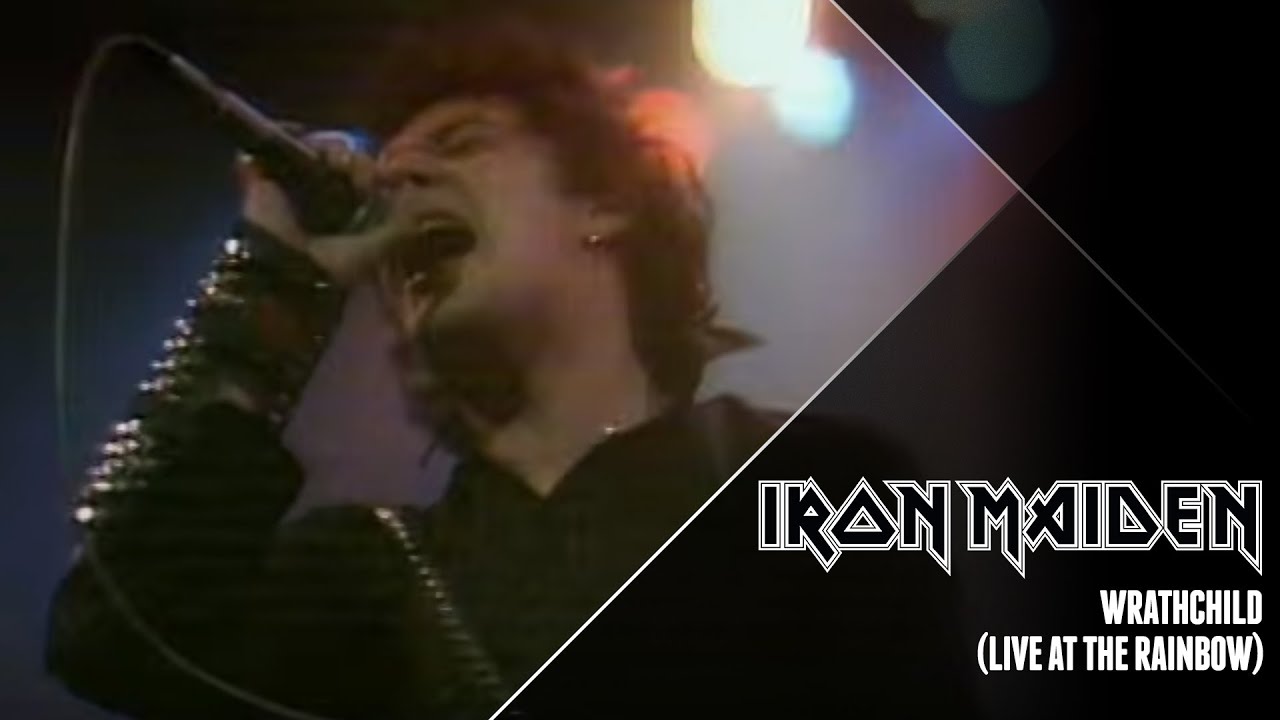
Many of the songs that ended up on the final version of Killers had already been performed onstage for some time – in fact, two of Killers’ songs, Innocent Exile and beloved hit Wrathchild, were getting played in Maiden sets in the mid-70s. Plus, Wrathchild had actually already been officially released previously, on EMI’s New Wave Of British Heavy Metal sampler, Metal For Muthas, in 1980, though it was unquestionably an inferior version.

Even Drifter, during which the singer would go all-out to get the crowd singing along, had been another staple of their shows for several years and was a firm fan-favourite by the time it was committed to tape. Put simply, for many pre-existing Maiden fans, Killers simply didn’t feel like a new album. Luckily, Martin Birch’s production gave the songs a whole different lease of life.
“Production-wise, Killers was like chalk and cheese compared to the first album,” Steve Harris noted in the official Iron Maiden book, Run To The Hills. He also acknowledged the lack of brand new material on the album, but argued it was nonsensical to deny such good songs a proper release: “The first album was like a ‘best-of’ from our live set, songs which went back years. [For Killers], we still had a lot of really good, strong songs, like Wrathchild, and we didn’t want to lose them.”
There was also some controversy with the press. Sounds, a major music magazine who were credited with the power to make or break careers, had got firmly behind Maiden’s debut, calling it: “Heavy metal for the 1980s, its blinding speed and rampant ferocity making heavy rock of the 60s and 70s sound slothful and funeral dirgey by comparison.”
I don’t blame them for getting rid of me. In the end I couldn’t give 100% to Iron Maiden anymore and that wasn’t fair to the band.
Paul Di’Anno
The review was a big seal of approval from a major player in the music industry, and helped stoked the fire of the rising NWOBHM. Killers, however, was received rather differently, as reviewer Robbi Millar – who had reportedly dated Di’Anno – gave it a less than warm response.
“Maiden have never really cut it on vinyl,” she noted. “Hold on a minute, haven’t we rather overrated this lot?” she added, before posing the controversial question of whether the debut “might have crashed into the charts at the Number Four position with a little help?”
Maiden were unimpressed with the review, aggrieved at the response to what they said was “an early cut” of the record with an unfinished production. All five members of the band gathered for an interview with Sounds soon after, conducted by a slightly more sympathetic writer in Garry Bushell (even if he admitted he actually preferred the first record himself).

While Paul Di’Anno was in particularly boisterous mood (“I’ve got the right asshole with Robbi Millar!” he exclaimed), Steve Harris was a little more diplomatic. “I thought she was being constructive [about the choice of songs], but the claims of hyping were so out of order,” he noted.
“She was implying that the first album was [artificially assisted] into the chart, but hype can’t make it go silver. You can’t hype 63,000 people to buy it. It’s also gone gold in Japan, was it hyped there too?
While Killers would debut on the UK charts at a relatively disappointing No.12, it would still propel the band forwards and set the foundations for the all-conquering run their 80s output would pick up from there. More than 40 years later, it remains rightly regardless as a classic.
Despite all this, Di’Anno just wasn’t destined to last the course. His drink and drug intake worsened and, in September 1981, the singer was dismissed “on a totally amicable basis” following a trek of more than 120 gigs in 15 counties, “different attitudes towards the music and touring” being the official company line.
We all know what happened next. Following a secret audition, Bruce Dickinson of NWOBHM rivals Samson won the job of fronting the band, and the following year Maiden released a third album, this time comprised of all-new material. It was called The Number Of The Beast, and it would change heavy metal forever. Still, whether you’re a very particular kind of Maiden fan or not, one thing is certain: Killers marked the end of an era, and Iron Maiden would, quite simply, never be the same again.
Originally published in Metal Hammer issue 347 (March 2021)

