


Biff Byford recalled it as the moment when “the dam began to burst”. In May 1979, Saxon, the Yorkshire-based heavy metal band fronted by the foghorn-voiced Byford, released their debut album.
In the same month, in a Sounds review of a London show with three other young bands on the bill – Angel Witch, Samson and Iron Maiden – the phrase ‘New Wave Of British Heavy Metal’ was printed for the first time.
Change was in the air, a vibrant grass-roots rock scene was developing. As Byford said: “We were in the right place at the right time.”
The NWOBHM would make working-class heroes of former factory workers, labourers and dole-queue dreamers, and Byford and co. were as proletarian as they come. The band formed in 1976 as Son Of A Bitch, and it was in local Working Men’s Clubs that they honed their act. “We’d play three sets a night, maybe with bingo in the middle,” Byford said. “And in some really rough places. It was like the Wild West some nights.”
The primary influences for Son Of A Bitch were the big heavy rock groups of the early 70s: Led Zeppelin, Black Sabbath, Uriah Heep. But as guitarist Graham Oliver said: “In 1977 we did a few gigs with punk bands. We supported the Sex Pistols and The Clash. Their audiences didn’t know what to make of us, but we had so much energy we’d really stick it to ’em!”

It was this energy that connected Saxon to a new generation of teenage heavy metal fans. “We started getting a lot of university gigs,” Byford said, “and we saw a big influx of young kids getting into the music.”
It came out in a blaze of, well, nothing, really. But we were off. And as far as we were concerned, we were going all the way to the top.
Biff Byford
In 1978, the band found an unlikely home at French independent label Carrere, best known for their disco output. At the company’s request, the name Son Of A Bitch was changed to the more palatable Saxon. And in January 1979 the band headed to London to record their debut album with producer John Verity, a fellow Yorkshireman, formerly the guitarist in Argent.
It wasn’t all glamour. Although the band had a £30,000 advance for two albums, they were billeted in a cheap bed-and-breakfast joint where, as Byford wearily recalled: “The owners had this huge green parrot that never, ever shut up from morning till night.”
But the lads had brought along some noisy friends of their own. “These girls from Yorkshire,” Byford said. “There was a lot of shagging”. And while the finished album was not as rowdy as they had intended – due in part to Verity’s lightweight production – the best songs pointed to a glorious future for Saxon.
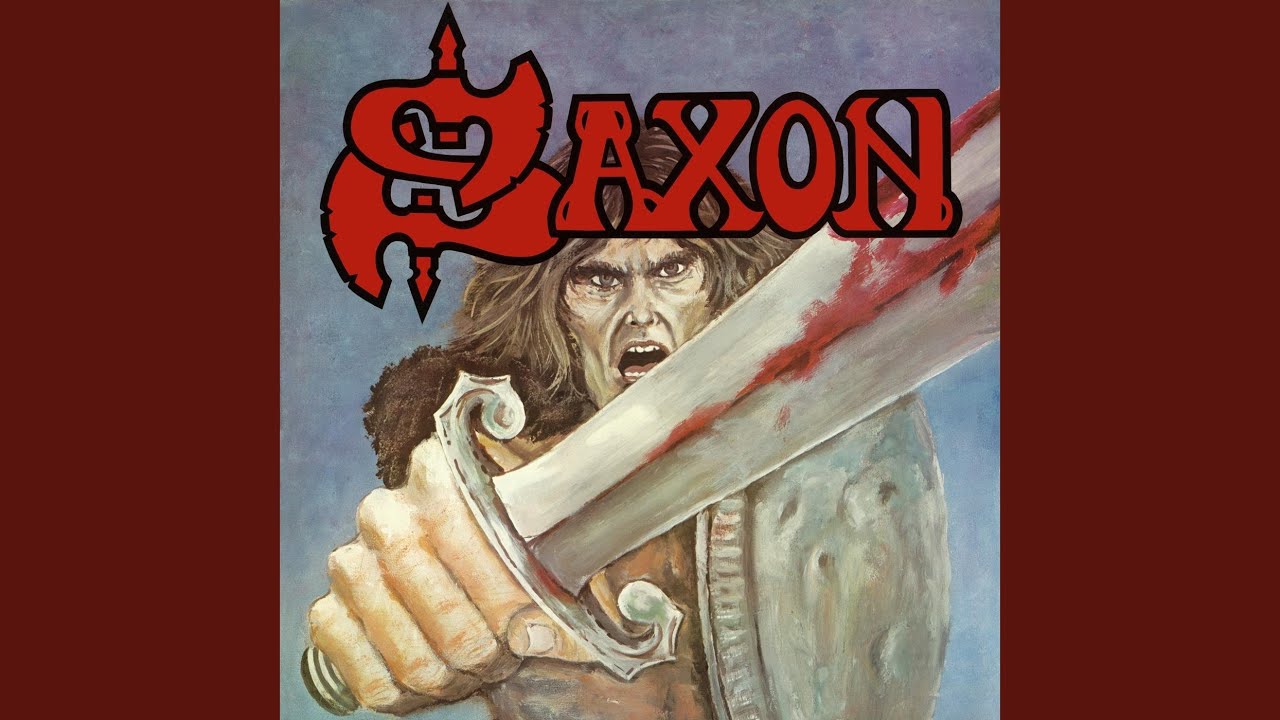
They threw in some curve balls. Rainbow Theme and Frozen Rainbow had “a proggy flavour”, Byford said, and there was a whiff of glam-rock in Big Teaser and Still Fit To Boogie. But two hard-and-fast numbers – Backs To The Wall, Biff’s two-fingered salute to The Man, and Stallions Of The Highway, the first of the band’s many speed-king anthems – had the raw power and streetwise attitude that came to define both Saxon and the NWOBHM.
The album failed to chart. “It came out in a blaze of, well, nothing, really,” Byford recalled. “But we were off. And as far as we were concerned, we were going all the way to the top.”
They didn’t have to wait long. In 1980, Saxon had not one but two hit albums, with Wheels Of Steel and Strong Arm Of The Law, both now revered as heavy-metal classics. And in the title track of their 1981 album Denim And Leather, the spirit of the NWOBHM was enshrined. The opening line of the song was addressed to metal fans: ‘Where were you in seventy-nine when the dam began to burst?’ For Saxon the answer was simple: they were right there in the thick of it all.

