




Imagine if Bono suggested that 9/11 might be an inside job perpetuated by the US government. Or Robbie Williams insisted that the human race evolved as a result of aliens tampering with monkey DNA. Or Noel Gallagher maintained that The Beatles were a front for a clandestine think tank intent on brainwashing the youth of America. We'd never hear the end of it.
And yet Muse frontman Matt Bellamy offered up such opinions in the course of promoting the trio's fourth album Black Holes And Revelations without generating so much as an apoplectic Daily Mail editorial. For shame. There was a time when enemies of the state blowing the whistle on government cover-ups and media lies could have expected to meet with tragic accidents and/or freakish, fatal acts of God rather than BRIT Awards, sold-out stadium shows and number one albums.
This country.
Muse went into the recording of their fifth album in a supremely confident mood. Released in 2006, Black Holes And Revelations had sold over 750,000 copies in the UK alone, and the band were determined that album number five should be bigger, bolder, more ambitious and more adventurous. And to ensure that they pulled this off without any interference, for the first time the trio opted to record in their own "war-bunker" studio in Como, Italy, with their frontman producing.
"I wanted The Resistance to be a culmination of everything we know about music," Bellamy told Q magazine. "Every style we have ever played. Every idea we ever had."
Lyrically, part of the album's conceptual narrative had already been foretold by the band themselves. In the video for Sing For Absolution, the fourth single from their third album, 2003's Absolution, Muse were cast as fearless adventurers descending to Earth from another galaxy, ultimately finding themselves gazing in horror at the ruined remains of Britain's Houses Of Parliament, democracy having been extinguished as mankind tore itself apart.
To some degree, The Resistance can be viewed as a glossy prequel. Here, our heroes are battling to hold onto love in the midst of chaos, defiantly vowing to "rise up and take the power back" in a society where there's "red tape to keep the truth confined", before ultimately deciding that our planet is doomed and the only solution is to set the controls for the heart of... anywhere but here, to start over.
I believe in the power of people and love to change things. There is a romance to fighting back against malevolent interests.
Matt Bellamy
The album is full of ominous warnings. In Bellamy's worldview, humanity is permanently under surveillance by the forces of darkness: they're out there, observing, recording, cataloguing, classifying, gathering the data required to justify repression, brutality and enslavement. Our mission then, should we choose to accept it, is how to find love in this hopeless place, to paraphrase Rihanna. In 2026, with far right politicians in the ascendancy across much of the world, with peaceful protestors being jailed as 'terrorists', with western democracies complicit in, and profiting from, genocide, and mainstream media asking you to reject the evidence of your own eyes and ears, this idea seems less outrageous than it did in 2009.
"The Resistance is supposed to be less about conspiracy and the fantastical than the rational and the real," Bellamy insisted to Q magazine. "It's hopeful and positive. I have been through periods where I've felt quite paranoid about the world. But I also believe in the power of people and love to change things. There is a romance to fighting back against malevolent interests. The last album was dark and angry. This is all about resisting the corporate-ocracy."
Ahead of its release, the album was teased in the most Muse way. In July 2009, the band announced that a new song from the record could be heard once a global treasure hunt had been successfully concluded. Fans were informed that the trio had hidden USB sticks in Berlin, Tokyo, Hong Kong, Moscow, Paris and Dubai, and that each USB stick contained a code which, when logged at the PROJECT EURASIA microsite, would form a portion of a new song.After fans - sorry, 'agents' - unlocked the first six segments, the website displayed coordinates for a New York location, and Muse's global army of truth-seekers were warned that "UNITED STATES OF EURASIA WILL NOT BE RECOGNISED" unless a seventh code was entered.
The song, United States of Eurasia, was finally revealed on July 21. After which Matt Bellamy revealed that it was inspired by a book called The Grand Chessboard by Jimmy Carter-era US National Security Advisor Zbigniew Brzezinski, who believed that Europe, Asia and the Middle East had to be controlled by America to secure the oil supply and ensure its global dominance for the century to come.
Heady stuff.
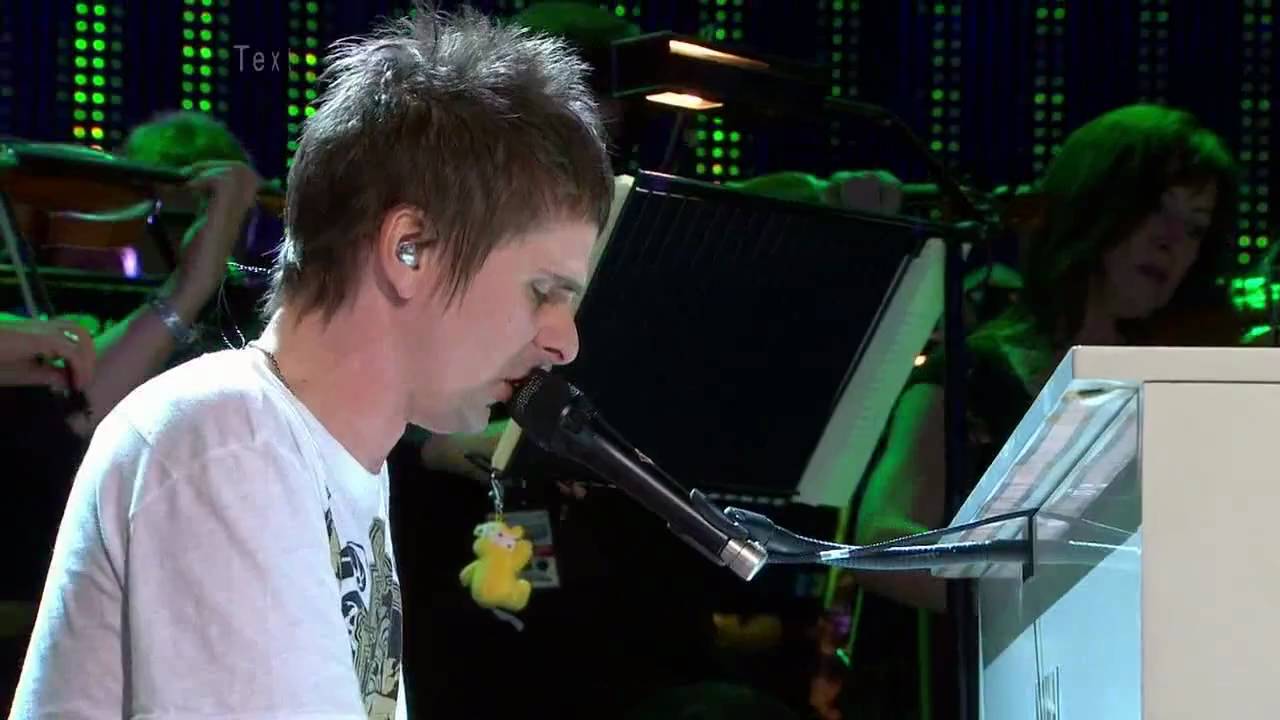
The album's first proper single, however, was Uprising, an addictive glam rock-influenced stomper featuring Bellamy wailing "They will not control use!" and massed terrace chants of "Oi!" as it nears its climax.
"It's meant to be football hooligans chanting in protest at the banking situation," Bellamy explained to MOJO.
"In the song you can hear the general feeling that we've been let down again by big institutions, which are supposed to be in positions of trust,"he told The Sun newspaper. "Politicians obviously and bankers. I've got a flat in the centre of London, which is right near all the embassies and I noticed protests on a regular basis. During the G20 protests, the UK, got closer to really making a dramatic change, a non-violent revolution. I think the UK needs one and I hope it hasn't died down. Hopefully we can flame it up again."
It's not all gloom, however. As ever with Muse, there are moments on The Resistance which are so joyously eccentric that you can't help but laugh out loud, such as the moment you realise that the title track's portentous atmospherics could easily double up as the intro to Bonnie Tyler's Holding Out For A Hero.
Undisclosed Desires, bereft of guitar, is a stark gothic take on Timbaland's stripped-down R&B template, with staccato string samples layered over Dom Howard's electronic drums, and Bellamy promising, "I want to exorcise the demons from your soul", like Depeche Mode's Dave Gahan at his most tender. I Belong To You, drawing inspiration from French composer Camille Saint-Saëns' aria My Heart Opens Itself To Your Voice from the 19th-century opera Samson And Delilah, marries R&B with cocktail jazz piano.
And all this is but a prelude to the album's extraordinary, elegant climax, Bellamy's three-part, 12-minutes-long orchestral work Exogenesis: Symphony, rising and falling dramatically as its protagonists come to the realisation that their time on Earth must, of necessity, come to and end and they need to "breach the outer sphere, the edge of all [our] fears". It's ludicrous, outrageous, pretentious and perversely life-affirming: what's not to love?
Muse fans lapped it all up. Released on September 14, 2009, The Resistance hit number one on the national charts of 19 countries and went on to sell over 5 million copies. It also earned Muse a Grammy award for Best Rock Album. Not that this success ensured that Matt Bellamy would sleep any easier at night, or curbed his more rebellious instincts.
"I think I’ve put forward the idea in the album that love and peaceful protest is ultimately the best way, but you can't help thinking that sometimes it’s not enough," he mused at one point. "But kicking a few shop windows in helps as well!"
