





Prog-friendly Scottish folk rocker reveals the inspiration behind his biggest UK hilt came from comedian Tony Hancock…
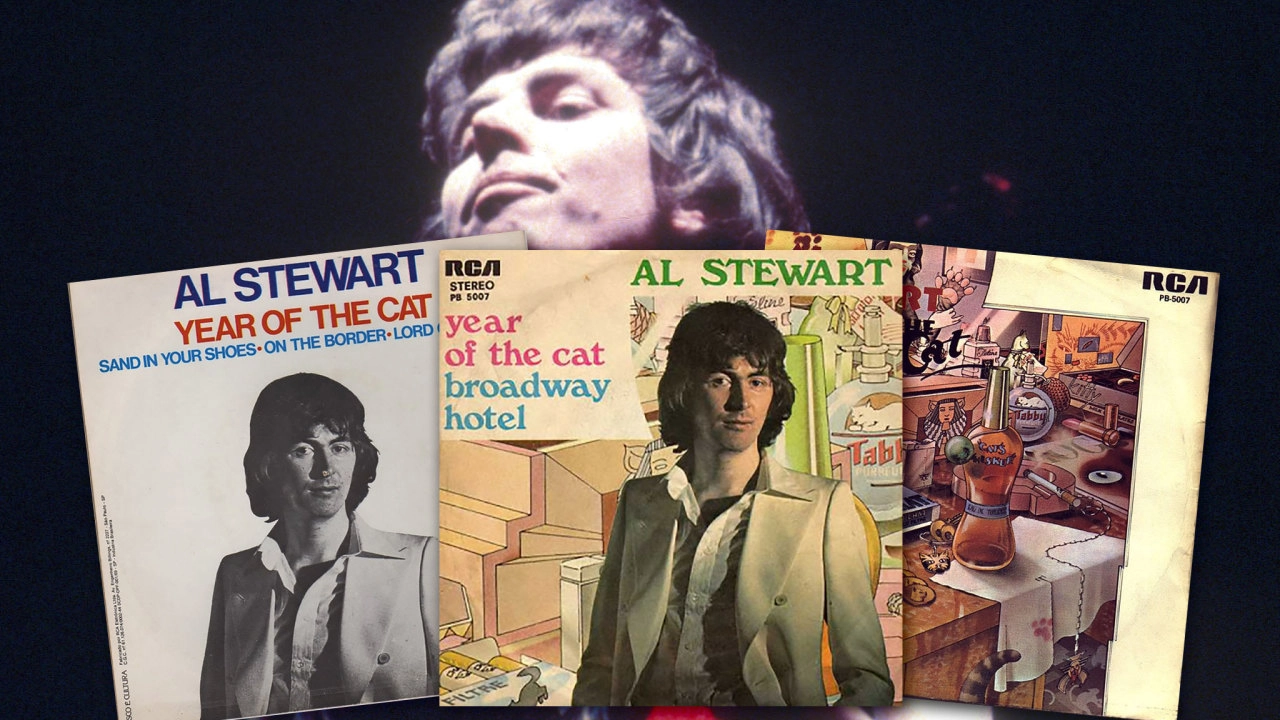
Year Of The Cat b/w Broadway Hotel
(RCA, 1976)
Highest UK Chart Position: No. 31 (Number 8 in the US)
While this was Al Stewart’s only hit single in the UK, in America it wasn’t his most successful. Year Of The Cat reached number eight over there, whereas 1978’s Time Passages got to number seven. The recording was done during the Vietnamese Year Of The Cat, which was the Year Of The Rabbit in China. The full song is just under seven minutes long, but there were various edits done for the single versions in different countries. In fact, the Italian one is a little over half the full length.
Where did the inspiration for Year Of The Cat come from?
“It started out as a song inspired by seeing Tony Hancock performing in Bournemouth during 1966. I was struck about how depressed he was at the time – this was just before he committed suicide – and the way he told the audience that he wanted to die. Everyone thought it was part of his act and was laughing at him. No-one understood he was serious. I called the song Foot Of The Stage, but my label felt it was too bleak, so refused to release it.
“I tried different approaches, because I really thought the melody worked well. Then one day, my Vietnamese girlfriend of the time was reading a book about the Vietnamese signs of the zodiac, and it was open on a chapter about the Year Of The Cat. That gave me the title, and everything else fell into place.”

(PIc: Getty)
What was the reaction to it?
“Well, it took the label a while to be convinced the song could be a single. Peter Wood deserves some credit. He came up with the riff on piano, and that helped to win people over. But in Britain it didn’t chart for a long while. It wasn’t an overnight sensation.”
Did you feel like a pop star?
“I’ve always been too down to earth to get carried away by fame. Success has never meant stardom to me. So it never turned my head.”

Was having a hit a blessing or a curse?
“I became known as a one hit wonder, which was annoying. There are a lot of people who know me just through Year Of The Cat. That’s the curse of having the one hit. You are defined by your career through this solitary song.”

