


Frank Beard, who has died at the age of 77, spent much of his life sitting slightly apart from the mythology of ZZ Top. While Billy Gibbons and Dusty Hill transformed themselves into a pair of synchronised Texan mystics in shades, Stetsons and chest-length facial hair, Beard remained the odd one out at the back of the stage; headphones on, expression unreadable, laying down the immense, disciplined grooves that helped drive ZZ Top from hard-touring blues boogie trio to one of the most distinctive arena bands of the MTV era.
“I’m a seventh-generation Texan,” Beard said in the documentary That Little Ol’ Band From Texas. “I know that my father’s family came into Texas in 1836. I know that my grandmother, Bessie Dossett, walked behind a covered wagon in 1899 from Louisiana.”
That sense of lineage and place runs deep through ZZ Top. Beard grew up around Dallas and Fort Worth immersed in a working-class culture of blues, country, hot rods, beer joints and border-radio R&B. While still in his teens, he was playing clubs and frat parties when Dusty Hill and his big brother Rocky recruited him into their group, The Warlocks, later renamed American Blues. Long hair alone could provoke hostility in Texas at the time. They responded by dyeing their long hair blue.

Speaking to Beard in person could be a pretty disorientating experience. He talked in a thick Texas drawl that could turn a simple sentence into slow-moving tar. The listener would also try to decode the dry humour, the deadpan timing and the absence of visible emotion behind it all.
While Gibbons projected mystical showmanship and Hill provided warmth and mischief, Beard came across as the band’s hardest member to read: laconic, watchful and faintly intimidating. In conversation, he made Lou Reed seem effusive.
ZZ Top’s longevity has obscured how hard-living the tres hombres really were in the 1970s and early 1980s. The trio emerged from the same broad culture that produced outlaw country, Southern rock excess, biker culture, psychedelia and serious narcotics consumption. Beard embodied all of that a lot more deeply than the latter-day cartoon version of the band suggests
“The first time I ever did any drug at all was [when] I injected LSD, and boy, I liked it,” Beard recalled much later. “I was looking for God. I became a seeker of truth. Then the pills came about just from the workload. And the heroin came about because I liked it. It’s a vacation of the mind. I liked it a lot.”
When ZZ Top disappeared from the road for a couple of years after the Worldwide Texas Tour in 1977, Beard was largely the (unspoken) reason.
“I knew that I needed to kick heroin, I needed to stop doing cocaine. I had done it all, and I couldn’t go any further. So I went to a 12-step programme. I just wanted to get sober. I wanted to be like people I admired that could sit home and watch TV and go to bed, and that was, you know, OK [for them].”
Sobriety coincided with the start of ZZ Top’s remarkable reinvention. As they emerged into the 1980s, songs such as Manic Mechanic (from Degüello) and Heaven, Hell Or Houston (from El Loco) took the band into a world of eccentric time changes and quirky special effects far removed from their blues roots.
By the mid-1980s Beard had become something close to ZZ Top’s internal clockwork mechanism. Wearing headphones onstage and locking himself to click tracks with near-military discipline, he anchored the band’s transformation from gritty Texas blues-boogie trio into a streamlined piece of rock futurism.
Gibbons likes to joke that Beard was listening to the football scores through the headphones. In reality, he was performing a far stranger role: human metronome, machine whisperer, the iron controller of momentum as they made the leap into the sleek MTV-era machine.
Songs such as Gimme All Your Lovin’, Legs and Velcro Fly fuse an R&B groove with electronic textures and mechanised precision, while Beard’s playing retained the heavy undertow of Southern blues beneath the modern production sheen.
His drumming remained rooted in the classic Texas shuffle, a deceptively subtle style in which the left hand carries a rolling triplet figure across the snare while the right maintains a steady pulse on cymbal or hi-hat. It requires looseness and absolute precision at the same time. ZZ Top’s grooves swing hard, but they never drift.
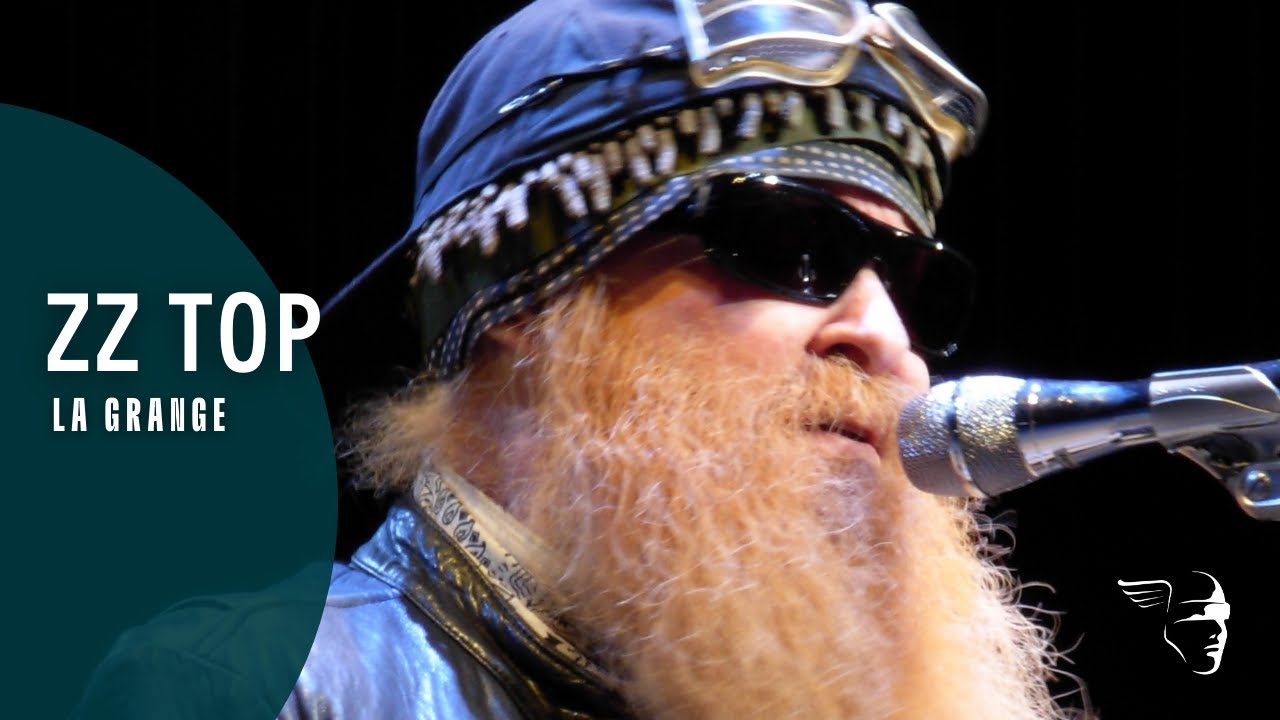
Beard understood how to generate impetus without losing control, whether underpinning the swampy lurch of La Grange, the mechanised stomp of Sharp Dressed Man or the syncopated riffing of Cheap Sunglasses. Even in the band’s most technologically ambitious moments, his playing retained a blues musician’s feel for weight, space and movement.

Over the years, Beard became an increasingly self-contained presence on stage, enclosed behind the ornate, chrome-plated custom kits that perfectly reflect ZZ Top’s mixture of hot-rod excess, futuristic technology and inscrutable absurdity.
While Gibbons and Hill developed their telepathic visual double act out front, Beard appeared locked inside his own private rhythmic world, barely acknowledging the spectacle unfolding around him. The drummer often looked less like an entertainer than a man concentrating on keeping some complicated mechanical process under exact control.
During one Wembley Arena show in 2009, Beard chain-smoked his way through the performance and stalked off stage at the end without even glancing towards the crowd. The emotional insularity that once seemed cool and imperturbable could occasionally harden into something more detached. Yet the pulse beneath ZZ Top has never faltered.
Towards the end of That Little Ol’ Band From Texas, Beard reflected on the group’s extraordinary longevity and his position in the hierarchy with typical understatement and a momentary, almost childlike, innocence.
“I never wanted to quit ZZ Top,” he said. “And I never wanted to get fired.”

