


When Susan Tedeschi and Derek Trucks started dating, one of their favourite things to do was play basketball. Among rock’n’roll’s most uplifting love stories in recent years, the pair met in 1999 on tour with the Allman Brothers. She was the opening act; he’d just become the Allmans’ new guitarist. She was 28, he was 20.
Quickly realising how much they had in common besides music, they played one-on-one together. They bonded over sports, as well as bluesy deep cuts and their similarly musical childhoods. Trucks’ father looked on in surprise.
“His dad was all: ‘I didn’t even know girls knew what a baseline was!’” singer/ guitarist Tedeschi says, laughing. “I’m like: ‘Shut up, Pop! There are great female basketball players! They can dunk on these boys!’ So it was really cute. But, you know, we enjoy a lot of things in life – we’re not afraid to get outside of our one world of music."
Twenty-seven years, solo records, a couple of Grammys, six Tedeschi Trucks Band studio albums and hundreds of concerts later, this is still very much how they operate. They go on deep-sea fishing trips in their 70-foot Hatteras (which they christened Son House). They play in a fantasy football league together. They’re season-ticket holders for local NFL team, the Jacksonville Jaguars.

That sense of living – really living – comes out in their music. You can taste the humid warmth of their rural Florida home. Close your eyes and you might picture the swamp that stretches out from behind their home studio, Spanish mosses overhead, the couple and their bandmates writing songs or cooking outside. In the past they’ve recorded cricket sounds for use on tracks.
When we speak to the TTB’s founding pair (on separate calls) in anticipation of their incisive yet lush sixth album Future Soul, they’re gearing up to have the band over for rehearsals – muso adult sleepovers of sorts, with heaps of gorgeous old instruments, and their two drummers (“they usually stay up the latest,” Trucks says with a grin) crashing out in the studio. The deep respect for everyone’s abilities is clear, as is the pleasure taken in each other’s company. On the road, when time allows, they go to small gigs and jazz clubs together after their own shows.
“I’ve been in groups where, when the show’s over, everyone scatters,” Trucks says with a chuckle. “And I think you can sense that on stage too; I feel like you can tell when people want to be there or not.”
In a Trump Mk II-era and despairingly war-beset world, the backdrop for that communion has changed. While 2022’s quadruple epic I Am The Moon offered enveloping storytelling to lockdown listeners (the band grieving for bandmate Kofi Burbridge, who died in 2019), Future Soul is planted in the present.
Recorded with producer and Dr Dre protege Mike Elizondo and written by the band’s ‘core’ players, it taps into contemporary fears and subtle feelings via concise fusions of blues, roots and soul, with heavier rock moments for extra bite.

“We know there’s a lot of devils out there right now,” Tedeschi refers to the less-coy tones of Devil Be Gone. “A lot of these male rulers that we need to get under control. And it’s not just in one country, they’re pretty well spread out.”
Even so, as ever their music comes with a transportive quality. An effortlessness, a stirring lightness, in spite of the myriad ingredients, that makes these songs seem to float.
“It is a little more playful, a little more upbeat [than I Am The Moon],” Tedeschi says, “hinting at some of the problems in the world without addressing them fully – a little ambiguous. But, you know, we’re all dealing with things we’ve never had to deal with.”
“Everyone has the right to be furious right now,” Trucks says, unhesitatingly. “And if that’s what’s coming out in your music, I celebrate that too. One of my good friends, Sturgill Simpson, is just putting out a new record, and he wrote a letter about what his band’s mission is, and it’s kind of that line of, like: ‘Of course we’re furious, we’re just choosing to dance and play through it!’ I feel pretty aligned with his headspace on that.”
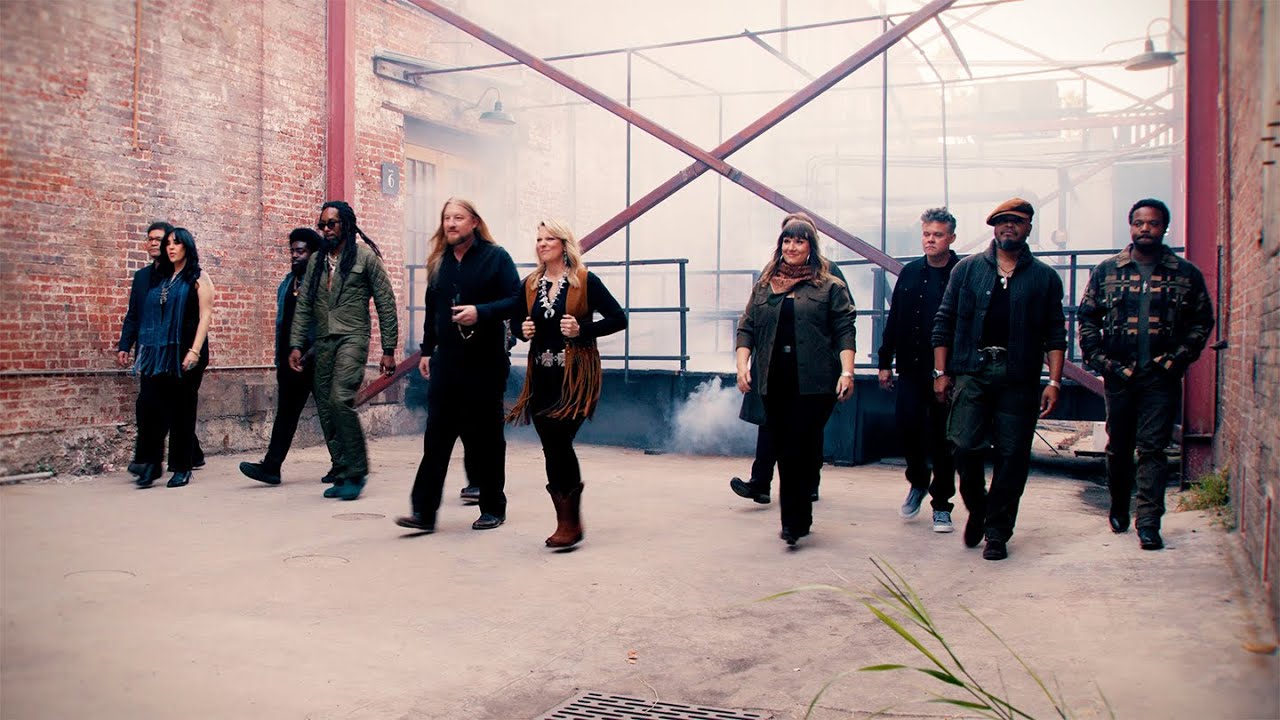
As a child, Susan Tedeschi dreamt of sailing from gig to gig in a huge sailboat. That lust for adventure, and open water, never left her. Today she surfs on Jacksonville’s coastline. She’s a keen environmentalist with an interest in marine biology. On a recent angling trip in Panama, she caught 20 sailfish in a week (“one day I caught nine, it was insane!”).
Their home studio, Swamp Raga, backs out onto marshes and assorted local wildlife. “We have an alligator up on the bank,” she says, casually panning her camera out through doors onto the grass. “I don’t know if she’s there right now.”
Sitting in the studio, Tedeschi crackles with a warm, slightly chaotic energy. Ask what she’d still like to do in life, and she chatters through an enormous list: marine science projects, underwater exploration, a country record, a blues record, a gospel record…
“These are things I’ve wanted to do for years, but I’ve just never been able to focus. I’m kind of scatterbrained. I’ll be doing one thing and then all of a sudden I’m doing something else.”
A lifelong overachiever and a straight-A student from Massachusetts, Tedeschi first went on stage at the age of four. She starred in musical theatre productions and ingested rock flavours of the 80s and 90s. Aerosmith were customers in her parents’ video store. Her first gig was that band’s Get A Grip tour when she was 13, with tickets from guitarist Brad Whitford. She had two life dreams: to have kids, and to play music for a living. Confidence was never an issue.

“I’m very outgoing,” she says. “I’m very social. If anything, the one time I will freeze up is in a studio. I like to have an audience. I don’t like to just be in a box and sing to nobody. I want to sing to somebody. I want to feel a human connection with somebody.”
That was something Mike Elizondo, Future Soul’s producer, understood very well. Trucks first met him 20 years ago in LA, where he was making a record with Eric Clapton and JJ Cale. One night at local joint The Largo, Trucks watched guitarist Doyle Bramhall play a set, noticing Elizondo whip up a storm on bass. In Swamp Raga, Elizondo’s session-pro background and diverse production CV (from hip-hop legends to Mastodon, Linkin Park, Carrie Underwood and beyond) drew TTB’s eclectic talent pool together.
You’ll hear that across these songs: vocalist/core TTB writer Mike Mattison’s I Got You is all honeyed soul melody; Hero, originally dreamed up by drummer Tyler ‘Falcon’ Greenwell, is a moody, grungy rocker, with Tedeschi’s voice at its most thrillingly raw and expansive; Under The Knife channels swampy, Little Feat-esque funk.
“I feel like I’m always the weakest link,” Tedeschi says, insecurity coming into her voice, “I’m kind of in my head sometimes. I get nervous when we’re making a record because it’s so final, whereas I love playing live because it’s so free. But [in the studio] I’m learning to have more fun with it, and I was able to do that more with Mike.”

At one point this involved channelling a romantic dream into the balladic evening glow of Who Am I. In TTB keyboard player Gabe Dixon’s hands, the song was chiefly about Tedeschi and her husband. Tedeschi’s mind, however, was on someone else.
“I had this dream that I was on a date with Bob Dylan!” she enthuses. “It was the 1960s, we were walking through this old music shop, and there were guitars and banjos, and outside there were candles and people drinking wine, and poets and all this stuff… Gabe took it, like, thinking about me and Derek, but [she finishes with a sassy look] I was thinking the whole time about me and Bob Dylan!”
That said, Dylan fantasies notwithstanding, she’s clear on who their true leader is: they all are.
“We have very easily defaulted to the fact that Derek is really our musical director. He is great at communicating with all of us, we all know he has great ideas. So it’s easy to say he’s the main boss. He says that I am too,” she says, smiling. “He’s so sweet, he definitely gives me the opportunity to have my voice heard.
“But we’re all watching him. He’s just very subtle. He raises an eyebrow, and the horns are like: ‘Oh shit, better come in.’ It might not look like it, but he’s definitely a conductor.”
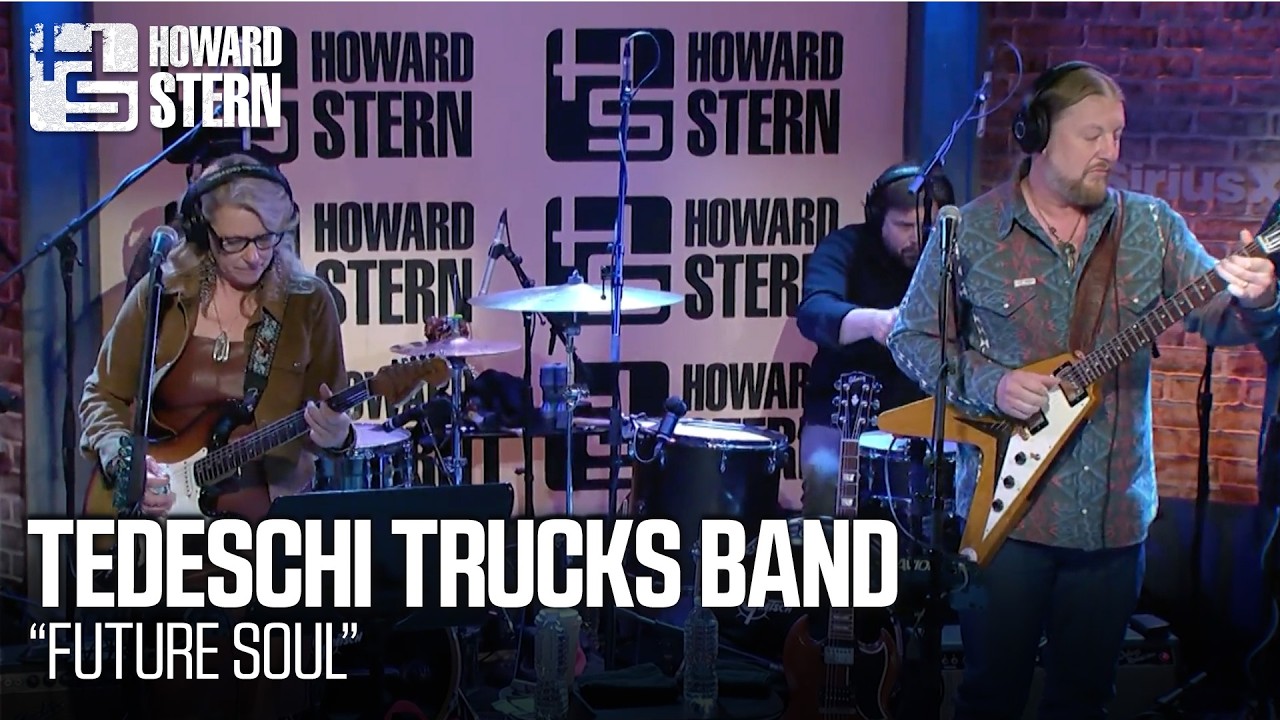
Derek Trucks is in a good mood. His bandmates will soon be at the house for rehearsals. At least as excitingly, his and Susan’s eldest child Charlie (named after jazz legends Charlie Parker and Charlie Christian) is expecting their first grandchild
“Pretty wild, right?!” he says, grinning, his small eyes widening for a second. “We’re really excited about it. And it’s a little boy. He’s due the day before my birthday, too. So that’s fun. God willing, we’re gonna be little buddies.”
Polite and thoughtful in conversation – his voice a gentle Deep South drawl – Trucks laughs easily but has a quiet seriousness. It’s easy to imagine him shooting hoops with his grandsonto-be, dispensing wisdom in subtle moments.
‘Subtle’ is the key word here. Where Tedeschi is a born frontwoman, Trucks inhabits his instrument closely. On stage, he doesn’t speak. Instead, through single notes, he conveys rich, nuanced worlds of feeling. His solos – sometimes planned, often improvised – can feel like a kind of spiritual experience. The presence of his uncle, Allman Brothers drummer Butch Trucks, who died by suicide in 2017, hangs silently in the background.
“There’s at least three or four [tracks on Future Soul] oul] that were just live on the floor. And then sometimes you’ll leave a space for the solo, and come back and take a few cracks at it. You’re somewhat imagining what you’re going to play, maybe thinking through it,” he chuckles warmly. “But usually you just hit the floor and roll tape and see – see where the bodies fall!”
Stage fright was once a problem for Trucks, even as playing guitar came so readily to him from childhood. At his earliest gigs, aged nine, he was so nervous he’d only look at the drummer, the one person in the band he really knew. Gradually, it grew easier. He turned heads with his instinctive, fluid playing, informed at least as much by jazz as by the southern rock in his genes. His father, a roofer, kept him grounded, on one occasion telling him off for walking too “cocky”.

By the age of “fifteen or sixteen” Trucks was doing all his schooling on the road. He took his SATs in a high school in Asheville, North Carolina, having played a local bar the previous night. His mother (who worked in an elementary school) was anxious that he make the grades for university. Trucks was a decent student, so he did.
“I mean, I wasn’t going!” he says, laughing. “But at least jumped through those hoops and made her feel like she wasn’t raising a total fool. I mean, we were touring and we had a full career, but at that point I was still living on my parents’ couch and driving down the road in a van, doing that thing. So she wanted to make sure I had something to fall back on, roofing in Jacksonville Florida!”
At 21, newly married and juggling Allmans gigs with his solo band, he became a father for the first time. With happy memories of the Trucks elders visiting his parents’ house from Alabama, he greeted parenthood enthusiastically.
“I was young, so I didn’t have time to really think about it,” he reflects now. “We just kind of jumped in. But I was super-excited for it. Growing up, our family was always so close that it just felt like that it would be an extension of that.”
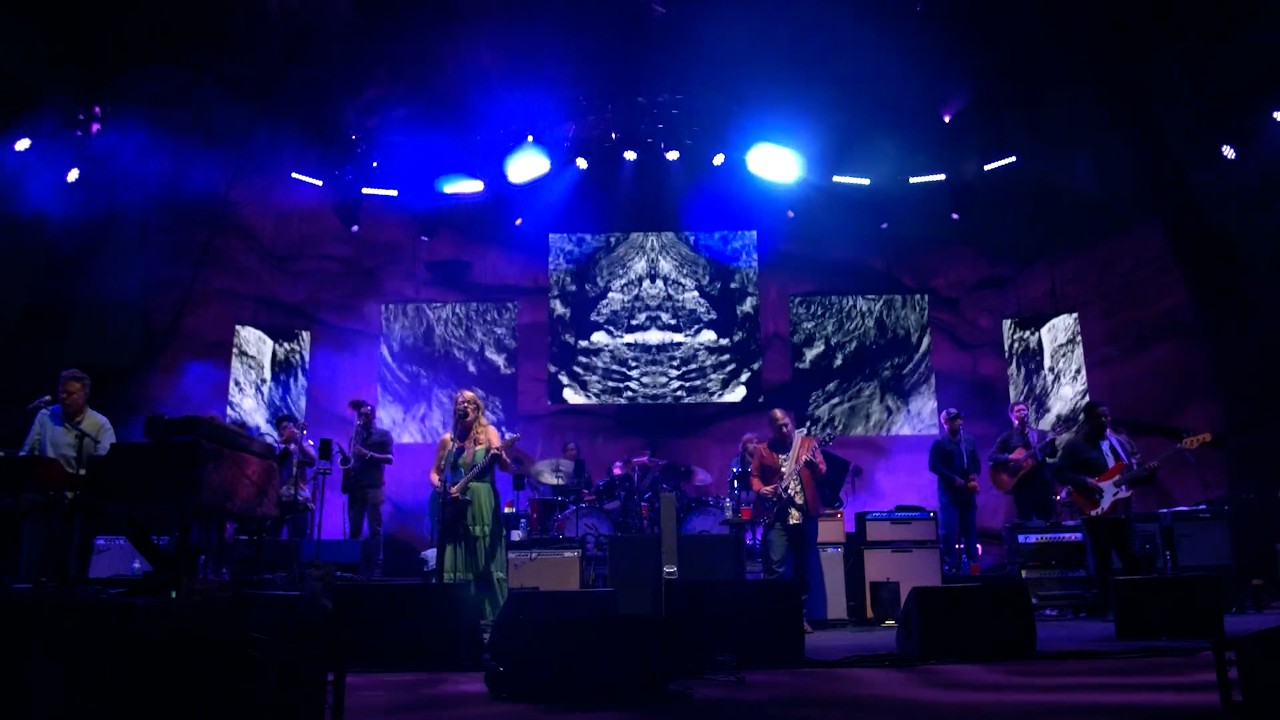
The Tedeschi Trucks Band will spend most of 2026 touring the US, opening for the Eagles on the way. As is the case for most artists, tours pay their bills (“I mean, it’s ninety-nine point nine per cent of the income for our band,” Trucks says). Since he was 10 years old, the pandemic aside, there hasn’t been a year when he’s not been on the road. For Tedeschi it’s a similar story. Those miles come out in their shows’ transcendent high points.
“We’re lifers,” he says. “I can’t think of a show where there hasn’t been those moments at least once or twice where you really tap into the thing. This band doesn’t phone it in, it’s not in our DNA.”
Susan and Derek have led intense lives. Starting young, marrying in a whirlwind of solo success, having children, forming a 12-piece band. Today they wrangle expanding costs, and worry about ageing parents and the future of the world.
“People don’t prepare you for getting older; not only for yourself, but for your parents,” Tedeschi notes. “So you really start to learn. You’ve got to prioritise. And life just comes at you fast.”

In Future Soul, and in all their records, there’s a sense of facing that. Not just sitting in a room working out chord progressions, but getting outside, finding our common ground, making their audiences feel good without pretending the bad things aren’t there. Tapping into life’s emotional grey areas. Experiences that make us. Trucks recalls an exchange with their friend Carlos Santana, which crystallised all this.
“He’s a trip, he always stays in touch, he’s always sending you music,” he says fondly, as one might refer to a kind, slightly mad uncle. “He was talking about certain musicians, saying: ‘It sounds like they never get out and take a walk… They need to go sit on the edge of a mountain and just, like, watch the birds! That’s why when I hear you guys play it’s so refreshing – you can tell you’ll actually get out there and live!’
“But I think it’s extremely important,” Trucks says. “If you’re just going to be telling people’s stories, it’s got to come from a place of…”
One of the best guitarists in the world considers this. For a moment, you can picture him with Susan on the boat they call Son House, reeling in their latest catch, returning to the studio, the stage, a jazz club with their bandmates. This summer he’ll turn 47 and become a grandfather.
“The real stuff feels real because you’ve lived it, you know?”
Future Soul is out now via Fantasy Records.

