


"Working on the plot and the prime / Preaching violence / Up from the slums and the factory grime / Running the streets biding our time / The bog wall shines anti-government signs / Go let your Molotov off! God loves you!" - Preaching Violence by Third World War.
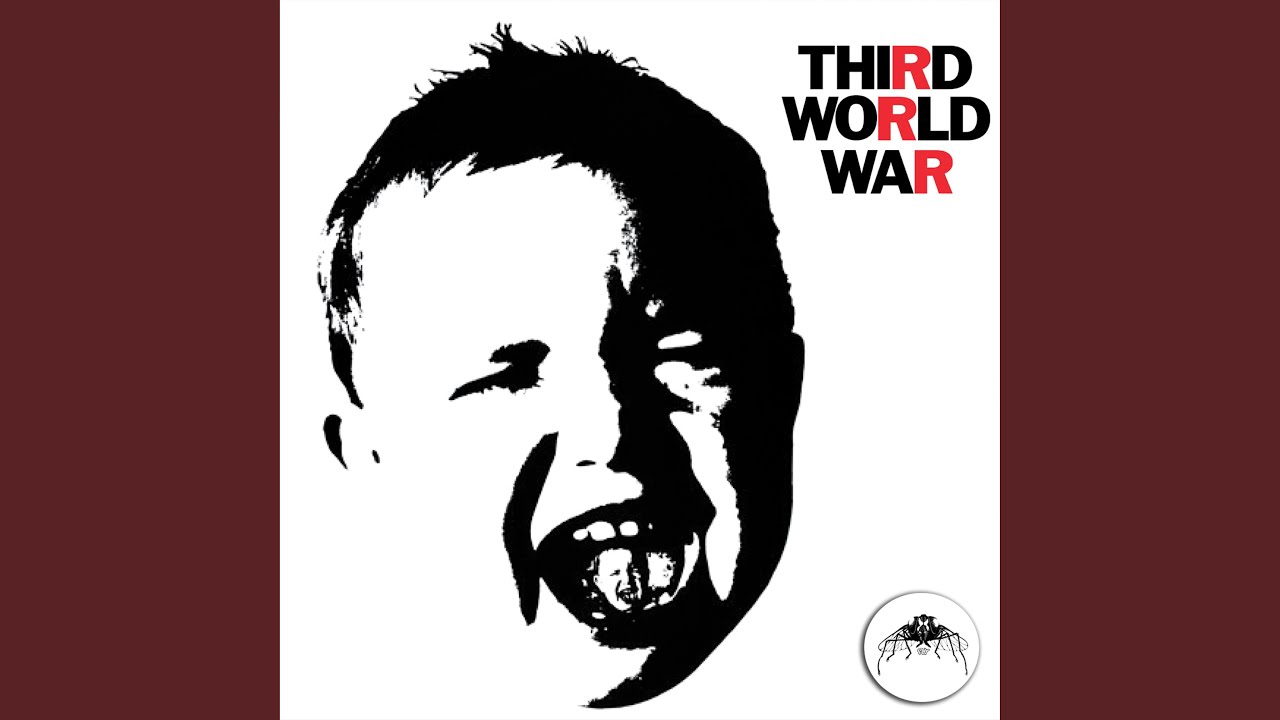
No, the above is not the bug-eyed ranting of some Mohawk-topped anarcho-punk outfit. It’s a verse picked more or less at random from a track on Third World War, an album released in 1971 by the London-based rock band of the same name. Other no-nonsense titles on the album include Working Class Man and Shepherd’s Bush Cowboy.

Musically, Third World War’s blues-based hard rock is saved from over-familiarity by tunesmith and bassist Jim Avery’s canny knack with riff and hook, and – at the opposite end of the melodic spectrum – Terry Stamp’s bellicose vocals and vicious guitar. Head-on, and without flinching, Stamp’s lyrics tackle political violence, working-class working life and booze-fuelled nights of casual sex and mindless aggro.
At the start of the 1970s, no one else was offering dirty realism quite as dirty as this, or projecting the same level of social menace. Listening to the Third World War album even 35 years later, your jaw hits the floor in shock and awe after the first verse and stays there till the last bellow dies away.
The band started as a concept. According to manager John Fenton, the Third World War was a covert Establishment offensive against education, rights and the quality of life for the poor and working class. “All that love and peace nonsense was still going on,” he says. “It was time to stop putting flowers down the barrels of guns, and make a real protest.” The band was his way of turning the gun barrels around.

Fenton knew Stamp and Avery, seasoned live musicians and aspiring songwriters who were also West London working-class boys. He introduced them, signed them up and put them on a retainer, enabling Stamp to give up his job driving trucks. The duo clicked instantly, and began churning out provocative material at a prolific rate.
Whether any one of the three really meant it (maaan) is open to debate. Fenton says they were “telling it like it was” – but he was a successful music business hustler with a track record of canny predictions and imaginative hypes. Avery is sincere when he claims “rock’n’roll should be music from the streets for people from the streets”, but, like Fenton, he’s also keen for Third World War to claim a belated place among the Godfathers of Punk.
Stamp refuses to play along. “I didn’t care what I was writing about,” he shrugs. “It was really about pleasing Fenton to get that cheque.” But he too has an agenda: he’d rather direct attention toward his more recent music than rehash the past.
Third World War HQ was Fenton’s flat – where Avery had been given a room – in Brompton Road, Knightsbridge, within a grenade’s throw of Harrods. In contrast, Third World War photos were shot in grainy black-and-white against brick walls, the rest of the band taking their sartorial cue from Stamp’s greasy trucker anti-image of shortish hair, straight-leg jeans, boots, and leather or denim jackets.
The basic tracks for the album were recorded over two weeks in Basing Street studio in September 1970, neophyte producer Fenton winging it with the help of young house engineer Phill Brown. It was deliberately rough stuff: recorded live, with the bum notes left in and the bleeding not confined to Stamp’s fingers. The core line-up was completed by drummer Fred Smith and affable Australian guitarist Mick Liber, who wailed away through a Leslie speaker cabinet.
Fenton charmed in guests from the Speakeasy, including Tony Ashton on rollicking piano, and in-demand horn section Bobby Keys and Jim Price. Fenton came close to getting totally carried away. “He wanted to put a low frequency – 7 cycles – at the end of the album,” Phill Brown laughs. “To destroy the stylus or make people shit themselves.”
Having paid for the recording, Fenton was able to arrange a small advance from the quasi-independent Fly Records. He then orchestrated a steady drip of publicity for Third World War via the underground press and even The Guardian, ensuring a buzz was building for the record’s release…
So why haven’t you heard of Third World War?

In his Melody Maker review of Third World War supporting Mountain at the Lyceum in May 1971, Roy Hollingsworth wrote: ‘Third World War are being hyped right, left and centre… They are the worst band I have ever heard perform, ever… At one point I felt like soaking myself in vodka, setting myself alight and flinging my body from a balcony in protest.’
The loss of Liber (poached) and Smith (defected) halted the band’s early live momentum. During March and April ’71, though, Stamp and Avery brought in ex-Nashville Teens and Renaissance pianist John Hawken, ex-US Marine ‘Funky’ Paul Olsen on drums, and – with just a week or so to spare before the Mountain support – a blistering young blues guitarist named John Knightsbridge.
Despite the band’s lack of rehearsal time and poor sound, the Lyceum crowd reacted warmly to Third World War’s raw aggression. But Roy Hollingworth was clearly hunting for bear.
Fenton reacted in two ways. To hone the band’s chops he set up a summer tour of Finland: 35 dates (plus one TV appearance) in just 30 days. Before that, though, he had the histrionic Melody Maker review blown up and fly-postered all over London.
It was at once a brilliant promotional wheeze and a measure of his frustration. The album had already been out for more than a month, and Fenton might reasonably have expected the right-wing media to respond with the kind of apoplectic editorials the Sex Pistols would inspire just over five years later. Instead they did the journalistic equivalent of coughing and looking the other way.
Less surprisingly, the BBC didn’t play the single, Ascension Day. But they didn’t ban it, either, which of course Fenton had hoped they would do.
Subverting the Melody Maker review was Fenton’s one opportunity to prove there is no such thing as bad publicity. Yet while it boosted Third World War’s hip quotient around the capital, it also shot the band in the foot.
The music press’s revenge was to join the chorus of silence. Which left Third World War with the underground press, tail-end hippies and bolshy students. Their UK gig schedule included the Oz magazine obscenity trial benefit, a Time Out anniversary party, a Young Socialists’ Ball, a sit-in at North London Poly, and a benefit for a couple of members of the Angry Brigade. With the promotional help of young radical Gilles Yéprémian, the band also benefited from the revolutionary mood in France, resulting in several return trips to Paris and its environs.
The UK underground gigs seldom went off smoothly. “It was a good band to riot to,” laughs John Hawken. “If you weren’t pissed off when you came, you were certainly pissed off after a couple of songs.” And if the band themselves didn’t cause trouble, their over-zealous road crew did.
Despite their material, Third World War had little affinity with their core audience. “There were no Commies or revolutionaries in the group,” says John Knightsbridge, “just musicians trying to make a living.” Which raises the key issue: “It wasn’t really a commercial proposition,” says Hawken. “The type of people the band attracted had no money. And you just can’t keep doing those cheapo gigs forever.”

Aware of this, Fenton got busy while the band were away on the gruelling Finnish tour. He lined up professional booking agency, March Artists, and a run of UK shows including gigs at the Marquee and the Roundhouse. For these, the exuberant but exhausted Olsen was replaced by new Aussie drummer Craig Collinge.
Having already found French and German labels (EMI and Polydor respectively), Fenton headed for New York for talks with a US record company (CBS were definitely in the frame for a while) and – he claims – to finalise a US tour supporting The Allman Brothers. Stamp and Avery had already written a second album, and plans were made to record it upon Fenton’s return. It looked as though it still might happen for Third World War after all.
The first part of Fenton’s US campaign came to grief when he played hardball over percentages. The second when Duane Allman drove his motorcycle into a truck.
In December 1971, sessions for Third World War 2 commenced anyway at Olympic studios in Barnes, south-west London. The road-tested new material was laid down quickly, and more cleanly than previously, with the now seasoned live band.
And then the money finally ran out. Fenton had been winging it for months, borrowing, deferring, making and breaking promises to the band. The only way he could continue was by raising a second advance from Fly.
The album had just seven tracks, with titles like Yobo, I’d Rather Cut Cane For Castro and Hammersmith Guerrilla. Terry Stamp’s black humour was more to the fore, especially on the psychopathic Hell’s Angel lament Coshing Old Lady Blues. But Fly didn’t get the joke, and refused to release the record.

Fenton had made one serious error in judgement. Come hard times, people would rather party than revolt. During 1971, T. Rex’s escapist high-camp boogie had given Fly Records two No.1s and two No.2 UK hit singles. Dirty realism was now an unwelcome gatecrasher at the decadent glam ball.
With Fenton no longer able to pay wages, the band started to fall apart. Hawken left, and then, with a family to support, Stamp went back to driving trucks. Fenton kept on searching for another outlet. A few continental gigs took place with Knightsbridge singing (a desperate move, both he and Fenton now concede) before the band was put on hold.
It wasn’t until April 1973 that Third World War 2 finally got a release, on The Who’s label, Track – and then only following the personal intervention of Pete Townshend. Working the media, Fenton successfully spun the yearlong delay in its release into a mass conspiracy to silence Third World War. Reviews were numerous, and mostly highly positive.
It appeared that Third World War’s hour had come at last… when there was no band.
In May, Fenton made a last attempt to rally the troops. Disillusioned, Jim Avery ignored the call-up. Terry Stamp agreed to play, but cynically insisted on payment upfront. John Knightsbridge, already on board, brought in a pick-up rhythm section. After just a couple of low-key shows, though, it was clear the spirit had gone.
Without ceremony, announcement or, indeed, anyone noticing, Third World War finally split.

As accomplished gigging and/or session musicians, it was the hired hands who found it easiest to adjust to life after Third World War. The band’s originators enjoyed rather more mixed fortunes: Fenton had a nervous breakdown; Avery battled the bottle; Stamp, although he recorded solo album, Fatsticks, for A&M in 1975, was never able to give up the day job again. “Terry and Jim only realised how much they’d blown it when punk happened,” says Fenton. But that was true for all of them. There have been Third World War reissues, but nothing that has succeeded in fully establishing their influence.
Fenton returned to the music business, and Stamp and Avery still play, write and record. In the late 90s, Avery, by then in recovery, started collaborating with Stamp again, mailing song ideas to him in Los Angeles, his home since the late 70s. Wary of the music business, the duo release and promote CDs via their own label and website. If anything, their writing has continued to improve. The songs are more obviously melodic these days, and lyrically more varied, but no less edgy.
In 2004, long-time fan Alistair Murphy set up official the Third World War website stardomroad.com and persuaded Stamp to agree to a more polished mainstream CD release of his and Avery’s recent material. Produced by Murphy and issued on Burning Shed, Bootlace Johnny And the 99s was received warmly – not least by Classic Rock’s Peter Makowski, who in his review awarded it eight out of 10. Follow-up Howling For The Highway Home is due this month.
A buzz is building. Marc Almond has recorded a cover version Third World War’s Stardom Road for his new album. Coldcut’s Jonathan More recently raved about Stamp’s Fatsticks in The Guardian.
The Bootlace Johnny track Tender Guillotine reveals Stamp to be more sentimental about Third World War than he tends to admit. Telling the story of the band with ill-disguised affection, it closes with the lines: ‘We kicked their arseholes then/And we’ll kick their arseholes now.’
If you never give up, you always have the right to remain defiant.
Jim Avery died in 2022. This feature originally appeared in Classic Rock 103, published in March 2007.
The influence of Third World War
Third World War’s Working Class Man was written well before John Lennon recorded his Working Class Hero, and the Lennon song’s key line ‘Keep you doped with religion and sex and TV…’ is Fenton’s Third World War concept in a nutshell. The refrain of Third World War’s Ascension Day – ‘Power to the people/When we rise’ brings to mind another, later, Lennon song.
The Who monitored Third World War’s progress from the start. Won’t Get Fooled Again, recorded in March 1971, was a song ‘against the revolution’, and could be seen as an answer song to Ascension Day and Preaching Violence.
When Third World War’s Fly Records labelmate Marc Bolan moved T. Rex to EMI in 1972, he recorded Children Of The Revolution. This would also seem to be an answer song to Preaching Violence. Why else would it use such a similar riff?
In 1973, would The Faces have recorded Borstal Boys (with its references to Molotov cocktails and sawn-off shotguns), or Elton John Saturday Night’s Alright For Fighting, if Third World War hadn’t gone further sooner with Shepherd’s Bush Cowboy and Urban Rock? The Hammersmith Gorillas were named after the Third World War 2 track Hammersmith Guerrilla.
Third World War’s MI5’s Alive began ‘bawling down the Royalty’ five years before The Sex Pistols’ God Save The Queen. In January 1977, John Lydon sat next to John Fenton in the Oxhoft club, Amsterdam, and recited Ascension Day to him word for word.
The punk band closest in spirit to Third World War was The Clash. Riot warnings? Been there, done that. Also in January 1977, Joe Strummer shook Jim Avery’s hand in the Speakeasy club and congratulated him for being part of the only outfit doing it in the early 70s “when everything else was dead”.
Finally, late producer Steve Albini considered the band's two albums among the best ever made, and referenced Third World War in his infamous column The Problem With Music.
