





“I thought Pam was great,” Joan Armatrading says of her early lyric-writing partner, Pam Nestor. “She was totally different from me. Pam did all the things that I didn’t do [laughs].”
Armatrading is going back in time with Classic Rock to revisit the record that put the singer-songwriter in the public eye: Whatever’s For Us. Released in November 1972 on the brand-new Cube Records imprint and produced by Gus Dudgeon, it demonstrated the 21-year-old’s flair for adding sophisticated, soul-laden melodies to Nestor’s lyrics. Then there was that voice, and that musicianship on guitar and piano.
Armatrading was born in 1950 in St Kitts in the West Indies, to parents Beryl and Amos, who left there for the UK in 1953 for better work opportunities in Birmingham, taking her eldest two brothers with them. Joan stayed behind with her grandma in Antigua until age seven, when she joined her parents and brothers in the UK in white working-class suburbia. Armatrading found the place friendly – “People would say hello to you in the street” – but new brothers and sisters came along and her family felt a little like strangers to her.
“I was on my own a lot… I was an observer,” she told biographer Sean Mayes in 1990. “I didn’t get too involved in the family… It took me a while to get used to people.”
At school Armatrading had friends but “wasn’t so interested in being in a bunch of people all the time”. Her observational eye was developing. “I watched my friends as they played… and if people were watching a fight [in the playground] I’d stand and watch the people who were watching.”
She showed an aptitude for playing the recorder and singing. At home she listened to artists her parents liked, including Jim Reeves and Nat King Cole. As the oldest daughter, she was often leaned on to help with household chores and caring for younger siblings. When she got time to herself she adored witty radio shows such as Round The Horne and the surreal The Goons, and would write jokes, little stories and limericks.

Her mother told her that her bus-driver dad played guitar in a band. “I never saw that,” she says, “but he did have a guitar, and would play Blue Moon.” Joan took an interest in the instrument but wasn’t allowed near it. “He’d hide it from me in a place we called ‘the safe’, a big room at the side of the house with a really heavy bankvault door. I was too small and weak to open it,” she told Julie Etchingham in 2025.
A three-pound guitar in a local pawn shop caught her eye, and she asked her mother if she could have it. “She didn’t have the money, but asked if they’d swap it for two old prams.” A deal was done. “That guitar was really hard to play, the action was ridiculously high,” Armatrading says, laughing. Her dad wouldn’t show her how to play it – “That made me more determined to learn” – but he showed her how to tune it. “A very important element, he did me a big favour there.”
When Armatrading was 14, the family moved house and gained more space, including a posh reception room. Her mum requested a piano as a “nice piece of furniture”.
“As soon as that arrived I started to write songs,” Joan says. “I was self-taught, and wherever you put your hands [on it] it made a nice noise. I didn’t struggle to find a tune. I learned how to write lyrics, too. It came very easily.”
Her parents didn’t seem that aware of their daughter’s musical ability or drive to make something of it. Her relationship with her dad was tense, for no main reason she could discern, even though their musicality could have bonded them.
Armatrading left school without having achieved the secretarial qualifications she’d hoped for and took a job operating an adding machine, her pay boosting the family coffers. She took her guitar to work to play at break time, but this was frowned upon by one of the bosses, who threatened her with the sack. She quit her job – and never went to work again. “I just played the guitar and wrote.”

Her elder brother had noticed her talent, and booked his 16-year-old sister to perform at a show he was promoting at Birmingham University. “He told me: ‘You’ll have to play something that people know.’ I was nervous – because I always am nervous – and I did The Sound Of Silence. The rest was my own songs, that was what I was more interested in playing. That was the only time I played other people’s songs in public.”
Some club dates in Birmingham carried on through 1966 and ’67. She formed a duo with her school friend Scott and played mostly covers for a year before the charm wore off.
One day Armatrading encountered a friend who was on his way to an audition. He asked her to go along with him, and she arrived at a theatre hall where many young hopefuls were gathered. “Another friend said: ‘As you’re here, why don’t you audition?’” she recalls. “I didn’t even know what it was for – but I got the job and they didn’t.”
The job was as a member of the touring production of Hair – The Tribal Rock Musical, which in the newly permissive autumn of 1968 had got society a bit hot and bothered with its positions on sex, drugs, interracial relationships and war. At one point cast members briefly appeared completely naked as they chanted “beads, flowers, freedom and happiness”. Hair had been a smash hit in New York, but some disgusted theatre goers had walked out of the show in London’s West End.
Armatrading looked cool with her guitar, short hair and tomboyish clothes. Her audition landed her a role as one of The Tribe, on £30 a week. She was given her own song, What A Piece Of Work Is A Man, based on Hamlet, and would also appear as one of a blonde-wigged trio of ‘Supremes’. “Let me just add,” she says, laughing, “that I never at any point took my clothes off. There’s not enough money in the world to make me do something like that!”
The cast featured upcoming stars such as Richard O’Brien (who would have his Rocky Horror Show hit a few years later), Paul Nicholas and Floella Benjamin.

The shy, reserved Armatrading also met 19-year-old Guyanese livewire, Pam Nestor. Nestor had arrived in the UK aged 14, with her mother. They lived in Muswell Hill and she was a stunning-looking party girl who’d sung in soul bands from 16, then became a mum herself. She’d written poetry at school and her writing documented the confusion of English life and romantic relationships. Hair chimed with her hippie style, so she temporarily parked her poems and left her two kids at home with their grandma while she “played at being a popstar,” she told Sean Mayes.
Armatrading and Nestor’s off-stage circles didn’t overlap until it came to sharing lodgings. “Joan was very closed,” Nestor said. “If you saw her she was hugging a guitar.” In one of their digs there was a piano in the basement. Nestor would see Armatrading amble down to play it, eventually sitting in to hear her play. “It was good stuff,” Nestor said, “I gave her a poem and – presto! – a song!”
Their songwriting partnership escalated quickly. “I was writing anyway,” says Armatrading, “so when [Pam] asked me to put music to what she’d written it just went from there.”
Nestor noted that if she gave her a lyric, Armatrading would be right back with a melody. “We were partners for three years… We wrote about a hundred and twenty songs.”
As the Hair tour wound up, Armatrading looked for ways to get their songs out. She tapped up her Hair representative, Pearl Mogotsi of the Afro Asian Caribbean Agency, and Noel Gay Artists – home to John Cleese and The Swingle Singers – but with no success.
Armatrading moved to West Hampstead, and she and Nestor formed a six-piece group called Dice who lasted one show. The duo carried on crafting songs into 1971, with Nestor and Armatrading willing the songs to find a publisher. “When I started, my ambition was to have people know my songs and not necessarily know me,” said Armatrading. “I wanted people to know my name but not necessarily to be recognised.”

Armatrading set up a tape recorder in her flat and got four songs down very roughly with just guitar and her voice. Nestor shopped the tape around and landed a deal with Essex Music. But the tape joined thousands languishing in the publishers’ corridor shelving, as no one was managing the catalogue – until, after Paul McCartney accidentally found Mary Hopkin by browsing the library himself, a young man called Mike Noble was assigned to determine the contents of each reel.
Armatrading’s voice and unusual compositional style immediately stood out. Noble took the tape to a producer based on the same floor, Gus Dudgeon. His new company, Tuesday Productions, had been created to nurture new talent, and Armatrading was ideal. One song, All The King’s Gardens, especially caught his ear. Armatrading had seen the street name from a bus window and asked Nestor to write something; coincidentally, this was Dudgeon’s address in West Hampstead.
Armatrading and Nestor were called in for meetings, where Nestor’s forthright character balanced Armatrading’s more withdrawn demeanour. They were yin and yang personally, but a creative partnership similar to one Dudgeon was already working with – Elton John and his lyricist Bernie Taupin. Armatrading was signed to record an album with Dudgeon, via Essex Music publisher David Platz’s brand new Cube Records, where her labelmates would include Joe Cocker and Nazareth.
“They told me to change my name, as nobody’s going to remember ‘Armatrading’,” she says. “They also told me to sing other people’s songs.” But she was resolute in her identity and catalogue. “Neither of those things happened.”
Dudgeon arranged a demo at Marquee Studios, inviting Elton’s drummer Roger Pope and guitarist Caleb Quaye in, with Armatrading’s friend Larry Steele on bass. What a testing of waters; now they could see the strengths and weaknesses of Armatrading’s self-taught musicianship, as odd timings, tunings and meters added difficulty for the ensemble.
Quaye recalled: “I’d been on tour and was very tired. [Joan’s] guitar was unbelievably out of tune, there was no chart, it was just bare bones. I was thinking: ‘Nobody’s saying anything. Is it just me?’ Finally I blew a fuse, threw the headphones off, told her to tune the blankety-blank thing up and stormed out of the studio.”
Many years later, Quaye got a call from Pope, who’d been at a celebration of Gus Dudgeon’s life following his passing in 2002. “He said, ‘Do you remember Joan Armatrading? She was at the party, and said: ‘Tell Caleb thanks, I needed that.'”
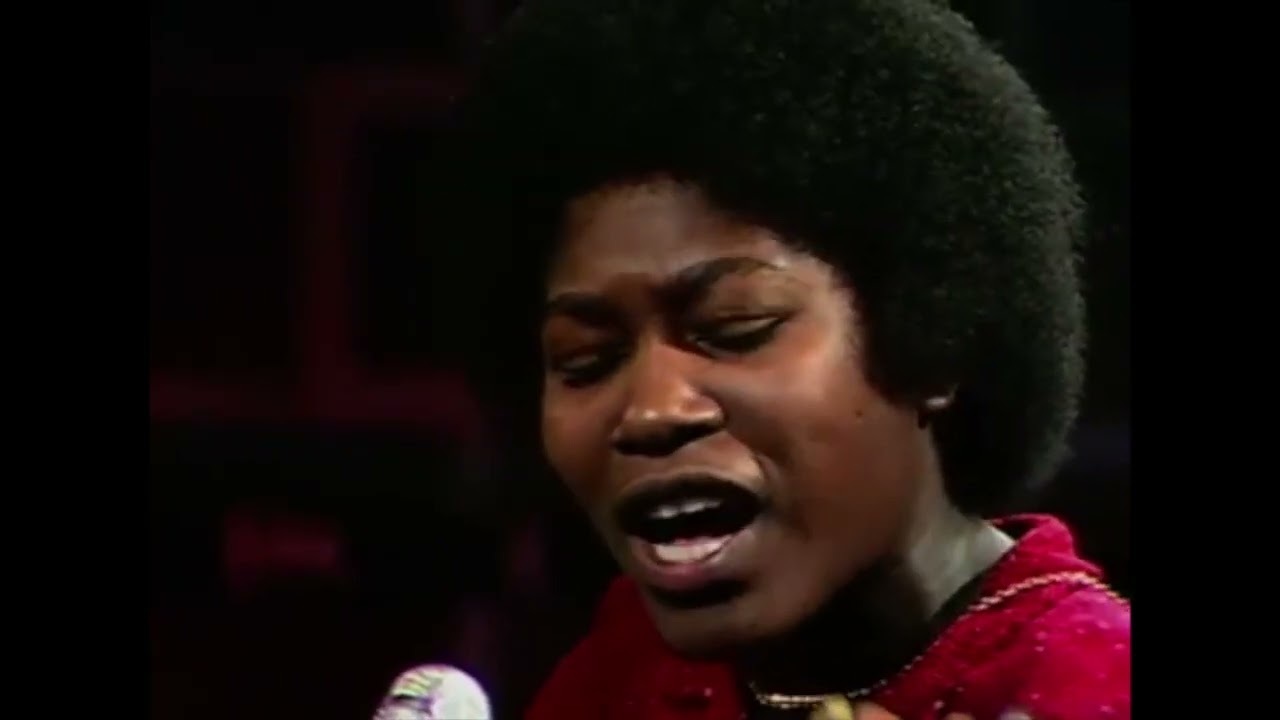
At the beginning of ’72, Dudgeon was off to record Elton John’s next album in France at the 18th-century Chateau d’Herouville country house. He booked a couple of weeks for sessions with Armatrading before starting what would be Elton’s Honky Chateau, and assembled a team that would relate to her music: drummers Gerry Conway and Henry Spinetti, percussionist Ray Cooper, guitarist Davey Johnstone and bassist Steele.
The place was a little run-down, haunted, and there had just been a fire, but the peacefulness of the countryside, the atmosphere of the building and the chemistry of the team were a vast improvement on the Marquee sessions.
“Gus was great, he put people at ease,” says Armatrading. “I knew what I wanted, how the songs should be. He never said to me: ‘I know better’, he just said: ‘I’ll make what you need to happen happen.’”
Guitarist Johnstone had been briefed on what to expect from Armatrading. “I was coming from the world of Ralph McTell and Magna Carta, a more folk-into-pop style,” he explains. “Gus had told me about this guy called Reg, and then this woman called Joan. He said: ‘She’s crazy. She has all these time signatures that are hers alone. Unless you’re concentrating you’ll miss it.’”
Johnstone was laid-back, going with the flow of the musicians he was put with. “I don’t go by what’s on the written page,” he said. “I understand being earthy, and if the song changes, the song changes. Joan was shy, so you had to go a little deeper to find out what’s going on. And she was sweet – so was Pam. What they were doing was quirky, and I was into it.”
Even with Pam Nestor in attendance – and Armatrading’s song City Girl being about Nestor – Armatrading was the focus.
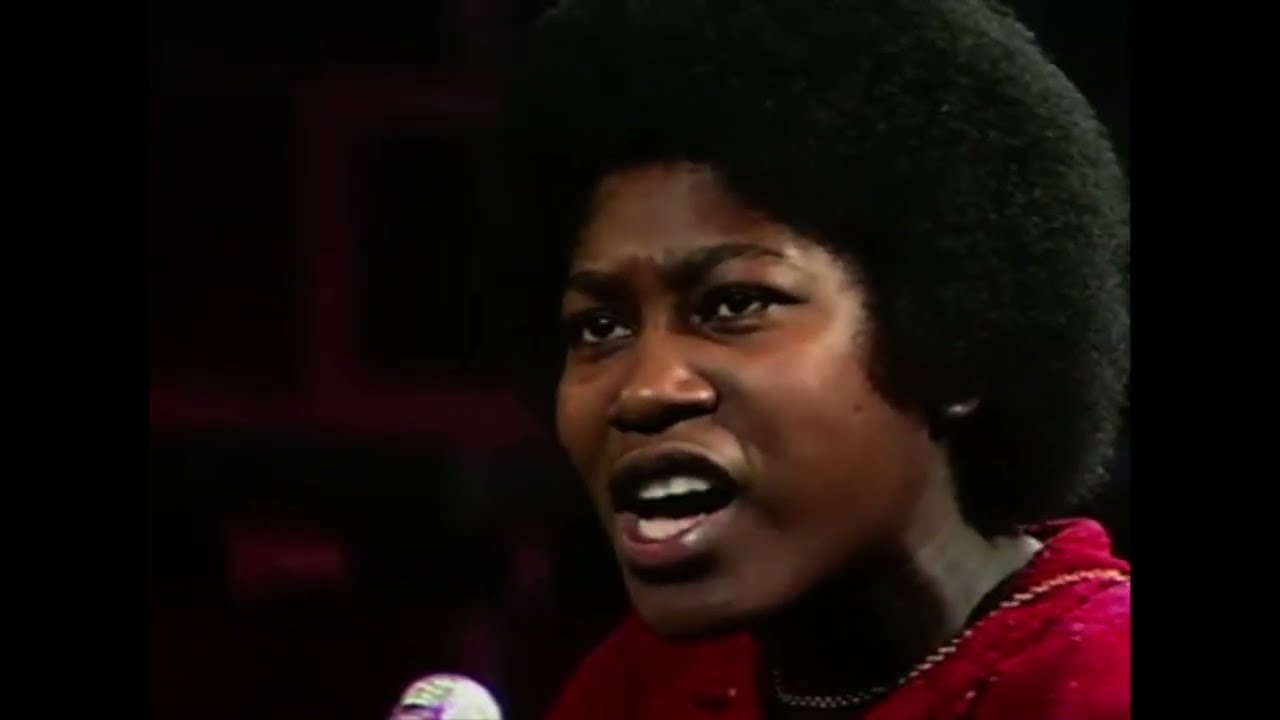
“It was clear it was Joan’s project,” says Johnstone. “Joan was really dialled into Pam’s writing. It was like they were joined at the hip, and you’d never know there was a lyricist as well as a songwriter. We loved what we were playing. It was a challenge, all of it, even the ballads.”
Fourteen tracks went in the can, with touches of folk, jazz, pop and orchestral ballads in the blend. Armatrading won’t be drawn into talk of influences – apart from Led Zeppelin on Child Star, perhaps: “I love them, one of the finest bands ever” – but listeners might hear hints of Joni Mitchell, Nick Drake, and that guy called Reg, who deemed It Could Have Been Better a favourite track of his.
Johnstone was struck by her similarity to Richie Havens. “Here was a person strumming their guitar, quite aggressively even when she was playing quietly, just taking the song where it needed to go.”
With the album titled after one of the tracks, the release of Whatever’s For Us modestly launched what would be a 50-plus-year career for Armatrading, who Paul Gambaccini called “potentially, an important performer” in his Rolling Stone review. In the Sunday Times, Derek Jewell wrote: “This country has produced at last, from the new generation, a black singer of total individuality.” In music weekly Sounds, Penny Valentine described the album as “brilliant, crushing… the kind of collection that you may have despaired of ever hearing from anyone in England”.
“I knew I was good,” says Armatrading. “But if you looked at myself and Pam in the picture on the back of the LP, you’d think Pam would be the one to make it.” The duo’s collaboration ceased. Nestor carried on creatively but with less eyes on her as Armatrading’s star rose (although follow-up album Back To The Night was “one of the most unhappy periods in my career”.)
“Having a record out made such a difference to my life,” Armatrading says. “Not in songwriting terms, because I knew what I was doing. But recording, touring, learning to produce… well, nothing was going to stop me.”

