


In 2014 Prog explored former Cream member Jack Bruce’s third solo album, 1971’s Harmony Row, viewing it from the perspective of a concept album that took him far away from the blues rock he’d prevously been known for.
“I sat at my Blüthner piano and played the thing from top to bottom,” said Jack Bruce, explaining how his third solo album arrived almost fully formed one inspirational afternoon. “The songs just came tumbling out as a complete entity in pretty much the same order as they appear on the album.”
While his 1969 debut Songs For A Tailor had mopped up material originally intended for Cream, with 1971’s Harmony Row he wiped the slate clean and delivered a sequence of songs that took him out of the mainstream.
Several pieces traverse a jazz-rock undertow and utilise unorthodox chords which owed more to classical avant-garde composer Olivier Messiaen than the blues-based rock he helped pioneer, and which he remained associated with.
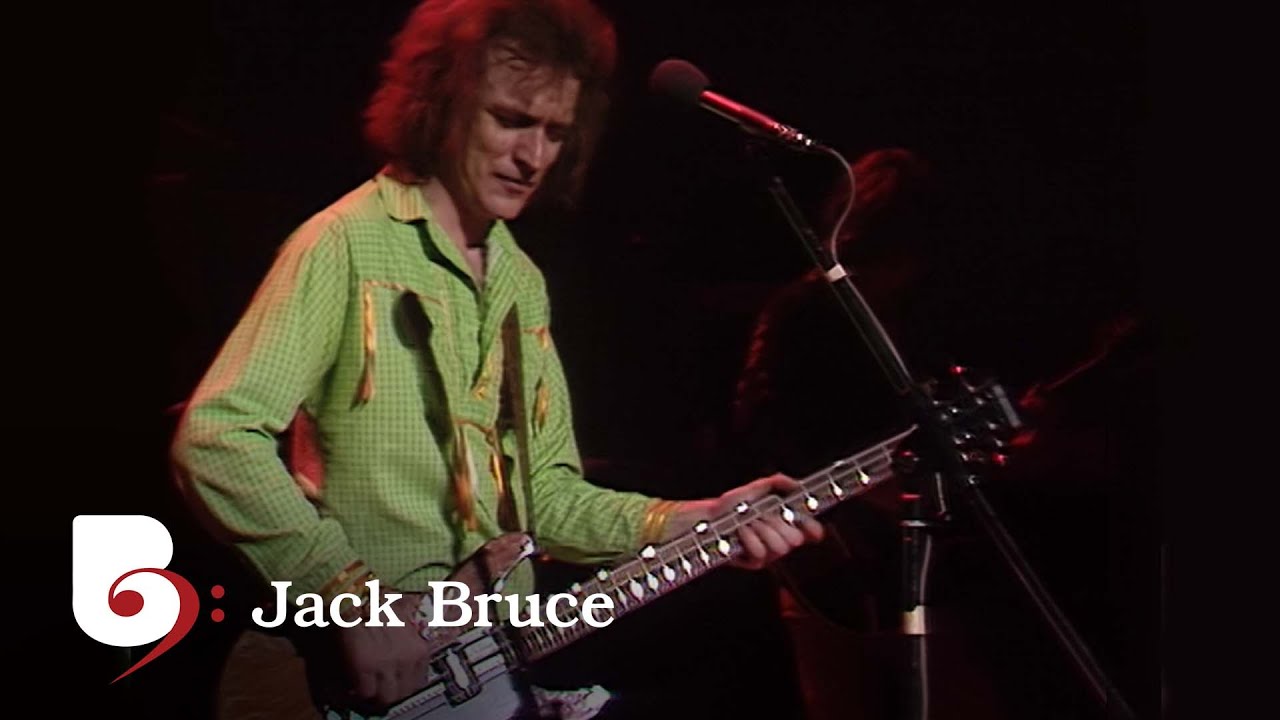
After working with Eric Clapton and Ginger Baker, and what he called their “big” sound, Bruce wanted something more intimate and personal in nature. He co-opted Chris Spedding (guitar) and John Marshall (drums) from British jazz-rock pioneers Nucleus to flesh out these poetic vignettes alongside his own bass, keyboards and vocals.
“Lyricist Pete Brown had this mad idea that the songs were kind of like a big show on ice – not exactly like an operetta, but a kind of concept album in a way,” said Bruce.
Not unlike an interlinking song cycle rooted in his working-class upbringing, the album title references a tenement block in his native Glasgow, describing drifters, early-morning commuters, grinding poverty, yearning love songs and the yawning possibility of death or rebirth at each sunset.
Harmony Row’s cinematic contrasts provide starkly lit close‑ups during the reflective prelude of Can You Follow?, before rushing into the wide-open vistas of Escape To The Royal Wood (On Ice), bustling with quick-fire time signatures, abrupt vocal jump cuts and layers of processed guitar glistening in spectral reverb.

Meanwhile, on Folk Song, Bruce multitracks his own voice into an ethereal choir to devastating, poignant effect. He recalled: “It was engineer Andy Johns who came up with that idea. It was the only way we could get the kind of texture we were after. We called those voices The Jackettes!”
Harmony Row’s willingness to go beyond expectations highlights Bruce’s interest in experimentation and his contrarian disposition. This is emphatically not the work of the blues bruiser some supposed him to be, but rather a sensitive and sophisticated composer who understands how to box clever, an expert in judging precisely when to hang back and when to hit hard.
Harmony Row is an album of which, understandably, Bruce remained very proud. “All of my early solo albums are really diaries of where I was at musically at the time,” he said. “Listening to it now, I think it still stands up.”

