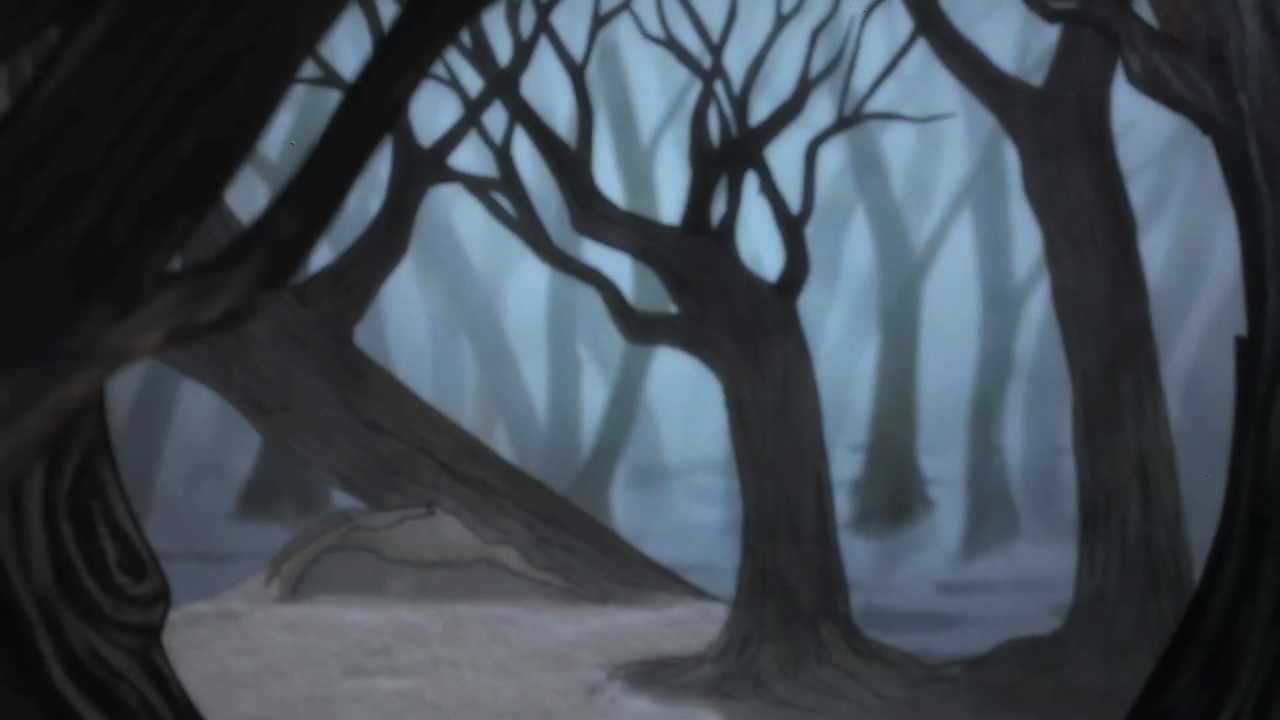


”At this time in my life I want to make records that are astonishing, difficult, ambitious and pretentious,” Steven Wilson told Prog of his third solo album, The Raven That Refused To Sing (And Other Stories) ahead of its release in 2013. Inspired musically by King Crimson and Frank Zappa, technically by Alan Parsons (who engineered the record) and thematically by Edgar Allan Poe, MR James and spooky 70s kids’ TV including Children Of The Stones, Wilson delivered a collection of ghost stories that reflected his fascination with mortality. He discussed each of the six pieces that appeared on his last fully prog album until 2025’s The Overview.
Luminol
If you go back through my discography, I tend to start with something ambient that eases you gradually in. This time I wanted to do the opposite – bang, straight in, excitement. I liked starting this one with just the bass and drums.
Some have said, ‘Oh, that’s classic Yes, like Squire and Bruford,’ and in a way it is, because you don’t hear that so often these days. Then the only vocal line you hear in the first five minutes is: ‘Here we all are, born into a struggle / To come so far but end up returning to dust.’ That’s a kind of prologue to the whole idea of ghost stories and mortality – the fascination with death and the afterlife.
It’s based on someone who is a busker where I live. He’s in the high street every day. He’s terrible! He never ever seems to get any better and he never gives up. I had this idea: maybe one day this guy is just going to die of hypothermia or something. And even when he dies, he’s still going to be there. So it’s this idea of this busker that dies and doesn’t realise that he’s dead, and just carries on performing in the street.
It’s in the tradition of those old Victorian stories where people died but were not aware of it, and continued to manifest. A ghost in life, a ghost in death...

Drive Home
A happily-married couple are driving along. The man looks out of his driver-side window, looks back, and his wife has gone, disappeared. He stops the car, looks around, does the rational things, but there’s nothing. Years and years later, it eventually comes back to him – there was a terrible accident and she died, and it was all his fault. Because he couldn’t deal with that information, he’d wilfully erased a whole piece of time from his mind.

The Holy Drinker
This is about a guy who challenges Satan to a drinking contest. It’s a Faustian, no-win situation… ultimately he’s dragged down into Hell. It’s the kind of thing Poe might have written.
Such long pieces, musically, take a long time to write. You’re looking for a satisfying shape; you have to find the right order for all the scenes, the narrative flow, like making a movie. Sometimes you have to kill your darlings.
And it’s only because this band are so good that I’d even consider recording live – the idea of making a record where accidents are allowed to happen is very unusual for me as a producer. But it was a fantastic experience.

The Pin Drop
A woman sings it – she’s floating down a river, but it’s this beautiful image, she’s at peace. The thing is that she’s dead, murdered by her husband. I had an Ophelia-type image in my mind. As she floats, she’s reflecting on what’s happened.
I’d started reading a lot of ghost stories about this time last year. It’s fair to say every human being, whether they realise it or not, is obsessed with their own mortality: the idea that one day they’ll cease to exist. It’s an incredible burden to carry, isn’t it? Yet it creates a kind of momentum to life. No matter how you look at it, you’re always going to be up against the clock.

The Watchmaker
The little old watchmaker sits alone in his workshop every night, mending watches and clocks. It seems a romantic image – until the song reveals that he’s killed his wife and buried her under the floorboards. So it becomes macabre. She comes back at the end and says he’ll never be rid of her.
I’d emphasise that these are ghost stories, they’re not horror stories. It’s about dread. Something has happened; like in the best MR James tales, you can just feel it. It’s a cynical song. It’s also about compromise: this elderly couple have been together 50 years through inertia, not love; through habit and fear. Then one day something snaps.
For me, regret is the tragedy of the human condition: if you haven’t achieved what you wanted to. It’s most poignant when people reach the end of their lives...

The Raven That Refused To Sing
Behaving like a frontman for the first time has maybe thrown more focus on what I actually do as a singer. This is the big orchestral ballad – what they call an anthem, I believe!
I always adored Jeff Lynne’s work with ELO, and Scott Walker’s early albums, and Nick Drake’s Five Leaves Left: those beautiful romantic string arrangements. I’m very proud of this song; it’s direct and simple, yet there’s no way it could be more pompous! Actually, it could have been if I’d put a choir on it too.
There’s a bitter, lonely old man with nothing in his life, just this day-to-day existence. When he was a young kid his big sister, who was everything to him, died. He’s never got over this loss; it’s coloured his entire life. In fairytale tradition, the local kids make fun of him. It’s forever snowing in his garden.
Then one day a raven visits, and for him becomes the manifestation of his dead sister. Once she sings he will have proof. Or is he imagining it?